———————————————————
———————————————————
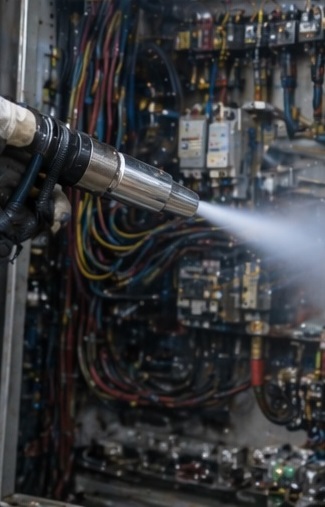
Facilities managers have started questioning the chemicals under their sinks.
The fumes, the residues, the PPE requirements, the compliance paperwork. It adds up. And for a growing number of UK sites, the question is no longer whether to switch but what to switch to.
CO2 pellets, no moisture left behind, no secondary waste, no abrasion. The surface gets clean. Nothing else arrives with it. Which is exactly what stricter health and safety frameworks are pushing maintenance teams toward.
The shift away from chemical-intensive workplace cleaning
COSHH puts employers on the hook for assessing and controlling hazardous substance exposure. Many standard cleaning agents fall directly under those controls, adding administrative overhead before anyone has touched a surface. Workplace exposure limits dictate the legal framework for staff safety, turning every standard rinse cycle into a potential compliance bottleneck. In food processing, chemical residue on preparation surfaces is a hygiene risk that often triggers extended downtime while testing protocols are completed.
Solvents are the next problem. VOCs off-gas into the shift environment, exposure levels climb, ventilation gets engineered in as an afterthought. Specialist PPE gets added to the budget. The waste leaving site carries environmental disposal obligations that generate paperwork long after the cleaning is done. Most sites do not calculate the full operational cost of chemical cleaning until someone adds it up. The number is rarely comfortable.
How solid carbon dioxide cleaning works in practice
A CO2 pellet hits the surface and disappears. Solid to gas, no liquid stage, no residue left on the substrate. The temperature at the point of contact drops fast enough to break the bond between contaminant and surface. What was stuck comes off. The surface underneath stays intact.
Equipment on site: a blasting unit, a CO2 supply, appropriate PPE. Ventilation planning is essential in enclosed spaces where CO2 concentrations can build. Risk assessments before deployment, not after.
The operational advantage that matters most to production environments is that machinery can be cleaned in place. Dry Ice Cleaning specialists accredited under SafeContractor and ISO 9001 handle food processing lines, generators, and industrial machinery on-site, without disassembly or extended shutdown.
 Applications across heritage and industrial settings
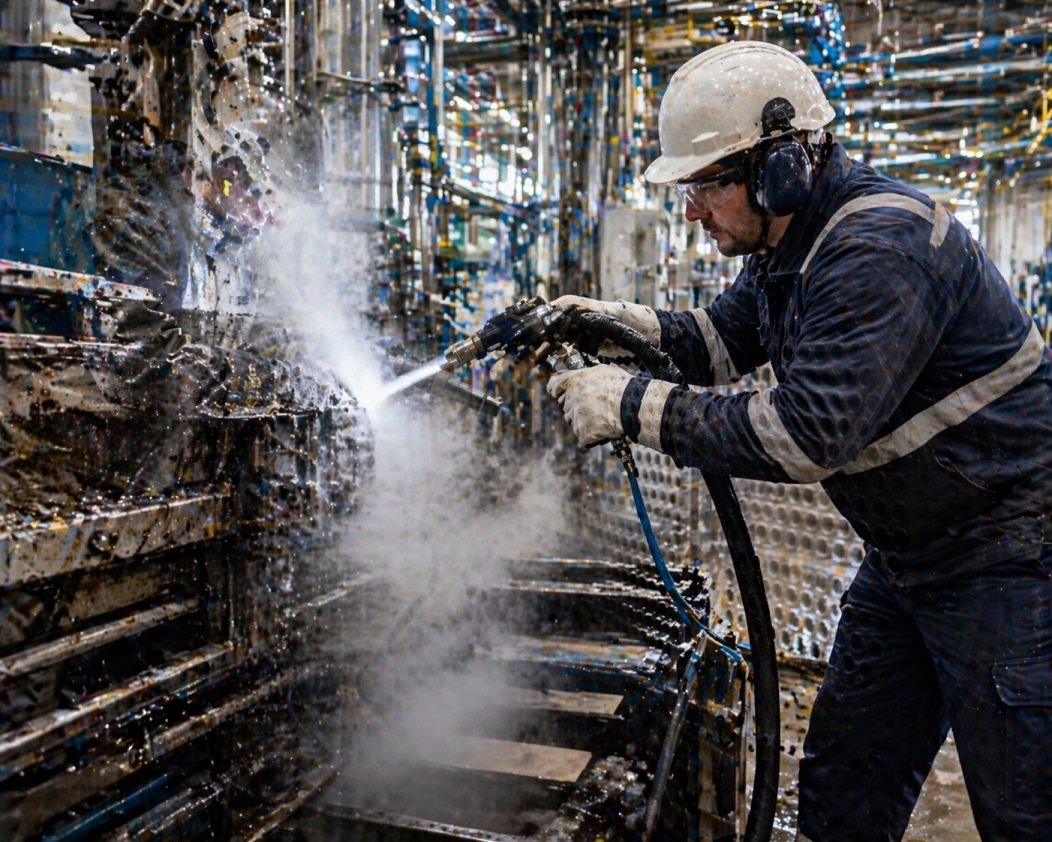
Conveyor belts, ovens, packaging lines: cleaned between production cycles, dry, no residue to test for before restart. Grease and carbon deposits leave manufacturing machinery without anything being taken apart. Printing equipment, which builds up ink and solvent residue in awkward internal spaces, responds well to CO2 blasting where standard methods cannot reach effectively.
Generator cleaning removes carbon and grease from components that cannot get wet. Fire-damaged properties get soot and smoke pulled from structural elements without water touching materials already weakened. Sensitive electrical components come back into service the same day, no corrosion risk, no moisture contact.
Marine environments present similar constraints. Salt deposits, grease, and biological fouling accumulate on hulls, engine components, and deck machinery in conditions where water-based cleaning accelerates corrosion rather than preventing it. Aerospace components with tight tolerances and sensitive coatings are cleaned without the dimensional risk that abrasive media introduces.
Heritage conservation considerations
Listed buildings demand a different approach. Abrasive methods damage original stonework and timber. Chemical treatments react unpredictably with aged materials, partly because older substrates were never designed to resist modern solvent formulations. CO2 pellets are soft enough to clean fragile historic surfaces without removing material or leaving residue behind.
UK regulations are specific: the original fabric of the structure must be preserved. Obtaining the necessary building regulations approval ensures that restoration work on Grade I and Grade II listed projects follows established safety and conservation standards. The surface damage and chemical staining that conventional methods leave on irreplaceable materials does not occur.
 Safety protocols and regulatory alignment
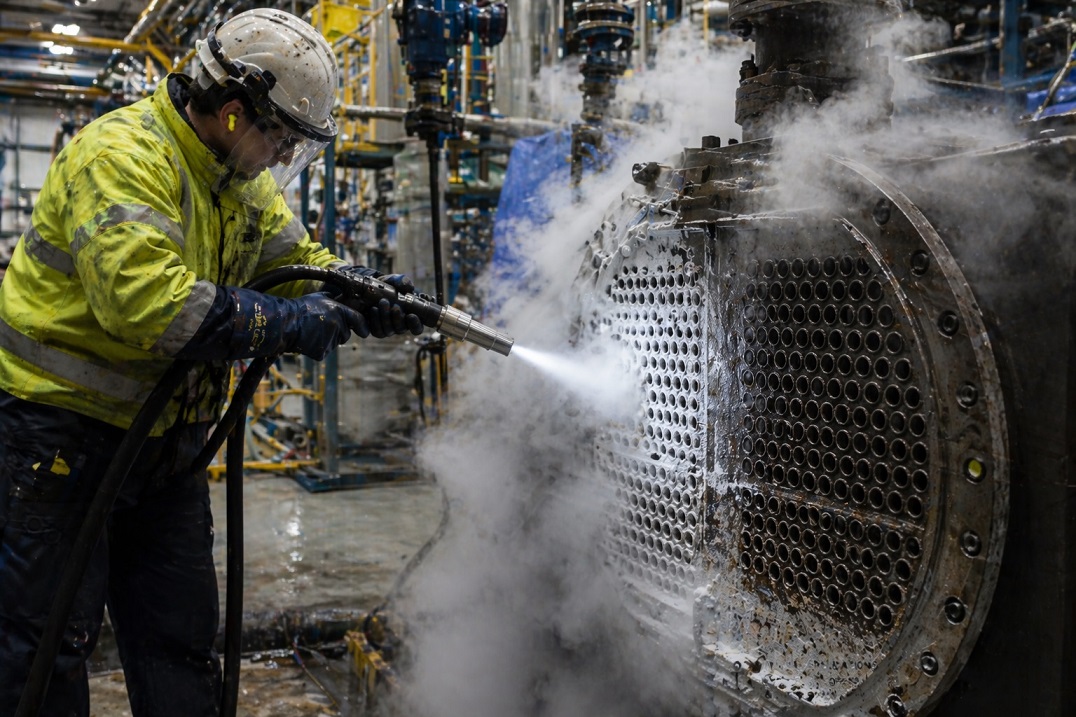
CDM 2015 applies where relevant, requiring health and safety risks to be planned and managed from the outset. CO2 concentrations in enclosed spaces require gas monitoring and ventilation parameters established during the risk assessment phase. Operators wear insulated gloves, eye protection, and hearing protection. Method statements and risk assessment documentation provide the audit trail facilities managers need for compliance records and HSE reporting. A method statement for a CO2 deployment typically covers access arrangements, CO2 supply logistics, confined space protocols, and operator competency records. That level of documentation satisfies both CDM requirements and client-side audit processes without generating the chemical-specific COSHH addenda that traditional cleaning methods require.
It does not remove the need for rigorous safety planning. What it removes is the chemical exposure load that traditional agents bring onto site, which is a narrower and more solvable problem.
The regulatory direction is clear. COSHH compliance, food safety, downtime, heritage preservation: each one pushes in the same direction. Fewer staff health complaints, shorter cleaning windows, less disposal paperwork. The residue problem and the secondary waste problem both disappear. Shorter path back to production.
(Images: AI-generated illustrations (ChatGPT)










.jpg)