
A new study by Florencia San Martin looks at the work of Alfredo Jaar and the political valency of his visual, mostly installation, art.
 Sean Sheehan
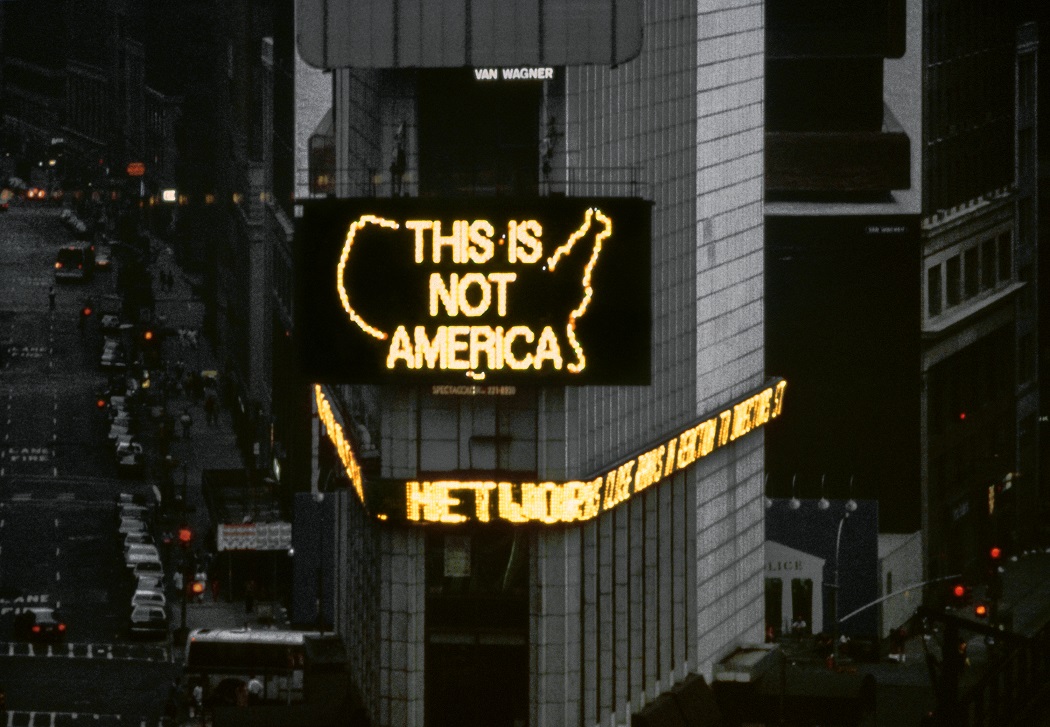
Jaar’s work challenges political indifference with images and gestures that solicit more than passive spectatorship. Five years after moving to New York in 1982, his thirty-five-second animation “A logo for America” was projected in Times Square on an electronic billboard. Using maps and words, it questioned the appropriation of the term ‘America’ by the United States and alerted viewers to the colonial nature of the US’s relationship with Latin America. It has become a signature work of Jaar’s, being re-enacted around the world – including Piccadilly Circus in 2016 – reminding its viewers that “American” is too readily taken to mean “white American” and not “Latin American”, “Latinx American”, “Black American” and so on. San Martin devotes a rich chapter of her book to “A logo for America” and Jaar’s drive to re-enact it in different forms and technologies but with the same political thrust.
She considers this in the light of some of his other work as well as the writings of Frantz Fanon, the Martinican-born psychiatrist and activist, and the Bolivian theorist Silvia Rivera Cusicanqui. She situates Jaar’s work in a “zone of combat” with “Americanity” and the semantics of colonialism.
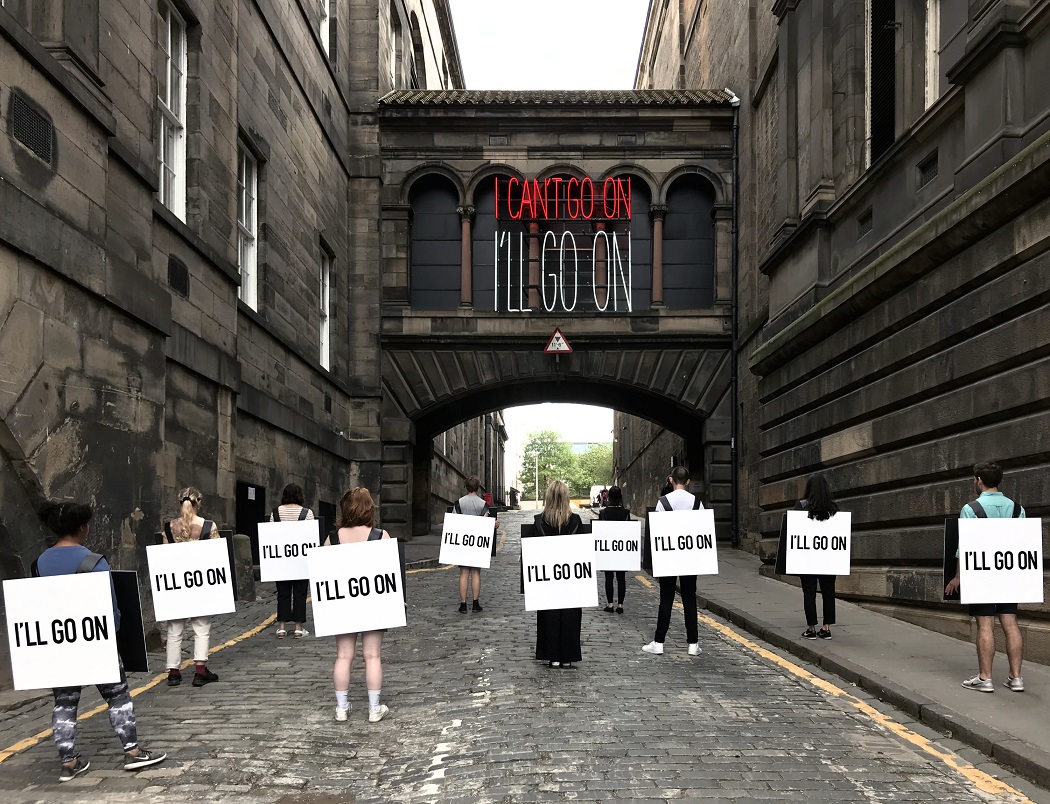
 Presenting hope is part of the zone of combat and, following Trump’s election as president in 2016, Jaar responded with “I can’t go on, I’ll go on”.
The words, from Beckett’s novel “The unnameable”, in red and white neon, give taut expression to Antonio Gramsci’s statement – witnessing the rise of Mussolini’s fascism – of feeling intellectually pessimistic but optimistic in will.
Its relevance in the face of the new fascism now threatening the world is clear: lamentation is called for but so too is radical hope and resistance; the author recalls Aníbal Quijano’s vivimos adentro, pero en contra. When the installation appeared in Edinburgh in 2019, collaborators walked under it wearing sandwich boards with the text split between the two sides of the board.
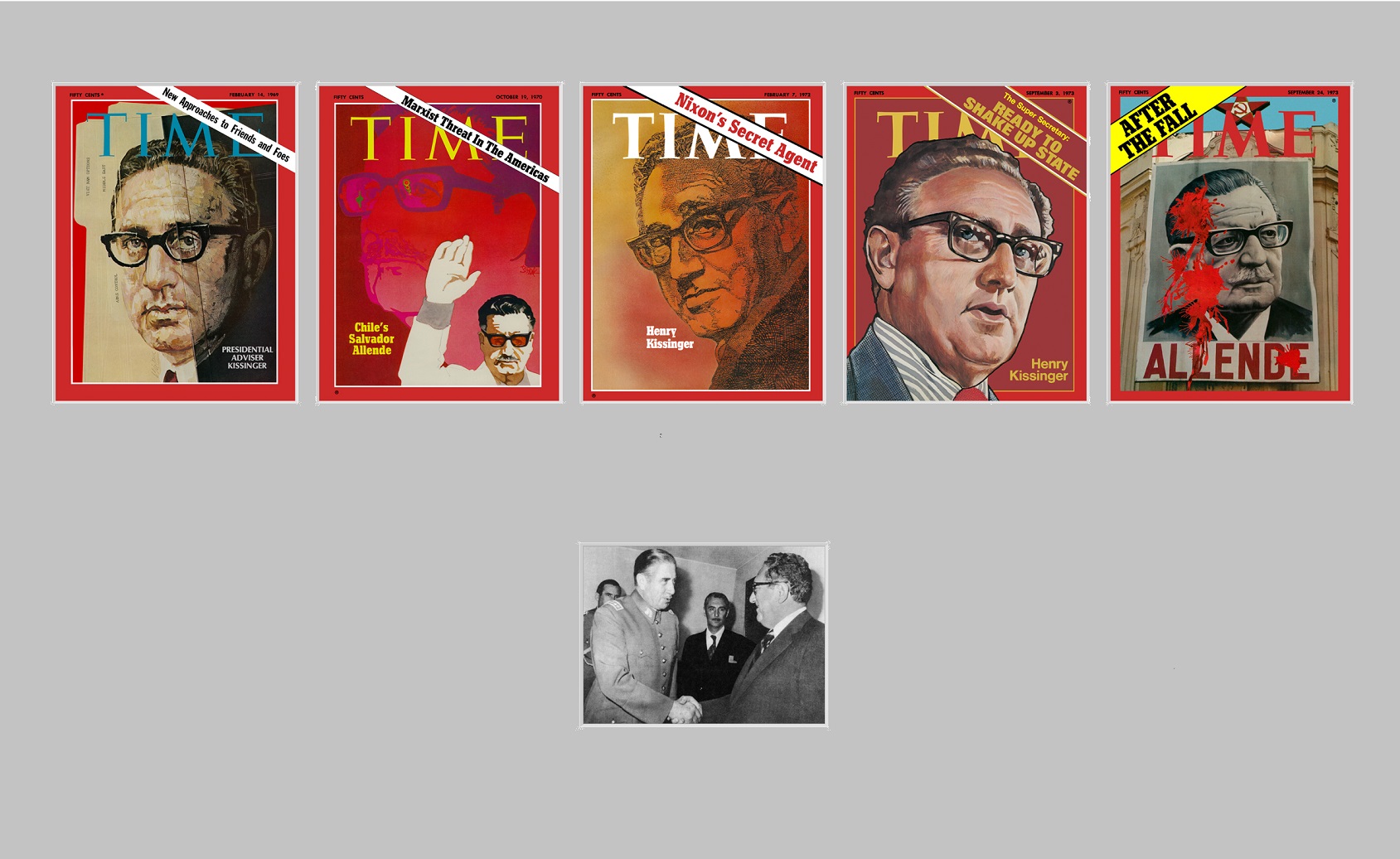 San Martin’s study, based on ten years of research, is a ground-breaking book with a wealth of information and illustrations about Jaar’s projects and, where the form is a video performance, vital descriptions.
His video “Opus 1981/Andante Desesperato”, where he blows a clarinet as hard as he can until (after seven minutes and fifteen seconds) exhaustion stops him, is inspired by a scene in a 1979 photograph by Susan Meiselas. The photo, taken in the last days of the Sandinista uprising against the Somozo dictatorship in Nicaragua, shows two armed Sandinistas taking cover behind sandbags while a third, with a rifle on his back, “looks forward, his gaze detached from the action, while playing the clarinet”. San Martin goes on to say how he created the work in a Chile under a dictatorship, ‘in total isolation to avoid censorship and thus punishment’.
“Alfredo Jaar: decolonial time and the aesthetics of the unfinished”, by Florencia San Martin, is published by Duke University Press.
(Photos supplied by the publisher)
.










.jpg)












