When the First World War’s victorious powers divided up the Middle Eastern region and the plunder from the Ottoman colonies, it led to the birth of Jordan, Iraq, Libya, Saudi Arabia and Palestine. However, behind the patriotic decolonising efforts were plans to keep excesses in check and avoid endangering neo-colonial interests, and to strengthen the oil industry.
 Julio Morejón
The area’s importance increased noticeably and the pre-war influence of the Turks – who had authority over territories in Europe, Africa and Asia – weakened. The geopolitical reordering promoted by France and the United Kingdom, along with the nationalism in fashion since the end of the nineteenth century, accepted as useful the encouragement of a pro-Western state on Islamic land that would plant a reactionary spear there.
The first Zionist Congress was held in Basel, Switzerland, in 1897, bringing together diverse interests of European Jews’ social and economic life. It advocated strengthening that community’s ideological exclusivity and securing a “home” in the Holy Land.
The event’s pre-eminent figure was the Austro-Hungarian journalist and writer Teodoro Herzl who unleashed a campaign for the creation of a confessional state, supportive in appearance but rebellious in essence.
Twenty years after the event and in the midst of the First World War, the British Prime Minister Arthur James Balfour issued a declaration which, at the expense of the Arab inhabitants, strongly backed the idea of establishing a Jewish entity there.
Partition of Palestine
With the Jewish emigration to Palestine, under the British mandate (1922-1948) awarded by the League of Nations, those people originating from central and eastern Europe, the Mediterranean and the north of Africa were favoured, but spiralling population growth prevented substantial changes to demographic distribution.
 “In November 1947 the UN General Assembly approved the partition of the territory under the British mandate. This was followed by war until 1949 and construction of an Arab state was paused. In 1948, Israel created its own,” according to Contralinea.
Following the territorial break-up came the first Arab-Israeli conflict (1948-1949) which saw personnel from Egypt, Iraq, Lebanon, Syria and Transjordan (later Jordan) fight against the recently proclaimed Jewish state, backed by the West.
Israel, the nightmare state
That rupture constitutes one of the axes of the Arab-Israeli conflict and hinders stability in a sub-region that has been the scene of five wars and around thirty military operations perpetrated by Tel Aviv against Palestine over the last few years.
Israel’s political-military alliance with the West helped it beat the Arab armies, become a representative of the Middle East and be a member of the United Nations (UN).
According to Ale Kur, in the 1920s the Arab presence in the area was 93% while the Jewish population was just 7%, a proportion the Zionists would try to change with the Nakba, one of the most painful episodes suffered by the Palestinian people.
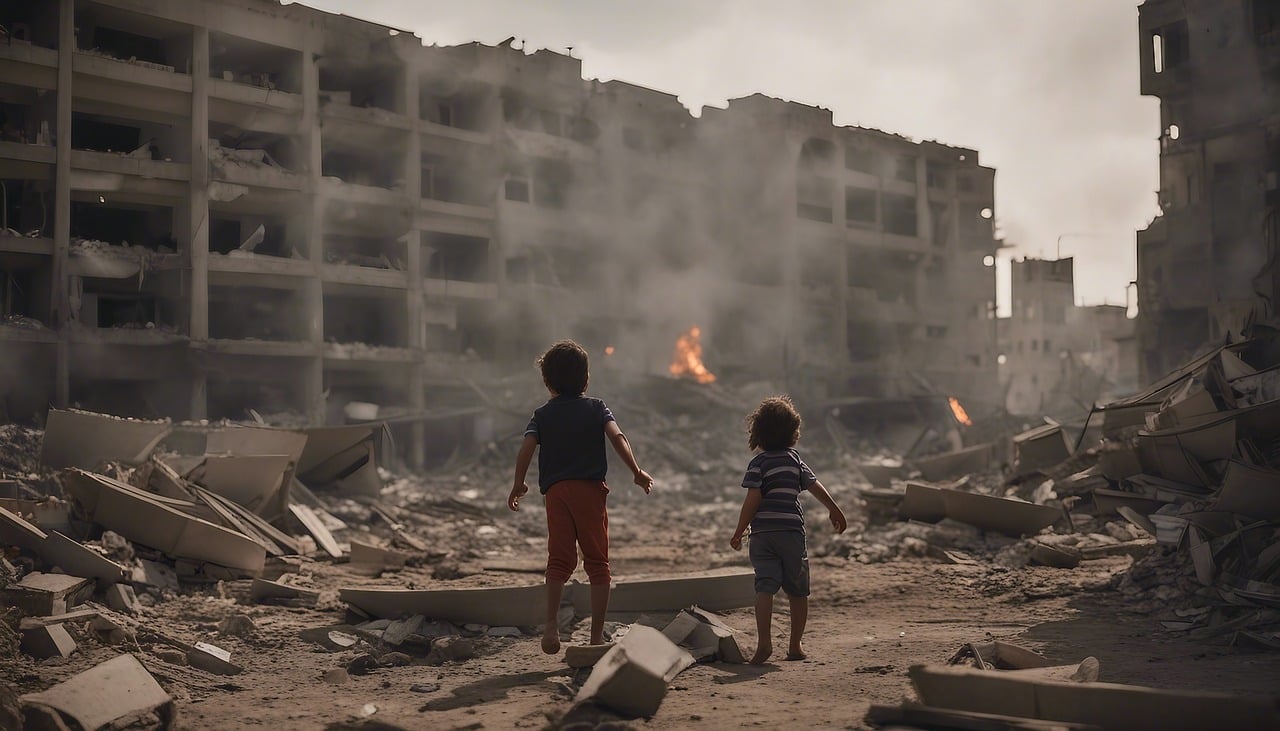 The Nakba or catastrophe was the expulsion of the Palestinians from their land and the plundering of other assets through terror, a method similar to that used by the Nazis during the holocaust (1941-45) against Jews in Germany and occupied Europe.
It was a crime against humanity as it forcibly displaced the civilian population from its habitat, something Israel tried to repeat in 2024 against the residents of the Gaza Strip through aerial bombardments and ground attacks. Since that era and by violent means, Israeli administrations (regardless of the nuances of right or left) have undertaken a unique programme of land seizure and implantation of settlements on captured Arab soil.
The Sykes-Picot Agreement
In May 1916 under the Sykes-Picot Agreement, London and Paris divided up the land in the Levant colonised by the Ottoman empire. The secret clauses were divulged through the Russian press, some experts say they were leaked by Leon Trotsky who was of Jewish origin.
The terms of the pact signed by the Englishman Mark Sykes and the Frenchman François Georges-Picot, without taking account of Arab interests, were the prelude to neo-colonialism in the transition after the First World War.
Another relevant Franco-British-Ottoman accord was signed in the French city of Sèvres in 1920, recognising the Turkish defeat in the war and its royal family’s acceptance of the dismantling of its colonial space, but that agreement was never ratified.
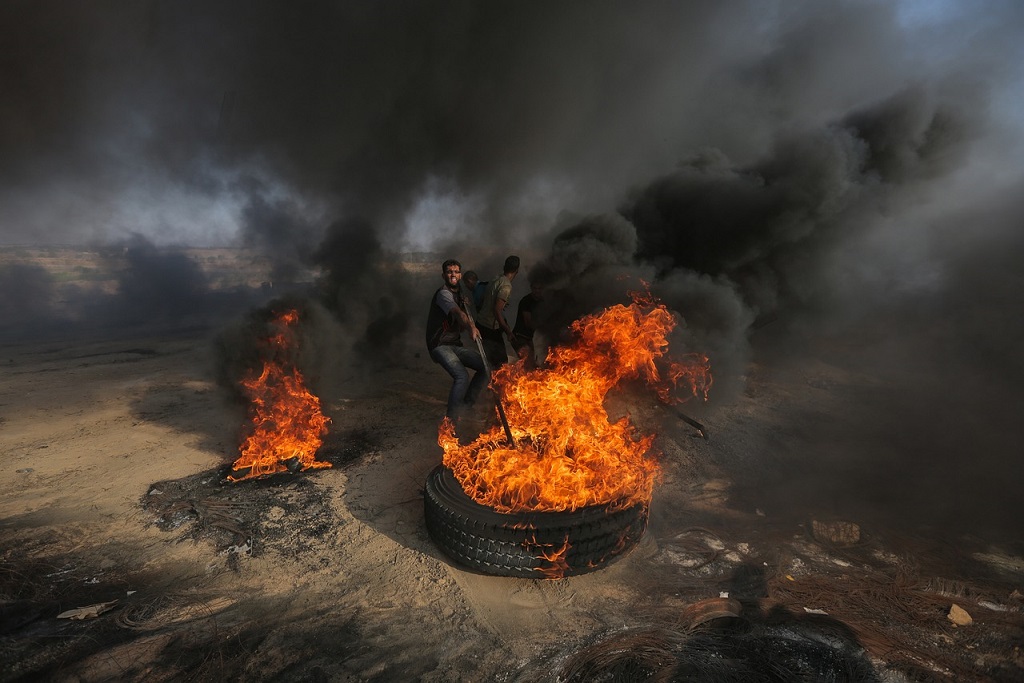 If the first Arab-Israeli conflict demonstrated Israel’s military capacity, its anti-Arab profile was defined by the policeman role it played alongside France and the United Kingdom in the 1956 Suez Canal crisis.
That year the Egyptian leader Gamal Abdel Nasser nationalised the strategic waterway, vitally important to trade and communication between three continents: Asia, Africa and Europe, and with repercussions in the Americas.
“Along this route passes 61% of the current global fleet of oil tankers, 92% of bulk carriers and 100% of container ships, car transporter ships and general cargo ships,” stated the authorities quoted by the BBC.
In 1956, the two European powers, along with Israel, attacked Egypt. Thus Tel Aviv, through the Kadesh or Suez Canal operation, became a credible guardian of Western interests in the strategic sub-region.
The 1956 conflict, during the cold war, was resolved through manoeuvring by the Soviet Union and the United States, and differed from military skirmishes prior to the Second World War (1939-1945) when pressure from the socialist camp did not exist.
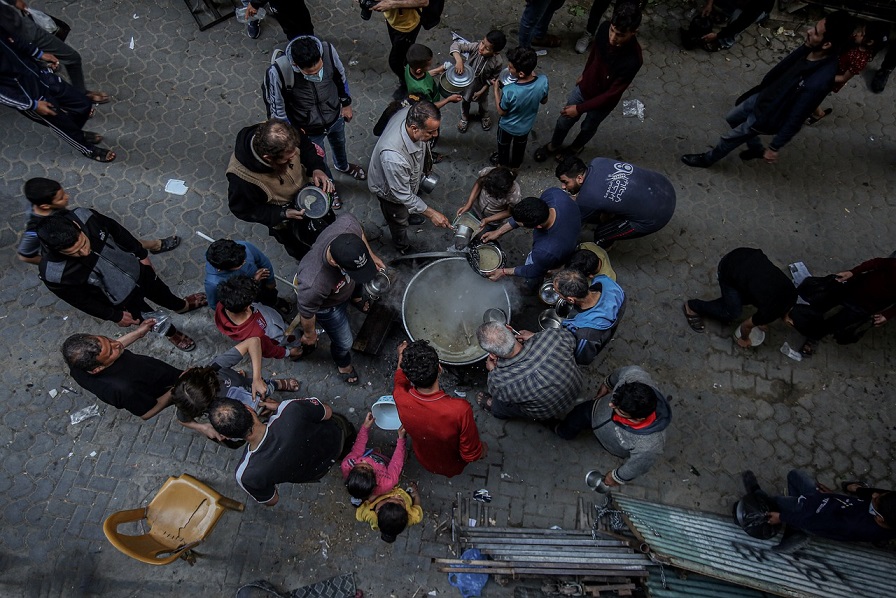 However, 70 years after the first Zionist Congress and 50 years after the Balfour Declaration, Israel set off another conflict through Operation Peace for Galilee, the six-day war, but armed Palestinian resistance was already on the scene. (PL)
(Next week: part 2)
(Translated by Philip Walker – Email: philipwalkertranslation@gmail.com) – Photos: Pixabay










.jpg)