
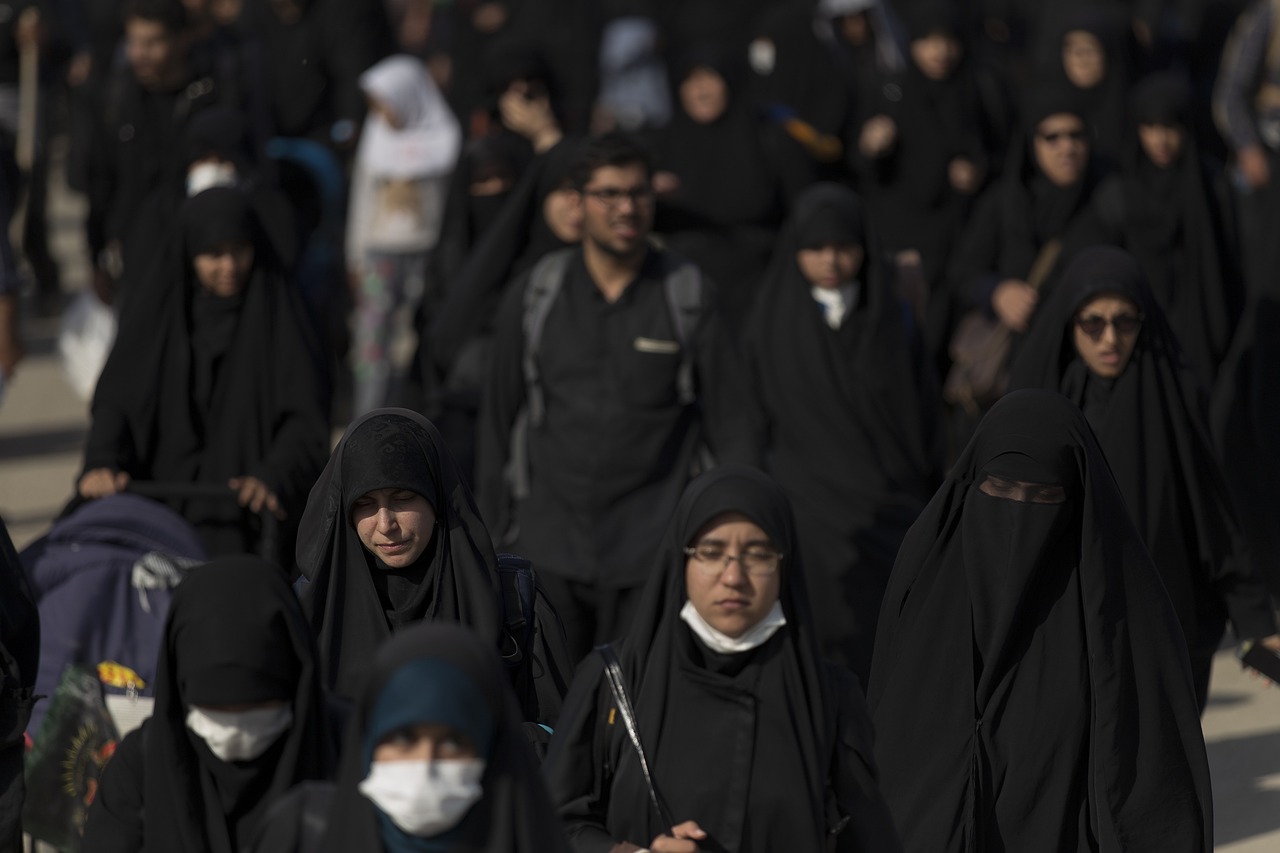
A Muslim resident in London argues that Islamophobia is amplified in media discourse and does not necessarily reflect her personal experience. She points to Muslim political participation in the UK as an example of social inclusion. Some Muslims don’t hear about Islamophobia but instead feel support coming from the British Government. They’re not afraid to go out on the streets and don’t feel discriminated against. (The Prisma memoirs)
 Virginia Moreno Molina
Nahla Nasser is a 26 year old Muslim woman born in Cairo, Egypt. She and her parents decided to come to the UK a year ago for work. Now, Nasser works as a Capgemini at Oracle Applications Consultants, an IT Services Company.
This Muslim woman thinks of herself as an open person with regard to her faith and religion, and explains that “I treat everyone the same regardless of their belief.” Although Islamophobia is a subject that affects many, other people, like Nasser, have not experienced this problem during their stay here. Since her arrival, she’s felt that “London is definitely much more tolerant to Islam than other cities that I have visited”.
And, having ample international experience she has ‘‘witnessed a much more hostile attitude towards Muslims in other cities, than in the UK”
“My mother, as an example, is veiled and she has never had any issues or discomfort on the streets of London. On the contrary, she feels that there is a very high tolerance towards Muslims and Islam in the UK”, she explains.
 Nahla Nasser speaks with The Prisma about Islamophobia (which she hasn’t experienced herself) and of other aspects of being Muslim in the UK with.
Political Perspective
She believes that the British government protects the Muslim community and in England Muslims ‘‘are treated as normal citizens rather than second class ones, and are encouraged to involve themselves in all different aspects of the vibrant London society”. She cites the recent election of Sadiq Khan as the Mayor of London as an example. ‘‘A Muslim has recently been voted in as Mayor of London which ultimately represents the tolerance and trust that Londoners have towards Muslims”, she says.
On the recent election she says “as long as the new Mayor ensures that all residents of London enjoy the same freedoms and benefits, regardless of what their religion or ethnic background may be, a healthy society, from an overall perspective, is guaranteed.”
 Discrimination?
Nasser completely disagrees with the generalization that the majority of Muslims suffer abuse in the UK due to policies implemented by today’s Government, or that it profoundly affects their community.
“Muslims mostly adapt to the circumstances of where they live, and I think that the media plays the biggest role in spreading these type of false statements” she explains.
She affirms that she has not seen anything concrete, or discovered anything that suggests that “‘most’ Muslims in the UK complain about segregation, discrimination and racism in the UK”
Nahla Nasser thinks that “people complain more about media narratives painting all Muslims with the same brush when one Muslim does something wrong”. With regards to whether Muslim women are afraid to speak out due to the present situation, she believes that the current rise in Islamophobia in the West has united Muslims “across all different spectrums, in promoting the true values and principles of our peaceful religion.”
Nasser believes that “the first way to stop Islamophobia is for Muslims to stop feeling like victims”.
 “The more Muslims feel or claim they are the victims – explains Nasser – , the more people will feel our weakness. The only way to stop Islamophobia is for Muslims to continue behaving the way God told us to in our daily lives.”
Falsehoods in the Media
Regarding the link between terrorism and the Muslim community, Nasser explains that in Islam the religion “is one that preaches only good, much like many other religions, and does not promote terrorism in any form, but rather harshly condemns it”. However, ISIS continues to promote a negative image of Muslims because “all the media surrounding us is just broadcasting false propaganda to distort Islamic values”.
“It is up to Muslims to prove that ISIS has nothing to do with Islam through their behaviour and kindness which align with Islamic values”, she affirms, then concluding that: “The majority of ISIS’s victims are Muslims, so that in itself proves that they are not Muslim”.
 But the media plays a role in the matter “It is interesting to see debates that occur on social media regarding Islamophobia”, explains Nasser.
She adds that, on the contrary, social networks such as Facebook and Twitter undoubtedly “have definitely helped Muslims in correcting the many misconceptions that the general public has on Islam, as a result of lies that are spread by the mainstream media.” (The Prisma memoirs)
(Translated by Jennifer Hanley)










.jpg)












