
Many recent stories focus on the behaviour of housing associations, who are very wealthy and have the ear of local and national government officials trying to find ways to solve Britain’s housing crisis through ‘Regeneration’. Part of the problem is laws and regulations that have not been properly thought through offering loopholes for exploitation.
 Graham Douglas
Britain has a perennial housing crisis with successive governments apparently unable to act, for reasons including restrictive planning laws, NIMBY protests, conversion of residential accommodation into commercial use via platforms such as Airbnb, and since over 100 MPs earn over £10,000 a year in renting property they are inevitably unwilling to see rents decline. It has reached the stage of public protests in London.
The National Housing Federation points out that the role of HAs is not to make a profit for shareholders but to invest in housing benefitting communities. Their activities include supported housing for vulnerable people, providing rented accommodation at market rents, and in 2018-19 they built one third of all new Housing in England.
They are also committed to supporting local community services, by providing affordable housing. But ‘affordable’ depends a great deal on service charges, and a recent article in The Guardian highlighted the lamentable state of legislation, by which service charges are controlled until the resident moves in, after which the HA is free to raise them, with catastrophic effects in some cases.
In the tax year ending 2024 Hyde Housing had £809 million of surplus cash in the bank. On 31st October 2024 the Inside Housing organisation announced that Hyde had acquired the property asset management company Pinnacle Group, in a move described by Hyde’s CEO, Andy Hulme, as a “game-changing moment for the housing sector”.
 The price was not disclosed but in 2023 Pinnacle Group declared profits of £23 million
The Prisma reported earlier on an issue in Thamesmead in London, where a housing association has been challenged in court for its failure to adhere to the ideals for which housing associations were constituted.
Harry Allen’s acute analysis brings us to some keywords: Gentrification; Storywashing – rewriting local history to portray housing associations as the hero; Artwashing – marketing an area with affordable housing to impoverished artists who will then unknowingly contribute to raising its cultural desirability to less-impoverished people to set up home, raise their kids and feel they are doing London a favour; and finally the biggest buzzword of them all: Regeneration. This is one of those improbably good words that it seems churlish to question, until we begin to ask: what is being regenerated, does it need mending, who is benefitting from it and are they in need?
For the present article, The Prisma spoke to John Farley, the secretary and founder member of Bellevue Community Association in Stockwell, London SW9, and what follows is summarised from conversations and documents provided by Mr. Farley.
Bellevue Community Association and Hyde Housing
This is a story of how the socially responsible Dr.Jekyll-face of a housing association slipped to reveal not a night-time prowler but just the banality of the pursuit of success in an environment riddled with players promoting their images as popular heroes without facing the real enemy that frustrates them at every turn: the financialization of social housing.
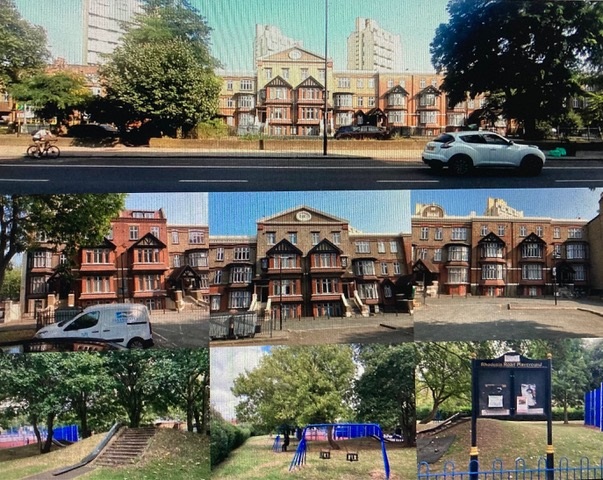
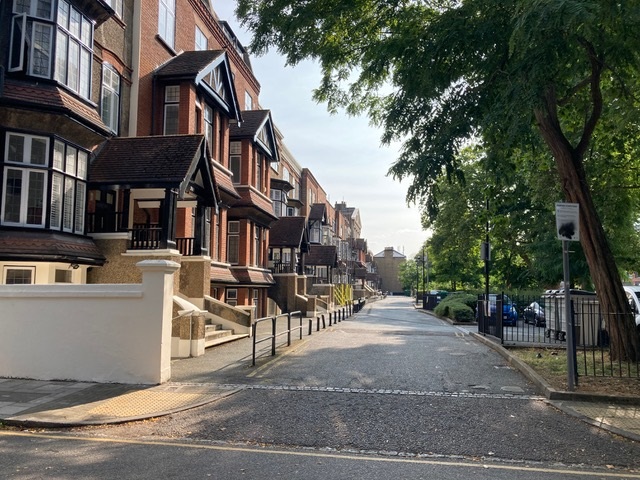
 This crisis began on the 18th of October 2023 when residents of some mansion flats near Stockwell tube station, Bellevue Garden Mansions (BGM) were informed by its owners, Hyde Housing that their perfectly good properties were to be demolished to make way for a larger number of purpose-built flats – hence regeneration.
But residents were quickly reminded of a longer history, in which their homes had been acquired with a Compulsory Purchase Order (CPO) by Lambeth Council in 1976, and in response to a gradual deterioration of the property Lambeth undertook a major refurbishment in 1987-89 including new roofs and windows. By 1998 Lambeth was struggling to maintain BGM and other properties in the area and sought the advice of Hyde Housing Association (HHA).
This led to a Formal Consultation document on the transfer of homes in the Central Stockwell Neighbourhood to Hyde Southbank Homes (HSH), a subsidiary of Hyde. Prior to the vote, HSH promised residents ‘Bright Futures’ and good maintenance, and won the trust of the majority of residents so that in July 1999 a total of 2,350 homes, including BGM, were transferred to HSH along with £17.6 million of government funding through the “Estate Renewal Challenge Fund”.
The proposed contract between the residents and HSH stated:
 “There will be a contract between the Council and HSH. This will set out what HSH must do after the transfer to keep the promises made in this document. The Council will have the power if necessary to take Hyde to Court to enforce this contract. In the event of a dispute, tenants will be able to take HSH to court to enforce the tenancy agreement”
The transfer required properties to be properly and regularly maintained, but for 23 years this was not honoured. Throughout 2023 HSH organized many drop-in sessions and one-to-one meetings, asking residents for their views. Finally, on the 9th October cyclical works began on the communal areas and re-painting external walls.
The 18th October meeting followed months when Hyde had never used the word regeneration, so it was a shock when residents asked “What is that?” and the director replied: “It means that Bellevue Garden Mansions will be demolished.
There will be a Greater London Authority (GLA) Ballot in April or May 2025 for tenants to vote ‘Yes’ or ‘No’ for Regeneration. If 51% voted ‘Yes,’ Hyde would receive a grant to demolish their homes, and destroy their community.
Residents believe the vote is not for ‘regeneration’ but for HSH to get a government grant to demolish their perfectly good homes, and if the vote goes against them Hyde’s director of Regeneration has stated that Hyde will proceed without a government grant and apply for a CPO to demolish BGM.
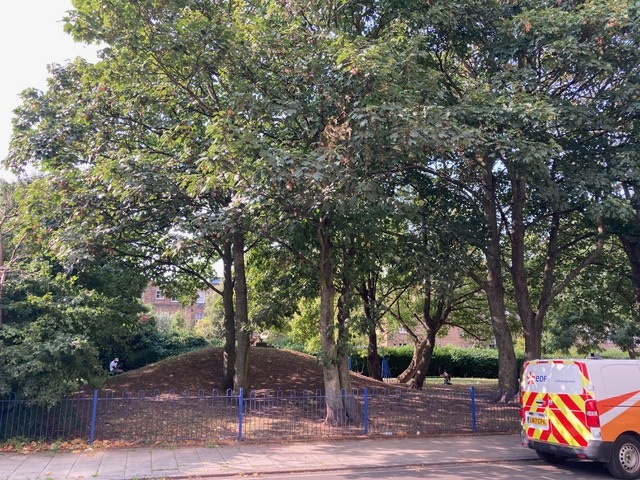
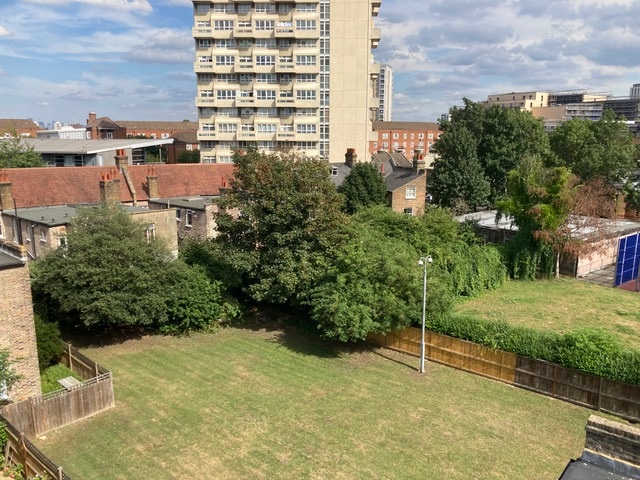
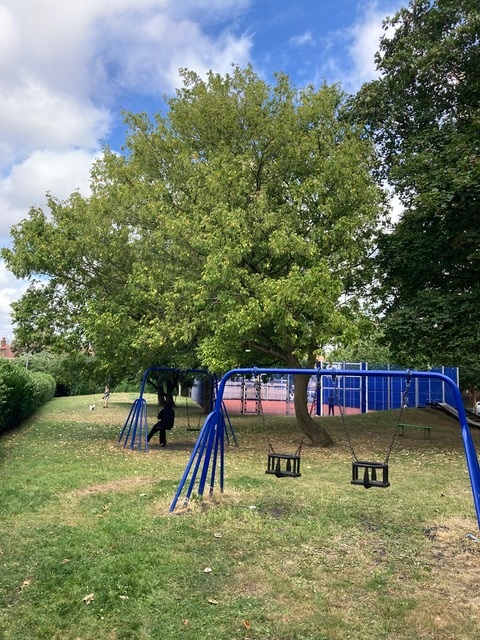
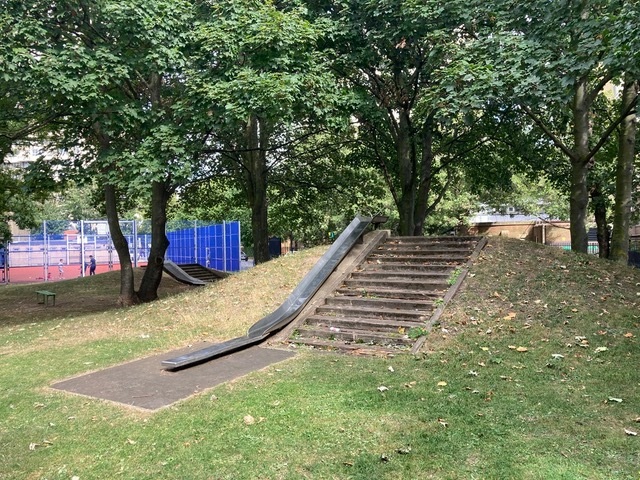 The implications are even more serious, because a CPO would cover a wider area including a green space behind Bellevue terrace used by residents of tower blocks and neighbouring streets. Building accommodation for 10 times the present number of residents of Bellevue while removing a green space next to it certainly wouldn’t serve community needs and might not even be legal.
Hyde Housing problems extend beyond Lambeth
In 2022, Corporate Watch (CW) published a report, “Hyde Housing still Shafting Tenants Nationwide”, which assembled a catalogue of Hyde’s activities and failure to support their tenants, especially in London and Brighton & Hove. This included failure to deal promptly or at all with serious damp problems, and issues relating to unsafe cladding following the Grenfell Fire.
It also becomes clear from the CW Report how Hyde have strong relations with some local councils and with government through the appointment in 2021 of Peter Denton, Hyde’s former chief executive as CEO of Homes England, the government’s authority responsible for distributing housing funding.
When local and national governments promote their Regeneration agenda their first allies will be people connected with them through housing associations.
 In 2022 a report by Inside Housing exposed the increasing politicisation of routine claims by tenants of housing associations.
Eight HAs, not including Hyde, employed the lobbying firm Connect PA to influence changes to legislation or policy to reduce the ability of tenants to pursue illegitimate claims for repairs, supported by ‘No win – no-fee’ lawyers. But as the IH makes clear, this was brought about by the cap on Payment Protection Insurance (PPI) claims, introduced in 2018. PPI protected tenants from eviction in case their mortgage payments lapsed due to their incapacity or illness. This cap made it more lucrative for lawyers to pursue claims for repairs so that the eight HAs reported that 48% of their costs went to lawyers, triple the amount of compensation granted to tenants. One can see why they are upset – and how the government is not very good at joined-up thinking.
*Next report – Hyde’s tactics to influence their residents.
(Photos authorised for publication)










.jpg)












