
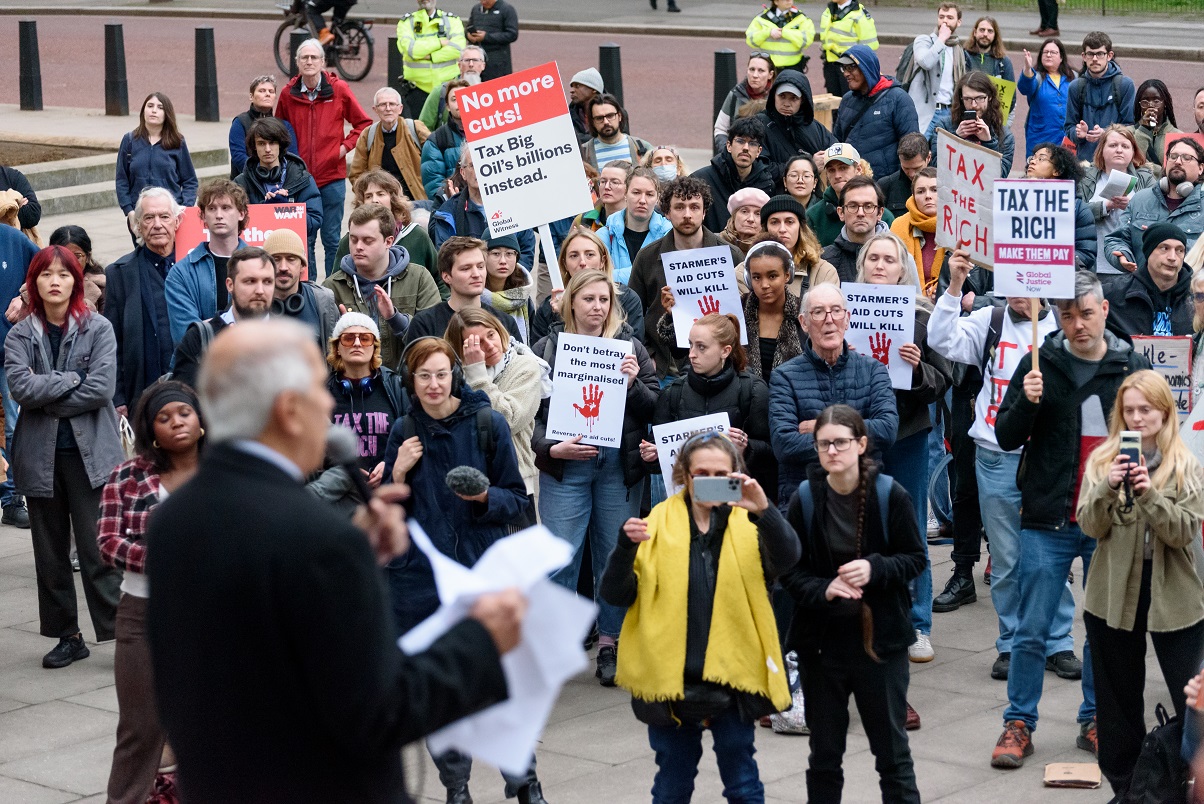
Around 300 people gathered outside the Treasury in London last week, ahead of Chancellor Rachel Reeves’ controversial spring statement, to demand the government raises taxes on the wealth of the super-rich instead of slashing public spending.
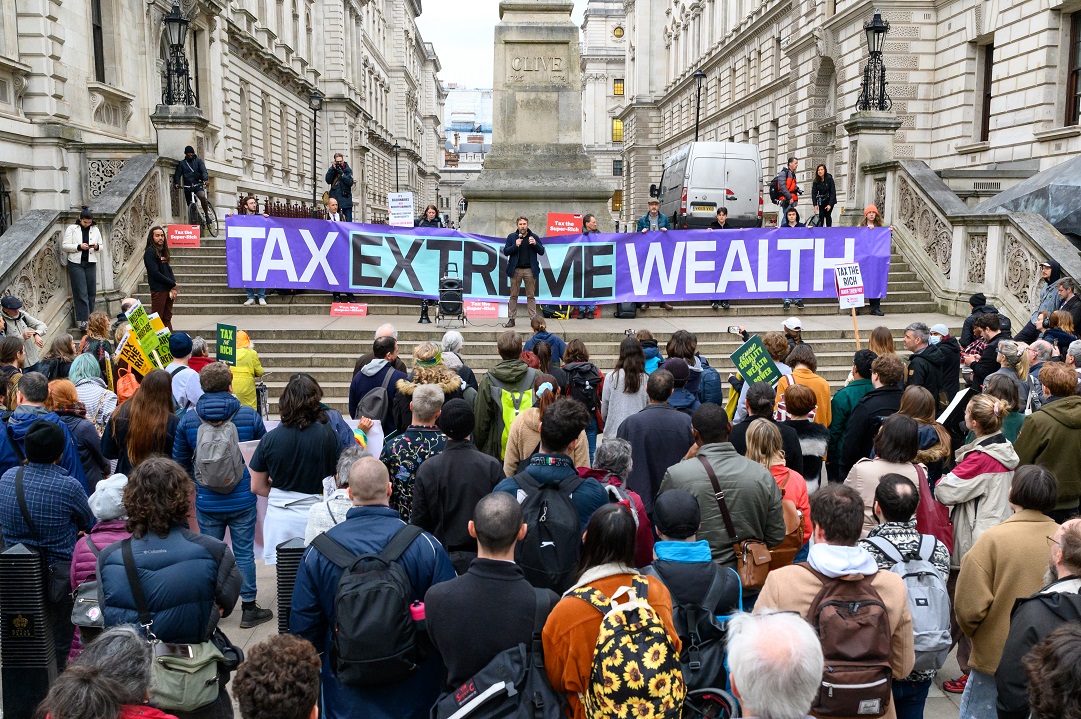 Photos by Andrea Domeniconi/War on Want
The government sparked fury ahead of the budget, by announcing deep cuts in disability benefits and international aid spending, while boosting investment in the military.
Author and economist Gary Stevenson, Green Party Co-Leader Carla Denyer and Labour Peer Prem Sikka addressed the crowd, alongside the leaders of union, environmental groups, and anti-poverty organisations. “This is the only way to save the majority of the country from poverty” Stevenson told the crowd. “I know that we can win this one. But we don’t win it today, and we don’t win it tomorrow, and we don’t win it this week, and we don’t win it next year. We need to build this and build this and build this, because this is the issue that unites this country and people all over the world that are being squeezed out of a quality of life that their parents and their grandparents had.”
The protest was organised by War on Want, Oxfam, Greenpeace, and others.
There have been mounting calls for the government to raise taxes on the assets of the super-rich. The Trades Union Congress endorsed one last summer, and in October, a dozen Labour MPs broke ranks to support the call.
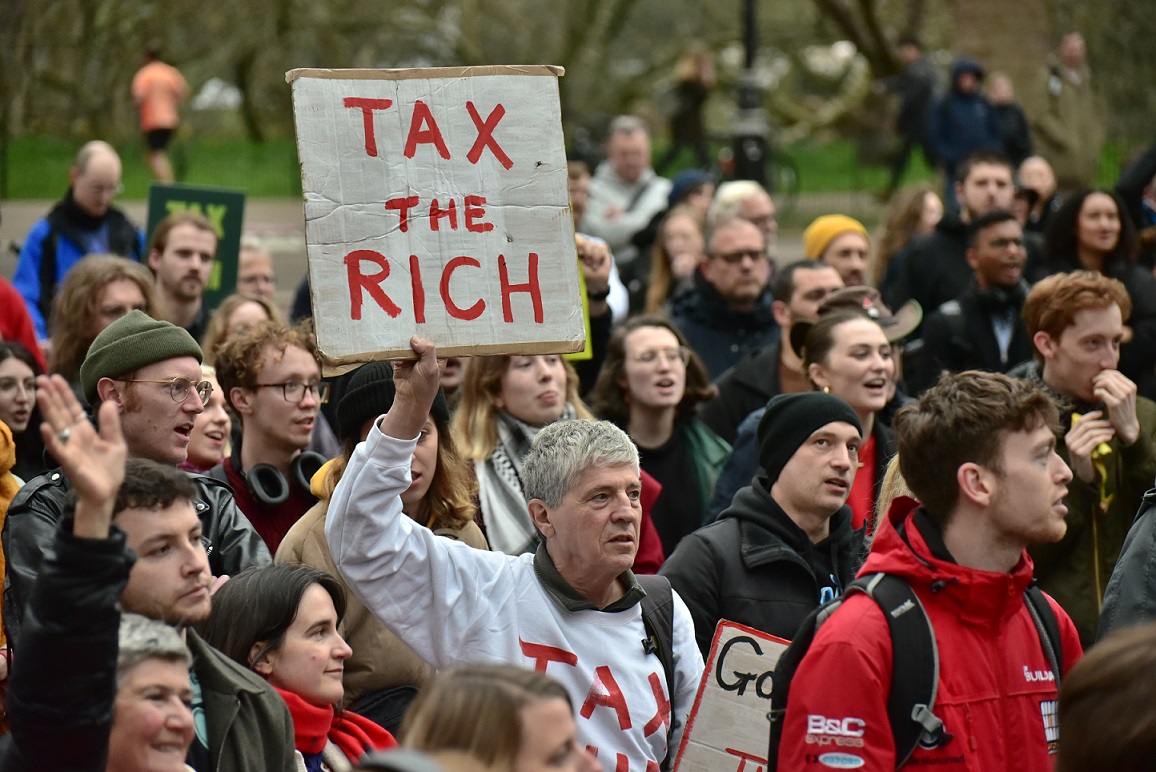 Last week, Oxfam published research revealing that three quarters of Brits back a tax increase on the richest over cuts to public spending.
The richest 1% of Brits own more wealth than the poorest 70%, and the world could see multiple trillionaires within a decade. Levying even a 2.5% tax on assets over £10 million could raise £36bn annually, according to Greenpeace.
Nuri Syed Corser, senior economic justice campaigner at War on Want, said that “Inequality is soaring, the climate is collapsing, and public services are at breaking point. We need huge public investment to tackle these crises. But instead, the government is gearing up to deliver lethal cuts to welfare, international aid and green investment, claiming there is not enough money to fund these life-saving policies. Meanwhile, the obscene wealth of the super-rich is surging and going largely untaxed. It’s time to tax it.
Meanwhile, Matilda Borgström, UK campaigner at 350.org, explains that Rachel Reeves’ decision to slash welfare while refusing to tax the super-rich “is both cruel and misguided. Instead of making billionaires like Jim Ratcliffe – who profits from fossil fuels that drive the climate crisis – pay what they owe, she is choosing to side with the ultra-wealthy at the expense of ordinary people.
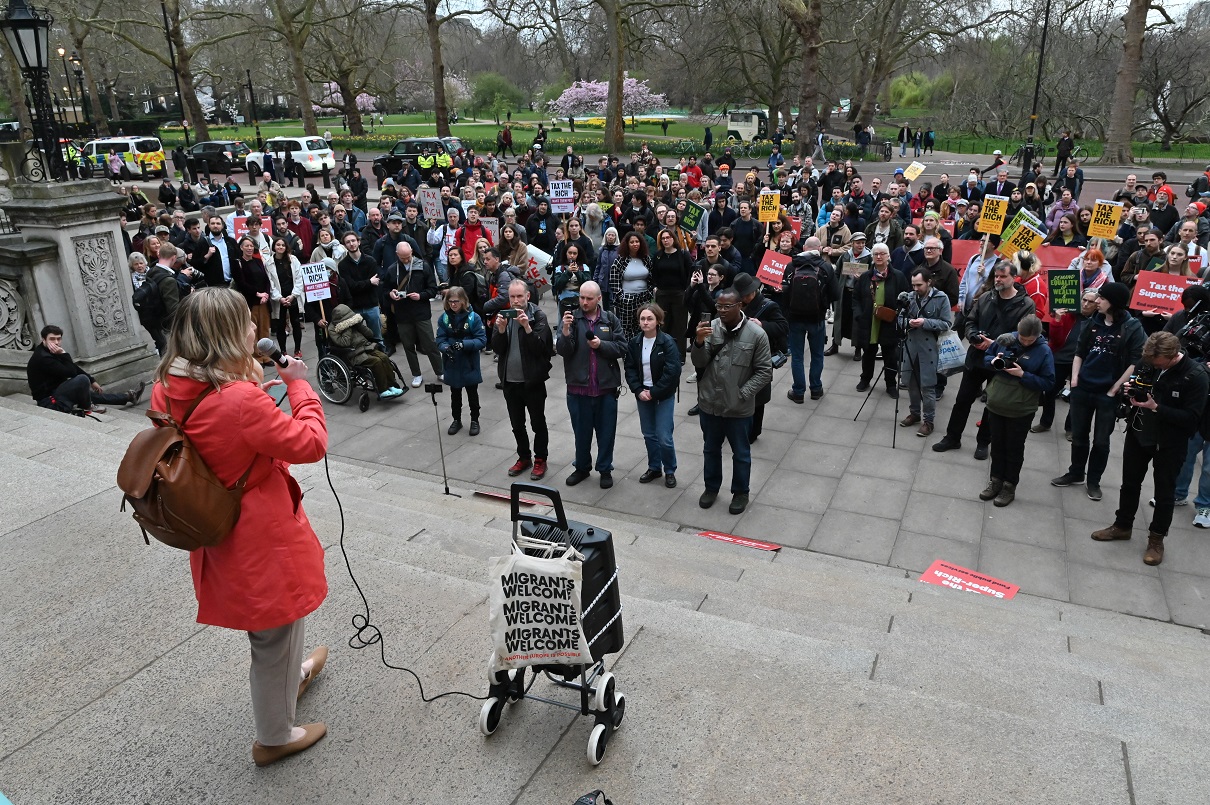 And she adds that “A wealth tax on billionaires could fund vital support for those struggling with the cost of living – accelerating the transition to renewable energy could slash energy bills, insulate homes and create future-proof jobs. Instead, Reeves is prioritising the interests of a handful of elites over the well-being of millions. This is not just an economic failure – it’s a moral one.”
Similarly, Linda Burnip of Disabled People Against Cuts, said the Labour government has clearly chosen “to target disabled people for budget savings to finance their war effort instead of targeting the super rich and tax avoiders. Over a decade of Tory cuts have led to the death of thousands of Disabled People”… “Instead of facing the reality that more and more people struggle with their physical and mental health, Labour is feeding in the narrative that Disabled People receiving benefits are work-shy and should be punished. Resistance is mounting and dozens of protests are already taking place across the country.”
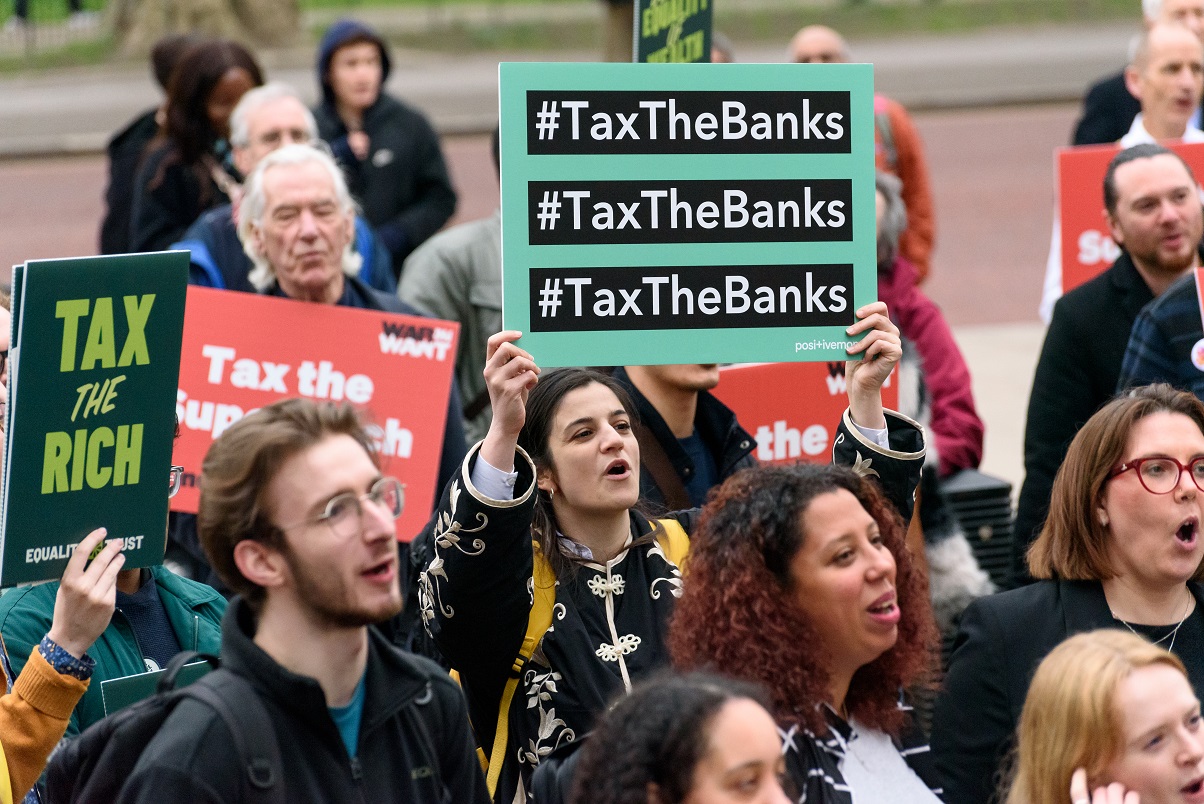 For Louise Hutchins, campaigns director at Stamp Out Poverty, the big oil and gas corporations “have raked in billions in profits over years, while households are struggle with soaring bills and the climate crisis deepens. Why is Rachel Reeves punching down and getting ordinary people to pay? Isn’t it obvious that she should be getting the fossil fuel polluters to pay up?”
According to Hannah Dewhirst, head of campaigns at Positive Money, “too many wealthy corporations and individuals have seen their riches rise because the last government failed to prevent profiteering during a cost of living crisis. This government must rectify the inequality caused by this by taxing back some of that wealth and using it to support the struggling households it was squeezed from.”
Commenting finally, Caitlin Boswell, Head of Advocacy at Tax Justice U, explained how across the country, inequality is soaring and people “are being left behind, struggling to make ends meet and dealing with broken public services, all while the very richest get richer. Choosing to make cut after cut to the poorest and most marginalised, while leaving the vast resource of the extreme wealth of the super-rich untouched, is immoral, harmful, and will not deliver for our communities or the economy”.
 Caitlin adds that “Instead, this government could choose to tax the wealth of the very richest people and corporations. This would raise tens of billions annually to address the cost of living crisis and deliver the long-term investment our country needs.”
*Information supplied by War on Want
(Photos authorised for publication)










.jpg)












