
This is the first time in Argentine history that a president or former president has been sentenced to prison after a trial criticised for being riddled with irregularities and seen as a judicial coup.
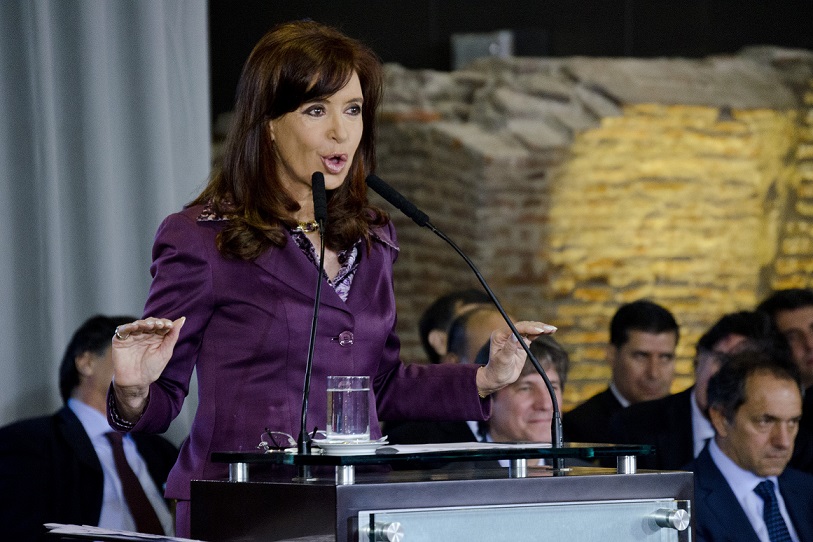
The decision has exacerbated the feelings of many Argentinians who are protesting against the decision and against the current government.
The six-year prison sentence and political ban against former president Cristina Fernández is “another chapter in the lawfare unleashed in the region against popular leaders,” Argentine writer and journalist Héctor Bernardo said today.
“In this case, in Argentina, it is directed against the main figure of the opposition to Javier Milei’s government and leader of the Justicialist Party. It is the chronicle of a foregone conclusion,” he told Prensa Latina. “The political-media-judicial persecution against Peronism is history in our country. The judiciary is co-opted by local and international economic power and responds to those interests,” Bernardo explained.
For this reason, as with Lula in Brazil and Correa in Ecuador, Cristina is being convicted in Argentina without evidence in order to prevent her from participating in the upcoming legislative elections. “It is a ruling that deeply damages democracy,” the analyst warned.
 For his part, Sebastián Halperín, a sociologist at the University of Buenos Aires and public opinion analyst, believes that Cristina’s conviction represents “a problem for the national government, largely because it wanted to face her at the polls and thus validate the defeat of Kirchnerism,” he told Prensa Latina.
“This complicates the situation in some way, added to everything it represents a challenge for a government that has been promoting law and order as one of its assets.”
He commented that there have been calls for mobilisation from various sectors and that there have been attacks on the offices of Canal 13 and Todo Noticias. “This is obviously a problem for the national government, which has recently had difficulties with pensioners’ marches, serious attacks on journalists and other violent incidents,” Halperín said.
On the other hand, Father Paco Olivera, a prominent figure in the defence of the poorest, also took to the streets to voice his support for Cristina Fernández. Encouraged by the protesters, the “Priest of the Poor,” as he is known, improvised a sort of pulpit on the staircase outside a building near Cristina’s home in the Buenos Aires neighbourhood of Constitución, from which he delivered a brief message.
 “They are banning her and want to imprison her,’ he warned and predicted, quoting Psalm 22:26 from the Old Testament, “The poor shall eat and be satisfied, and those who seek the Lord shall praise him.”
And he declared, amid thunderous applause: “Never lose heart, they will not ban our hope, they will not ban our struggle.”
(Translated by Susan Seccombe – Email: ess.translations at gmail dot com) – Photos: Pixabay










.jpg)












