
A doctor, former minister and feminist, she visited Paris to listen to the diaspora and propose their genuine inclusion in politics. In this exclusive interview with The Prisma, she talks about her presidential aspirations, challenges corporate media, defends social reforms and advocates for strengthening participatory democracy against the power of the elites.
Teresa Galindo Lozano*
Our conversation took place in a café near Place d’Italie, where five avenues in southern Paris converge, and which is a meeting point for residents, students, migrants and workers who frequent or live in this dynamic and diverse area.
The urban setting seemed a metaphor for the varied paths that Carolina Corcho Mejía must navigate to achieve her goal. In fact, we were able to meet because on her recent tour of Europe, Paris was on her agenda.
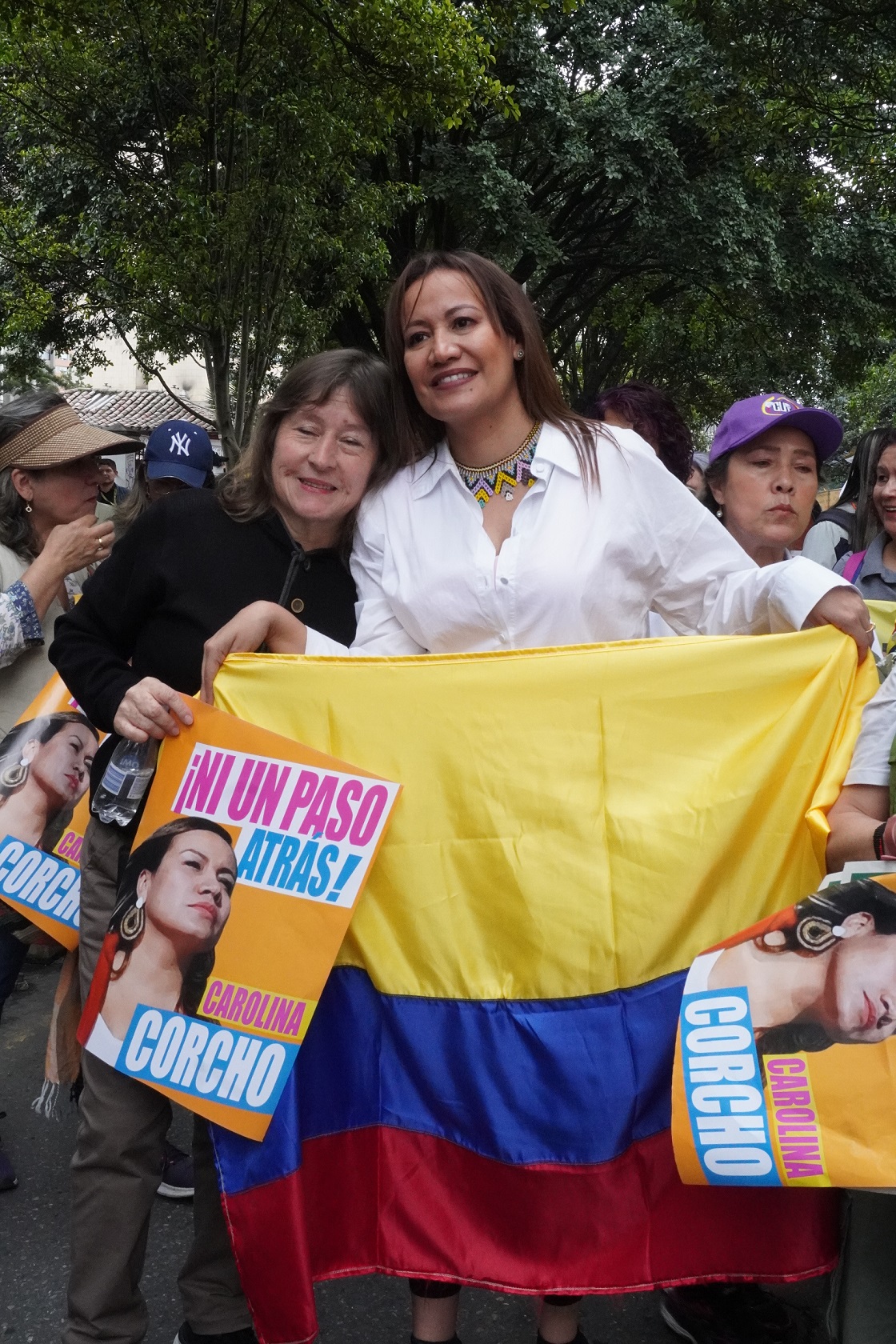
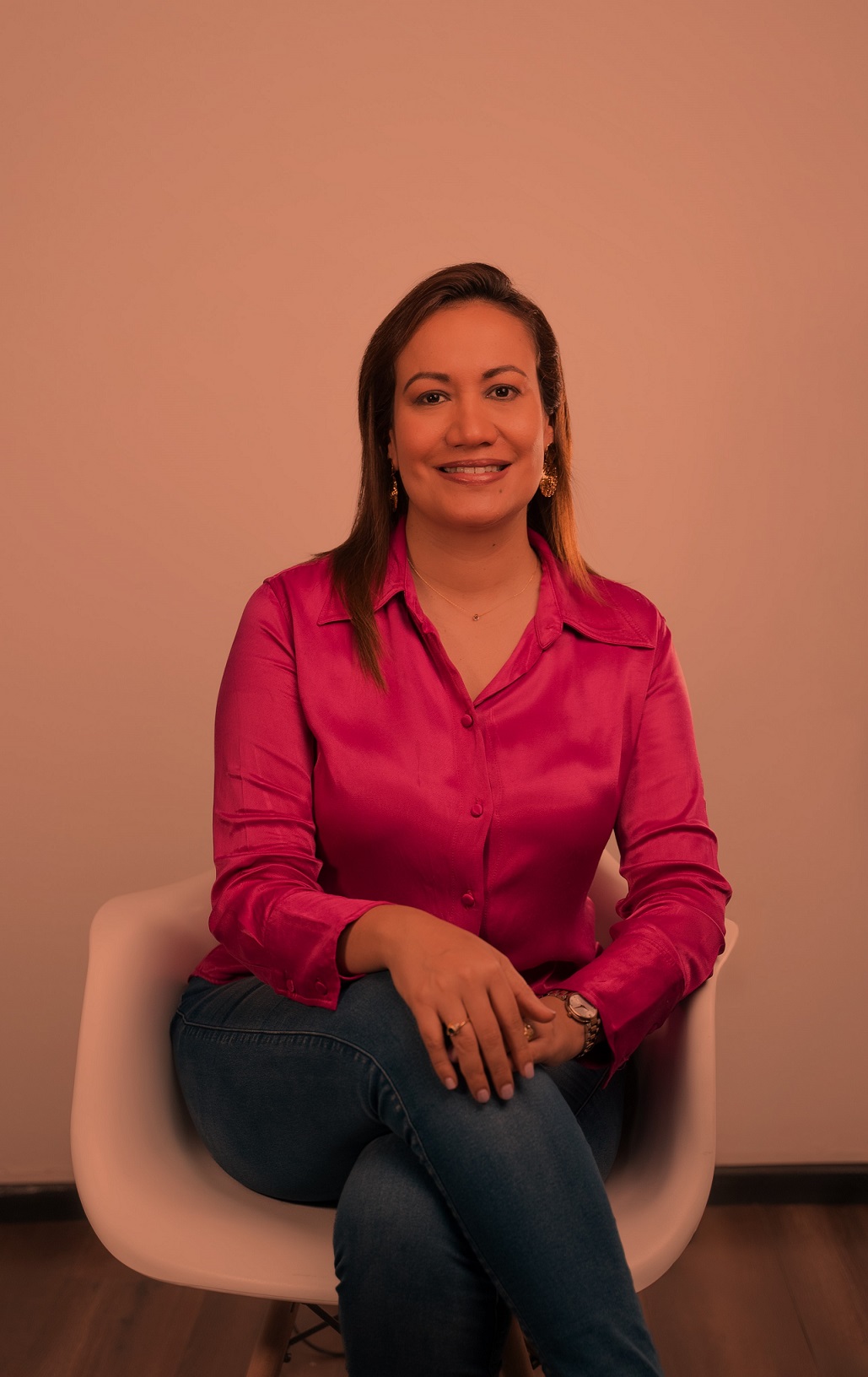
Progressive, doctor, psychiatrist, social activist and former Minister of Health, she aspires to succeed Gustavo Petro, the first left-wing president Colombia has seen in its republican history.
That is why her major challenge will be to win the presidential candidacy in the internal elections of the Pacto Histórico – Frente Amplio (Historical Pact – Broad Front) and then to tip the political balance in her favour after defeating the candidates of the other parties, as happened in Mexico with the appointment of Claudia Sheinbaum as the first female head of state.
There are similarities between Corcho and Sheinbaum: both have a high level of academic and scientific training, prioritise the public over the private, defend human and social rights, and represent the empowerment and progress of women in Latin American progressive politics.
Her critical and transdisciplinary vision of the country’s problems and realities, combined with her feminist thinking, leadership skills and empathy, positions her strongly against other right-wing candidates such as Claudia López, María Fernanda Cabal and Vicky Dávila.
Carolina is clear that Colombia requires deep structural reforms in order to continue with the Change – the Petro’s government programme- and thus overcome corruption, violence and inequality. And to achieve this, it is necessary that the Pacto Histórico – Frente Amplio (Historical Pact – Broad Front) (a major centre-left coalition) wins the presidency of the State, in the 2026 elections and renews the Congress of the Republic, which has a conservative majority, that for decades has prioritised the interests of the elites over those of citizens.
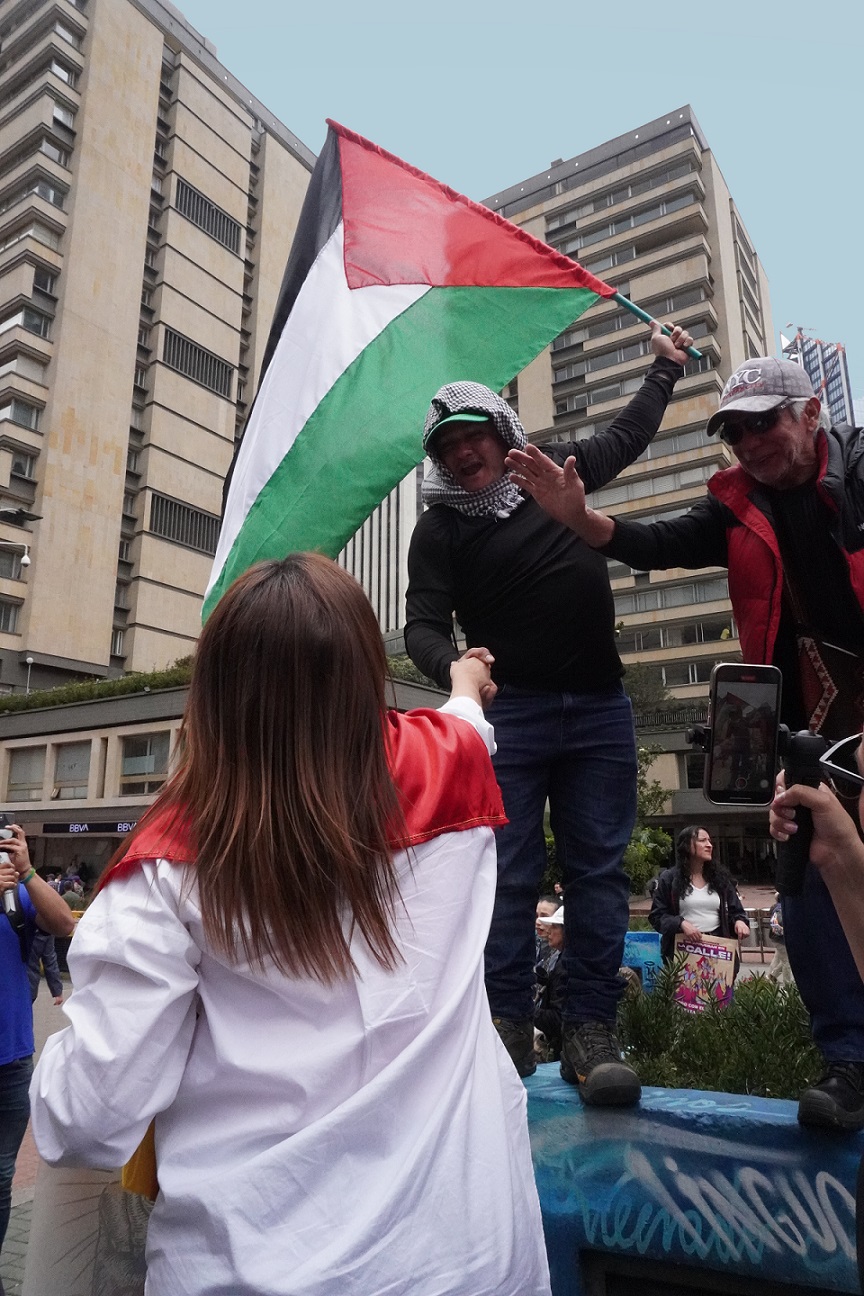 So far in Gustavo Petro’s government, this legislative body has blocked several reforms and prevented democratic participation mechanisms like the People’s Consultation.
To make her ideas on the social, economic and political transformation of Colombia known and to gather the concerns and needs of her potential voters, Corcho (born in Medellín, Antioquia), has visited different municipalities in the country. But she has also visited some European cities where she has engaged with Colombian immigrants who left their country in search of new opportunities, to study or for political asylum.
In Paris, more than 150 people gathered at the Café du Village to listen to her and to support with their signatures the establishment of the first Cabildo Abierto (Open Town Hall) at international level, in response to the rejection of the Peoples’s Consultation in the Colombian Congress and to back Gustavo Petro’s social reforms.
It was after these signatures that she spoke to The Prisma.
We discussed the role of the diaspora as an overlooked social actor that has always been neglected by previous governments, despite the fact that there are 10 million Colombians living abroad. She also spoke about the role of the media in shaping public opinion, women in politics, and the People’s Consultation and the Open Town Hall as tools of direct democracy to reverse the decisions of Congress that have prevented the current government from advancing its long-sought reforms.
She still has a year of intense political work ahead of her in which her proposals on democracy, human and material development, migration, gender equality, human rights, peace, diversity management and political pedagogy, among others, will have to captivate an electorate that is increasingly demanding and aware of its citizens’ rights.
Moreover, Colombia has changed.
Political indifference and lack of democratic participation are behind us, and women have a prominent role to play in this change.
 Do you think Colombia is ready for the next president to be a woman?
Absolutely. Progressivism has spearheaded the discussion on gender equality and has enabled women to reach the highest state office through constitutional and democratic channels in other countries: Dilma Rousseff, Michelle Bachelet, Cristina Kirchner, and Claudia Scheinbaum. If Mexico elected a female president, Colombia can follow suit. Culturally, the middle and working classes of both countries are very similar.
Evidently, in Colombia there are far-right women who defend conservative, misogynistic and patriarchal ideas. It is not about being a woman per se, but about the ideas and policies she supports, and this is the trap of wokeism in the world. Appointing a woman does not mean that she is a feminist or advocates gender equality, as some continue to perpetuate inequality, inequities and violence.
Could you be the female voice leading the change, independent of Gustavo Petro?
We are in that process. I am part of a collective project called Pacto Histórico and Frente Amplio, and I have proposed that the candidacies we present for Congress and the Presidency be submitted to popular scrutiny and to the vote. I believe that for the Senate and the Chamber there should be closed zipper lists to give women the opportunity to participate, and to ensuring that 50% of Congress is women.
We cannot change politics in Colombia with clientelist practices like those of César Gaviria’s Liberal Party, or Radical Change by decree, or hand-picked decisions. Either we believe in the people, or we do not.
And if the conditions for popular democracy are met, I will be willing to stand as a candidate.
If you were president, what would you do to ensure that the millions of Colombians dispersed around the world could have a voice in their country? How would you address the reality of the diaspora?
In Colombia, there is a public migration policy, but only on paper. The issue of migration and the diaspora is not on the Colombian political agenda.
 This is absurd, because we are not 50 million, but 60.
Fifty of us who live in the country and 10 million who are outside the country, underrepresented. One single congresswoman is not enough.
In this regard, we are proposing that the political reform should create a special constituency for Colombians abroad with sufficient representation to reflect the millions of compatriots who must be counted. We must improve the systems for information, identification and characterisation of the diaspora, because today the migrant represents the political subject of the social movement of the 21st century. In the discussion of the new world order, of how we move from a unipolar to a multipolar world, and the global North against the global South, migrants are political subjects, and as such, they must be recognised in the Colombian political, social and cultural system. To restructure the country’s migration policy, we are engaging with them.
How can we ensure that students who trained abroad find a place in Colombia to apply their expertise and contribute to the country’s growth?
What we are proposing is that they should be the human capital for the first phase of Colombia’s industrialisation policy. However, we need to change the mindsets and encourage the young people of the second and third generations of the diaspora to meet and collaborate with vulnerable and disadvantaged young Colombians to exchange knowledge.
 In the current global division labour, the countries of the South export minerals, foodstuffs and other products, which the North industrialises and sells to us already processed and with added value. This can no longer be the case. Colombia must industrialise.
There is already a government project with four lines of industrialisation: energy transition, agribusiness, aerospace and vehicle assembly. We can also produce vaccines and medicines. We have the facilities, but this requires a knowledge society, people trained in mathematics, fundamental sciences, applied sciences, multilingualism… We need high-level international diplomacy, and think-tanks in each country, to open Colombia to the world. These people are already available.
These young people must work towards the industrialisation of the country, and to achieve this, our international policy relationship must be completely transformed. The president has already begun. She has visited Asia, Europe, and she is going to renegotiate terms with the United States through CELAC, which is becoming the new framework for Latin American integration. This will spark a total transformation in Colombia and will require numerous people, who already speak several languages, who know other countries and understand trade and industry, to work for their country.
What role do traditional media play in the shift towards right-wing public opinion and in the democratic distortions caused by entities like the Congress of the Republic, by blocking reforms that should be a priority and benefit society in general?
 Some of the corporate press in Colombia – to avoid absolute generalisation – acts as the opposition party. And when you become the opposition party, you have lost the impartiality to present the truth.
As a result, journalists end up defending the interests of the media’s financial backers rather than the public interest, which is to pursue the truth. To counter the lies that flood public opinion every day, we need a serious public media.
I believe there should be public funding for the alternativer and community media, but not for propaganda, which is what the corporate media do. No. We are not going to replace opposition propaganda with propaganda for the governing party. The aim is for a media that is committed to the country and to the truth, and that presents impartially and rigorously, the opinions and perspectives of the people.
In the editorials of the corporate media, it seems that the only opinion represented is that of big business, that of Mr. Luis Carlos Sarmiento Angulo, that of the bankers, that of the owners of the EPS (healthcare providers), lacking the opinions of the peasant farmers, the taxi drivers, the housewives, the young people or the women. We need a serious public media, committed to the country and to the truth, that counters the lies propagated daily by the opposition party and the corporate media.
Would public funding for these media compromise freedom of information?
I insist that what the government would finance would be a mural. We provide them funding for the wall, but we do not tell them what they are going to paint on the wall. Freedom of information is respected, but must be funding supportive funding, because, otherwise the only ones who will continue informing the people are the owners of large capital in Colombia, defending their interests in the Congress of the Republic across various institutions.
Could participatory democracy mechanisms, such as the People´s Consultation or the Cabildo Abierto (Open Town Hall), be the most sustainable and future-oriented solution to safeguard the model of democracy threatened by the elites that you have described?
 Colombia, in the 1991 Constituent Assembly, established both representative democracy and participatory and direct democracy.
Thus, I cannot understand why the opposition senators claim convening a mechanism of direct participation constitutes a breach of the legal order.
The Constitution empowers participatory democracy and allows the Colombian people to challenge representative democracy through various instruments and mechanisms, such as the Plebiscite, the Referendum, the Open Town Hall and the People’s Consultation.
In March, the labour reform, which restored workers’ rights – was shelved, and in mid-May – possibly through fraud – the Senate also blocked the Peoples’ Consultation proposal. The Historical Pact – Broad Front filed an appeal to re-run the vote and the President of the Senate is obliged to comply.
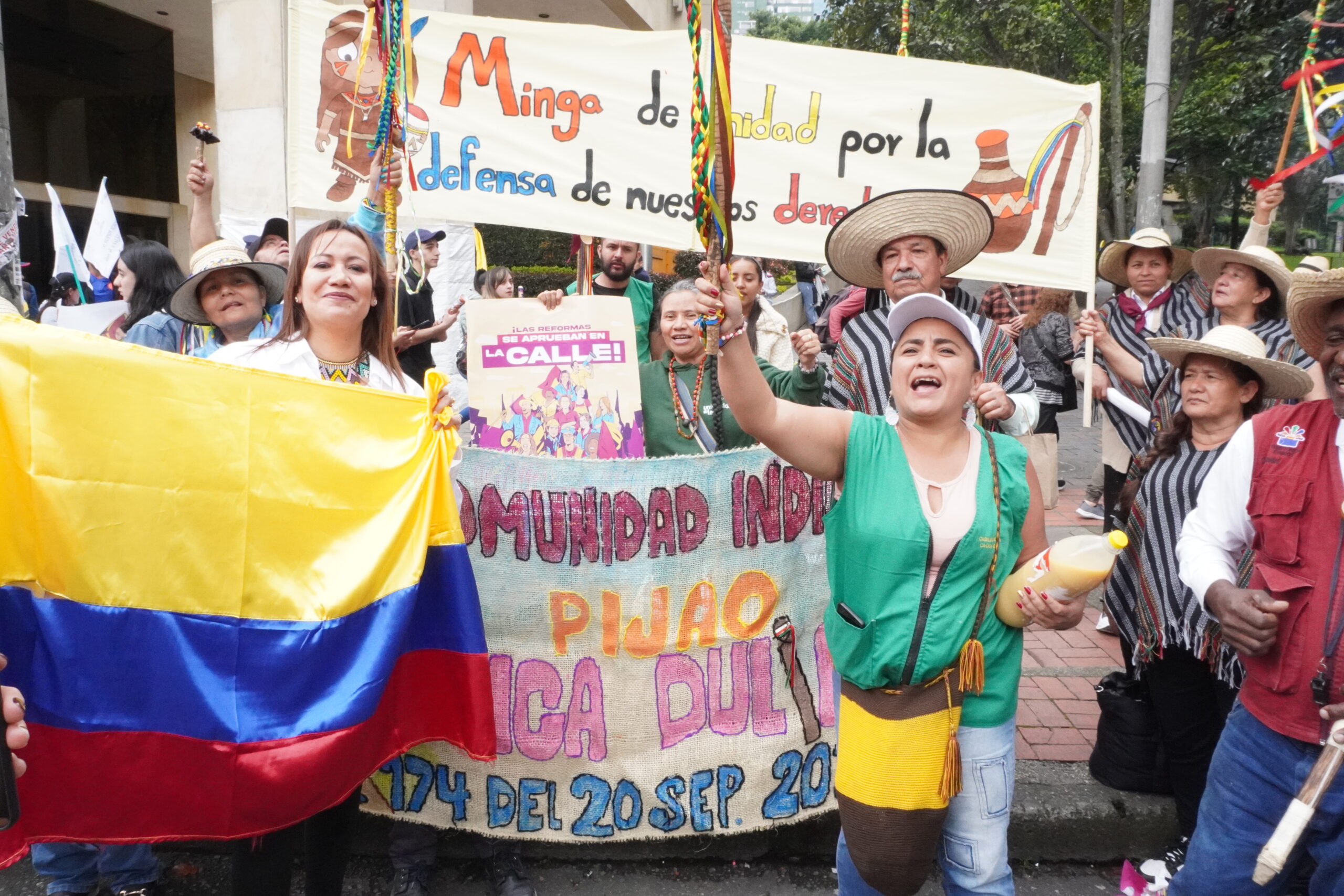
Given the continuous blockages and obstacles posed by the Congress to the government’s proposed reforms – health, tax, labour, and others – the president called for the establishment of an Open Town Hall to initiate deliberations over the Popular Consultation and the social reforms in Community Action Boards, Local Action Boards, municipalities, and clearly also abroad – at the Consulates.
On 20 July 2025, the government will resubmit the People’s Consultation on the labour reform and will also include a question on health. This is the president’s response to the institutional gridlock and the crisis of representation in the Congress of the Republic, which must be resolved in 2026.
*Teresa Galindo: International journalist, correspondent for The Prisma in Paris, France.
(Translated by Rene Phelvin – Email: renephelvin@gmail.com) – Photos provided by Carolina Corcho Mejía’s Press Office and authorized for free publication)










.jpg)












