
Between urban redevelopment and rising property pressure, an independent bookshop keeps alive a tradition of radical thought in London. Its presence recalls pacifist, anarchist and left-wing movements that shaped the city’s political history. (The Prisma memories)
 Steve Latham
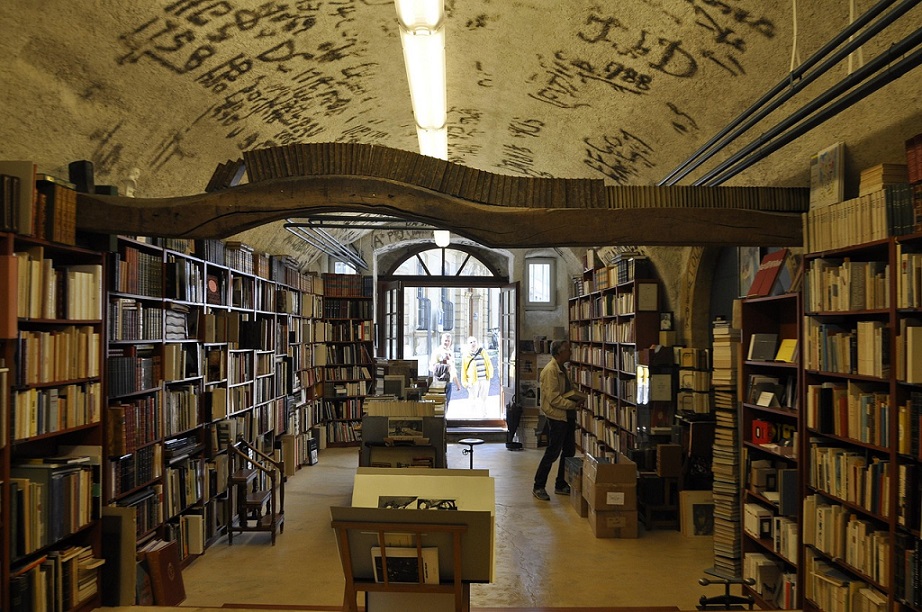
“Housmans bookshop” is a strange delight, among the now affluent, ‘regenerated’, shop fronts around King’s Cross.
Together with Bookmarks, it is one of the few remaining radical book stores left in London. The ravages of property prices, together with the decline in the left-wing market, put paid to them all.
Housmans has provided a resource for generations of indigenous London lefties, as well as a nurturing soil for incoming students and drifters, avid to learn about an alternative politics. Originally set up elsewhere in central London in 1945, the shop moved to the present site in 1958. It is owned by Peace News, and was established to support peace issues with the Peace Pledge Union. Despite its overt support of pacifist causes, Housmans is, unlike Bookmarks, unaffiliated to any particular ideological tendency.
Instead, the store sells books from an eclectic mix of various left-wing perspectives, plus an array of pamphlets, periodicals and magazines from a bewildering assortment of radical sectarian groupies.
 Nevertheless, this radical emporium seems to concentrate on the arcane strands of anarchist, situationist, and dissident communist publications, unavailable in mainline book stores.
In this, Housman’s is similar to, but perhaps with a wider selection, than Freedom book store in Whitechapel.
Being in the centre of the redevelopment of the King’s Cross area does, however, lend it a certain kudos; an ironic, satirical, presence.
While the neighbourhood was being supposedly ‘improved’, developers tried to buy them out, but were amazed at meeting people unaffected by the ploy of offering more money. I was told this at a conference by the guys from Housman’s, who laughed as they recounted that they had anyway received some money to brighten up the shop. Despite this injection of funds, the store has remained, as a slightly threadbare, lacklustre, challenge to the glitz going up around it.
Housmans is therefore an important witness to another way of seeing the world, sign that another world is still possible.
 Nevertheless, there is a sense that their best days are behind them: CND and the peace movement, hippies and the new left, punk anarchists.
The lightly elderly staff recount tales of the characters who used to live in the area, and led protest movements against previous attempts at regeneration.
As is usual with such attempts, the revitalisation schemes exist to benefit the rich, investors and incoming gentrifiers, not the existing local residents.
One group of protestors was the Railway Lands Group. But I remember attending one talk by an architect involved in the scheme, who even denied there had been any opposition. Airbrushed out of the official history, this is the fate of many opposition movements, which have failed to stop the march of apparent ‘progress’.
Their memories are kept alive, through a thousand mouldering booklets, as a historical resource for alternative ways of thinking. Some of the material on sale is unintelligible in its spurious philosophising. But it’s all a cheering sign that people have not yet given up. (The Prisma memories)
(Photos: Pixabay)










.jpg)












