
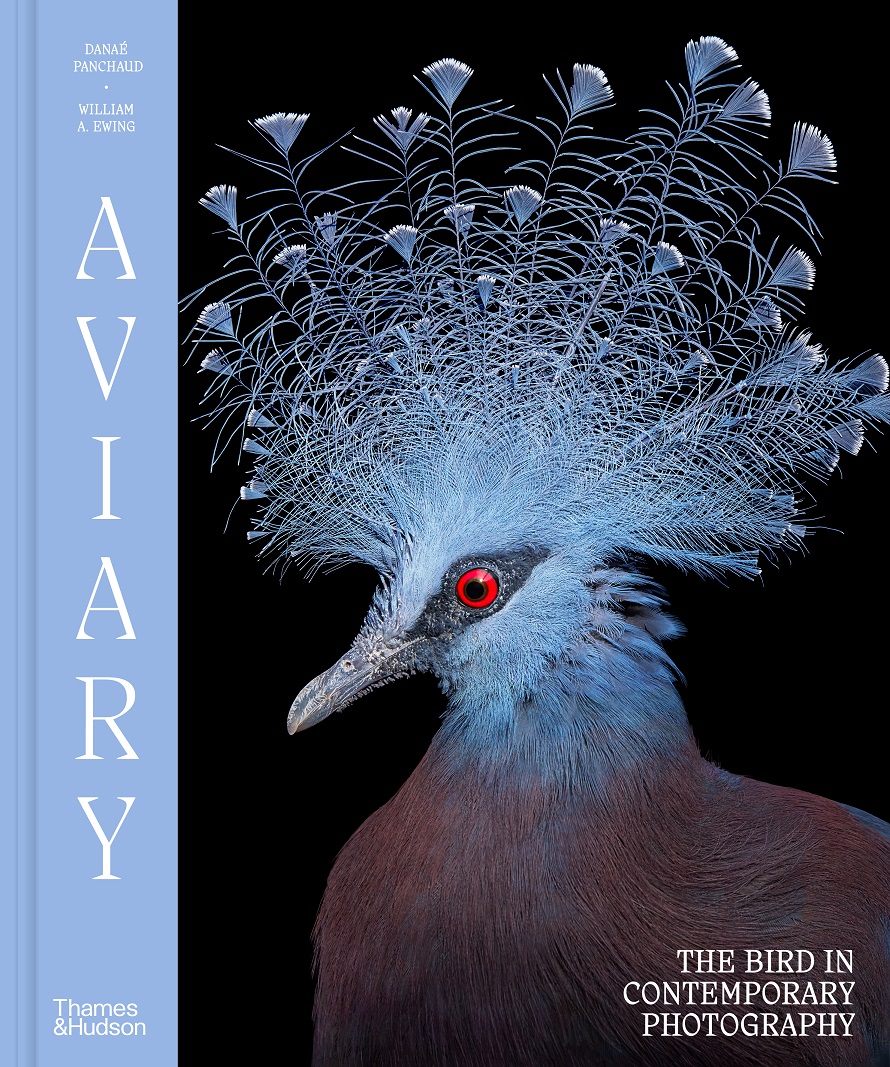
Bird photography took flight when limitations in the technology were overcome in the 21st century. The 200 photographs by more than fifty practitioners of the art that make up “Aviary: the bird in contemporary photography” bear astonishing testimony to what is n possible.
 Sean Sheehan
The book’s two editors deploy the concept of a theatre to rich effect. The opening chapter, “The curtain rises”, introduces the subject and what follows are six Acts and a Curtain call section. The Acts, each devoted to a different aspect of the life and representation of birds, invite viewers to observe what the editors correctly call a tragic love story. There is the fondness that comes from our fascination with denizens of the air and the tragic undertones arising from the presence of human interference in their world.
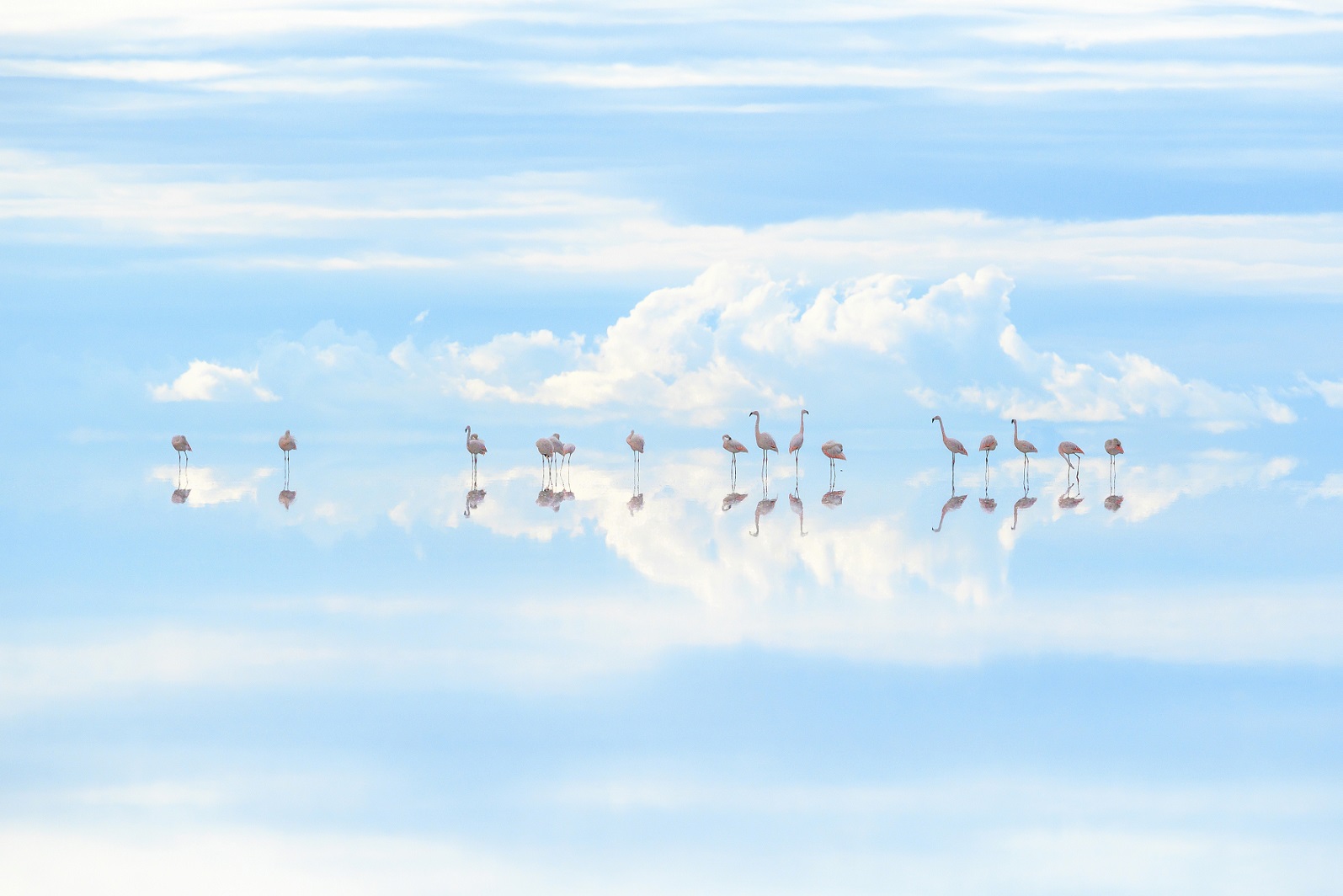
The bewitching serenity of a scene featuring flamingos is captured by Junji Takasago at a salt lake in Bolivia. Takasago writes of photography as ‘an encounter, created in the resonance between those who share the space and moment’ and he seeks to minimize his involvement by not making the birds aware of his presence.
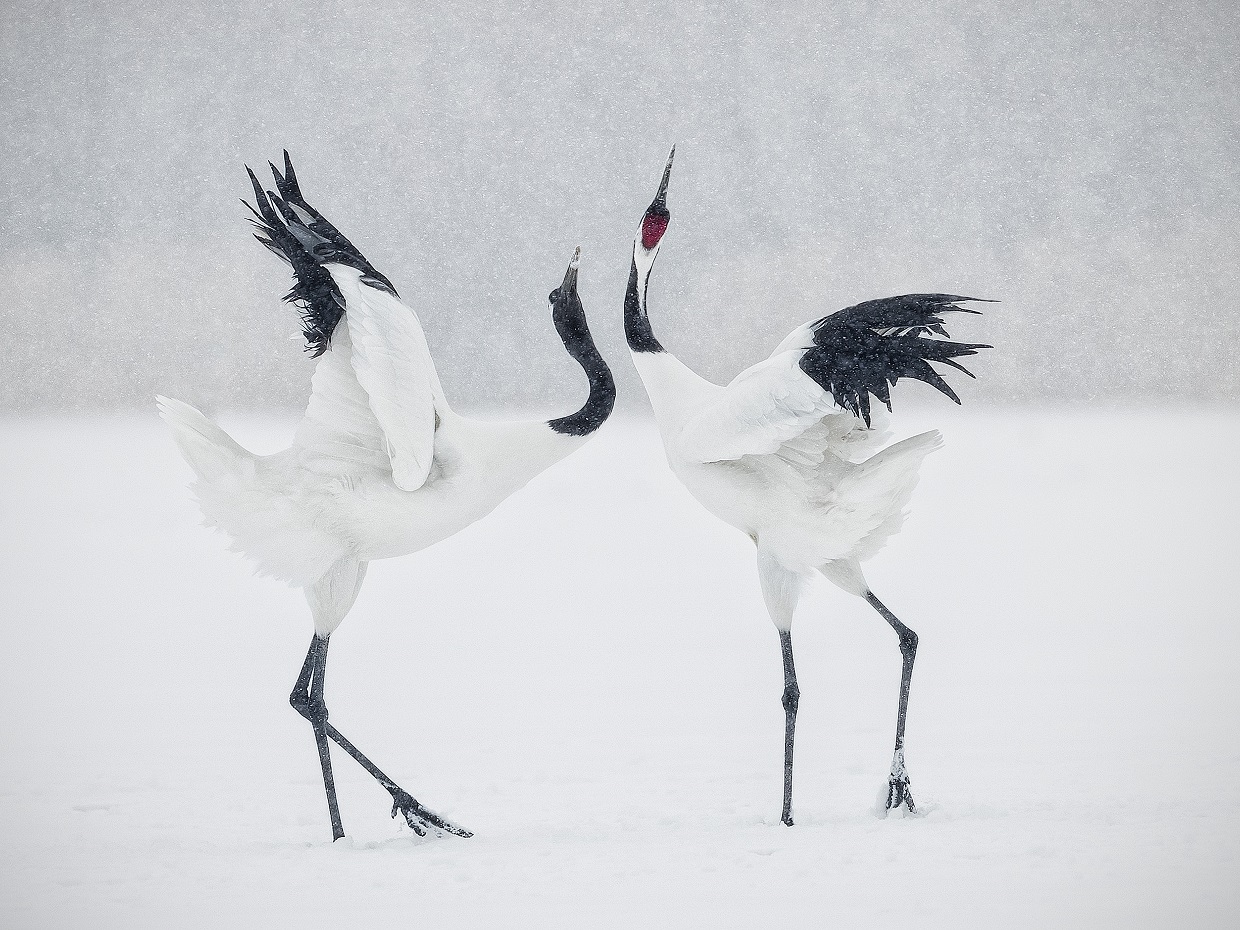
Mario Ceo is another photographer who follows the ethical code of wildlife photographers by not manipulating images with post-production digital techniques. The considerable technical skill this entails is on show in his spectacular shot of a kingfisher diving into water, taken with a slow shutter speed of 1/15th of a second, ‘combining, for the exposure, continuous light to capture the trail left by the bird with several flashes to freeze the flight’.
There is no post-production trickery and knowing this adds considerably to the power and beauty of the shot.
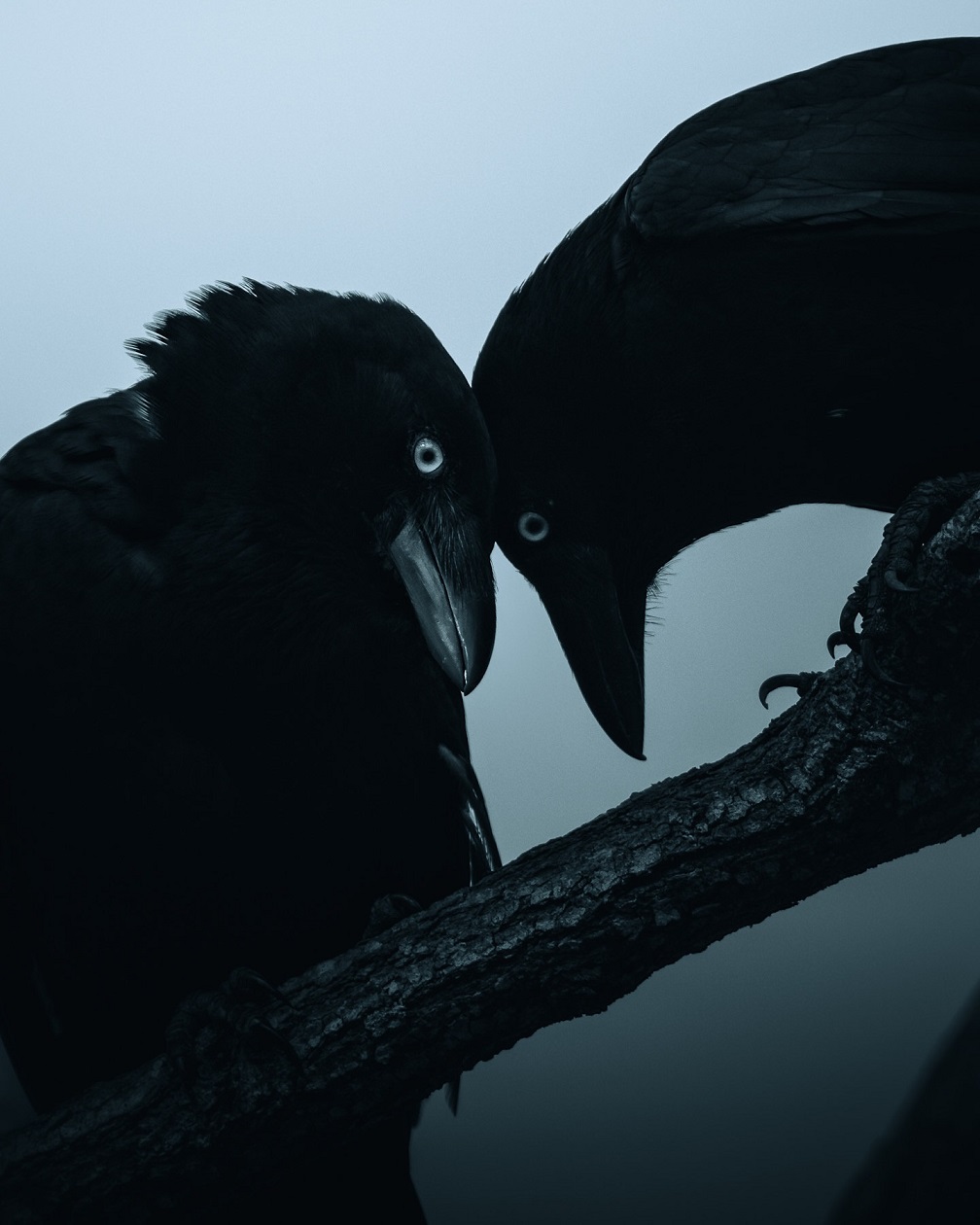
Unlike flamingos and white swans, crows are not the epitome of graceful elegance and the sight of them by the roadside and areas of rubbish does little to make them endearing. Christine Ward’s photo of two of them goes some way in improving their public image: “They were preening each other and were showing lots of affection towards one another”.
Humans are the problem for birds and Robert Walker is all too aware of this when he notes how one-third of all bird species will have disappeared by the end of the 21st century: “What wildlife will be left for future generations to admire and appreciate? Maybe only crude renditions of exotic animals like those on a fairground carousel or in a Disney theme park.”
“Aviary” is a beautifully designed book with ethereal compositions.
The editors’ intelligent text introduces the diverse fields where the visual theatre is played out – ornithology, documentary, art, fashion and portraiture – whilst fully aware of the fragility of many of the birds’ habitats and the dangers posed by human creatures. The attitude towards birds of shoot it, bag it, eat it or stuff it is not extinct. The prospect of extinction is reserved for birds.
“Aviary: the bird in contemporary photography”, edited by Danáe Panchaud and William E. Ewing, is published by Thames & Hudson.
(Photos supplied by the publisher)










.jpg)












