
Débora Arango is one of the most valuable painters in Colombian painting of the twentieth century. She is valuable because of the quality of her brushstroke, especially in watercolour: intense, agitated, and by no means fragile; as if she painted with wine and blood, not with water.
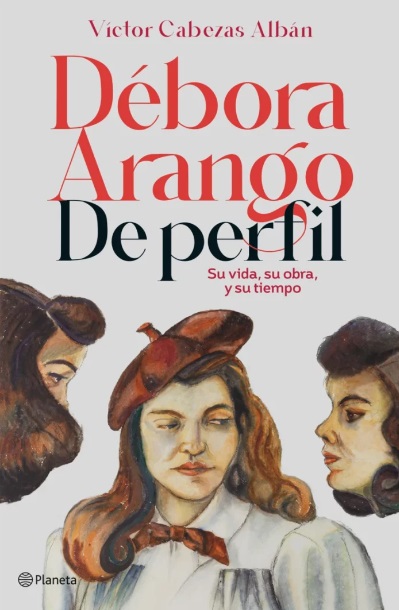
She is valuable because of her gaze on Colombian society: she observes it from very close up, touches it and smells it; she analyses it with intellectual distance; she arranges her characters in interrelated spaces where the causes and effects of their actions move the country’s history forward.Débora Arango de perfil. Su vida, su obra, y su tiempo” is a sui generis biography about the painter. Víctor Cabezas Albán, its author, acts as a researcher who follows her traces –whom he never met– and, above all, those of the characters who crossed her life.
Cabezas shows us sketches of the lives of the two artists who taught painting techniques to the young Débora in Medellín; the political leader Jorge Eliécer Gaitán and Amparo Jaramillo, who helped her to exhibit at the Teatro Colón in Bogotá. Several presidents of Colombia also appear in this work because they played important roles in either helping or hindering Débora’s trajectory.
The pages devoted to showing sketches from the lives of the German expressionist painters Käthe Kollwitz and Elfriede Lohse-Wächtler are necessary to understand Arango’s critical gaze. German social expressionism influenced Arango’s raw –and rather despairing– outlook, through which she recreates historical events in Colombia with the logic of a dramatist.
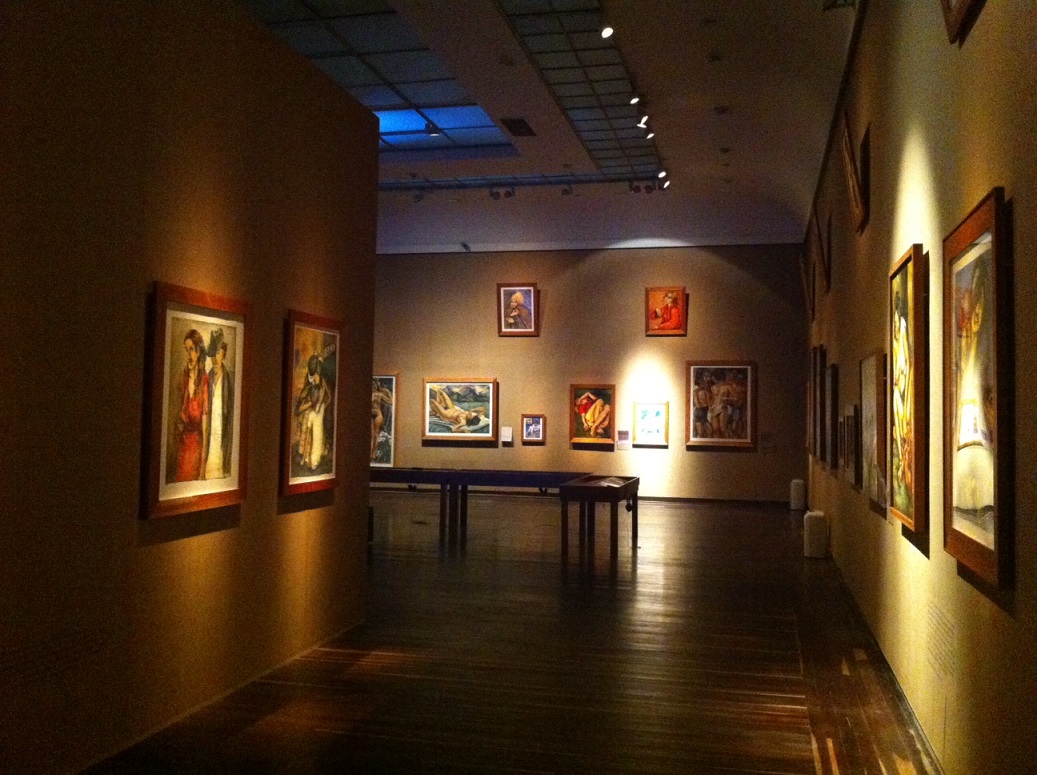
For example, in the painting where she depicts the Bogotazo –the popular uprising of 9 April 1948 that devastated much of the capital–: in the limited space of a church doorway we see anger and fear feeding off each other, as well as the sense of social injustice and hunger –although Débora never suffered it–.
At the end of the book there are photos of nine paintings. One that draws attention is “The Train of Death”. We see a train with freight wagons whose large doors stand open: inside there are dozens of corpses. Flashes of trains full of captives crossing Europe during the Second World War come to mind. However, Arango painted the work in 1948, weeks after the Bogotazo, based on a scene she saw in Puerto Berrío, on the banks of the Magdalena River. Cabezas has not discovered exactly what Arango saw. The biographer puts forward a hypothesis that I will not reveal here because of how disturbing it is. The train of history does not stop. Débora Arango withdrew from public life in 1955 and almost fell into oblivion. She took refuge on her Antioquian estate, where she continued painting until her death in 2004.

Since 1986, her work has experienced a gradual recovery both in the public imagination and in the art market. Regardless of her political preferences, today she is considered one of the great Colombian artists.
“Débora Arango de perfil. Su vida, su obra, y su tiempo”, by Víctor Cabezas Albán. Planeta Colombiana, 2025.
*Article and cover originally published in Frontera D.










.jpg)












