
The war in Iran is disrupting the global flow of crude oil. The blockade of the world’s main energy corridor causes drastic reduction in production in Iraq and other Gulf countries. With deposits saturating and ships avoiding the area, the markets register strong increases in crude oil and concern about global supply is growing.
The military conflict unleashed by the United States and Israel in the Middle East caused a sudden increase in fuel prices, with Brent – the reference in European markets – rising 30% last week and the prices of crude oil linked to the region exceeding the threshold of 100 dollars per barrel.
The United Arab Emirates and Kuwait have begun to reduce oil production, joining Iraq, which reduced its contributions by 60%, reflected the financial information company’s web, Bloomberg.
Other major crude oil producers could follow suit, as tanks fill up and oil tankers avoid passing through the Strait of Ormuz, the most important waterway for the world’s energy markets.
This also implies a rapid decrease in the number of empty ships available for loading, and once all the ships have been occupied, the remaining land reserves of the region will be filled more quickly.
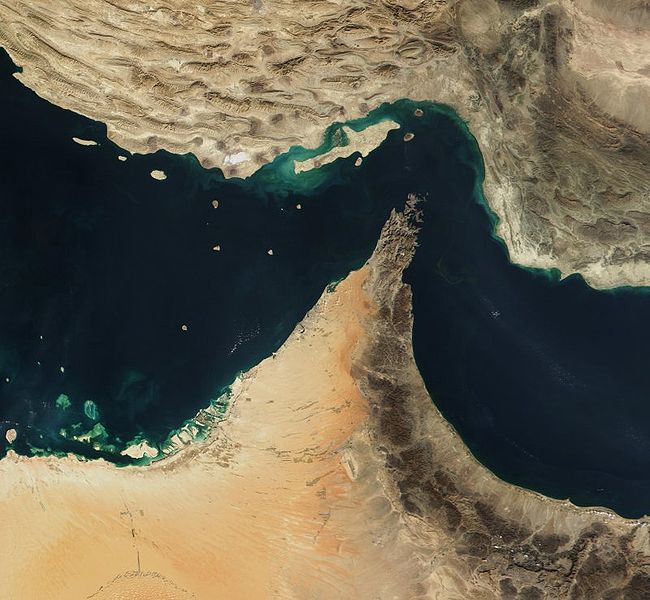
With no signs of imminent solution, the Strait of Hormuz, through which a fifth of the world’s oil normally passes, became impassable.
Saudi Arabia is diverting record amounts of crude oil via its Red Sea coastline for export, helping to ease some of the pressure.
 For analysts, executives and oil operators, there are increasingly strong warnings that the war will take crude oil to a critical point, bringing it closer to the psychological threshold of 100 dollars per barrel.
Brent, which already rose 30% last week, was only a few dollars from that brand, which is its biggest jump in six years.
Murban crude futures, Abu Dhabi’s benchmark, closed at $103 per barrel on Friday, while Oman’s crude oil stood at $107.
Likewise, Chinese crude oil futures on the Shanghai International Energy Exchange closed at $109.
Meanwhile, the effective closure of the Strait of Hormuz has caused Iraq’s pumping to be reduced to about 1.7 million barrels per day, compared to 4.3 million daily prior to the start of hostilities.
 Meanwhile, Saudi Arabia is sending unprecedented amounts to its Red Sea coast.
Saudi supplies from its western terminals have increased at a rate of 2.3 million barrels per day so far this month, according to ship tracking data compiled by Bloomberg.
Although that cargo represents 50% more than what the kingdom has sent from the Red Sea in any month since the end of 2016, it is well below the six million daily barrels it exported from the Persian Gulf in recent months.
In Japan, which obtains more than 90% of its crude oil from the region, refineries are asking to appeal to national oil reserves.
Countries such as China reduce fuel exports to preserve supply and keep domestic prices under control. South Korea is considering setting an oil price cap for the first time in 30 years, according to government officials. PL
(Translated by Susan Seccombe) – Photos: Pixabay










.jpg)












