
Hard power deploys brute force or makes manifest its capacity and willingness to do so. The soft power of storytelling does not command and coerce in this way but exerts its own form of dominance through its ability to script a particular perspective.
 Sean Sheehan
Through the control of mainstream media and platforms, right-wing ideologies are more successful storytellers than emancipatory ones.
Challenging this hegemony calls for convincing stories capable of forging alternatives to the xenophobic and neoliberal myths that colonize unsuspecting minds.
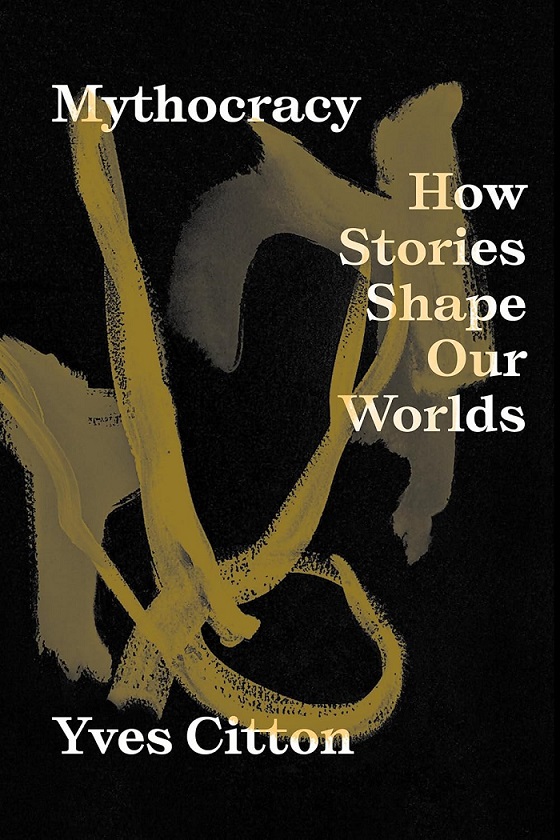
This is the essence of Yves Citton’s book as he seeks to show how feelings and beliefs are channelled to structure perceptions of our world.
Stories about ‘foreigners’ as sexual predators, for instance, induce anxiety about personal security and susceptibility to law-and-order rhetoric and ones about ‘welfare scroungers’ are another example.
Narratives like these are circulated and recycled and they shape reality through the affective potency of, respectively, fear and resentment. Actual crime, welfare and income inequality statistics would undermine such a ‘reality’ were they presented with a similar level of consistency. Basic to the ruling mythocracy is the drip feed of stories about celebrities’ lives and other mindless trivia that passes for news
The strength and the weakness of “Mythocracy” lies in its presentation of alternative storytellings.

It persuasively turns the reader’s attention to a relatively unread work of fiction, Denis Diderot’s Jacques the Fatalist and His Master, references a group of writers under the collective name of Wu Ming and evokes the jazz music of Sun Ra as an antidote to right-wing scripts.
The author also draws attention to how mythocracy works at a micro verbal level: what, he asks, is this food on my plate – “Beef? A pound of flash hacked off the body of an animal?” The soft power of name-giving was used effectively against Jeremy Corbyn by relentlessly associating him with anti-Semitism despite its patent ludicrousness – a tactic surreally resurrected during the run-up to recent council elections in Britain with attempts to smear the Jewish leader of the Green Party, Zack Polanski, with the same patently false accusation.
“Mythocracy” is sometimes weakened by a dryly academic style that relies too heavily on literary exemplars for challenging reactionary myths. This is despite the book’s grounding in the uncomfortable fact that “we are all born suckers. Certain political myths operate as pacifiers: their primary effect is to shut our mouth… incapable of nourishing our real needs in the longer term”.
 The ultimate counter-script to right-wing mythmaking is the power of material resistance that can be both hard and soft at the same time: witness the political power of words when thousands of people are arrested in the UK for holding pieces of cardboard reading ‘I oppose genocide. I support Palestine Action’.
“Mythocracy”, by Yves Citton, is published by Verso.










.jpg)












