
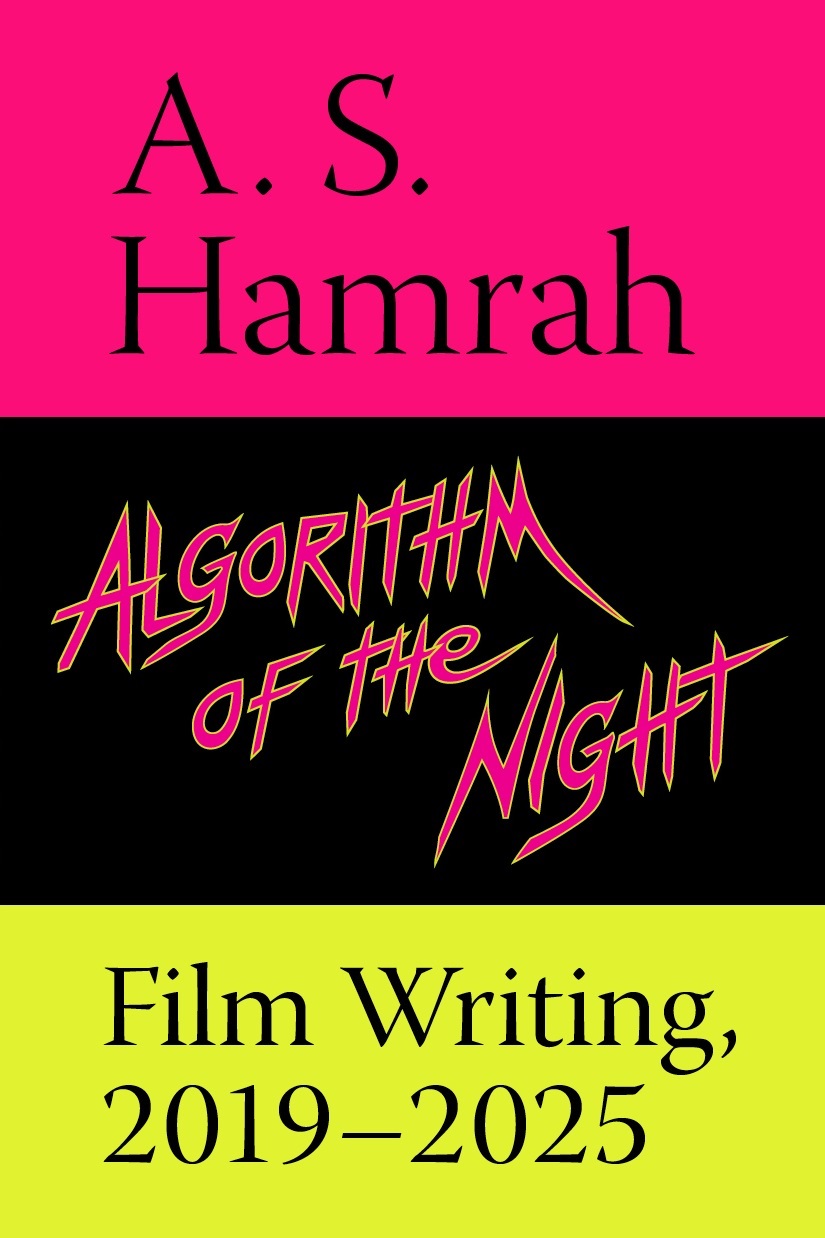
Mainstream film criticism, an unappetizing stew of the shallow and the impressionistic, is in dire straits. An honourable exception is A. S. Hamrah and the latest collection of his reviews, “Algorithm of the night: Film writing, 2019-2025”, is warmly welcomed.

Sean Sheehan
Part of the problem, of course, is the paucity of movies worth writing about and the situation becomes even more perilous as the tsunami of mediocre television films and mini-series generates even more poverty-stricken critical comment.
TV reviews in The Guardian newspaper, with their inverse relationship between a review’s quality and its hyperbolic, click-bait title, are particularly deplorable in this respect.
Hamrah rightly rails against the herd mentality-appeal of Rotten Tomatoes and calls out films that are blatant bosh but he does so with dry humour: Brian De Palma’s Domino ‘takes place in Copenhagen, where police detectives speak English and used to be in Games of Thrones’.
 He can also be spot on when commedning outstanding films, as with his praise of Francis Ford Coppola’s “The conversation” as “the coldest, most alienated Hollywood film from the post-1960s era of suspicion and anxiety, a time in American life when we first realized that ordinary discourse has to be decoded, that the unseen forces controlling our lives were sinister, and knowledge was fragmentary”.
Non-American films are often the ones that draw his praise, like Io Capitano and “La chimera”, and the birthday party in Bong Joon-ho’s Parasite is justly declared the best scene about killing the rich in recent cinema.
Characteristic of Hamrah’s writing are understated comments, slipped in alongside compact summaries of movies. He notes how the Colin Farrell character in “The Banshees of Inisherin” is driven to violence and how the sudden coldness of the Brendan Glesson’s character, the cause of his discontent, is also a form of violence. Hamrah does not, however, link the film to Ireland’s civil war which, being far more than mere background setting, is the key to what the film is about.
Three films from the Martin Scorsese stable are reviewed by Hamrah but for the cinephiles the full monty on this auteur is to be found in the compendium “Martin Scorsese all the films”.
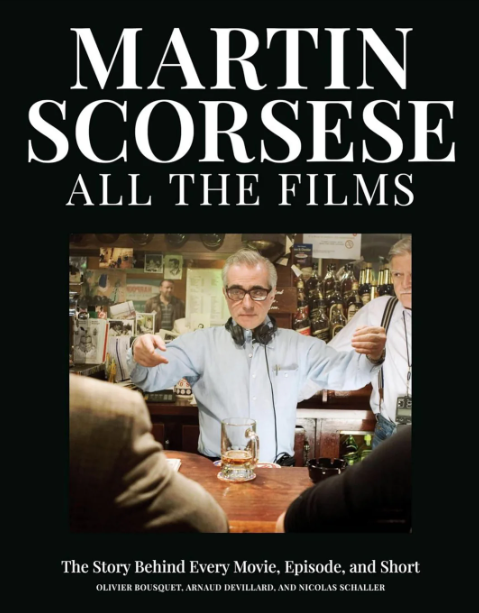 Amounting to nearly 500 pages and packed with a tremendously engaging range of photographs and background information, readers may be surprised to learn from it that only a quarter of Scorsese’s 26 feature films are devoted to the gangster genre; and this is not counting the 17 documentaries, seven shorts and four projects for TV he has also directed. The book’s impressive range of essays serve to confirm that Scorsese, notwithstanding the male bias in his films’ recurring themes, is a cinematic genius; contemporaries like Steven Spielberg and George Lucas trail far, far behind.
“Algorithm of the night: Film writing, 2019-2025” by A.S. Hamrah is published by n+1 Books. “Martin Scorsese all the films”, by Oliver Bousquet, Arnaud Devillard and Nicholas Schaller, is published by Black Dog & Leventhal Publishers.










.jpg)













