
The subject of this book is a security facility situated between Bethlehem and Jerusalem and known as Checkpoint 300. It is in the West Bank, the largest of the two Palestinian territories – the other being Gaza – and has been under Israeli occupation since 1967.
 Sean Sheehan
In his invaluable study of Checkpoint 300, Mark Griffiths, begins by describing its punitive machinery of control and intimidation: buildings, corridors, turnstiles, cameras, scanners and weapons.
At the receiving end of this ‘biopolitical management’ are the 87,000 Palestinians who have been granted permission to work in Jerusalem and Israel. (The legal border between Palestine and Israel is only two km to the north; East Jerusalem is part of the West Bank.) Palestinians not approved of by Israel – ‘non-docile’ as Griffiths puts it — are refused the special pass that allows transit through the checkpoint.
The checkpoint controls road traffic at a separate gate but West Bank Palestinians are restricted to gender-based, pedestrian access along a 30m-long concrete lane, with top halves of bars, and a button-controlled turnstile. Beyond this, another caged corridor leads Palestinians to an X-ray conveyor belt and, for those selected, a body scanner. Another turnstile has to be passed through after ID and fingerprint or facial recognition biometrics; a final, third turnstile accesses the Hebron Road that leads to Jerusalem.
A relatively small number of women have work passes and, like those needing to travel for other reasons – educational, medical or for family visits – have to use a separate lane. Only married men with at least one child have work passes and the effects of this gender control keep women at home and men, many awake since 2:00 or 3:00 A.M., at work and away from their families.
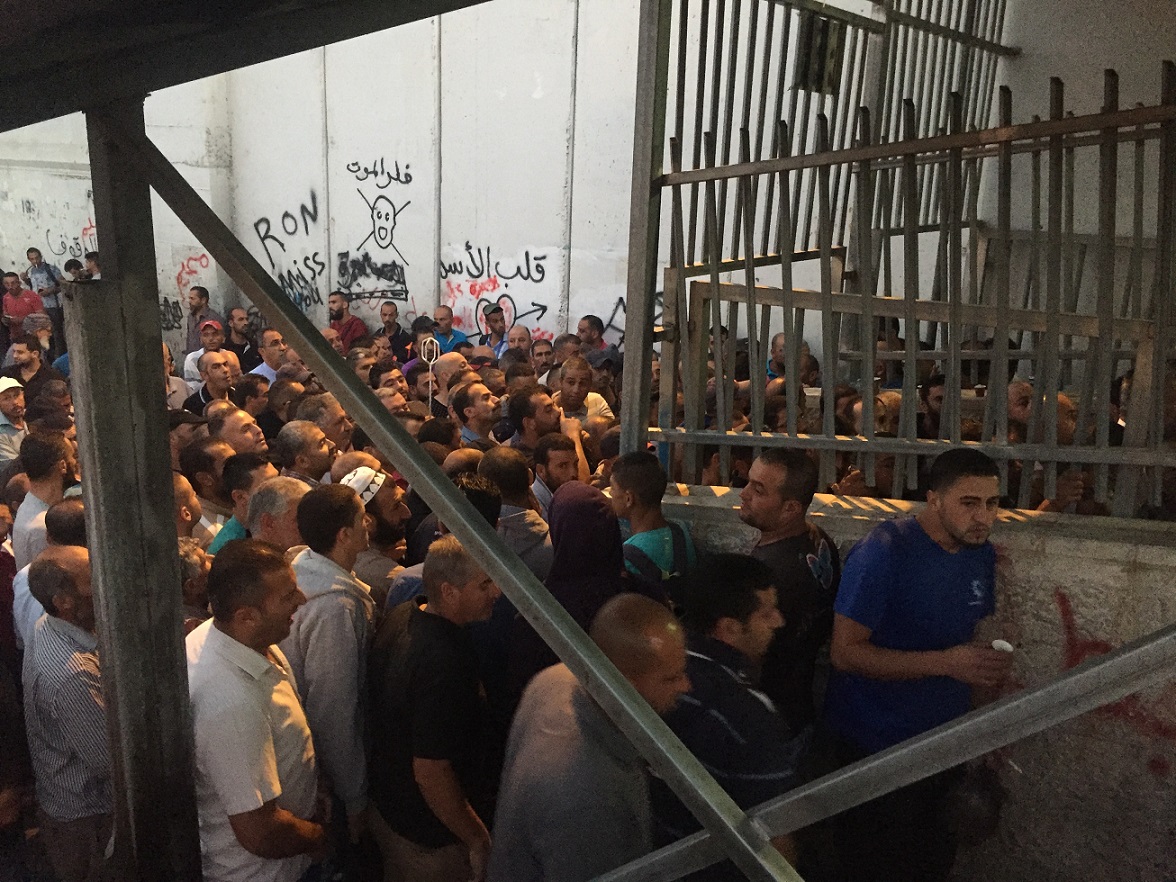
The effects on home dynamics and women’s lives are enormous and Griffiths sensitively recounts this aspect with human stories of what this involves.
Griffiths shows how the checkpoint, the keystone in the arch of Israel’s colonial control, impacts negatively on Palestinian life A fascinating chapter looks at Checkpoint 300’s impact on the Hebron Road, a story of land expropriation and ‘spatial apartheid’, followed by an account of the security technologies (including Elbit Systems) deployed by Israel.
Griffiths concludes his meticulous and vitally important study of West Bank life by looking at Palestinian resistance to the oppression. In the past, those rounded up by the Nazis and dispatched by train to Auschwitz underwent a selection process on arrival: those deemed worthy of work were directed to the many work factories that were an essential part of the Auschwitz complex; those judged of no use as forced labour were sent off for immediate murder in a gas chamber.
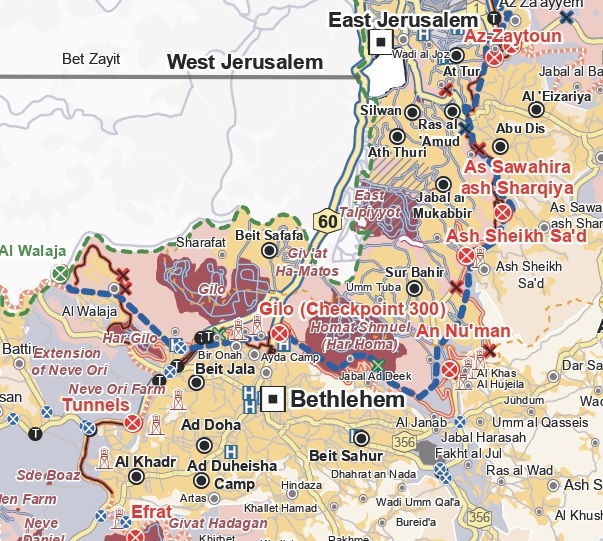
In the West Bank, those able to work are controlled and processed at places like Checkpoint 300.
In Gaza, where ethnic cleansing continues, Palestinians are killed in large numbers regardless of work ability; more than 75,000 since October 2023.
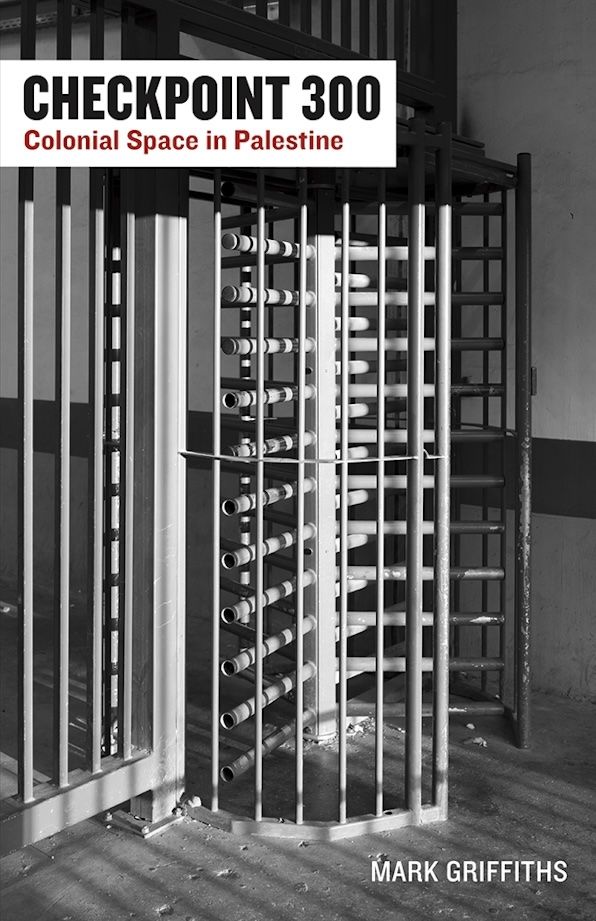
“Checkpoint 300: colonial space in Palestine” by Mark Griffiths is published by University of Minnesota Press.
(Images used with the permission of the publisher.)










.jpg)












