
New customs tariffs, disputes about digital regulation and questioning of sovereign decisions has widened tensions between the two countries. The South American nation has announced legal and diplomatic responses as it seeks to reduce the economic impact on its exports. Tariffs as a tool of economic policy.

Martha Andrés Román
The escalation happened on 22nd July when Washington began the application of an additional 25% tariff for thousands of Brazilian products after concluding an investigation carried out under section 301 of the United States Trade Act.
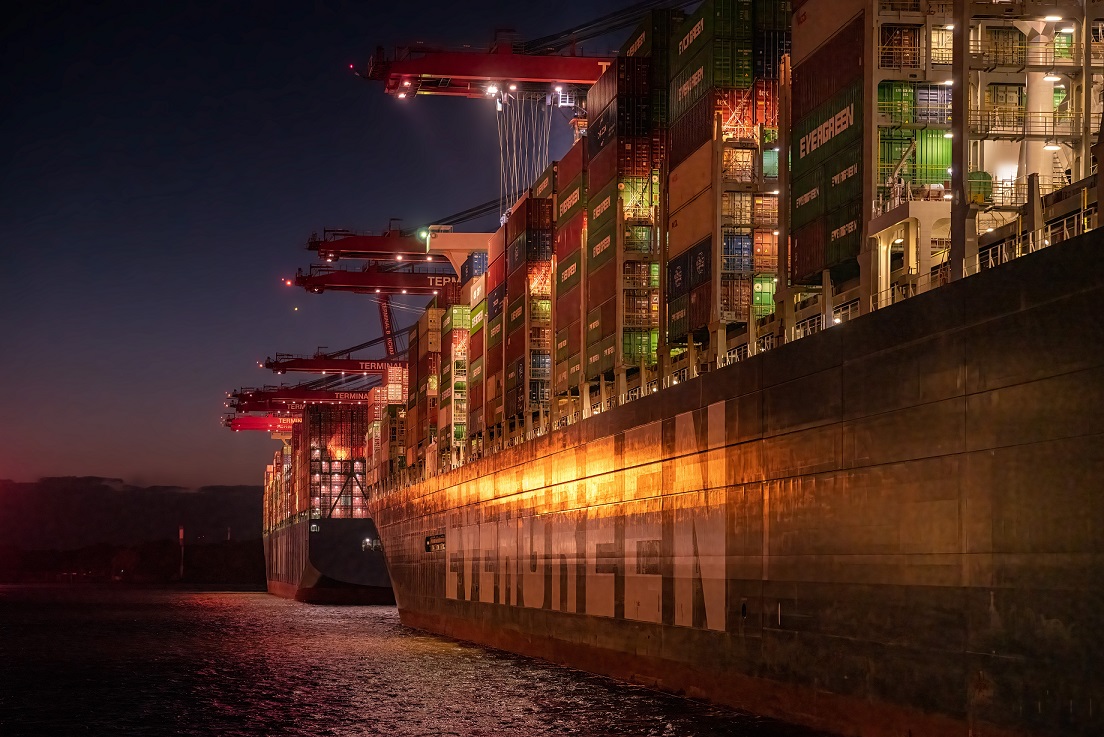
Barely two days later, the conflict took on a new dimension with the announcement of another 12.5% levy on some Brazilian exports based on the argument, rejected by Luiz Inácio Lula da Silva’s government, that Brazil does not adequately prevent the import of merchandise produced by forced labour. The combination of the two taxes means thousands of products face a total customs charge of 37.5% to enter the United States market, among the highest rates currently applied by Washington to one of its trade partners.
According to the National Confederation of Industry (CNI), quoted by Agencia Brasil, 3,985 Brazilian products have been subjected to this cumulative tariff, while another 75 will only pay the new 12.5% duty. Overall, the measures affect exports valued at some $12.4 billion.
The business organisation calculates that thousands of Brazilian products will be subject to some sort of additional tax, with greater impact seen in industrial sectors such as footwear, timber, machinery and sugar.
 It also stated that Brazilian legislation on forced labour is internationally recognised and does not warrant the United States’ government’s conclusions.
A timeline published on the portal G1 shows that the tariff structure applied to Brazil has become considerably more complex.
With the new measures in place, there are now completely tariff-free products, products taxed at 12.5%, or in some cases 25%, alongside thousands taxed at 37.5%. Some sectors, like steel and aluminium, continue to pay specific duties at 50%.
In the view of specialists consulted by the news outlet, the result is a much more difficult scenario for Brazilian exporters who are forced to individually verify the tax treatment of every product before it enters the United States market, increasing uncertainty and costs for businesses.
Washington extends its offensive
This is not limited to the trade of goods. The same day the 12.5% surcharge was announced, twenty Republican members of congress requested the Office of the United States Trade Representative adopt new measures to pressure Brazil over a legislative proposal to regulate digital markets.
 According to SBT News, the initiative questions bill 4.675/2025 which extends the competencies of the Administrative Council of Economic Defence to act against the anticompetitive practices of large technological platforms, along similar lines to regulation adopted by the European Union.
If the congress members’ claim prospers, the dispute between the two countries would spread to the regulatory and technological spheres, making Brazilian legislation on digital platforms a new point of friction. Previously, United States criticism had reached the Pix payment system as well as other aspects of Brazilian economic policy. Various recent analyses coincide in indicating that the Trump administration’s offensive is difficult to explain solely on the basis of trade balance.
A report published by the G1 portal noted that the United States has had a trade surplus with Brazil for decades, both for goods and services, a situation that contradicts the traditional argument used to justify barriers intended to correct trade deficits.
Professor Cristina Pecequilo, of the São Paulo Federal University, told G1 the trade tensions also reflect the level of autonomy in foreign policy sought by Brazil.
 In her judgement, Trump’s executive is using trade as an instrument to exert pressure in areas related to the multilateral organisations and alliances that Brazil maintains with other emerging nations.
For his part, the economist Tomás Marques declared to G1 that the new tariffs are not intended to correct a non-existent trade deficit but to reorientate trade flows and strengthen the United States’ competitivity by using tariffs as a tool of policy.
Sovereignty at stake
The day the 25% tariff came into force, the Workers’ Party (PT) launched the national “Brazil does not give in” campaign, presented as a mobilisation in defence of sovereignty, jobs, the national economy and the country’s right to decide its own destiny without external interference.
Officialdom maintains that the United States’ pressure transcends trade and seeks to condition sovereign decisions on the country’s economic and technological development, something which is generating additional alarm given the proximity of October’s general election.
The government’s response has been vigorous: the executive announced that it would initiate procedures to activate the instruments foreseen in the Law of Economic Reciprocity and that it will invoke the World Trade Organisation’s conflict resolution mechanism.
 Lula’s administration considers the United States’ measures to be arbitrary, lacking adequate legal foundation and based on arguments outside the norms of international trade.
At the same time, official strategy combines diplomatic dialogue with actions to support affected businesses and searches for alternative markets to reduce the dependence on the United States market.
On 24th July, during a visit to the company Avibras in the state of São Paulo, Lula reinforced the narrative of defence of national sovereignty, affirming that Brazil must keep its armed forces prepared in terms of armaments, scientific knowledge and technology to guarantee that “nobody sticks their nose into this country”.
In addition, the leader indicated that the nation possesses strategic assets like the Amazon, critical minerals and reserves of rare earths that reinforce the country’s geopolitical importance and make it essential to preserve the national capacity to decide on their exploitation.
The hardening of trade tensions has confirmed, according to various analyses published in the Brazilian press, that the bilateral relationship is going through a phase of growing complexity. Beyond the immediate effects on commercial exchange, the succession of measures and counterproposals shows that the dispute between Brazil and the United States has acquired a wider geopolitical dimension. PL
(Translated by Philip Walker – Email: philipwalkertranslation@gmail.com) – Photos: Pixabay










.jpg)












