
The majority of new recruitments are still temporary, while specialists and unions maintain that the challenge lies not just in creating positions, but in guaranteeing stability, sufficient income, and employment protection.
 The generation of quality employment continues to be one of the main challenges today for the Panamanian Government, in the midst of a debate about the effectiveness of public policies to reduce the high proportion of temporary and informal contracts.
Although the Government declared that the economy is maintaining a growth rate around 4%, and it has reiterated its goal of reducing unemployment to one digit, specialists, union leaders and business owners are warning that the main issue is not just the quantity of roles created, but their stability and capacity to provide sufficient income. The most recent statistics from the National Institute of Statistics and Censuses (INEC), in affiliation with the Comptroller General of the Republic, reflect that 141,595 job contracts were registered between January and May.
Nevertheless, 77% of those are fixed-term contracts or for a specific service, while only 32,627, just 23%, were ongoing.
Comparison with the same period of 2024 shows a similar trend. Of the 115,307 contracts registered at that time, 75% were temporary and barely 25% were permanent, which shows that the job market continues to favour short-term methods of hiring.
 These signs are especially relevant when the official unemployment rate remains at 10.4%, according to the latest measurement made public by the INEC; a figure that even exceeds the previous levels of the Covid-19 pandemic and keeps Panama among the countries with the greatest workforce challenges in Central America.
The economist, Luis Alberto Morán, believes that unemployment continues to be one of the population’s main concerns and indicated that a large proportion of these new positions are precarious or informal jobs, associated with the need to generate more income rather than a sustained recovery of the job market.
President José Raúl Mulino recently stated that the unemployment rate decreased by approximately one percentage point, a statement based on preliminary data from the Ministry of Labour and Workforce Development (Mitradel), whose official results are yet to be published by the INEC.
The head of that ministry, Jackeline Muñoz, reported that during the first six months of the year, 174,383 new contracts were created: a 22% increase on the previous six months.
 Of this total, around 41,000 are indefinite contracts, a higher figure than the average recorded between 2022-2026 for the first five months of each year.
Despite that, experts call for a cautious interpretation of these statistics until they can be validated by official organisations and remind us that the number of contracts is not necessarily equivalent to the same quantity of workers hired, due to the frequent renewal of temporary contracts.
The Chair of the Economy Faculty at the University of Panama, Rolando Gordón, stressed that even if the country reaches the government’s goal to create 80,000 jobs this year, it could still not be enough to significantly reduce the unemployment rate, due to the growing number of young people and professionals who are joining the job market annually.
Informality is another of the main structural challenges of the Panamanian economy.
On the Isthmus of Panama, various economic studies estimate that more than 45% of those in employment are working in the informal sector, especially in commerce, transport, agriculture, or personal services; a situation exacerbated by the pandemic.
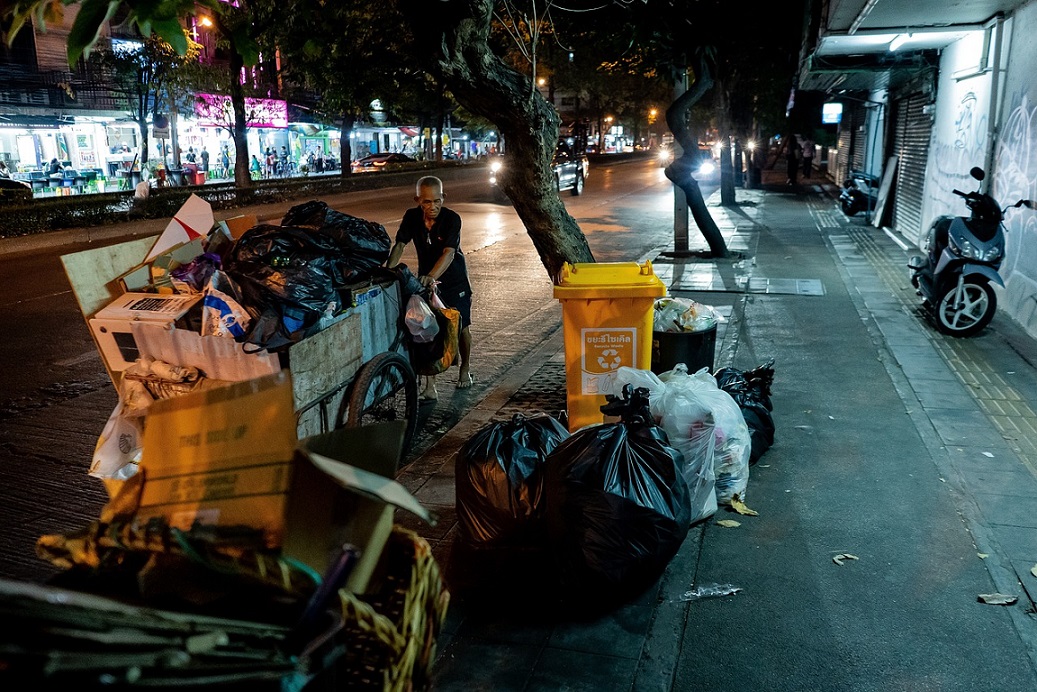 The agriculture and livestock industry specifically continues to be one of the biggest generators of employment outside the capital, despite only representing around 2% of the Gross Domestic Product.
The President of the National Union of Cattle Ranchers of Panama, Samuel Vernaza, explained that during the first six months of this year some hiring was in response to specific situations, among them the drought caused by the El Niño phenomenon, the rise of beef cattle slaughter and the additional jobs arising from the fight against New World screwworm in cattle. Within the labour movement, doubts remain about the real impact of the official figures. Director Nelva Reyes confirmed that the employment crisis “has not been resolved in society” and reminded us that in provinces like Bocas del Toro, redundancies are continuing, especially in the banana production market. PL
(Translated by Donna Davison – Email: donna_davison@hotmail.com) – Photos: Pixabay










.jpg)












