
The Argentinian government is preparing its territorial and parliamentary strategy with its eyes fixed on the 2027 election. But the fall in support among young people, growing rejection from women and the effects of the economic adjustment throw doubts over the government’s ability to recover lost support.
 Martin Hacthoun
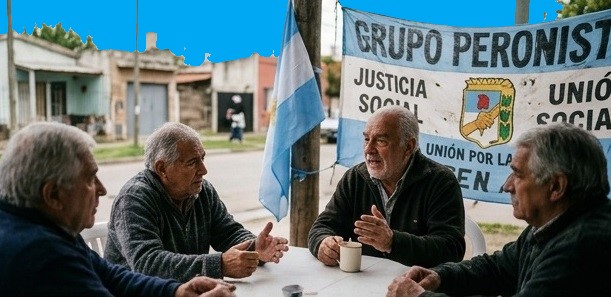
For Mileism, the manoeuvre by lawyers acting for Cristina Fernández, who is serving six years under house arrest and is banned from holding public office for life, to present her conviction over the Vialidad corruption case as illegitimate and the product of political persecution to the UN Human Rights Council, risks degrading Peronism, according to an article in the Perfil newspaper.
For the libertarians, Cristina Fernández de Kirchner’s legal movements before the UN and the calls from her staunchest supporters for her to be a presidential candidate, are more to do with political posturing than a strategy with specific possibilities since they see any resolution from the international body as non-binding for Argentinian justice.
In other words, if the UN body’s decision is favourable to the former dignitary, its effect will be more symbolic than practical.
In contrast, her defenders, who have been joined by the Brazilian lawyer Rafael Valim, who has experience in the strategy that achieved freedom for Luiz Inácio Lula da Silva, and the Spaniard Javier Borrego, a former European Court of Human Rights judge, consider it a vital technical and legal step.
They maintain that there were serious violations of constitutional guarantees, of due process and of the right to defence in the case and the conviction. They state that as president of the nation at the time, she did not have criminal responsibility over the administrative contracts in question, and that therefore the court’s decision is not valid.
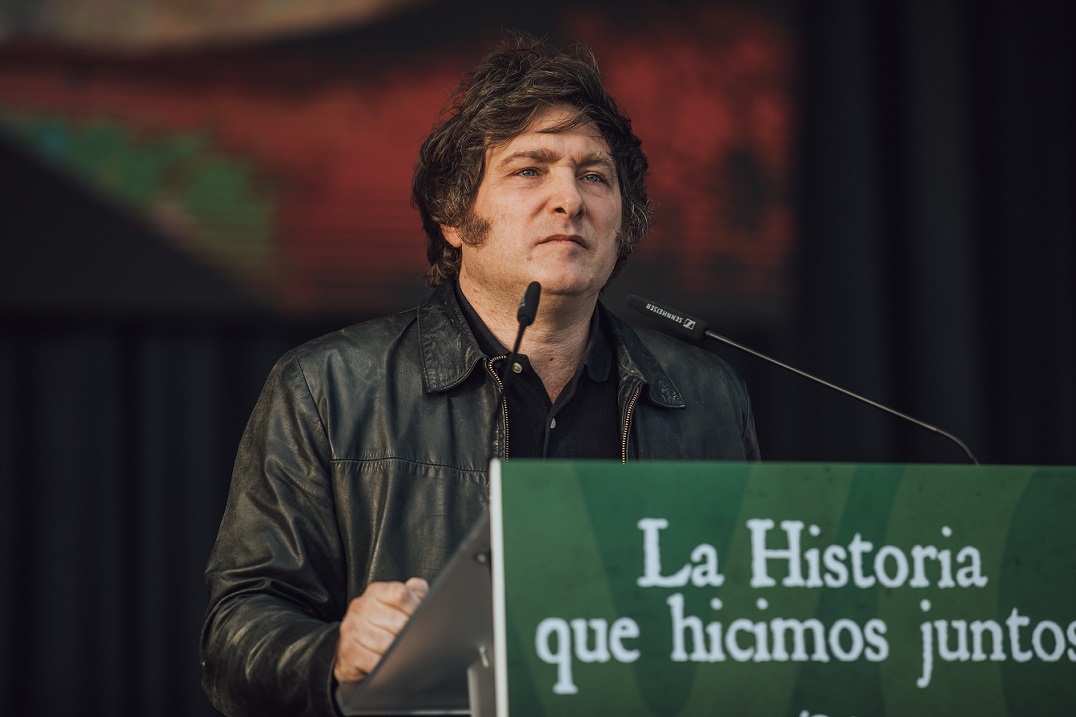
But a government civil servant told Perfil that the coalition La Libertad Avanza’s main worry at present is not the external rival that they see as broken but their government’s management itself. In their opinion, if they do things well, Milei will be re-elected.
Following the defeat in the senate that put paid to her proposal to put Argentinian land in foreign hands and turn over burnt forestry land to private use, projects openly favoured by President Donald Trump, the political committee led by Karina Milei in the Casa Rosada redefined the parliamentary agenda for the coming weeks and months so it would cause the LLA the least difficulty and risk.
The main thing the libertarians are aiming for is the suspension of the Open, Simultaneous and Compulsory Primary elections, better known as PASO. Historically, these contests have helped the diverse Peronist movement, Argentina’s main political force, on its electoral trajectory, unite around a pair of candidates. This explains the government’s insistence on eliminating these contests through a reform of the Electoral Law. It failed once before the winter holiday.
While kirchnerism pursues its judicial strategy and there is no solution for the moment to the internal cracks within Peronism, the leadership of the libertarians is advancing in parallel with territorial construction with a view to 2027.
Karina Milei is deepening the web of alliances in the interior, with the province of Buenos Aires being one of the districts where the government seeks to consolidate a competitive stronghold.
 Milei and his band of heavenly forces are facing other problems: they are not managing to kick start the real economy, the economy felt by the common people, and their image is in freefall. The latest survey by the consultancy Latam Plus revealed very worrying data for the Casa Rosada’s current tenants: the loss of support among the youngest members of the electorate.
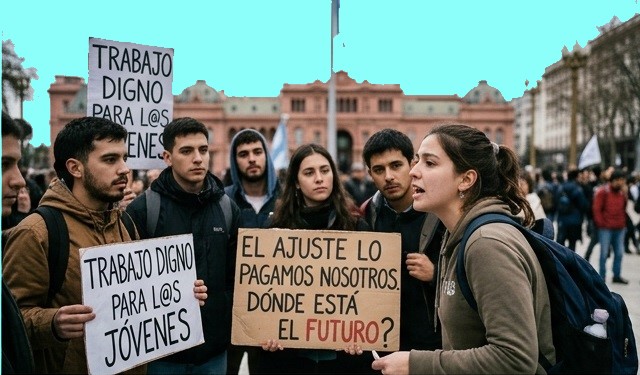
76% of young people aged 16-24 disapprove of the president’s performance. Four recent polls coincide in this strong disenchantment among young people. Some studies even indicate the government’s greatest level of rejection today is found among the young, a key data point because they were La Libertad Avanza’s most solid electoral base in 2023.
The consultants detected that this disillusionment is closely linked to the impact of the economic adjustment, since Milei’s approval rating plummeted more in households that had suffered a decrease in consumption and among the ranks of lower-income workers.
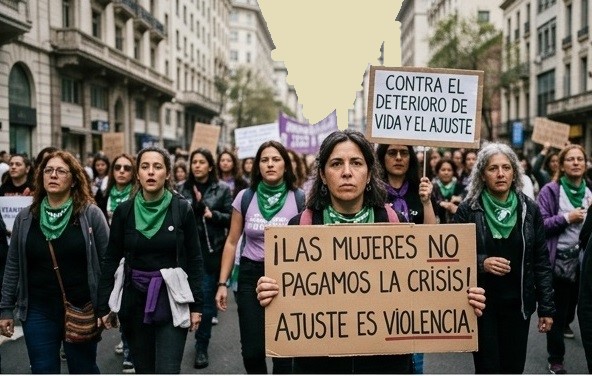
Now young people are being hit hard by unemployment and job insecurity and have become disillusioned with the government’s policies. Women’s rejection of the libertarian leader is also deepening, consistently more so than that of males. That is to say, Milei’s advantage among males is decreasing, the polls noted.
 In a hypothetical political fight, if it came about, between Milei and the governor of the province of Buenos Aires, Axel Kicillof, seen by parts of society as a possible presidential candidate in 2027, the provincial leader is ahead of the president in 21 of the 24 municipalities analysed in that electoral district, the largest and most important in the country.
According to the survey, Milei would only win in San Isidro, Vicente López and Tigre. There is still more than a year until the election, although these results allow an evaluation of the public mood and of how the political stage is being set in the country’s principal electoral district. On a national level, the numbers don’t favour him either. Gustavo Córdoba, owner of the Zuban-Córdoba consultancy, was uncompromising when he was interviewed on the evening programme Minuto Uno, on the C5N news channel: a government’s re-election is always a plebiscite on its own management, not on the opposition, he said.
“And the numbers today speak for themselves: 63.5% disapprove of the LLA government’s management; 61% have a negative impression of the president, and over 60% of Argentinians want a change of party in the national government.”
The specialist highlights that the analysis points to four key variables that will define the electoral panorama: the dollar, real inflation versus the official rate, the fragmentation of the opposition and – the most decisive factor – the recovery of spending power.
The last one is key: if Milei and his executive team do not manage to improve families’ incomes and with it Argentinians’ spending power in what remains of their term, their cards will be a losing hand. PL
(Translated by Philip Walker – Email: philipwalkertranslation@gmail.com) – Images generated by Gemini AI










.jpg)












