
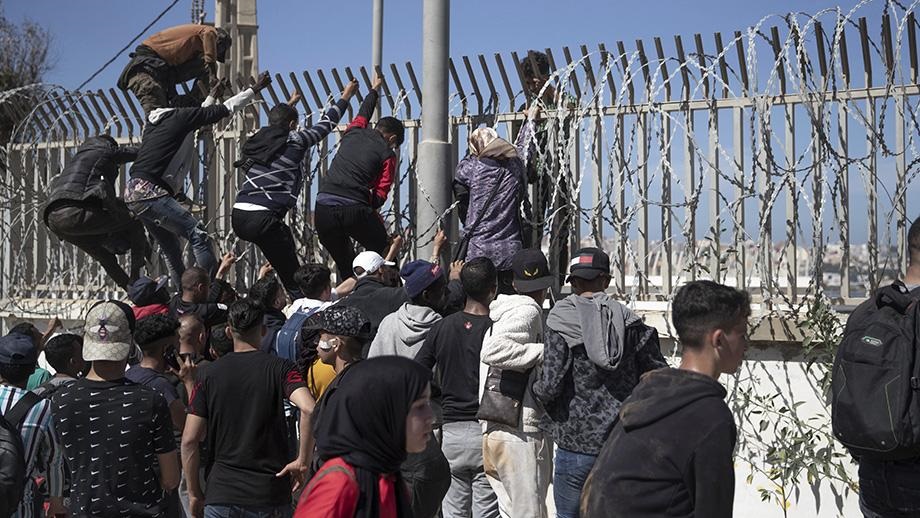
It has been a month since Ceuta), Spain’s autonomous city in North Africa, became the scene of a migration crisis when up to 80,000 people from Morocco entered irregularly. This crisis, which appears to have no solution, also became a furious political tussle and, in the view of many, an attack on the left.
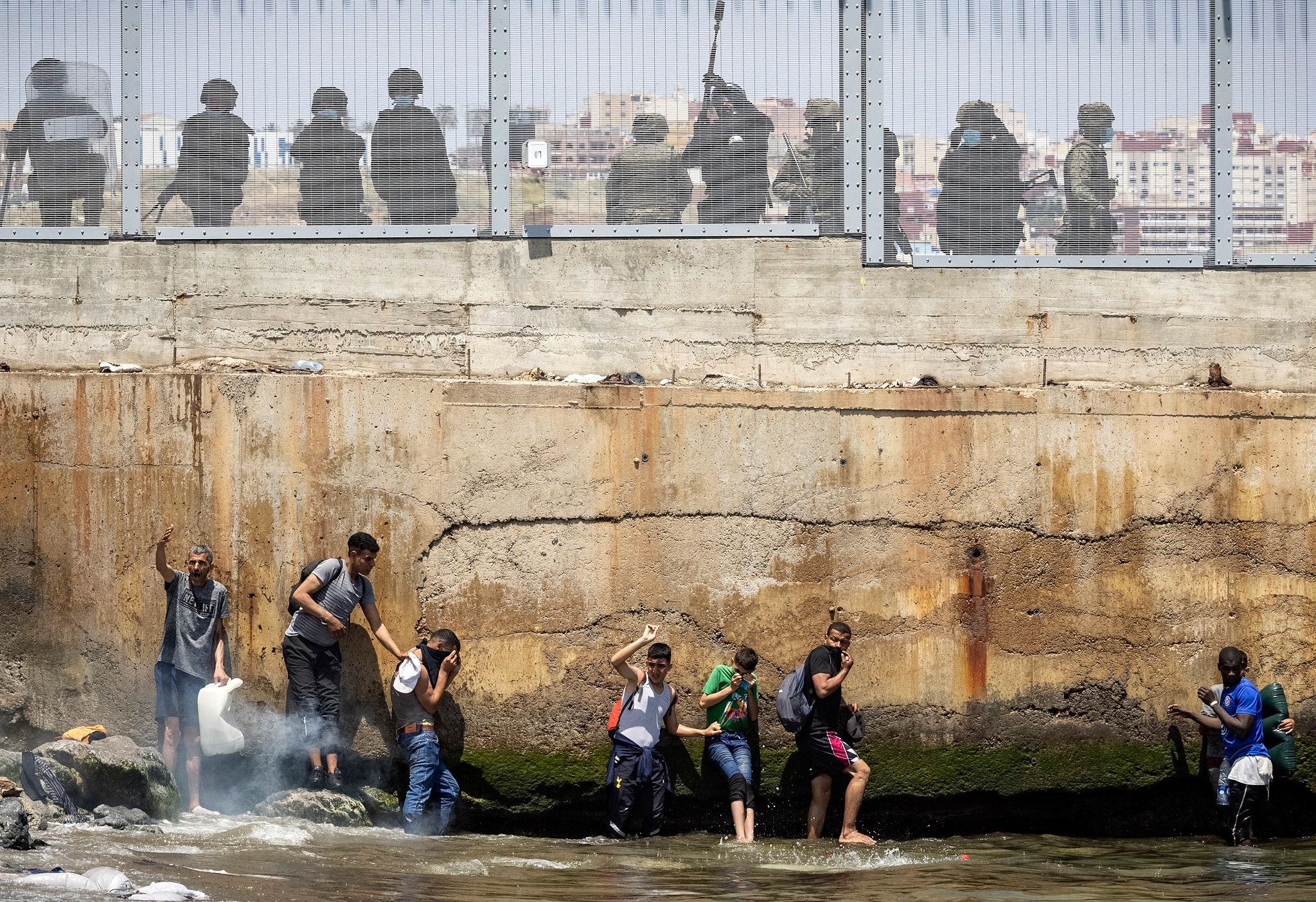 Although most were repatriated, several thousand remain in Spanish territory. But beyond that, several aspects have come to light that reinforce what in Spain are dubbed ‘conspiranoid’ theories.
The Prime Minister of Spain, Pedro Sánchez, has clashed with US President Donald Trump, particularly over the demand to increase military spending within NATO, but also over his alignment with the Palestinian cause and his promotion of a two-state solution with Israel.
Trump, as a close ally of Israeli Prime Minister Benjamin Netanyahu, also does not seem to tolerate Madrid’s measures against the Tel Aviv regime on certain fronts. In parallel, the Sánchez government decided to regularise migrants—more than half a million—who were already living and even working in Spain for some time, albeit without papers. Far-right governments, particularly European ones, Trump and other allies, attacked the Spanish initiative.
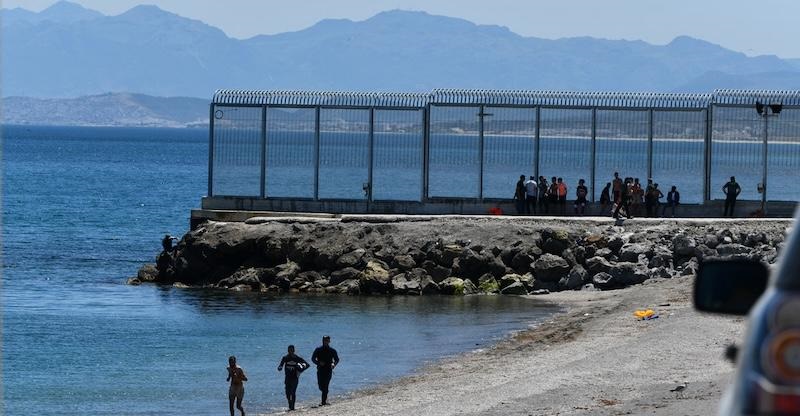
Curiously, they did not hide a sort of morbid glee when more than 72,000 people crossed the border from Morocco to enter Ceuta between 30 and 31 July this year. (This figure varies depending on the source: the Ministry of the Interior put the number of entries at 72,000, while Defence Minister Margarita Robles spoke of close to 80,000.)
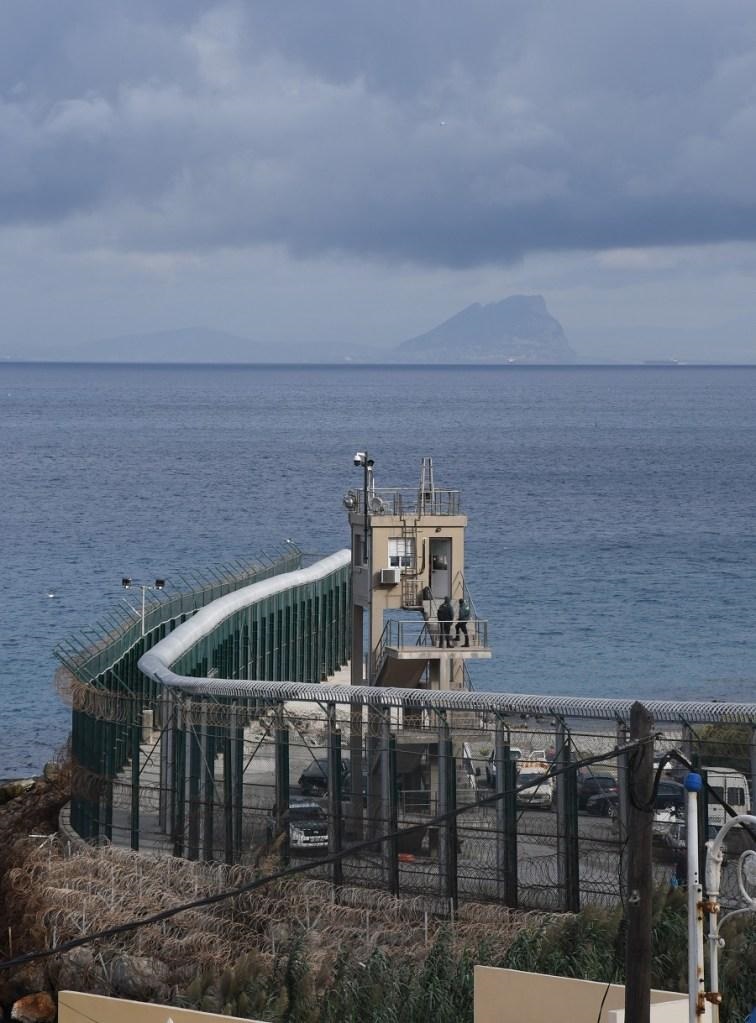 While tension continued between the Sánchez administration and the opposition, around 1,800 irregular migrants in Ceuta were voluntarily transferred to reception facilities.
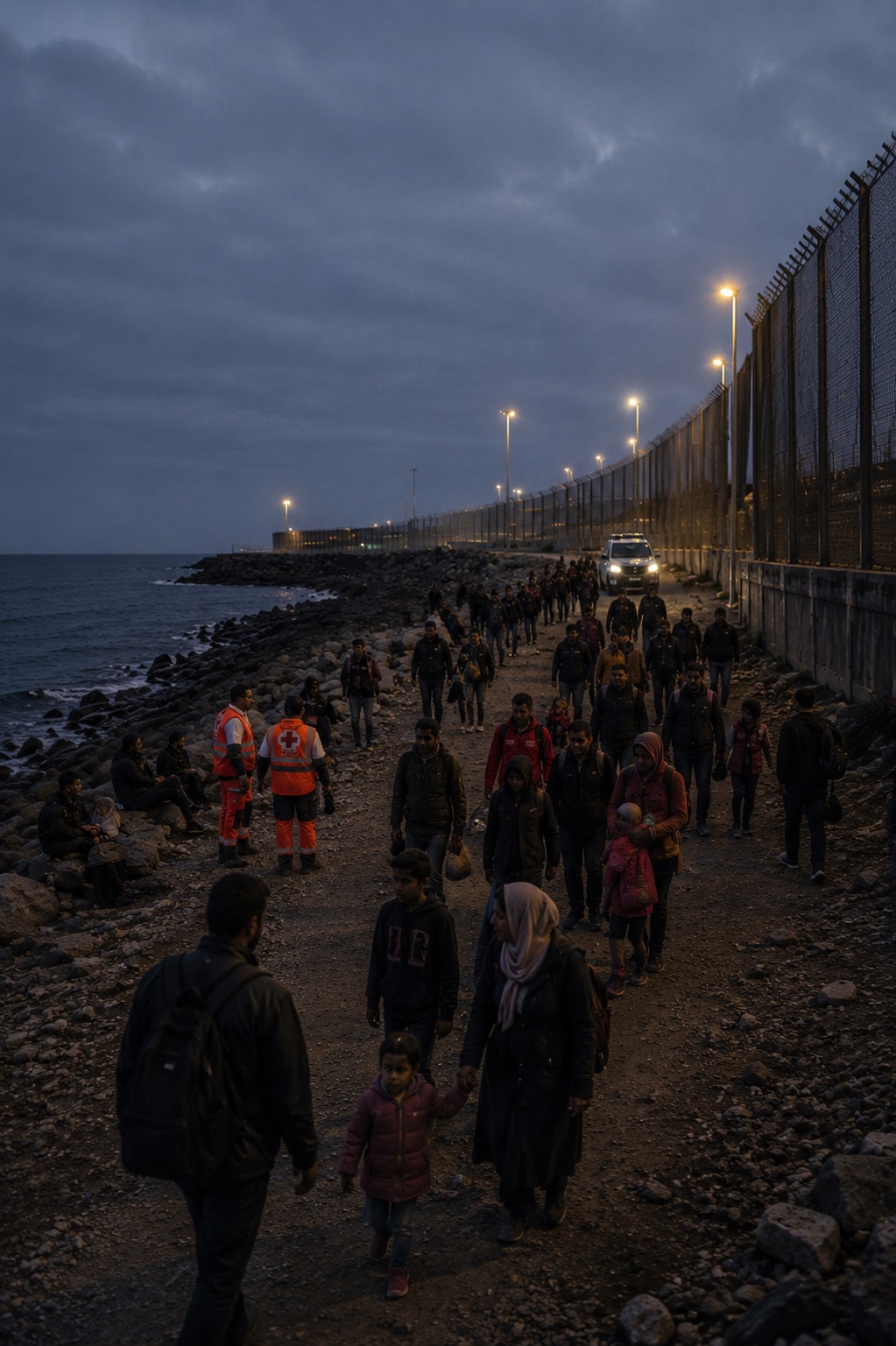
However, at nightfall, around 500 people returned to El Trampolín beach, fearing that they would be sent back to Morocco.
Law enforcement officers, accompanied by officials from Migration and the Red Cross, escorted the people, divided into two groups, one of sub-Saharan origin and the other of Maghreb origin.
But the situation grew tense again in El Trampolín, where hundreds of irregular migrants are once again gathering. And last Thursday, the Government of Ceuta, called for calm and urged people not to heighten tensions after a group of protesters destroyed makeshift migrant camps there.
In a column in eldiario.es, former minister and Communist Party member Alberto Garzón pointed out that “there is no need to imagine direct or explicit coordination between Washington, Rabat and the European far right”. He stressed the importance of understanding that their interests may converge towards the same outcome, producing destabilising effects.
“What is an opportunity for Vox (the Spanish far right party) to wear down the Government is, for the United States, an opportunity to torpedo any European project,” Garzón emphasised.
The situation in Ceuta remains one of permanent political confrontation between the national executive, the Ceuta authorities (likewise those of Melilla, the neighbouring city), and the conservatives of the People’s Party (PP) and Vox.
 Underlying this context, moreover, is the idea that Morocco was deeply angered by Pedro Sánchez’s trip to Algeria to normalise relations, since Rabat considers Algiers a staunch enemy. This is due to Algeria’s support for independence of Western Sahara, which Morocco occupies and claims as its territory.
As if that were not enough, the Ceuta issue led to Italy’s temporary suspension of the Schengen Agreement with Spain, to which the Iberian country responded in kind. For all these reasons, Josep Borrell, former EU High Representative for Foreign Affairs and Security Policy and a Spanish politician from the Spanish Socialist Workers’ Party (PSOE), described the European Union’s (EU) response to the migration crisis in Ceuta, Spain, as “hysterical, disproportionate” and “somewhat absurd”.
Borrell considered that most EU member states “have panicked”, at a time when “solidarity needed to be shown” with a country such as Spain, facing “a problem defending a border”.
Borrell spoke to the media and stressed that it is “a common” and “single” border (of the EU) and spoke positively of the way in which the government of Spain is handling the situation.
 “Since what happened in Ceuta, the thing that has caused the most concern has been the European response”, he said.
They should have reacted “in solidarity” (the EU members), in the face of what he again described as a “hybrid attack”.
He cited the attitude of Italy and its Prime Minister, Giorgia Meloni, as a negative example, as she opted to introduce border controls on travellers arriving from Spain, to which Madrid responded with the same measure.
Borrell said that, in this context, with the exception of only 4 countries: France, Portugal, Ireland and Luxembourg the EU reaction was half-hearted.
“We cannot carry out a mass expulsion just because you ask for it. Our laws are our laws, and they will have to be applied”, Borrell argued. And he added that “legal procedures must be followed when dealing with those who arrived irregularly”, with the aim of “returning them to Morocco, but properly, without violating the law”.
However, as time has passed, the situation appears far from being resolved and the idea that this is a laboratory against the left is gaining ground.
The latest development was the visit by former Spanish Prime Minister José María Aznar, a leading figure in the People’s Party (PP), who, in a brief speech in Ceuta, called for a change of course for the Iberian country. For his part, the president of the Ceuta government, Juan Jesús Vivas, said that he would go to Brussels, the seat of the European Commission, in September to explain everything that has happened in the autonomous city.
Against this backdrop, the PSOE’s Secretary for Organisation, Rebeca Torró, accused the PP of using Aznar’s visit to Ceuta to “stoke the conflict” of the migration crisis and “scrape votes”.
 She stated that the PP sent the “lord of war” to Ceuta, to whom she attributed a “grim and disastrous record” in crisis management, implicitly referring to the conflict over the Perejil islet and the Prestige disaster.
She added that the PP wants to take advantage of Aznar’s visit to “pour more fuel on the conflict” and make “partisan use” of the situation in Ceuta with the aim of demanding a change of government. (PL)
(Translated by Rene Phelvin – Email: renephelvin@gmail,com) – Photos: Pixabay










.jpg)












