
One year after Colombia closed every loophole permitting marriage before eighteen, congresswoman Alexandra Vásquez says the law has built the machinery for change, but warns that funding, not legislation, will decide whether early unions actually decline.
 Aleena Islam and Burak Batuhan Karakus
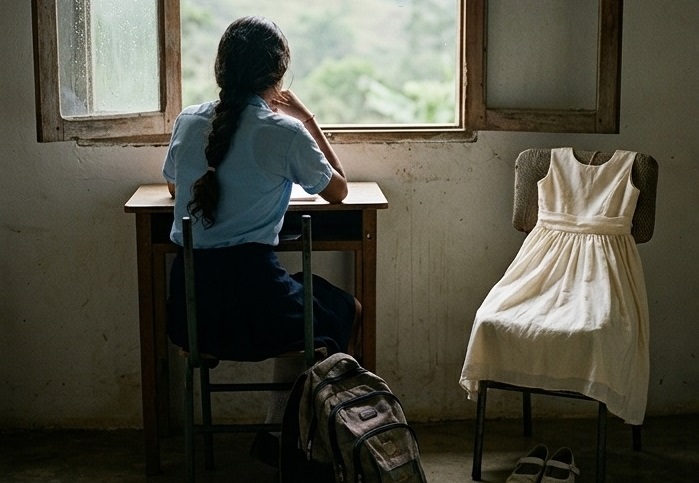
A single amendment to article 116 of the civil code now sets Colombia’s minimum age for marriage at eighteen, with no exceptions.
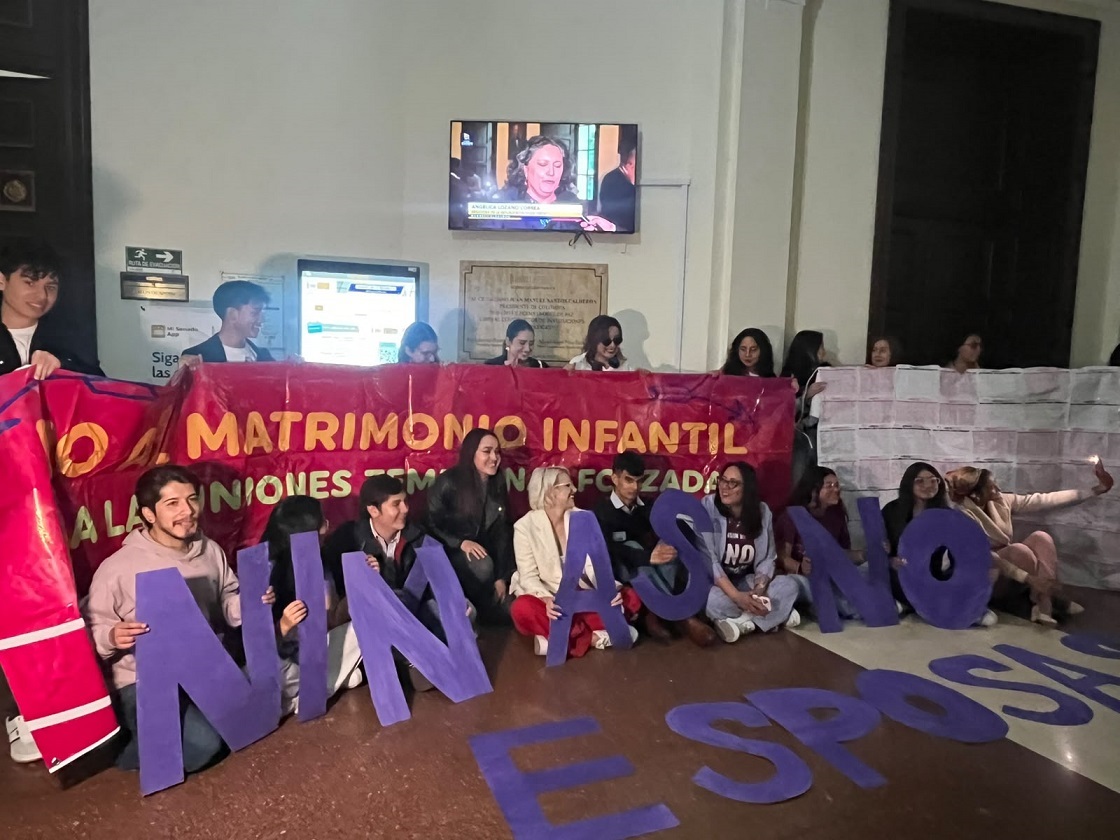
Law 2447 of 2025, known as “Son Niñas, No Esposas” (Girls, Not Brides), took effect a year ago, succeeding on its ninth attempt after nearly two decades of failed efforts.
Colombia is among the few Latin American countries to ban marriage before eighteen without exception, in a region where progress on the issue has been the slowest. Vásquez, one of the law’s principal authors, has spent the year since watching what legislation can and cannot do on its own.
Ten other articles were repealed alongside the amendment, along with clauses on inheritance and the marital estate, so nothing older could contradict it. Article 117, which had allowed marriage with parental consent, drew most of the public attention, though it was one repeal among many. The reform also scrapped exceptions letting minors as young as fourteen marry with parental or judicial authorisation, making any marriage involving someone under eighteen legally defective and subject to annulment.
The law also defines “early unions” to include de facto cohabitation, not only formal ceremonies, where one or both partners are under eighteen. This closes a loophole that let informal unions, historically far harder to track and prosecute, circumvent the restriction.
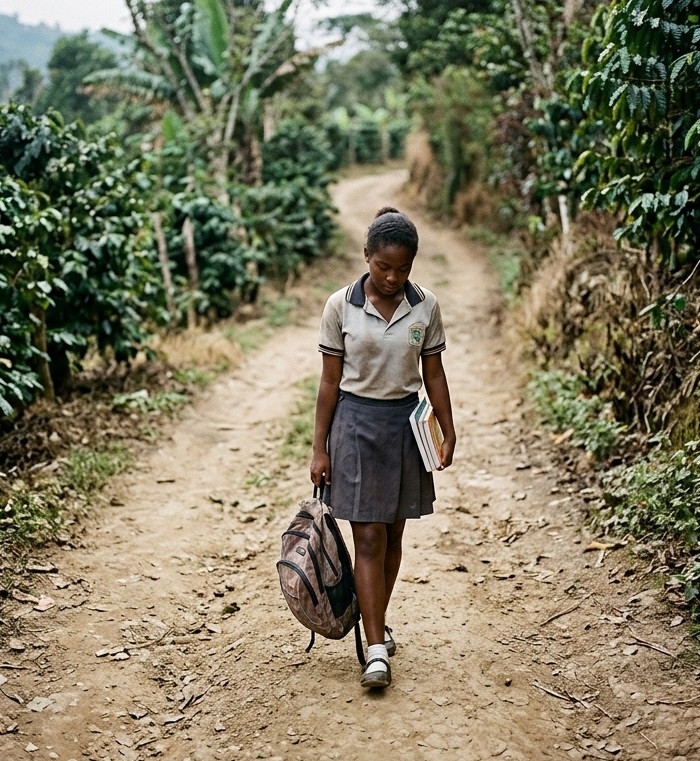 The scale of the problem explains the urgency behind it. Roughly one in five Colombian girls marries or enters an early union before eighteen, and about 5 per cent do so before fifteen, according to Girls Not Brides; that figure measures how many women were married as children, not what share of marriages involve one. In rural and indigenous communities the rate climbs to between 40 and 65 per cent, more than double the national average, the organisation reports. Latin America and the Caribbean’s adolescent fertility rate, 62 births per 1,000 girls, follows the same pattern.
Vásquez describes the first year as groundwork rather than results. “The first year was not oriented to reducing the phenomenon,” she says, “but much more focused on constructing what is expected and how this phenomenon will be addressed at the national level.”
The Instituto Colombiano de Bienestar Familiar (ICBF), Colombia’s family welfare institute, reported five achievements to Congress: a national implementation plan, a national baseline for tracking prevalence, a dedicated data category inside its case-registration system, new coordination channels across the wider family welfare system, and the launch of the National Life Projects Program. That last item carries most of the weight. Where the repealed articles closed a legal gap, the programme targets the poverty and limited schooling that make early marriage look like an option.
Colombia’s 2018 census counted 115 recognised indigenous groups, four Afro-descendant groups and the Romani people. A single national campaign was never going to work, so messaging is meant to adapt community by community. The rollout has not yet reached every targeted community, officials acknowledge. Civil society partners say full implementation will require coordinated work across health, education and justice systems to address the poverty and gender inequality driving the practice. The ICBF must now report to Congress every year evaluating the law’s implementation.
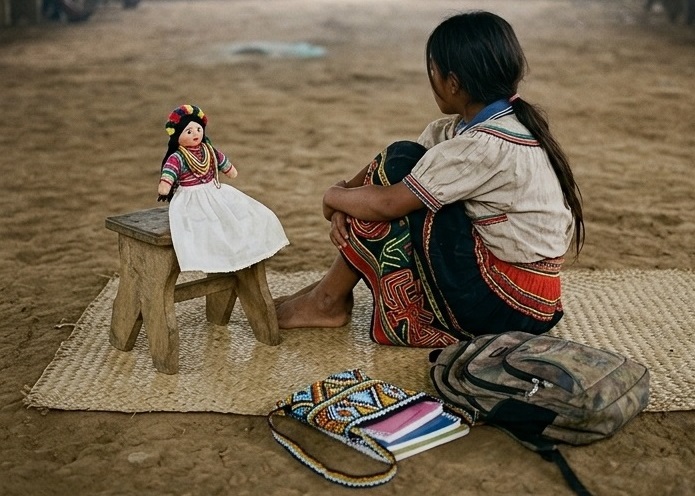 The clearest change so far may be discursive rather than statistical. Child marriage in Colombia was largely invisible before the law, an unremarked feature of rural life rather than a public issue, and is now openly discussed alongside the poverty and inequality that drive it.
The law also sets out a detailed framework for annulling existing child marriages.
An annulment action may be brought by parents, guardians, family defenders, prosecutors or anyone acting as a guarantor of children’s rights, though once a minor reaches adulthood, only they may bring it. Nullity actions carry no limitation period and may be filed at any time. The law presumes bad faith on the part of the adult who marries a minor and bars that adult from benefiting from the minor’s assets.
Vásquez’s advice to activists elsewhere is one word: perseverance. But she is careful to qualify it: a ban is necessary, she says, though not sufficient without sustained public policy around prevention.
The law’s passage drew a wide coalition: Congress, government agencies, civil society, international rights organisations, universities and community leaders all had a hand. None of that guarantees enforcement, which Vásquez says requires continued political oversight of whether the ICBF follows through on its own plan.
One notable absence from the public debate has been the response of religious institutions. In a country where the Catholic church holds significant cultural influence, its position could reinforce or undermine the law’s message, particularly in rural and traditional communities.
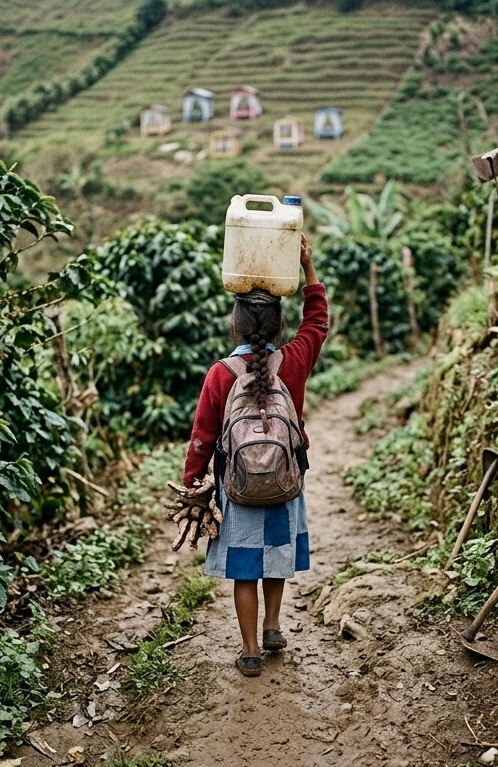 That task is about to get harder. Colombia’s current administration, under President Abelardo de la Espriella and Vice President José Manuel Restrepo, has been in office since 7 August 2026.
Vásquez is concerned that the change in administration could jeopardise funding for the ICBF’s plan; cut it, and campaigns that have not yet reached every community may never do so.
The National Life Projects Program, central to the law’s preventive approach, is a new initiative that depends on sustained investment.
A similar pattern of slow, decades-long advocacy runs through Colombia’s recent legislative record.
In June 2026 the country became the first in Latin America to ban female genital mutilation, a practice that persists in some indigenous rural communities, according to Equality Now.
Vásquez co-authored that law too, working with survivors from the Emberá community, per Global Voices; it took years to pass, much like the marriage ban that preceded it.
Two landmark laws in as many years put Colombia ahead of most of the region on children’s and women’s rights. The hope is that the example travels beyond Colombia’s borders. “We need the eyes of the world,” she says, if the country is to finish what the law started.
(Images created by Gemini AI)










.jpg)












