
Following the large-scale arrival of people from Morocco, Spain began carrying out returns and has allocated funds to manage the consequences in the autonomous city. However, the crisis has raised questions about prior warnings from the National Intelligence Centre (CNI), the role of Rabat, and the situation of nearly 2,000 unaccompanied minors awaiting redistribution.
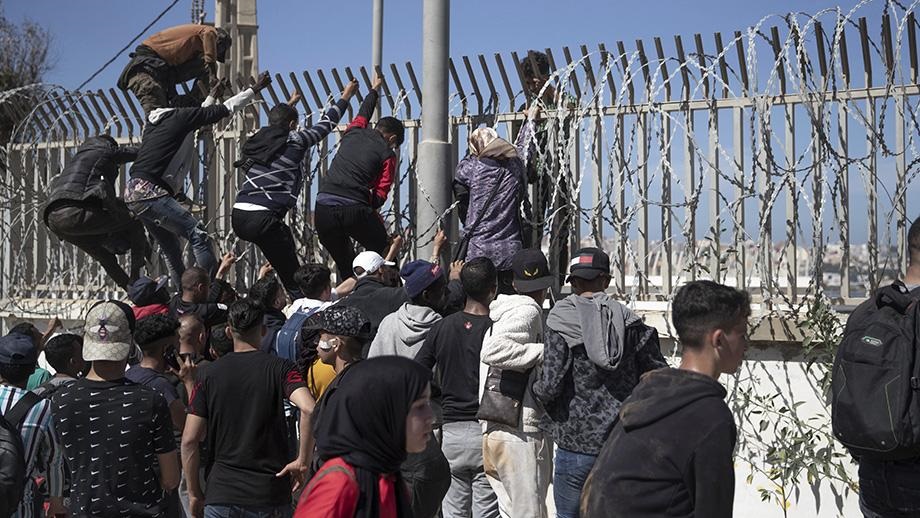 Political turbulence surrounding Ceuta remains in the spotlight in Spain, where the government is seeking solutions acceptable to all parties, but the migration issue continues to grow more complex.
Along with the desire to return the nearly 5,000 irregular migrants currently in the Spanish autonomous city to Morocco, there are around 2,000 unaccompanied minors waiting to be redistributed across different regions of the country.
Migration pressure, border security concerns, and their social, economic, and political consequences have yet to find a path towards stability. Morocco, amid an electoral campaign, further complicated the situation by raising sovereignty claims over Ceuta and Melilla, two cities that have never been under Rabat’s rule throughout history.
Ceuta, in any case, is located in North Africa and borders Morocco. Although, like Melilla, it has belonged to Spain for more than 500 years, its Muslim past and geographic location define its character.
Between 30 and 31 July, the city experienced a massive influx of people that temporarily overwhelmed its accommodation capacity and public services. The exact number is still unclear, with unofficial estimates placing it at more than 72,000.
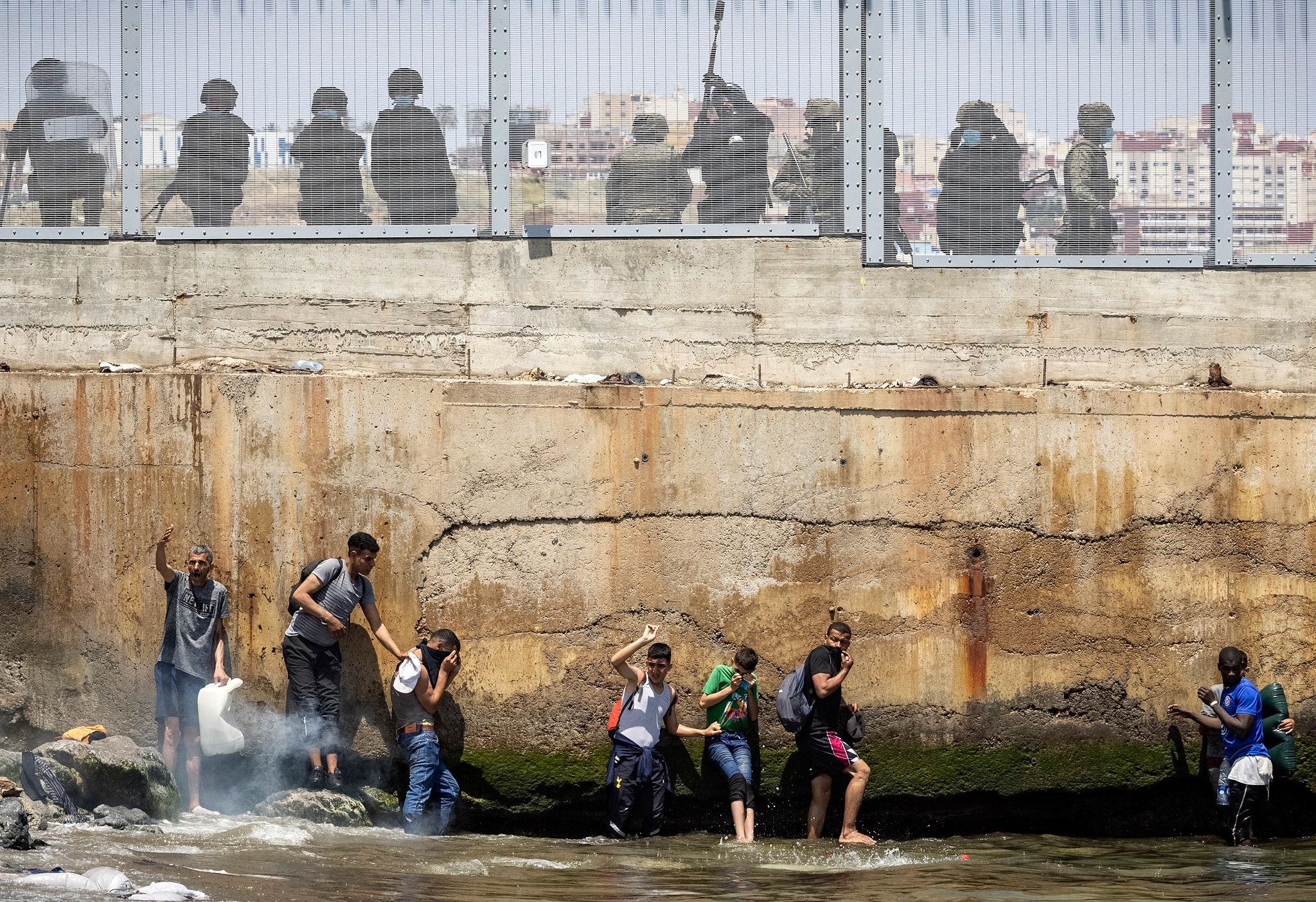
In the weeks that followed, a significant portion of the migrants voluntarily returned to Morocco, while Spanish authorities began return and deportation procedures.
However, the process requires identifying individuals, and for that purpose temporary camps have been set up on beaches and in nearby areas, a task that is still underway.
The start of the school year and several incidents further heightened tensions, leading to public demonstrations both in Ceuta and in other Spanish cities. These protests were exploited by extremist groups, resulting in violent actions and xenophobic slogans.
In response, the Spanish government announced and allocated significant financial assistance, more than €300 million, to help Ceuta address the consequences of the crisis.
In this context, increased demand for security, cleaning, and healthcare services led to new hires, while other sectors, such as retail and hospitality, suffered substantial losses due to uncertainty.
By order of Prime Minister Pedro Sánchez, intelligence and security documents related to what happened in Ceuta during the influx of irregular migrants were declassified.
To this day, a majority section of both public opinion and the political class, including a significant section of the left, believes there were warnings and alerts that something major could occur at the border with Morocco.
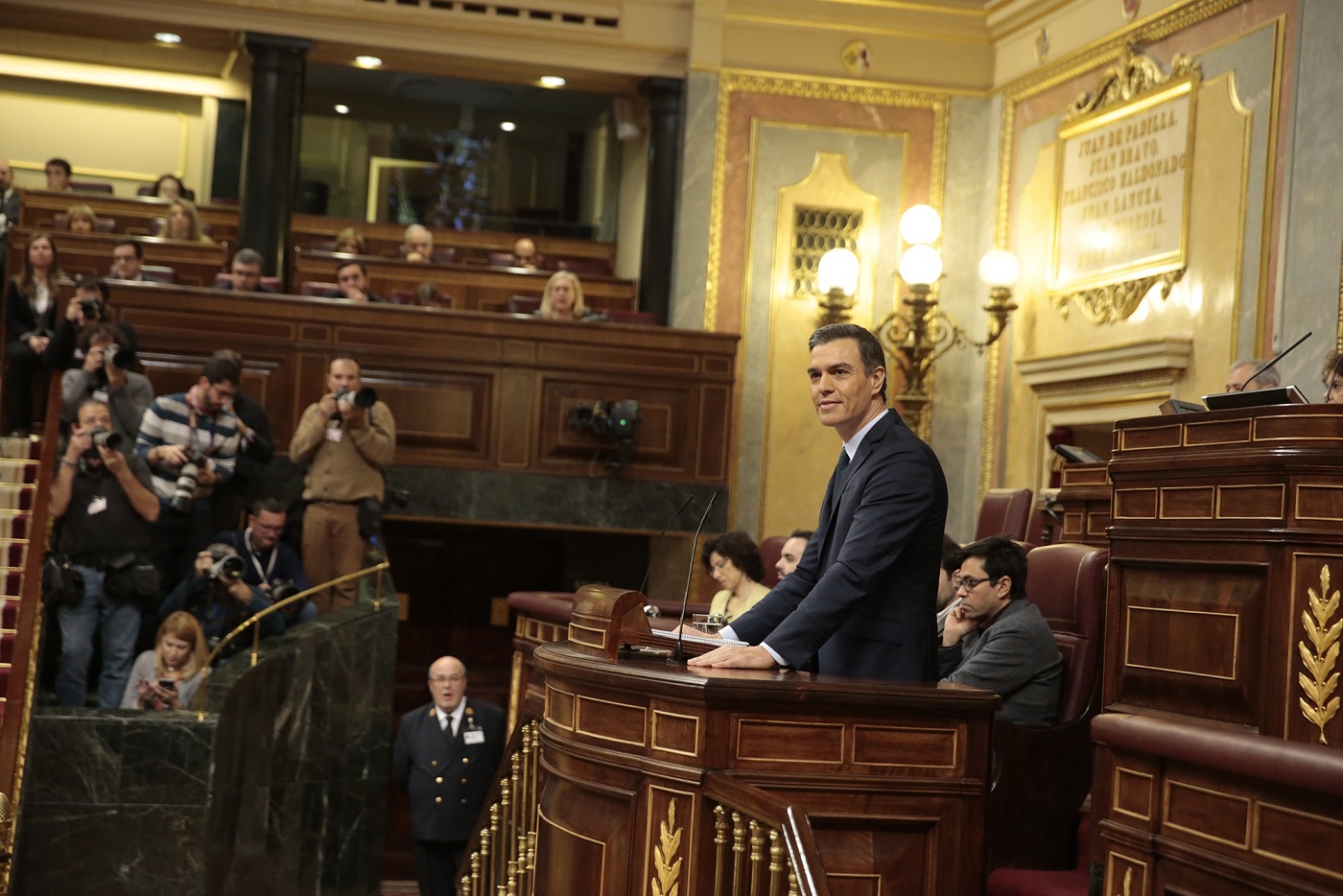
Beyond the sharp criticism directed at Sánchez by the far-right Vox party and the conservative People’s Party (PP), the Prime Minister has also faced criticism from the centre-left and the broader left.
 Interior Minister Fernando Grande-Marlaska continues to defend the Rabat regime, insisting that he sees no evidence of Moroccan complicity in the migration actions at the border, a position reiterated by Sánchez himself.
However, views within the government are far from unanimous. Meanwhile, the right wing of the People’s Party (PP) and the far-right Vox party have no doubt that Morocco played a role in encouraging people to cross the border into Ceuta in order to destabilise Spain.
The Sumar political group, through its current leader, Verónica Martínez Barbero, called for clarification regarding what failed with the warnings issued by the National Intelligence Centre (CNI) about the arrival of migrants in Ceuta in July.
Sumar, part of the governing coalition, raised the issue to determine whether additional responsibilities should be assumed beyond the resignation of Gonzalo Sanz, the chief of staff of the government representative in the autonomous city. PL
(Translated by Natasha Greenidge) – Images generated by ChatGPT AI










.jpg)












