
Several Ecuadorian boats have been intercepted by US military forces in 2026. While Washington links them to illicit activities, fishermen and human rights organisations denounce violent boardings, deprivation of liberty, torture and disappearances, and question the evidence and procedures used in the operations.
 Adriana Robreño
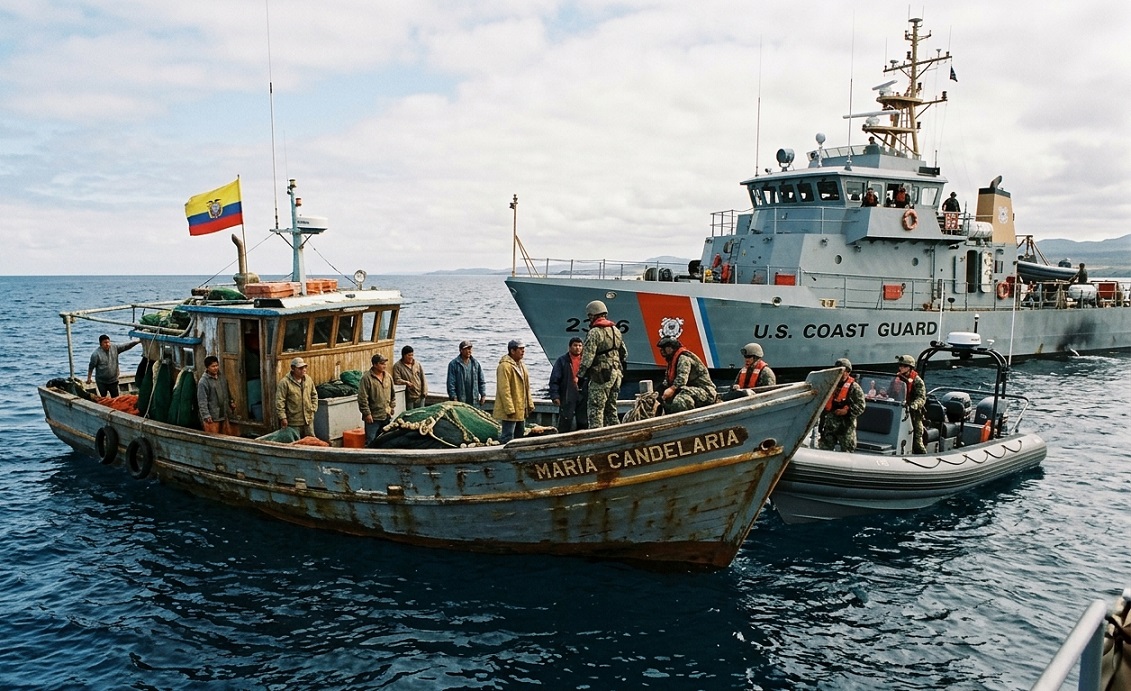
In one of the recent episodes, US personnel boarded the fishing boat María Candelaria on the high seas, from where one of its crew members managed to broadcast part of the operation live using his phone.
“The patrol boat came right up to us, the patrol boat came up to us and they didn’t call us, they didn’t call us on the radio. They didn’t call us, they treat us like criminals”, the fisherman recounted in the video, which was interrupted when one of the agents took his device. Since January, eight fishermen from the vessel Fiorella remain missing after the boat was intercepted at the beginning of the year, according to reports by relatives and human rights organisations.
The groups assert that, during the various operations, there have been cases of violent boardings, deprivation of liberty, temporary enforced disappearance, torture and destruction of vessels, and maintain that at least 180 crew members have been affected.
The US government, for its part, presents the operations as part of the fight against drug trafficking and other illicit activities, while Daniel Noboa’s government supports cooperation with Washington on security matters.
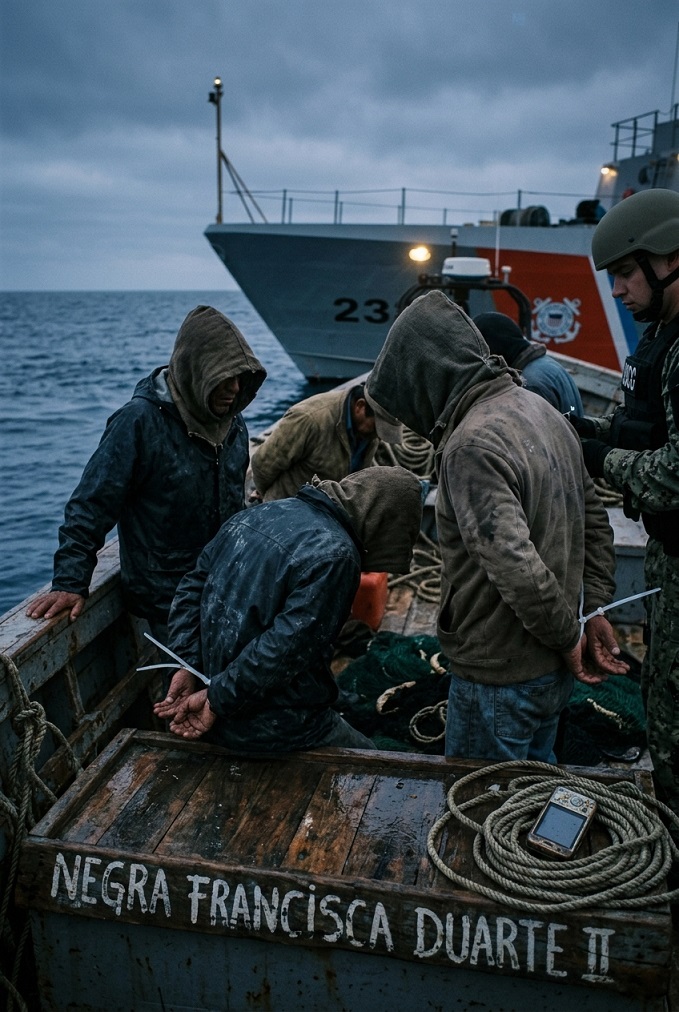 After what happened to the Fiorella, something similar happened to the Negra Francisca Duarte II, a boat intercepted on 17 March, whose survivors reported that they were attacked and subsequently transferred to El Salvador.
According to their testimony, during the operation, they were immobilised, hooded and subjected to conditions they consider degrading.
The third case occurred with the fishing boat Don Maca, intercepted on 26 March.
An investigation by the US newspaper The Washington Post suggested that a covert programme by the Central Intelligence Agency (CIA) could be behind the mysterious attacks recorded earlier this year near the Galápagos Islands.
After those three incidents, a fourth incident took place on 28 August, involving the vessel Los Tres Hermanos, intercepted and subsequently destroyed by US forces.
Its 14 crew members, who denied any link to drug trafficking, returned to Ecuador and reported having been followed by helicopters and held for several hours aboard a foreign vessel. The fifth incident involved the Conquista 2 on 2 September, followed by the OM2, intercepted a day later and also destroyed. The seventh incident involved the fishing boat María Candelaria, followed by the tuna boat Montecristi and finally the Don Rufo, intercepted on 8 September.
Thus, within weeks, the controversy went from the testimony of a few fishermen to involving dozens of families and becoming a matter of national interest.
The controversy acquired a new dimension with the visit to Quito by US Secretary of State Marco Rubio, who confirmed that the actions have the consent of the Ecuadorian government.
“We will continue destroying boats if necessary”, Rubio stated when asked about the US strategy.
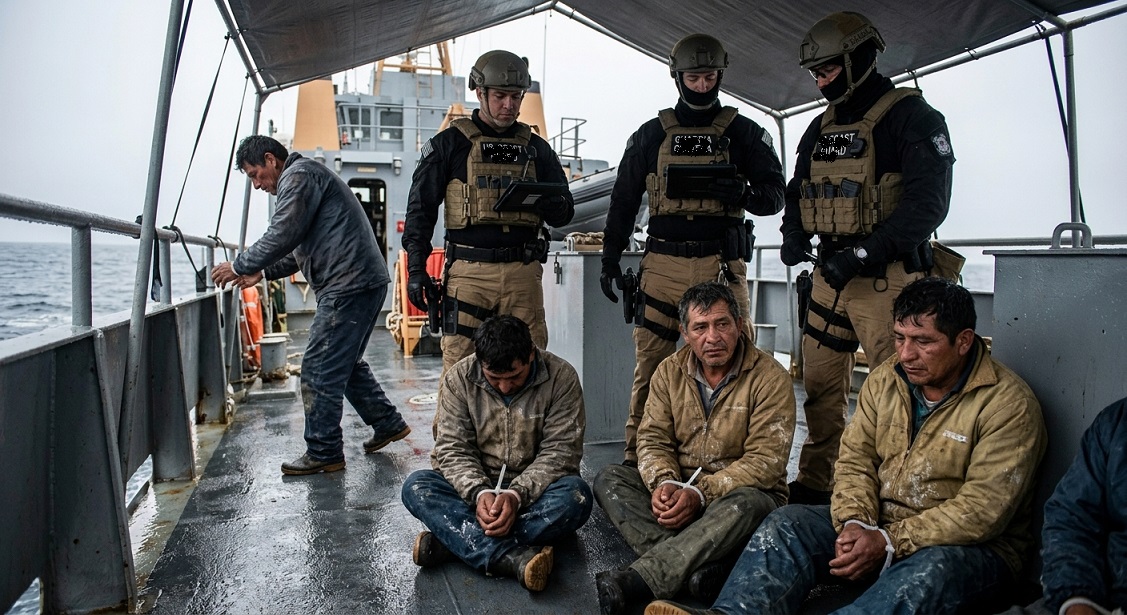 Rubio also made clear that Washington retains the option to destroy vessels when it considers there to be a threat, although he assured that decisions are taken according to the characteristics of each operation.
Human rights and sovereignty
The lawyer for the Permanent Committee for the Defence of Human Rights of Guayaquil, Fernando Bastías, criticised the way the procedures have been carried out. “They are doing things backwards: first they apprehend and then they investigate”, stated Bastías, who challenged the fact that the proceedings against fishermen are based on intelligence information, without evidence being presented publicly.
The lawyer also noted that some fishermen intercepted on the high seas have been transferred to the Galápagos Islands, outside mainland Ecuadorian territory, and considered that this practice makes it difficult for their relatives to report the alleged irregularities.
“This is the result of improvisation. Decisions that leave pain and suffering along the way, while the security crisis remains and the show continues”, he maintained.
The Ecuadorian opposition shares some of those concerns and accused Noboa’s government of allowing actions by a foreign force against citizens of the country.
The question is no longer limited to determining what the vessels were carrying or whether any were linked to illicit activities, but under which protocols US military personnel act, which Ecuadorian authority supervises those operations, what evidence supports the accusations and what mechanisms exist to investigate possible abuses. Civil society organisations requested precautionary measures from the Inter-American Commission on Human Rights for the fishing community of Manabí province and declared the head of US Southern Command, General Francis L. Donovan, persona non grata. PL
(Translated by Rene Phelvin – Email: renephelvin@gmail.com) – Images generated by Gemini AI










.jpg)












