
This is not just a conflict between Israelis and Palestinians, comparable to other national liberation movements by an oppressed people against an oppressor state; rather, in the opinion of experts, it is a conflict over a strategic colonial project for the great powers.
 Julio Morejón
The results of the 1967 war make it difficult to build peace in the Middle East based on solving the Palestinian cause by re-establishing all its political, economic and social rights in an independent state.
Israel and its allies identify, through a distorted, racist lens, the Arab world in general and particularly the establishment of Palestine, as enemies.
When in 1936 the Arab-Islamic community boycotted mercantile exchange with the Jewish entity, the polarisation of forces that sowed the seed of the Palestinian insurgency, which led to the 1947 project to divide the area, was clear.
Between 1936 and 1940 the British mandate’s authorities demolished two thousand houses and imprisoned nine thousand Arabs in concentration camps. The revolt against the Zionist plan’s adoption left more than five thousand Palestinians dead and ten thousand wounded.
That blood-soaked precedent marked the emancipatory path taken by the first Arab-Israeli war (1948-49) around territorial partition, made reality by the adoption of the UN General Assembly’s resolution and the founding of the state of Israel.
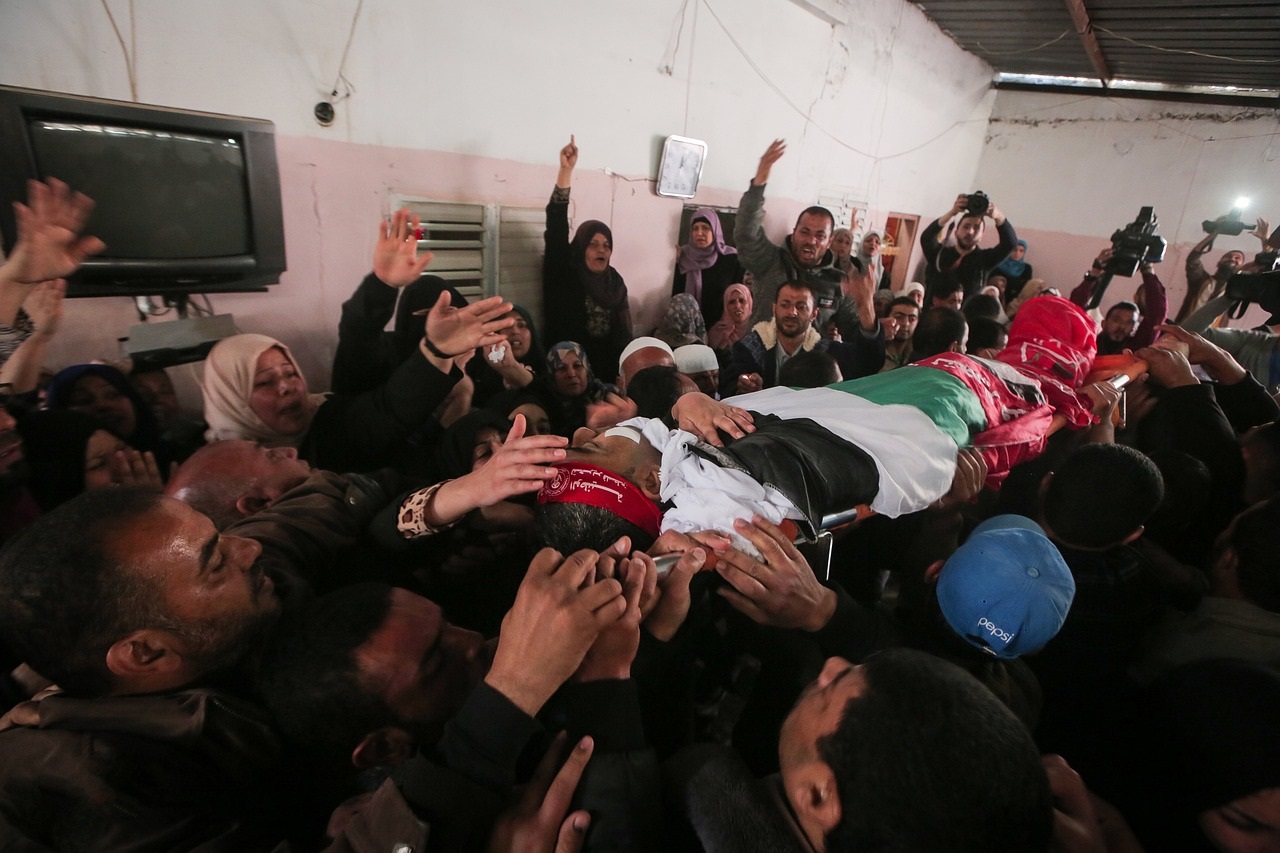 The division of Palestine was determined by the result of the Second World War, the appearance of the Socialist Camp and the need for a compassionate response to the victims of the Jewish holocaust.
Later, international reality showed this decision’s cruel consequences, how public opinion was manipulated and how the Zionist betrayal took the form of a cause in solidarity with the victims of Hitler’s fascism.
For Professor Rashid Khalidi, quoted by politicaexterior.com, Palestine’s contemporary history “is a colonial war waged by various forces against the native population to force them to cede the land of their birth to another people against their will”.
It is not just “a conflict between Israelis and Palestinians, comparable to other national liberation movements by an oppressed people against an oppressor state; rather, in the opinion of experts, it is a conflict over a strategic colonial project for the great powers”.
In the face of this, the right to self-defence becomes legitimately just and it was with this conviction that in 1964 the Palestinian Liberation Organisation (PLO) was created, led first by Ahmed Shukeiri and then by Yasser Arafat (Abu Amar).
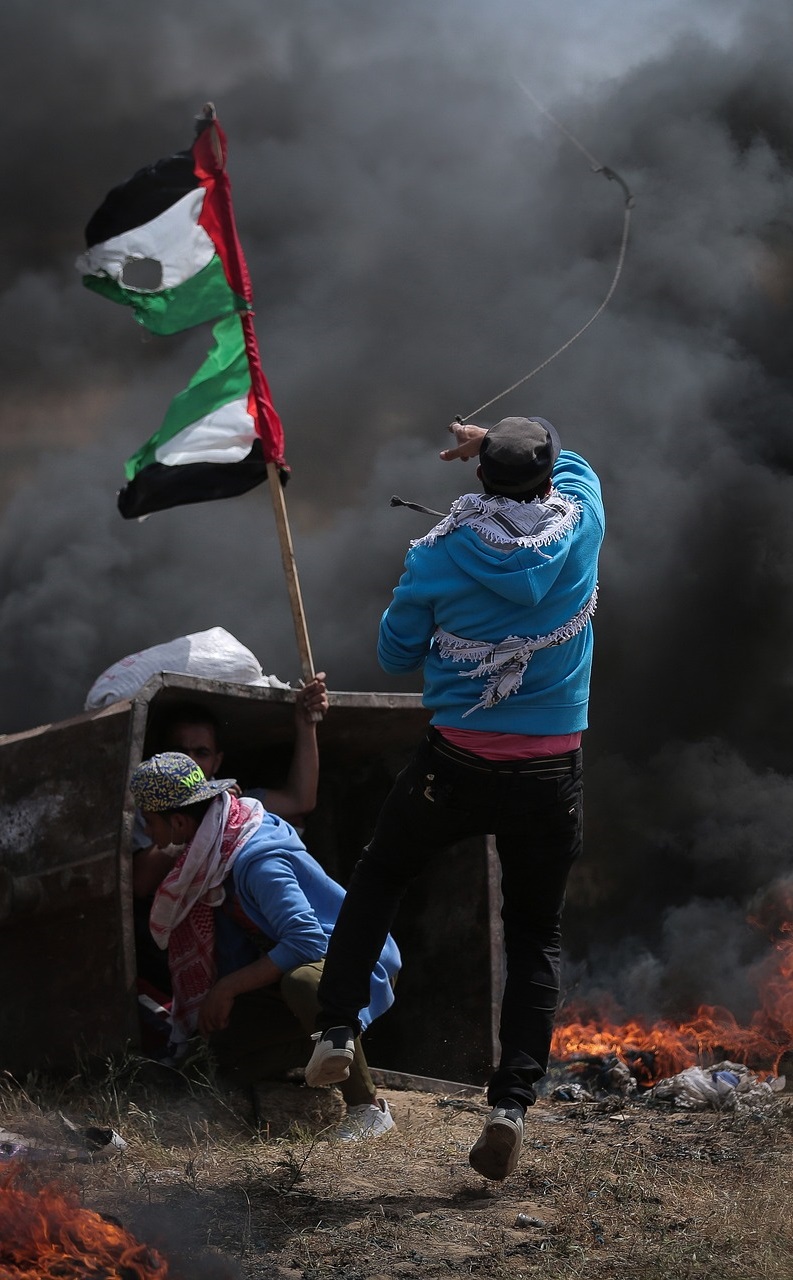 The PLO is made up of the Palestinian National Liberation Movement (Fatah), the Popular Front for the Liberation of Palestine (PFLP), the Democratic Front for the Liberation of Palestine (DFLP), the Palestinian Democratic Union (FIDA), the Palestinian People’s Party (PPP) and other groups.
The battle of Karameh took place in March 1968. Israeli troops attacked a Fatah base to annihilate Arafat but were repelled with the help of Jordanian troops, resulting in a triumph for the resistance.
Politics, religion and peace
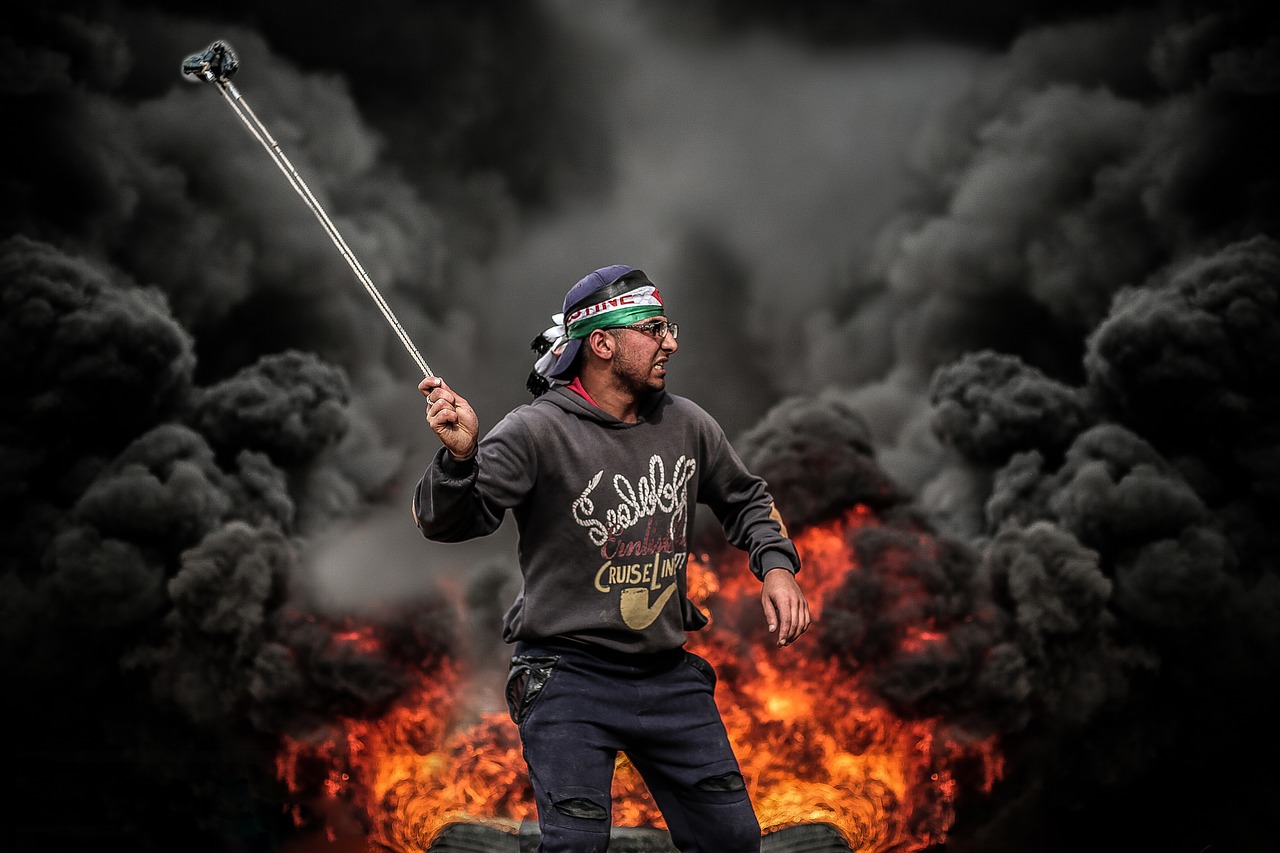
Years later, this military victory sparked the first and second intifadas (uprisings), also known as wars of stones, in 1987-1993 and 2000-2005 respectively.
Since then, circumstances and situations have changed, as have ways of fighting and the insurgents’ political-confessional affiliations; tensions eased in the 1990s with the Madrid Conference (1991) and the Oslo Accords (1993).
In that context was born the Palestinian National Authority (PNA) which governed in the West Bank, Jerusalem and the Gaza Strip until 2006 when Hamas won the enclave’s elections. The deaths of peace signatories Yizhak Rabin (1995) and Yasser Arafat (2004), and the rise of a very virulent version of Zionism, drained all attempts at détente and further deepened the crisis in the Middle East.
For its part, Washington provides incentives for sub-regional instability: the state department approved the transfer of over a thousand 500-pound Mk-82 bombs to Israel along with around a thousand small diameter bombs and fuses for Mk-80s.
The majority of actions carried out by the Israeli army in recent times have been against the Gaza Strip, governed since 2007 by Harakat al-Muqáwama al- Islamiya, the Islamic Resistance Movement (Hamas).
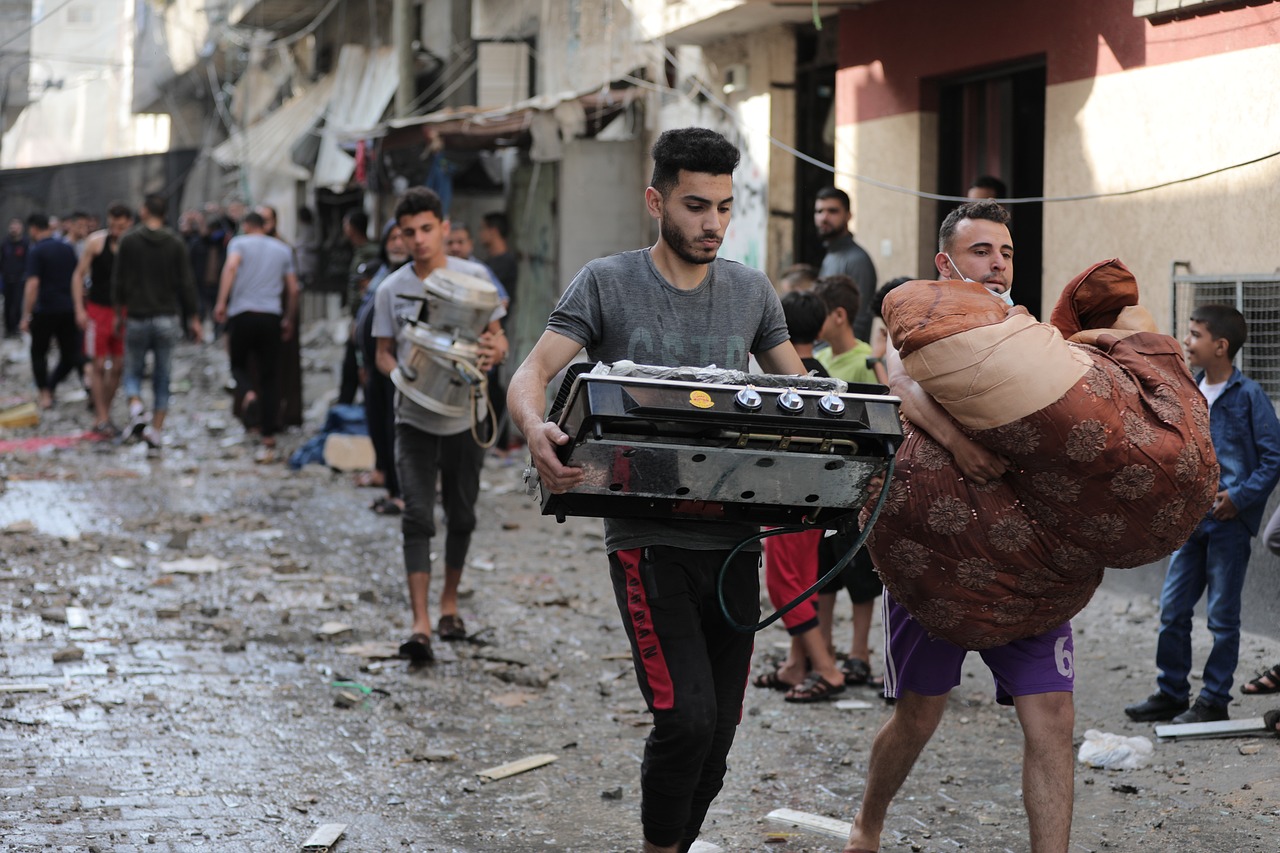 For 76 years, since the Jewish state’s creation, hostility has persisted between the oppressor representative and the defenders of the oppressed. This blew up on 7th October 2023 when Hamas destroyed the Gaza-Israel barrier.
Hamas – created in 1987 by sheikh Ahmed Yassin, assassinated by Tel Aviv in 2004 – is a political-military organisation with a confessional orientation related to the Muslim Brotherhood.
Headed up by Ismail Haniyeh, the Islamic Resistance challenged the Fatah movement in the 2006 elections and took office in 2007 in the Gaza Strip while its opponent did the same in the West Bank and East Jerusalem.
Its founding charter highlights that “our fight against the Zionists is very big and very serious” and calls for the creation of an Islamic state in Palestine, instead of Israel and the occupied territories.
However, this tendency to co-exist in an atmosphere of religious peace blows up when Israel violates places that are Muslim symbols such as the Dome of the Rock and the Al-Aqsa mosque in East Jerusalem.
It is with this anti-Islamic and anti-Arab psychology that the Zionist side is massacring the Gaza Strip, imposing its doctrine horribly, in a disproportionate reaction to 7th October 2023 which is part of the fascist script.
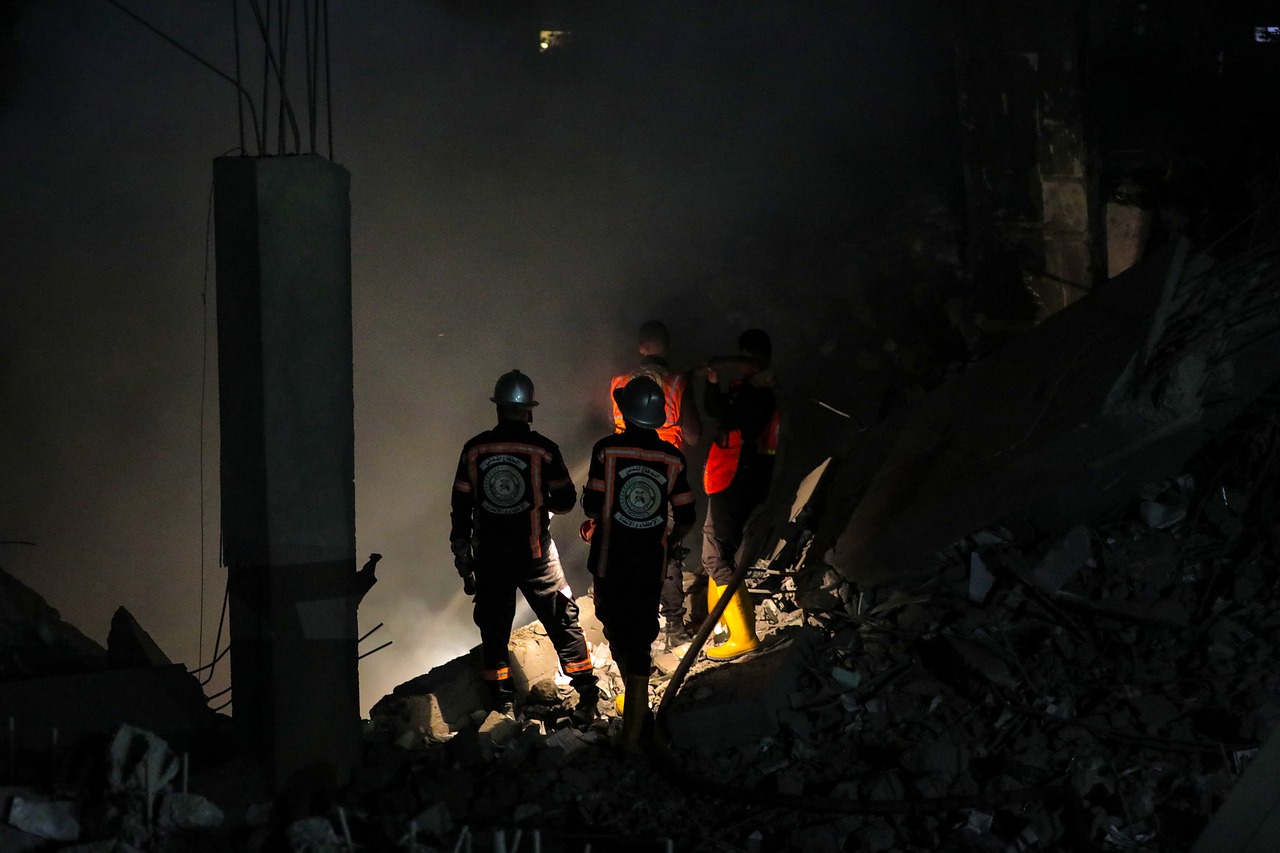 Gaza today
Since that date, Israeli aggression in the Gaza Strip has affected all the desperately poor enclave’s activities and the Zionist aggression has caused over 46,000 deaths, mostly among civilians, according to official statistics and statistics from humanitarian groups.
Experts say the territory will take 68 years to return to the GDP levels of 2022, when two-thirds of the population lived in poverty and 45% of citizens were unemployed. There are 182,000 workers without employment which affects thousands of families traditionally made up of more than three people. The United Nations Conference on Trade and Development (UNCTAD) added that the enclave’s GDP contracted by 4.5% in the first nine months of 2023, but the Israeli attack accelerated this decline to 24%.
With much optimism and 10% annual growth, “only in 2035 will Gaza reach the economic levels of 2006, when Israel imposed a blockade on the area after Hamas took power,” the institution predicted.
According to UNCTAD, “over two million people confined to one of the world’s most densely populated spaces will suffer from inadequate access to drinking water and sewerage systems and a sporadic electricity supply,” a deficit that has now multiplied.
 According to a report by Al Mayadeen, the Gaza Strip is also forecast to regress 16 years in the Human Development Index in the best case scenario, and 19 years in the worst case, due to the attacks.
The West Bank, where close to 500 Palestinians have died this year, suffers daily the excesses of the Israeli army and the colonists, paramilitary usurpers of these Arab lands, who take them by force and terror like in the times of the Nakba.
In the first semester of 2023, Tel Aviv approved the construction of between 12,855 and 13,000 houses for those individuals in the occupied areas; over 600,000 of them have lived since 1967 in about 140 settlements in areas taken from the West Bank and East Jerusalem which have also been the scenes of genocide. PL
(Translated by Philip Walker – Email: philipwalkertranslation@gmail.com) – Photos: Pixabay










.jpg)












