
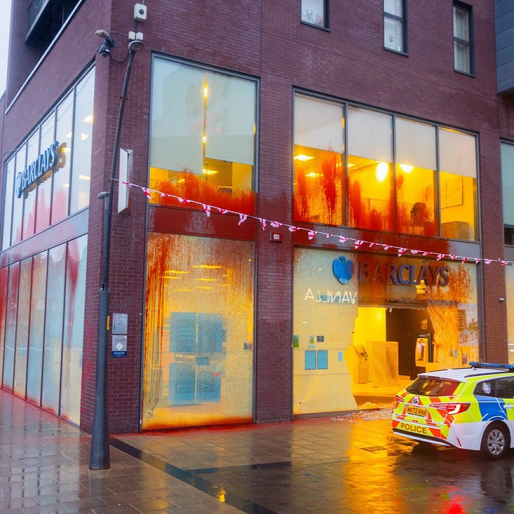
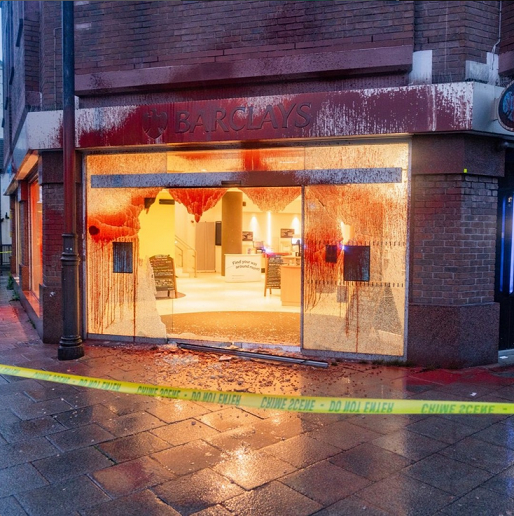
The Prisma spoke exclusively to Shut The System (STS), a necessarily anonymous climate activist group formed in February 2024. They first made headlines by spraying red paint on insurance firm offices, forcing insurers to drop two major carbon-bomb projects in the UK and West Africa.
 Harry Allen
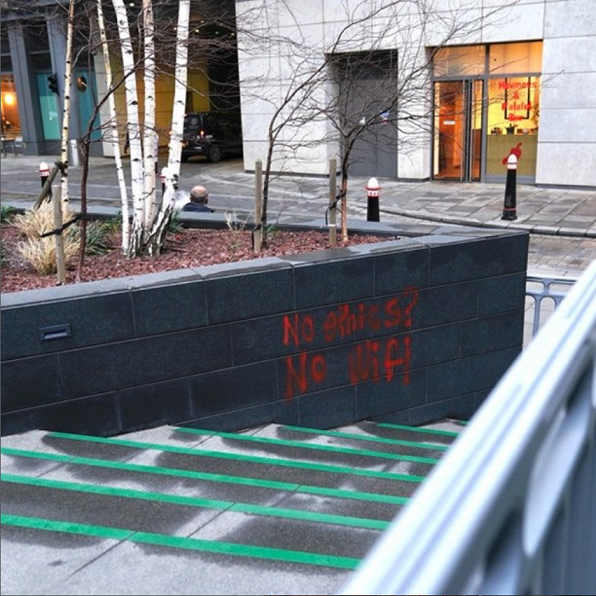
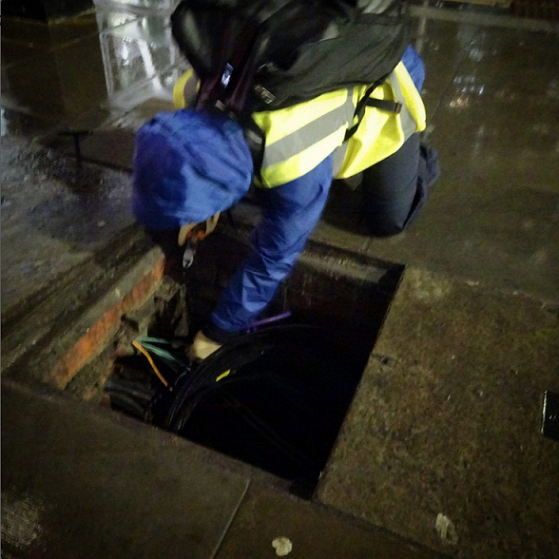
In the space of a few hours, undercover activists successfully cut the WiFi for several major insurers across Britain on Monday, 20th January. It is still unconfirmed how many internet outages occurred, but the targets were insurance firms known for backing fossil fuel projects that destroy the environment or activate carbon bomb sites.
ShutTheSystem claimed responsibility for the overnight operation, which struck at the heart of the insurance sector in Leeds, Birmingham, Sheffield, and London.
The group consists of around 300 loosely connected members spread across the country, coming from a wide range of political beliefs. “We’re not just Extinction Rebellion (XR) or Just Stop Oil (JSO) dropouts,” a spokesperson, who preferred to remain anonymous, told The Prisma.
“We are all ordinary people, getting on with our jobs, doing this unpaid in our free time because we are all concerned—just like most people do [about climate change].”
ShutTheSystem originated from those who see their last resort as fighting fascism and “preparing for an inevitable [societal] collapse,” because many believing direct action is now the only option in the face of climate, financial, and social decline.
STS is a decentralised organisation at its core, with cells of up to ten people in almost every major UK city.
Their main target right now is the insurance industry, whose firms derive roughly 2% of their profits from fossil fuels. While this is a relatively small contribution to an industry worth £200 billion in gross insurance premiums, it still plays a role in enabling environmental destruction.
 However, with new laws restricting the size and impact of protests, it has become increasingly difficult to challenge the insurance industry through traditional activism.
“The new anti-protest legislation in the UK has definitely driven STS underground,” our contact say, adding that the group is constantly adapting its strategies to evade stricter laws on protesting.
“You just can’t mobilise a mass movement that easily anymore. You can’t ask people to put themselves at risk of ten years in prison [these days]—that’s what we’re looking at now,” they say, referring to the Conservative government’s Public Order Act 2023. The legislation was passed before the group’s initialdirect action, which targeted the London offices of Tokio Marine, AIG, and Zurich. Under the Public Order Act, the Home Office has given police expanded powers to arrest those even planning to cause ‘serious disruption’, as well as to limit the size, duration, and location of protests.
Police can now impose SDPOs—Serious Disruption Prevention Orders—that restrict an individual’s freedom of movement and force protest organisers to give six days’ notice before holding a demonstration.
The Conservative-backed, Labour-upheld legislation is reshaping protests and activism in the UK, with ShutTheSystem criticising the lack of political will to address the reasons behind genuine protest movements, instead opting to suppress them before they even begin.
STS speak of regular protest as a thing of the past—an alarming sentiment from activists who have been involved in protest movements since the 1970s and 1980s.
 “The government is forcing us out of that (conventional protest) situation,” they explain, affirming that anonymity is now a more effective way of achieving victories.
In the past, activists would deliberately get arrested and use court trials to explain their cause. Now, they try to remain anonymous to keep their campaigns going for longer.
“It’s much easier to sustain our protests this way,” they add, highlighting the shift towards more covert actions.
With the increased risk of arrest, fewer activists are willing to turn themselves in. “We don’t see people walking into police stations, getting arrested, and then going to court anymore,” STS say.
This marks a significant shift from past protest methods, where public trials were once a key way to spread a message.
Typically, the right to protest is a cornerstone of democracy, protected in Europe under Article 10 (freedom of expression) and Article 11 (freedom of assembly) of the European Convention on Human Rights (ECHR), which Britain is still a signatory of so far.
Still, in the opinion of many, the Public Order Act is eroding the balance between rights and restrictions, and the current Labour government shows no signs of repealing the law, which was originally introduced by former Home Secretary Priti Patel.
Despite increased pressures and harsher sentences, ShutTheSystem has seen successes thanks to its revamped direct-action strategy—such as when it soaked insurance firm offices in red paint.
 For instance, in February last year, the insurance company Probitas responded to ShutTheSystem’s demands the very next day.
The East African Crude Oil Pipeline and the proposed West Cumbria coal mine were both removed from any future Probitas insurance plans. But one big win isn’t stopping the group.
“We are not ruling out [going after] other financial supporters or fossil fuel [providers],” STS explain. “We could go to Vanguard and BlackRock as well. It’s not something we’re ruling out at all,” implying further action is necessary to disrupt those enabling environmental destruction. “You’d think insurance firms would want to support socially and environmentally beneficial businesses.”
A regenerative world would, in theory, provide projects with longer-term insurance, but in a system where short-term profits take priority, STS understands that challenging fossil fuel backers will be a difficult fight.
The UK’s insurance industry employs around 300,000 people, with a further 200,000 working in related roles.
Half the challenge of modern-day activism is convincing people to support direct action. But with such a large workforce dependent on the industry, persuading a typical insurance broker to give up their salary for an uncertain future in activism is a tough sell.
“We’re doing this fully covertly. If anyone’s sharing information, no one is claiming it as their own,” they point out. But they also admitted that more media coverage would help their cause.
Labour’s refusal to repeal the Public Order Act could lead to even bolder protests. But within ShutTheSystem, fear of government crackdowns remains strong, making open activism riskier.
 “We know that we’re not going to be able to hide forever. We chat about our families and the effect it’s going to have on them, on their friends,” they continue. “When we’re preparing, our members wonder what’s going to happen. We talk about possible consequences, and we’ve all sort of accepted them.”
In a sense, the Public Order Act is doing exactly what it was intended to do—it’s preventing one form of disruption, but it’s also giving rise to another. One that is much harder to track and largely uncompromised, aside from the arrest of a 29-year-old man in connection to the fibre optic cable incident. Little has been disclosed beyond basic case details.
“They [authorities] don’t seem to be putting that many resources into investigating us—because if they did, they would have found us all by now,” the group explain. For most of ShutTheSystem’s operations, it is clear that this is less about civil disobedience and more about fears outlined in the Banking on Climate Chaos report, which informs much of their manifesto.
“This [direct action] just feels like the right thing to do—for me and the people involved. It’s an inevitable consequence of the laws that were put in place. It feels much better to be taking action than not.”
(Photos by Shut The System)










.jpg)












