
“Barrio” (working title) is a play that tells the story of migrant communities whose livelihoods, identities, and relationships are threatened by the call for ’regeneration’ and the loss of social housing. When the council pushes ahead with plans to demolish Castleview estate Santiago is forced to leave home and journey into himself.
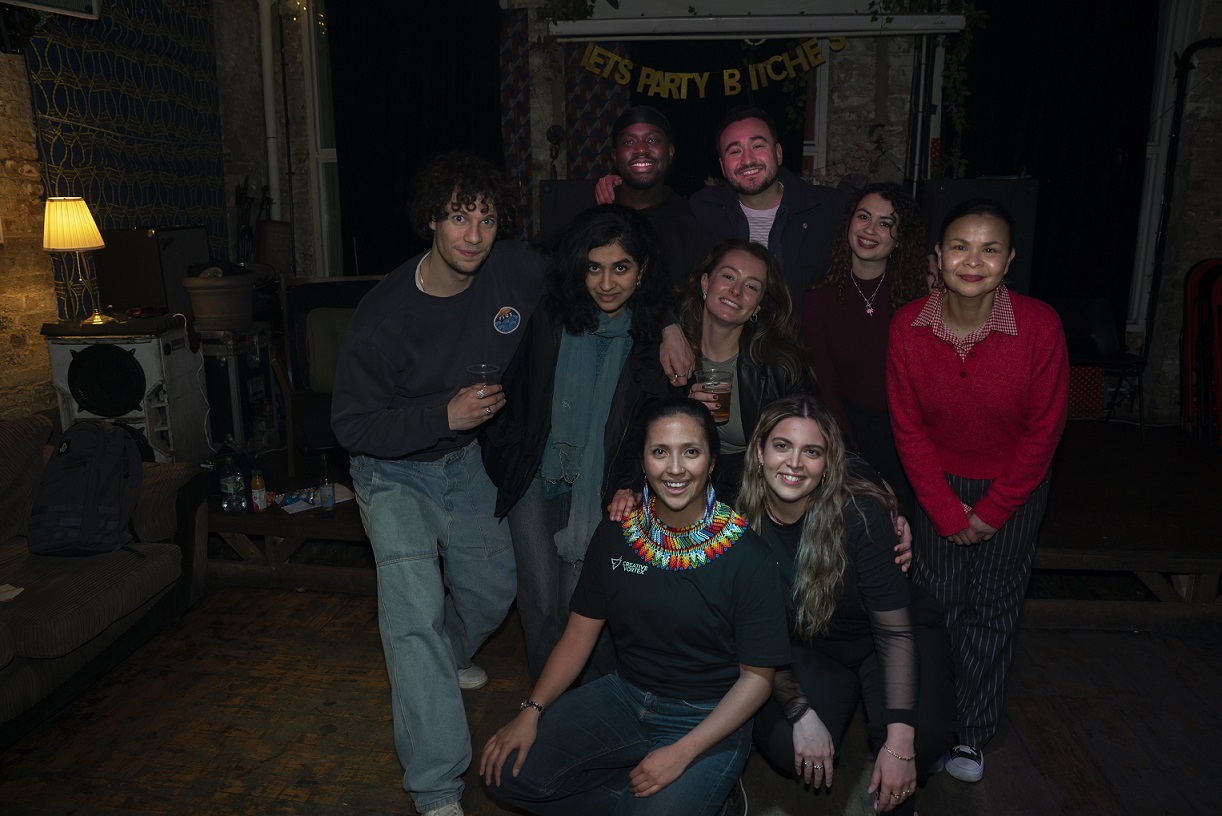 Zac Liew
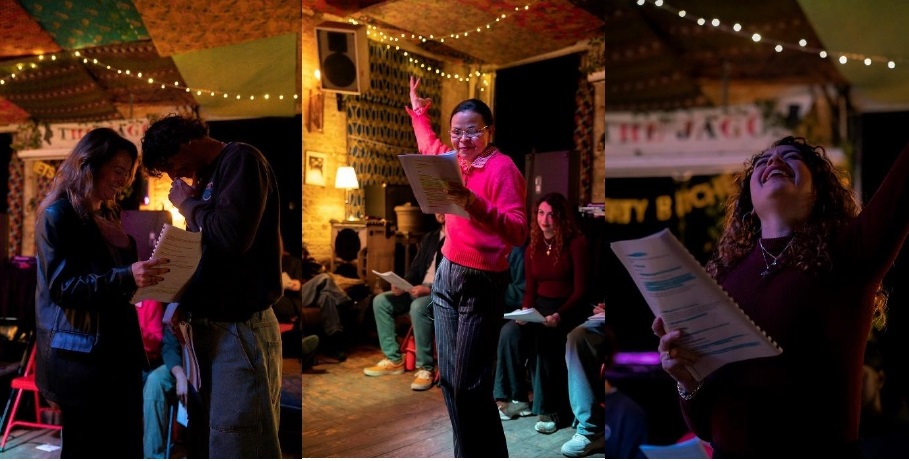
The opening of Barrio‘s rehearsed reading caught the audience by surprise. Expecting a serious social commentary on gentrification, what they got was a scene that made them laugh again and again. Protagonist Santiago is taunted in his kitchen by his friends who team up with his own mother to take it above and beyond. It brings into focus the close bonds of the characters straight away.
“We wanted the audience to ask themselves: Is it OK if I laugh now? Am I supposed to be laughing?” says the producer María Cuervo.
“I wanted the audience to enjoy the performance and not feel weighed down by the difficult topics discussed,” says writer and director Sara Al Ghanem.
The play outlines the dangers of gentrification by playing across the spectrum of human emotion and the nuances of human identity.
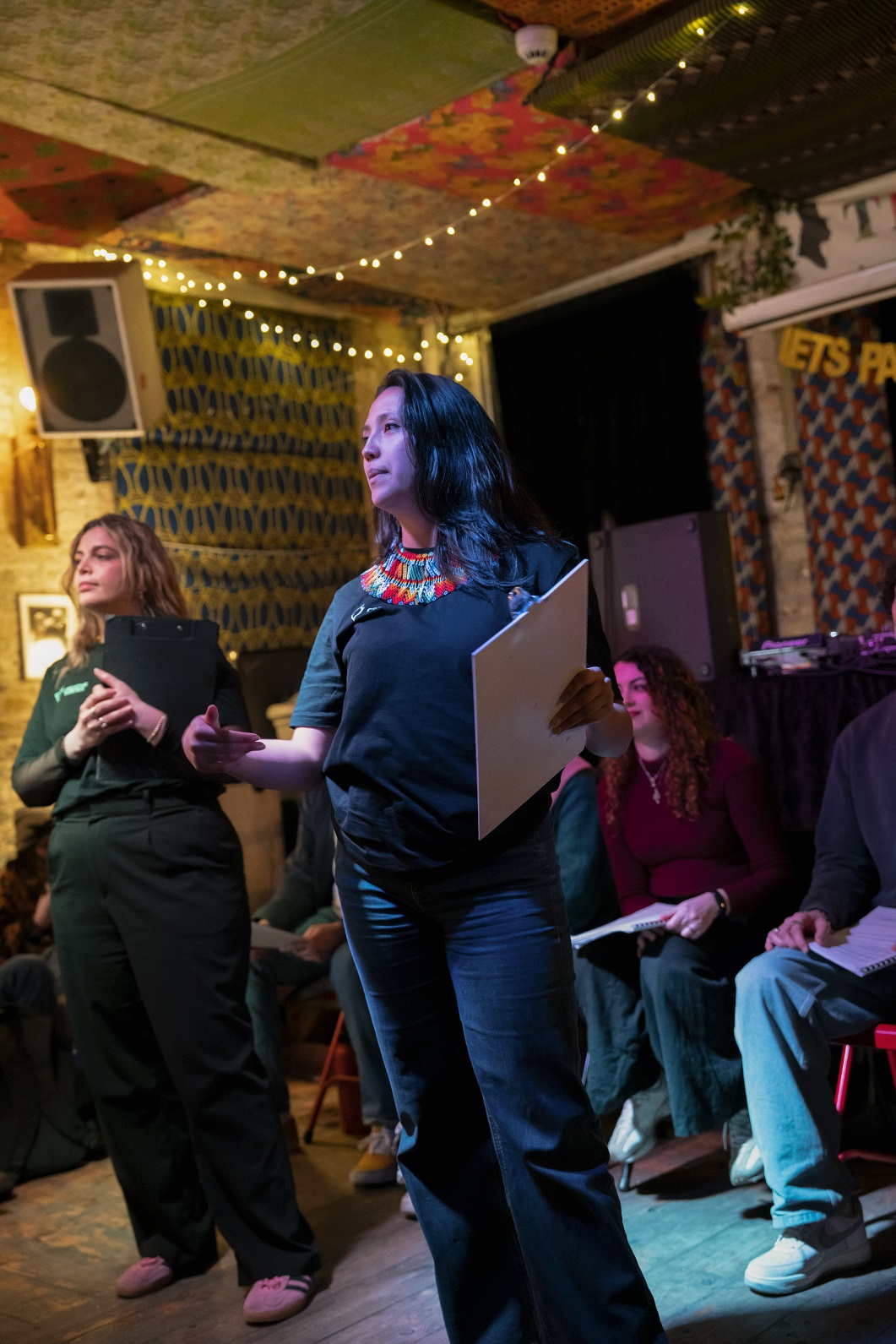 The characters make friends, grow up together, fight, fall in love, break up, and grieve, all on one estate. Santiago goes on a journey of self-discovery and must decide whether to stay in the country he has grown up in or go and seek out his roots where he was born, Barranquilla in Colombia.
“If you don’t know where you come from, how can you know yourself? Santiago feels that a lot of him is missing and some of it might lie in his hometown,” says Al Ghanem.
Santiago must also deal with the absence of his father who is thought to be in Colombia. Many migrant families who live in social housing have a fractured family.
Al Ghanem says she wrote much of herself into Santiago.
“My dad is Palestinian and made a conscious decision not to teach me Arabic. I’ve often felt like a part of me is missing, and I’ve had to reclaim it through my friendships and activism. I think this is a common experience for people of mixed backgrounds or those who have experienced migration.”
Based on her own experience coming to London from Colombia when she was 24, María Cuervo thinks that going to Barranquilla could heal Santiago but that it would involve growing pains.
“Being a migrant I know that changing countries, changing the whole atmosphere you live in, changing your friends, leaving your family behind, learning everything from scratch, speaking a language you are not used to speak, could be exciting for Santiago, but very challenging,” she says.
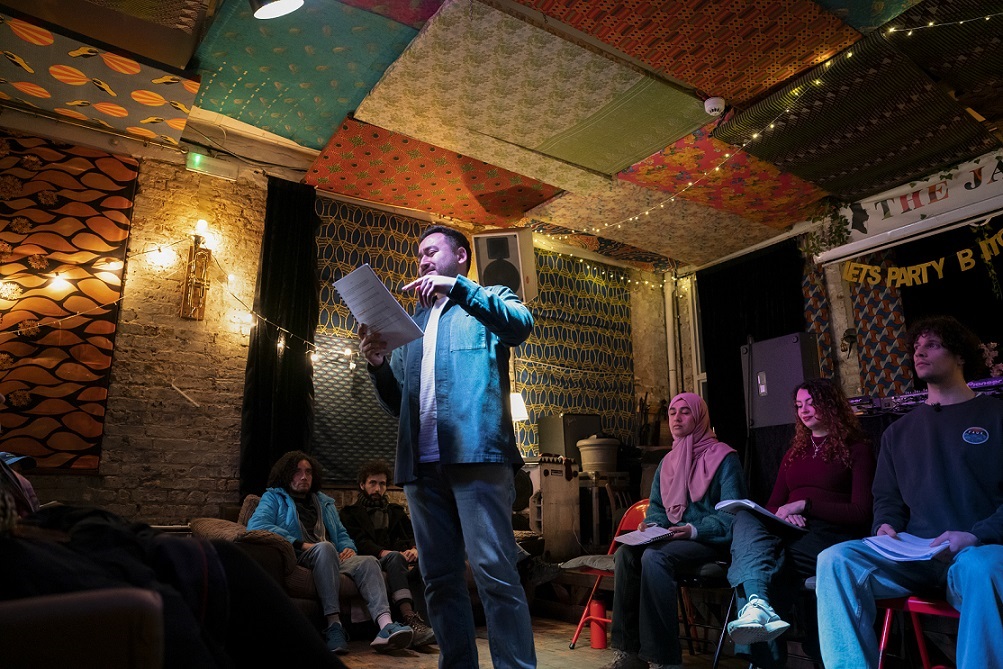 Sara Al Ghanem made friends in Elephant and Castle who lived through its regeneration. She spent months researching to make the play reflect the very real situation unfolding in the borough.
The date of the public enquiry for the demolition of Castleview is a real date taken from a hearing of a regeneration project of Elephant and Castle. St Albans, where two of the characters are told they must relocate, is where people have actually been sent by the council.
“This was probably the hardest thing I’ve ever had to write because I tiptoed around social housing for so long. I’m not from here and I haven’t had an experience of social housing,” says Al Ghanem.
“At first, I felt overwhelmed. I was like, this is too big of a thing, and I can’t tackle it, I don’t know enough! All my limiting beliefs came to the surface. I read through so many documents, conducted so many interviews, watched so many documentaries, and eventually, it all came together.”
The writer and director left the public inquiry scene until the rest of the play was finished so she could make it as pointed with accurate data as she could.
 But the issue of gentrification is itself marked by nuance, as Al Ghanem makes clear in one scene with Santiago and the middle-class journalist he falls for. Sophie comes to Castleview from the fictional media company The Outlier to interview Santiago’s mum but he has a meeting with her first to suss her out.
In this encounter at a bar Sophie lists the drawbacks of gentrification to get Santiago on side and show him her intentions. But Santiago questions her real motivations and retorts with his own list, suggesting maybe it’s for the best that estates like Castleview with their crime and their poverty are being taken down.
“I’m not here to provide the answers I’m just here to ask the questions,” says Al Ghanem.
Universal approach
Al Ghanem and Cuervo wanted to open up the production to more realities than just that of the Latin American migrant community. That’s why characters like Jayce, a black-British boy who makes friends with Santiago, and Kash, a queer British-Pakistani Muslim girl who joins the group, have their own parts to play.
This gave Al Ghanem and Cuervo the opportunity to break down a range of stereotypes thrown at migrants and ethnic minorities. Although Jayce comes to deal drugs on the estate, we see how easy it is for him to find himself in that situation and how he uses the money he earns to fund his friend’s acting career.
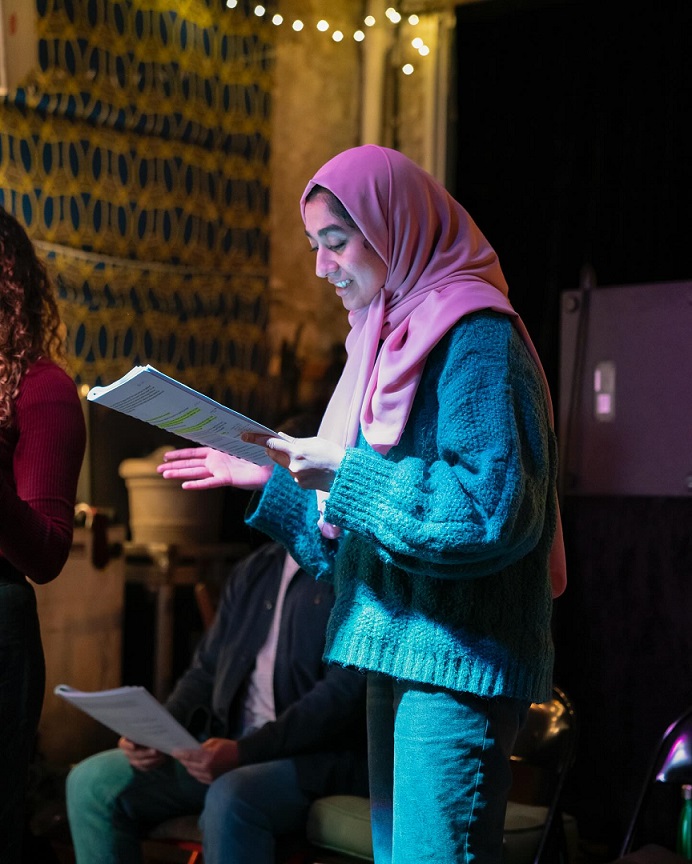
Kash tells her own story of why wearing the hijab is not an oppressive act but one which makes her feel closer to God.
Sara Al Ghanem, María Cuervo and the team at Creative Vortex Productions are on schedule to bring “Barrio” (a project funded by Arts Council England, ACE) to theatres in 2026.
(Photos supplied by the interviewees, authorised for publication)










.jpg)












