
Recent alarming changes in US-Russian relations will inevitably involve the internet cables that hold the techno-human world together, which may partially explain Trump’s interest in Panama, Greenland and Canada. Today’s fibre-optic cables present the same opportunities for great-power conflict as their telegraphic counterparts did in the 19th Century.
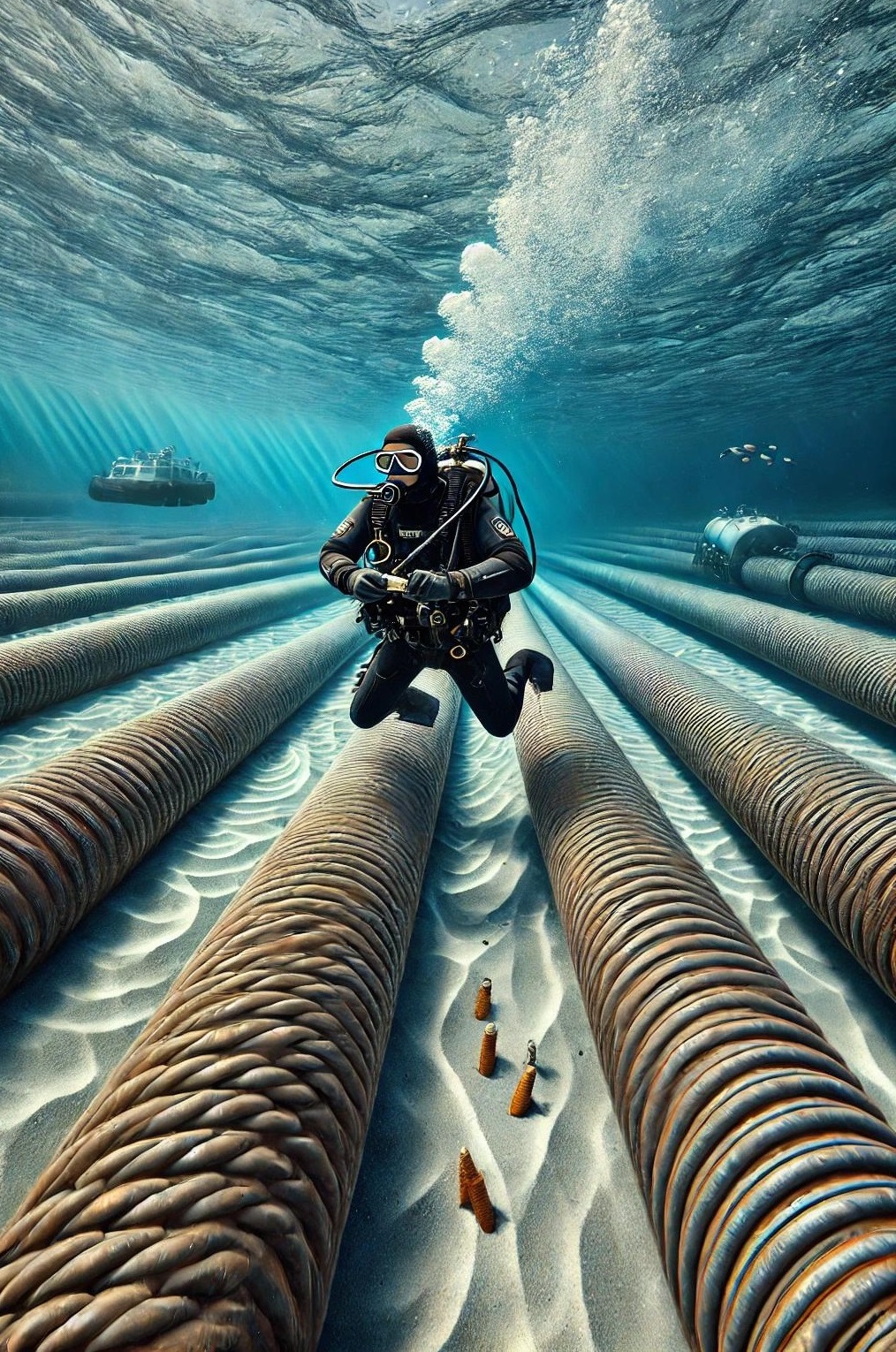 Graham Douglas
This article began in one place and time and ended in quite another as it was blown along by the currents of our interconnected world. Currents especially that flow through the fibre-optic cables that are today’s arteries of human commerce and politics.
A new book by Perri 6 and Eva Heims, “International cooperation when mistrust deepens: Britain and the first international regulatory regime”, uses the growth of telegraphic cables as a case study for their theory of how institutions work in surprising ways. I cannot do justice to their theory here, but this article begins by summarizing the history of cables and cable-cutting as described by the authors in Chapters 5 to 7 of their book.
In the late 19th Century cable-cutting in times of war was discussed, so it’s interesting to see what that can tell us about the recent incidents in the shallow waters of the Baltic Sea where anchor-dragging by Chinese boats is suspected of deliberate sabotage of internet cables. Concern about cable-cutting lessened as radio telegraphy replaced cables after 1900, but today high-speed fibre-optic cables carry 99% of the world’s communications, including banking services and secret military discussions.
Legal problems were recognized in the 19th Century – if a cable links a belligerent and a neutral country in wartime, can the belligerent have rights to cut the cable as spoils of war, and who has jurisdiction? These issues as well as censorship of messages were avoided by relying on the law governing commercial contracts, and today, too submarine cables are owned and operated by private companies – but similarly open to government pressure, as we shall see.
 Until the 1880s the vast majority of cables were British owned and operated, and made landfall at stations in British colonies, making security easier to manage. This situation didn’t please the US Government, which had begun investing in cable-laying, but radio-telegraphy, which was not open to physical control began to take over in the early 20th Century. In the absence of international law, the US used their control of cable landing rights to force companies to use censorship, without needing government involvement.
A turning point was the period 1898 – 1902 marked by two colonial wars. The Spanish-American War led eventually to the loss of Cuba and the Philippines by Spain, and the two Boer Wars in South Africa threatened British Imperial interests. The US succeeded in cutting four Caribbean cables, in one case seizing it and taking it over for their own use, while censorship was used on the Florida-Cuba cable. The US also wanted to cut the cable linking the Philippines to Britain’s colony of Hong Kong, but the UK protested that this was a violation of its neutrality, and in any case the cable was the only way for the US admiral to communicate with the US. An elaborate diplomatic fiction was concocted to get around this situation.
The events of the Spanish-American War made the British concerned about allowing foreign journalists to send reports from South Africa back to Europe during the Boer War.
After this typical meddle-and-muddle approach, clear British Imperial policy developed gradually until just before the First World War, when the cables were recognized as tools in any future great-power war. The German transatlantic cables through the Azores were cut in 1914, while the emerging imperial power of the US was not seen as a threat by the UK.
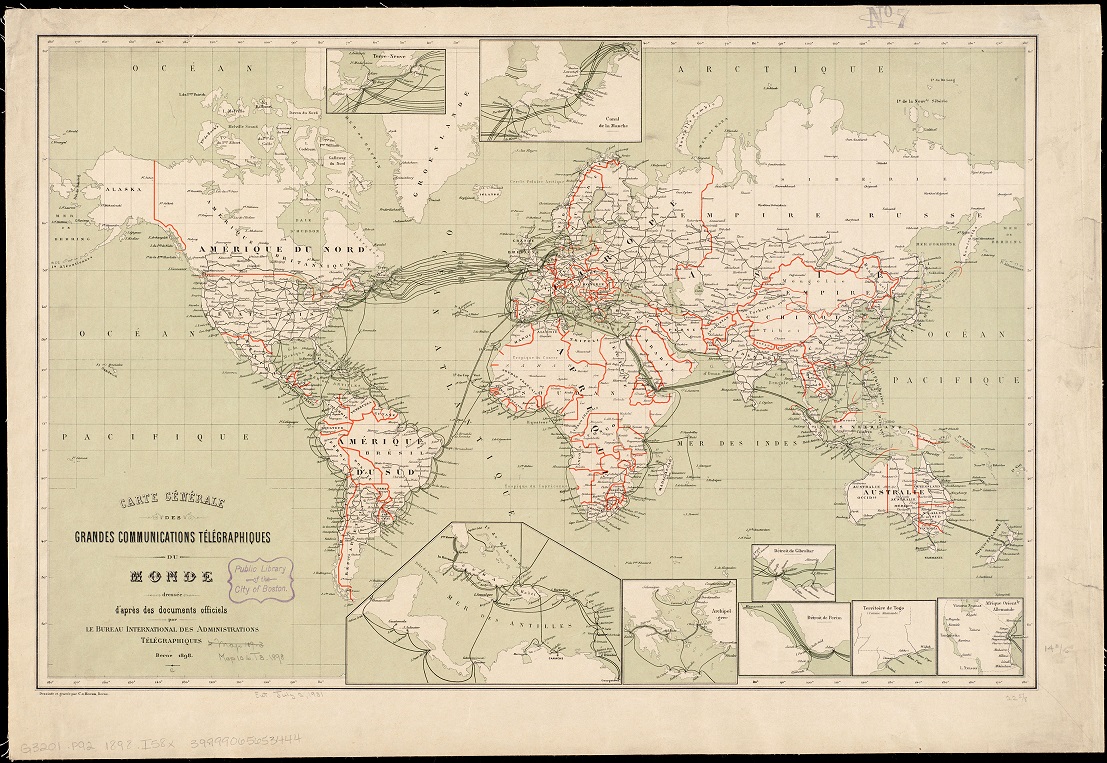
It is interesting to see how extensive submarine telegraphic cables were in this map for the Eastern Telegraph Company in 1901.
Submarine Internet cables today
A constantly updated global map of cables is available online and a freely available one is shown below, accessed from Wikipedia Commons.
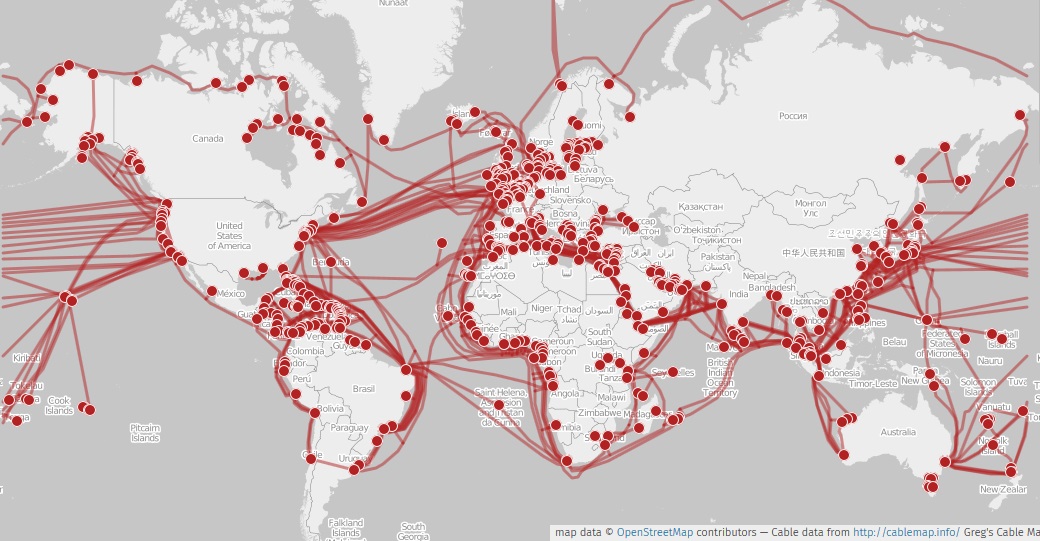
The same issues of vulnerability of cables are in play as they were in the 19th Century: damage from natural and human causes, conflict with fishing rights and concerns about espionage devices attached to cables, plus the new factor of climate change.
An instructive special report by Reuters News Agency was compiled in 2023 on US-China rivalry over internet cables.
Now, as before, subsea cables are privately owned as are the companies that transmit over them, and governments again rely on commercial powers and the location of landing sites to influence these companies. One cable is discussed at length in Reuters’ report, although it is only the largest among a total of six in Asia where the US intervened. Costing $600 million it runs 12,000 miles, from Singapore to France, mostly along ocean floors, and in 2020, a Chinese company HMN Technologies Group was expected to build it for an international consortium of companies including three Chinese ones.
HMN easily won the contract on price against the competitor, SubCom from New Jersey, possibly by Chinese Government subsidy. The prime concern of the US was espionage on a cable built by a Chinese company with three Chinese companies among the consortium that would operate it.
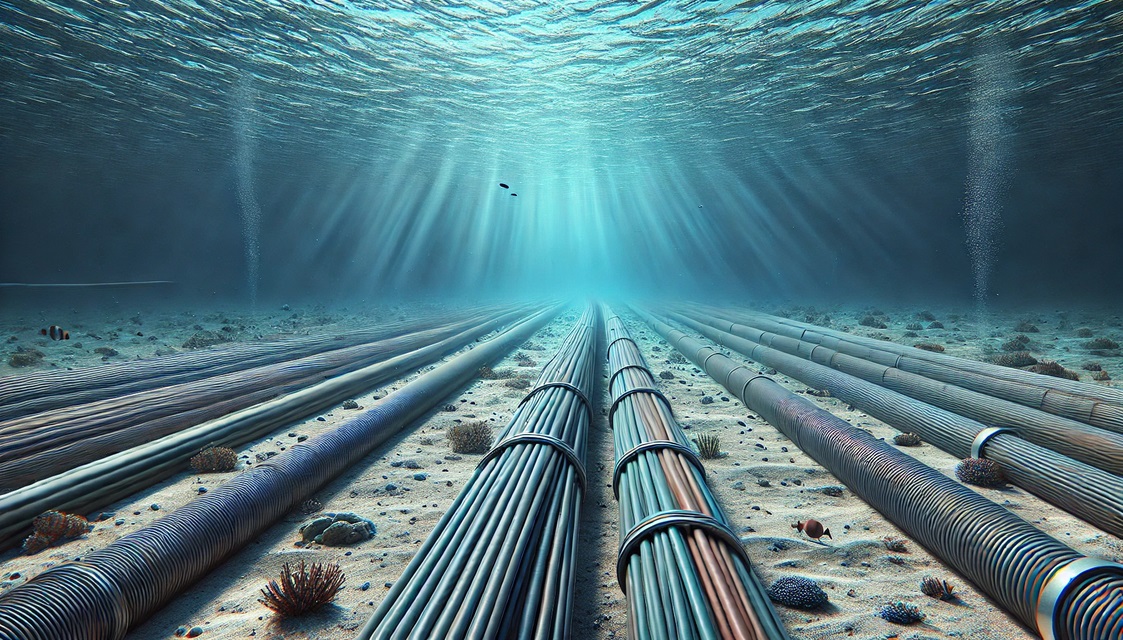
Espionage and damage are difficult to carry out in deep ocean – one group of transatlantic cables to Canada runs near the region where the Titanic sank – landfall locations and the shallow territorial waters nearby are the focus, but a cable manufacturer might also build in spying devices within the cable. The extent of US concern is indicated when the Reuters report mentions that US mega corporations including Google, Meta and Amazon lost tens of millions of dollars when the cables that had already been laid for them were delayed or re-routed by US pressure.
US influence was achieved through offers of lucrative training grants to some of the users if they switched to SubCom, and by pointing out that if a cable could not be used by US companies (the biggest customers) due to US sanctions on companies such as HMN, a cable company would simply go bankrupt after making such a big investment. Once the contract was given to SubCom the three Chinese telecoms companies were forced to withdraw by Chinese government rules preventing them investing in a foreign-built cable.
 How does that lead to Panama or Greenland, two of Trump’s favourite targets? Strategically important cables run through or beside the Panama Canal and Chinese companies were involved in ports at both ends – no longer, because their stakes have suddenly been sold to Blackrock, to Trump’s delight. Panama’s importance is emphasized by a real estate investor boasting about the technological marvels of her desirable country: the Beverley Hills of Panama City! For the Suez Canal, the necessary inducements already exist from Egypt’s economic dependency on the US, and Israel’s closely intertwined surveillance and defence relationships with the US.
Climate change and the Northern Sea Route
Trump’s public argument is about minerals and mining rights in Greenland – as in Ukraine – but a longer-term issue is clear in reports by the Londonpolitica agency. Climate change is melting the arctic ice and making the Northern Sea Route a possible alternative from Asia to the Americas. Russia is investing heavily in its northern regions as well as asserting ownership of a large part of the route on the basis of an undersea mountain chain being an extension of the continent beneath its own land.
 The earlier concept of One Arctic has given way to one divided between NATO and Russian interests. Russia is seeking allies elsewhere, including not just China which could clearly benefit from its own geographic position, but other members of the BRICS countries, with India actively interested in shaping this distant part of the globe for its commercial interests. And Canada, also threatened by Trump, is moving to strengthen its Arctic military posture.
There is only one internet cable to Greenland, going on to Iceland and Europe, but Trump needs Greenland for long-term geopolitical strategy, The scramble for Greenland and the Arctic, like that for Africa in the 1880s may see it carved up by Trump and his new buddy Putin, or it may lead to war.
(Images generated with artificial intelligence using ChatGPT)










.jpg)















