
Gangs and other armed groups are trying to isolate the population and sow chaos in the country by attacking the media. Their objective is to intimidate the media and put an end to its core mission of informing the public.
 Joel Varona
The fear among the journalistic trade persists, hence the National Network for the Defence of Human Rights in Haiti has expressed its concern for the dangers faced by the entire sector in the face of the armed group’s fury.
In mid-March, heavily armed criminals carried out an assault on Tele Pluriel and, in line with their usual modus operandi, attacked, vandalised and looted the premises then, to finish the fateful episode, they set fire to the offices causing significant damage.
The same fate befell Radio Televisión Caribe, Port-au-Prince’s oldest radio and television broadcaster, which will have been running for 76 years in June.
The employees were in a state of shock since it is not just about Radio Televisión Caribe, it is what it represents, which constitutes a heritage with a symbolic dimension.
Founded in 1949, it is established as one of the media outlets most followed by Haitians. The attack represented another affront against the news media, an additional threat, and is proof that the gangs are not going to stop their offensive in the capital and surrounding area.
Criminal gangs also looted and vandalised Radio Mélodie FM’s offices, situated in Capois street in Port-au-Prince. During their raid they broke several windows, damaged doors and desks and destroyed the building’s front wall.
Haiti’s National Media Association said it was astonished by the news and described as despicable the deeds that reaffirmed the continuity of chaos created by the bandits. Its view is that when this happens what is lost are the memories and history of a nation.
 According to Frantz Duval, editor-in-chief of the daily newspaper Le Nouvelliste, the gangs’ actions hinder the free movement of the press. It is very difficult to get around Port-au-Prince; those reporters that are still working find themselves limited to ever-more restricted areas.
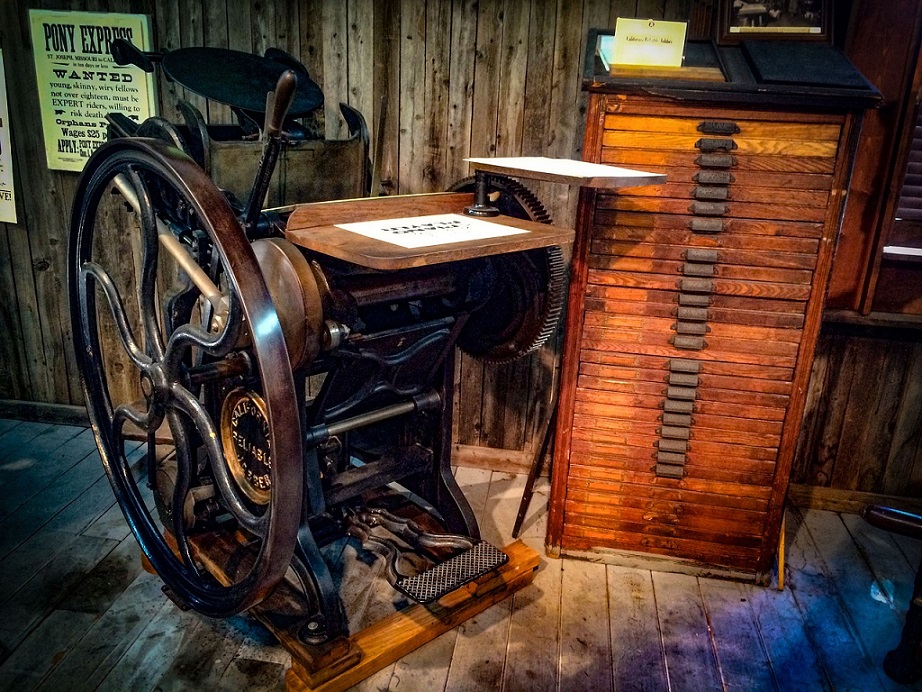
This means there are fewer images, news stories and reports from the areas where violent confrontations occur, as journalists no longer venture into them, Duval emphasises. He recalls the premises of Le Nouvelliste were vandalised in March 2024. The journalists were unharmed because they had already fled the premises but they were unable to take the presses or archives with them.
“We couldn’t go back inside, and when we did hardly anything was left, which means now we are an online-only news outlet,” says Duval.
Eric Voli, Head of Department at the United Nations Organisation for Education, Science and Culture (Unesco) in Haiti, describes the situation as alarming.
 For that reason, Unesco asked for measures to be adopted immediately to guarantee journalists’ safety, protect their premises and create a safe environment for the press to operate freely.
Access to reliable information can be a question of life or death in Haiti as it helps people identify safe areas, avoid danger and take the correct decisions to protect themselves and their families.
In a country marked by violence and instability, knowing the truth can be incredibly beneficial, asserts the Unesco official. This dark spring is preceded by mourning and pain in Haiti because families and friends are still waiting for justice over the deaths of two journalists on 24th December as a result of a gang attack in which seven other reporters were also seriously injured.
The incident occurred near the General Hospital, the country’s largest medical centre, which was about to be reopened in the presence of the former minister for public health and population, Duckenson Lorthé.
Haiti is at risk of becoming a media blackout zone due to the attacks on the press and the obstacles that hinder journalists in their work now.
 The situation has serious consequences for access to information for citizens and for the world.
According to the online daily Haití Libre, alarmed journalists are fleeing, reducing their media coverage or leaving the profession completely.
Since January 2022, fifteen media workers have been murdered, others have been injured and several reporters have lived the bitter experience of being kidnapped.
All these factors make Haiti one of the most dangerous countries in the world to be a journalist. The results of a survey by the United Nations Organisation for Education, Science and Culture, published by the Haitian newspaper, show that 76% of journalists suffered threats related to their profession and 62% were the target of verbal or online harassment. 30% were victims of physical threats and 54% indicated that the siege affected their work. PL
(Translated by Philip Walker – Email: philipwalkertranslation@gmail.com) – Photos: pixabay










.jpg)












