
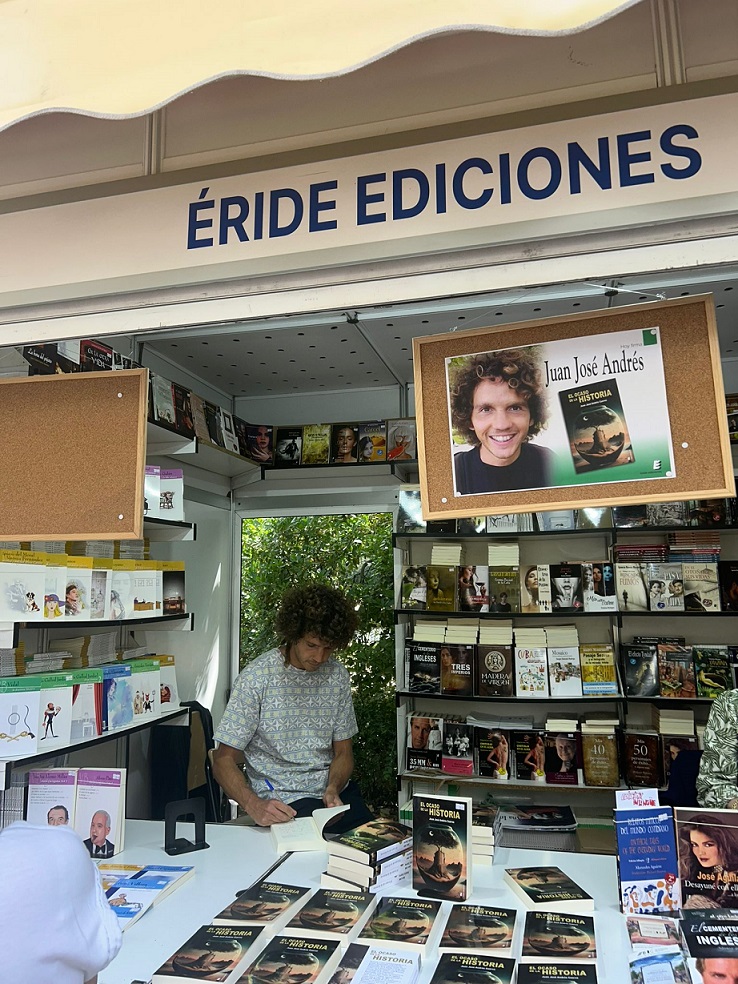
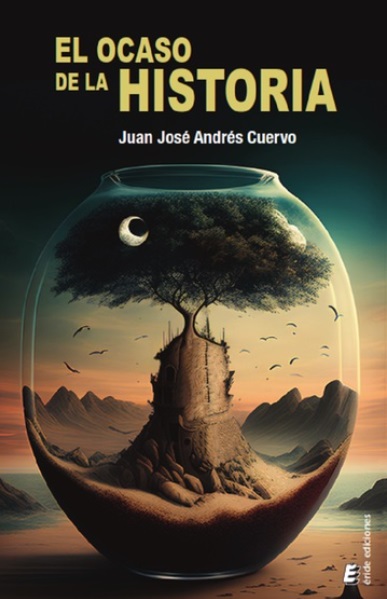
This is the title of the first novel by Juan José Andrés Cuervo, a Spanish journalist from The Prisma, who decided to immerse himself in history, first through academia and then through literature. In this book, he imagines a society where the ideas of cooperation, solidarity, and mutual aid have become hegemonic.
 Ernesto Goldman
The result is the establishment of a free and egalitarian society.
“It is easier to imagine the end of the world than the end of capitalism”. The sentence is attributed to Fredric Jameson, the late Marxist theorist who spoke about the cultural hegemony in our current world.
Following that premise, capitalism is the only viable economic system and there can be no imaginable alternative. “El ocaso de la historia” (“The twilight of history”) goes against that: it imagines a world without capitalism.
The story of the novel starts in 2604 in Krevana, a fictitious city where humans implement an anarchist-communist society.
Their premises are based on freedom and equality for all, respect for sentient beings and the environment, free love, and the provision of material needs to everyone. There is no money, no incurable illnesses, or conflicts.
The survivors use technology to implement their ideas for the benefit of all. Humans live peacefully, engage in constant discussions as part of the education system, and choose the number of hours per day that they dedicate to work.
The humans in Krevana are the descendants of the survivors of the Last War, a conflict that ended in 2105 with the launch of the Omega Bomb. In 2604, a watershed moment occurs that triggers the main events of the book.
 In the first chapter, the four main characters of the novel — Vienne, Corwa, John, and Larx — attend the Plaza de la Libertad. It is Graduation Day and, having just finished university , they and many others, including the inhabitants of Krevana, participate in the commemoration.
During the event, the speaker of the Libertarian Council, Norx, announces that something terrible has just happened. From then onwards, the characters strive to seek the truth, discover that there are humans beyond Krevana, and will face an existential crisis when engaging with them.
A utopia for today
Despite being set in the future, the story is clearly influenced by the present-day world. It highlights the role of the media, offers criticism of the elites who manipulate the masses for their own benefit, and their ruthlessness in imposing their ideas by force.
But most of all, it is a story of hope. It emphasises that a world based on the principles of mutual aid, freedom, egalitarianism, cooperation, and solidarity is possible.
To achieve that, the role of education in challenging hegemonic ideas is essential. While people in Krevana believe in cooperation and care, in other places they still follow remnants of old capitalism — albeit in a less perverse form.
The book showcases how the human condition can be shaped in different ways. In the city of Krevana, technology and anarchist-communist ideas merge to create a better world for the majority.
 “El ocaso de la historia” is a relevant utopia for the 21st century — because we have the technology to thrive and distribute wealth for everyone. It is only the ideological decisions of elites that undermine this project.
“El ocaso de la historia” by Juan José Andrés Cuervo, was published in April 2025 by Éride Ediciones. It is only available in Spanish. It can be purchased by clicking here.
(Photos supplied by the author)










.jpg)












