
In Northern Ireland, xenophobic riots against immigrants, driven by summer marches, Loyalist paramilitarism, and social media misinformation, reignite historical divisions. In cities like Ballymena, industrial decline fuels narratives ignoring low immigration, revealing intolerance, discrimination, and tensions as expressions of an enduring conflict.
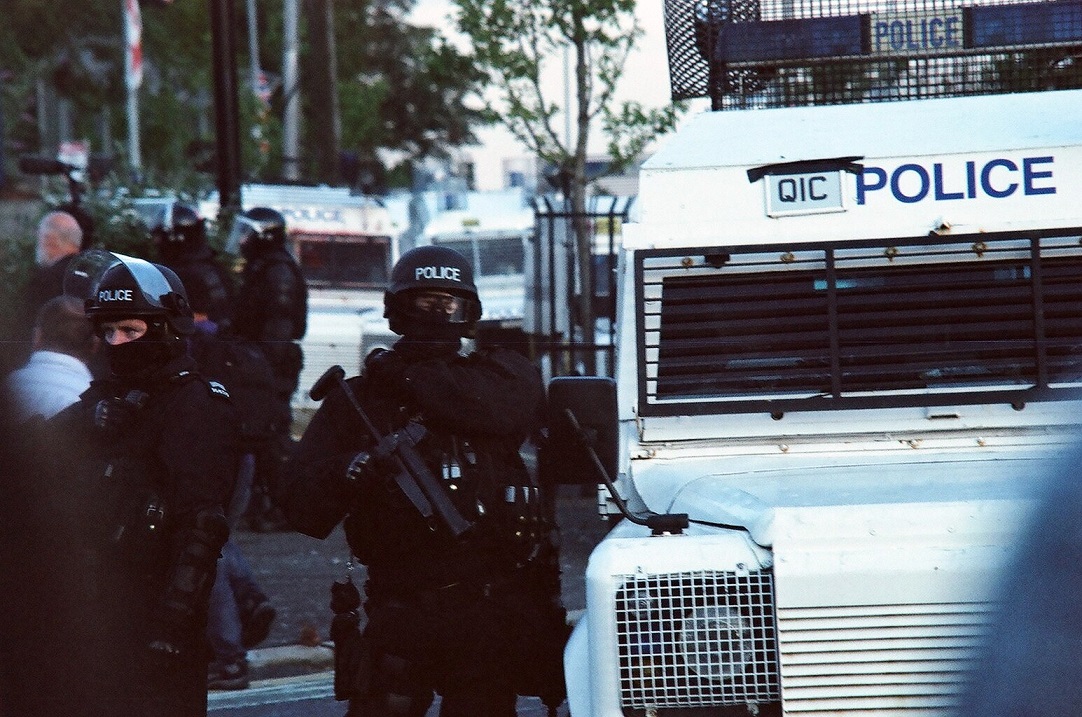
Clonavon lies on the north side of the Braid river, at the entrance to Harryville in Ballymena. A bit eastward lies Ballykeel estate.
The ‘bottom end of town’ is a bastion of British Loyalism, though scratching Ballymena’s history, back to the 1798 rebellion, reveals a near-forgotten connection with Protestant militant Irish Republicanism.
More than a few rebel Protestants would lie in local churchyards with their muskets and clothed in green, forgotten by history. The terms ‘Catholic’ and ‘Protestant’ in the north of Ireland can be misleading, though ‘Catholic’ and ‘Irish nationalist/Republican’ overlap to a degree, as do ‘Protestant’ and ‘British Unionist/Loyalist’. Therefore, the actual divide is based more on national loyalties and whether you went to a Catholic, or a state school but nevertheless, a certain degree of religious antagonism does persist, with evangelical and apocalyptic Christianity still popular and mixed in with Unionist politics.
The conflict in the north of Ireland’s six counties went on through and beyond the signing of the 1998 Good Friday Agreement, which aimed to create some level of parity of esteem and cooperation between nationalists and Unionists. Political violence gradually wound down over the two following decades, but even now lower level paramilitarism in Loyalism remains, and to a lesser extent with dissenting Irish republicans.
Sectarian antagonism reaches an annual height during July and August, when the Protestant Orange Order has its parades, often accompanied by Loyalist rioting whenever parades are stopped from going through nationalist areas, due to residents’ objections.
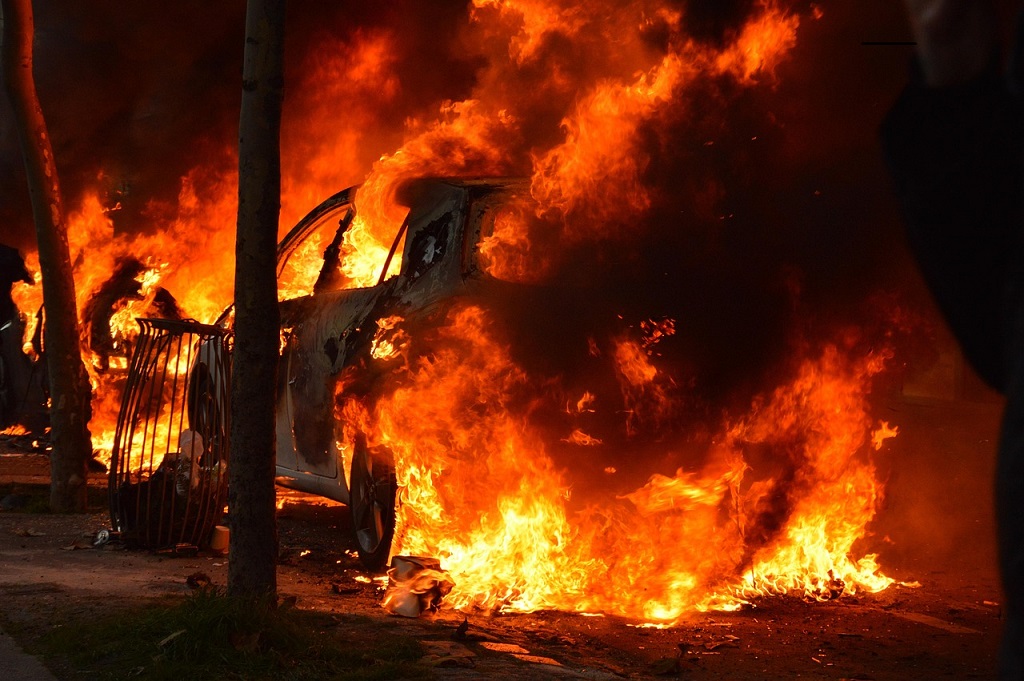
Marching season is often marked by sectarian arson attacks on Catholic property and rioting, and many Catholics opt to go on holiday, either to nearby nationalist areas like the Glens of Antrim, or towards the Irish Republic to places like Donegal.
Currently, a racist element to summer disturbances is focusing on post-conflict immigration into the area, with south Asian, Filipino and eastern Europeans moving in from the early 2000s.
Some argue that there is culture clash with ‘Romanians’, and only them, with the term seemingly confused with Roma people, as there are Roma living locally from various countries like Bulgaria. Some local nationalists have commented therefore on how ‘July is starting early this year’. With July’s marching season comes flags and bunting. This decoration includes a far right element with white nationalist flags flying alongside the usual British national and Loyalist paramilitary organisations’ flags. While some fly all year round, the bottom of the town covers itself in such regalia during the marching season.
Lighting the fuse
Two 14-year-old Romanian boys appeared in court on June 9, 2025 charged with a sex crime on a teenage girl, so a case is ongoing.
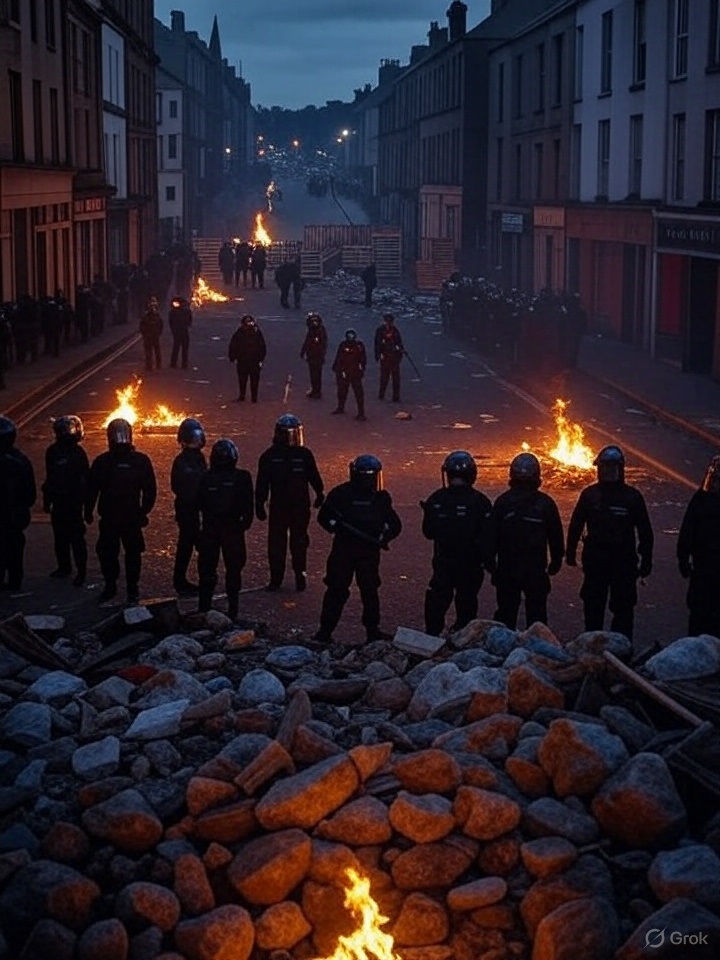 However, much like the Southport riots in 2024, on hearing the nationality of the accused, many jumped on this, leading to several nights of rioting in and around Clonavon Road which spread to unionist areas in neighbouring towns like Larne, where the leisure centre was attacked on hearing that foreign families were being temporarily accommodated there, Coleraine and Portadown.
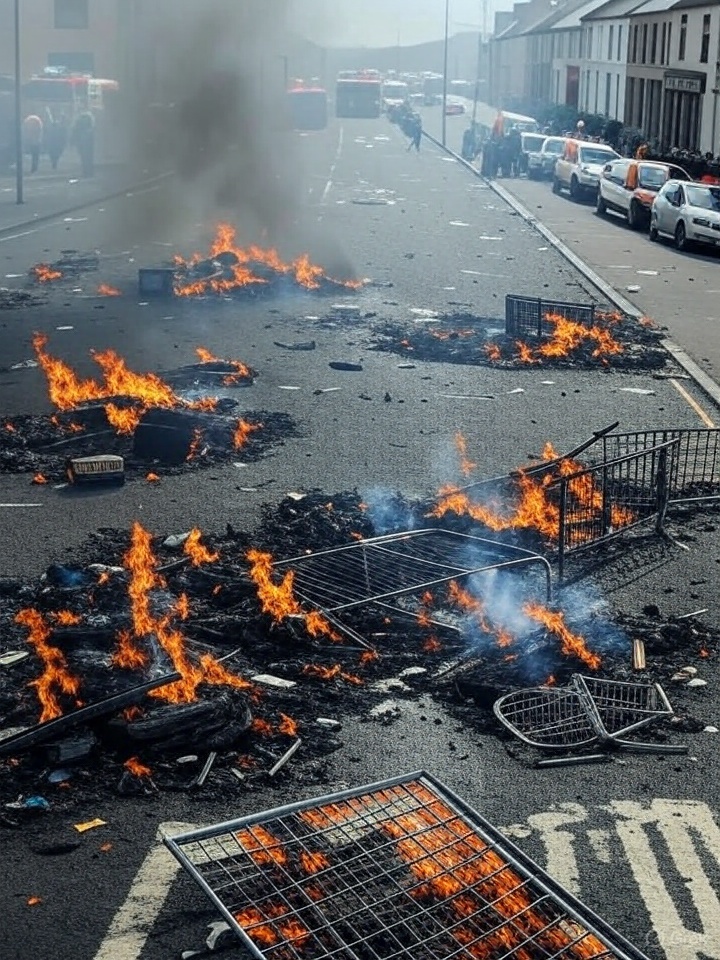
Several miles from Ballymena in Cullybackey, a Filipino family’s car was set alight, leading to a house fire, so the violence wasn’t confined to one group of immigrants, but ‘foreigners’ in general. Several houses in the Clonavon area were sacked and torched while rioters battled with police. Immigrants have since hung out British flags with ‘LOCALS LIVE HERE’ stickers on their windows hoping to avoid attacks.
Some local nationalists have questioned though “what would happen if it were Irish tricolours that they hung out to avoid attacks?”
Misinformation and Social Media
Back in 2006, a local Catholic teenager, Michael McIlveen, was killed in Ballymena town centre by a Loyalist gang. In the wake, and indeed for many years after young Mickey Bo’s murder, there was outrageous sectarian mockery of his death on online platforms.
Social media pot-stirring has evolved and spiralled since then and images or reels of destruction are plastered all over online platforms, with social shares of the mayhem, and rioters’ family members defending accused relatives online while finger-pointing at foreigners.
Politicians have also been criticised for their pronouncements.
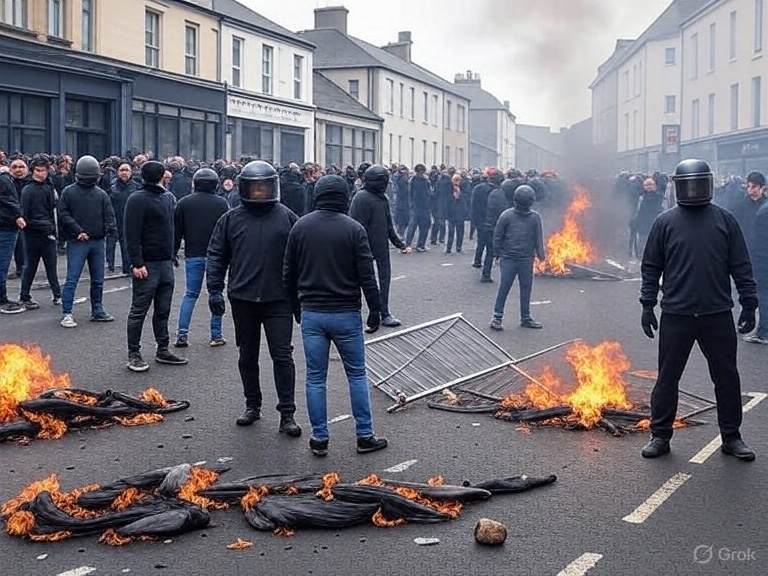 Unionist politicians tend to accompany condemnation of violence against the police with comments like ‘legitimate concerns’, ‘busloads of immigrants’, ‘asylum seekers’, ‘unchecked immigration’, demonstrating an ignorance of these immigrants’ status and motive, without acknowledging that immigration levels are among the lowest in the British state, running at well below 4%.
Urban decay and recreational violence
Ballymena was at a time an employment centre, though it has suffered the hammer blow of the loss of two major well-paying factories, Michelin and Gallaher’s Tobacco. Wrightbus, a local bus manufacturer, was eventually bought over and taken out of administration after about 1,200 people lost their jobs in 2019 in the wake of millions from company funds ending up with an evangelical church. Economically, things aren’t brilliant, though Wrightbus has bounced back under the new ownership. Ballymena also has an infamous drug problem, having the reputation of Northern Ireland’s scoring capital for heroin, with multiple deaths and overdoses over the last 30 years resulting from smack. Local accusations of foreigners being involved in antisocial behaviour like drug dealing and street crime would therefore ring extremely hollow. The town has a reputation for drugs, dating back to the rave scene of the 1990s.
Some may tie the town’s woes to lack of opportunities but this has gone on for years, even when there was industry. What does exist in the northern Irish statelet is a recreational addiction to feral street violence coming out of the political conflict, alongside Unionist feelings of ‘being left behind’ the rest of the UK, leading to lashing out against the nationalist community, which is now morphing into violence against immigrants who make up really only 5% of Ballymena’s population, the Roma making up a small fraction of that.
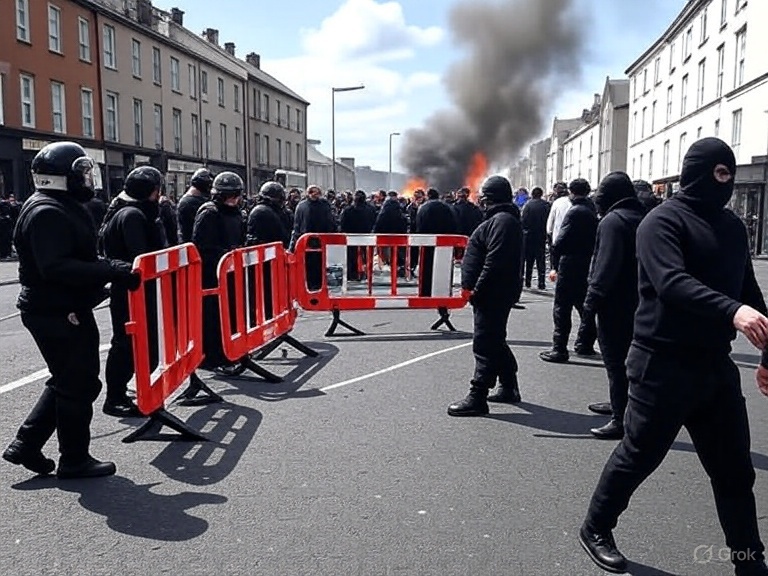 There exists a ‘Yeow!!!’ type of nihilistic and opportunistic drunken, drugged-up rioter, out for kicks and a chance to get at authority, and subsequent court cases attest to that, with some accused pleading drunkenness with no particular grievances towards immigrants.
Challenging the narrative
We need to challenge this defensive claim that ‘they listened to us this time’ because of the rioting. The bottom end of town is homogenous, with Catholic families having gradually moved away during the conflict due to sectarian tension and violence, many to the top of the town, Ballymena’s north end. There is an unresolved history and legacy of sectarianism including attacks on Catholic schools, churches, and property and people. While some nationalists may have mumbled some tacit support or comprehension of attacks on the foreigners, their involvement in rioting would have been virtually non-existent, with clearly coordinated pogroms coming courtesy of Loyalist paramilitarism.
The six counties also have a history of misogynistic violence, with attacks on females of a sexual nature and otherwise at worryingly high levels. There have been ongoing cases locally lately, with convictions of locally-raised predators with no accompanying comment on the attackers’ origins, so racist narratives need challenging along with strong action on the actual problem.
 And remember that a united Ireland free from London rule is on the horizon.
The six counties are on the verge of being a larger element of the wee country it was once part of than it is to the often-ignored backwater which it currently is within the UK.
An Ireland reunited after a century of partition, and independent, would be better positioned than its currently-divided version is to plan and deal with social issues, ready to fuse its cultural divisions.
While political Unionism fears independence and reunification, Protestant participation is essential and welcome, and cooperation would help build a bright future in a wealthy rainbow Ireland as opposed to a UK in terminal decline.
(AI-generated images with Grok 3, created by xAI)
PoliticsJOE with local youths discussing the rioting in the area and its fallout.










.jpg)












