
“The boys” is about a small number of characters who live around northwest London and who, on the face of it, are not unduly troubled by the fractures and complexities of their world.
 Sean Sheehan
There is little sense of crisis or despair and the novel itself reads as curiously old-fashioned for an author, Leo Robson, who is well versed in modernist literature; he writes about literary matters and has been a Booker Prize judge
The central characters – the ‘boys’ of the book’s title – are Johnny, the narrator, and his older brother Lawrence. Their aunt is Miriam, Johnny’s longtime friend is Kate, Emily is his onetime girlfriend and Chloe a more recent one. The other characters are friends, acquaintances and, in one case, kin: Harvey, Rory, Jasper and his girlfriend. The year is 2012, the time of the London Olympics, and the fault lines in Johnny’s family provide the traction for what is, structurally, a family drama.
 The writing is allergic to the portentous and anything verging on the intellectual is not allowed to develop into an obvious concern or theme.
When someone declaims their dislike of analogies this is because, they explain, it would suggest that what something is could be known in the first place: “No absolutes or conventions.
Nothing is, as they say, ‘given’.” Johnny, asks quite reasonably if this is what is meant when people talk about postmodernism and he receives an instant reply: “Not really”.
While we are told the debate continues, the reader is not privy to the rest of the conversation and the reader never finds out what position is being held if it’s not a postmodernist one.
This kind of opaqueness characterises the conversations that make up so much of the writing – the novel could be produced as a stage drama, with various characters entering and exiting – and it strangely begins to draw in the reader.
The two brothers’ mother has recently died and Johnny’s grief, never overtly demonstrated, is very palpable as he holds on to singular moments like her dying breath, a sound which he cannot identify but which becomes precious: “I cherished my mother’s being as ungraspable”. As another novel about family relationships and the fallout from the death of a loved one, “The boys” traverses familiar novelistic territory.
 The ground becomes more precise when the age divide between some of the characters makes itself felt and some of the characters’ ruminations create a space for pondering. Lawrence observes to his brother that, brought up in a pre-digital age as he was, “Back then, we didn’t have so many views”. Johnny remembers New Labour and the exciting prospects that the landslide election of Tony Blair held out. He was 15 at the time and the far younger Harvey is curious about how it must have been to feel hopeful about the future.
There are aspects of this story that sometimes annoy, like the interminable conversations, an occasionally flagging pace and background information that remains just background, but it piques the reader’s interest.
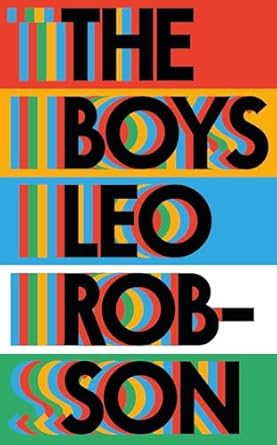
“The boys” by Leo Robson, is published by Quercus.
(Photos: Pixabay)










.jpg)












