
During Bolivia’s good years under ex-President Evo Morales and the MAS (Movimiento Al Socialismo) party, illiteracy rates dropped to 2%, extreme poverty was reduced by two-thirds, and the middle class thrived.
 Sean Sheehan
An economic crisis, followed by a political one – see Mutiny in Bolivia – has now decisively crushed prospects for the left.
For the author of “Visions of transformations”, the problem lies with the structure and economic vision of the hierarchically organized MAS. It relied on prioritizing production from hydrocarbon fuels and industrializing agriculture at the expense of a more plural economy. Its “extractivist mode of production” continued a capitalist model, vulnerable to market forces, and bypassed the possibility of a broader approach to the economy.
The top-down approach of Morales and the MAS is categorized by the author under the theoretical concept of hegemony. It looks to a political leader leading the will of a perceived social totality and the author traces how this hegemonic thinking developed in Bolivia. The year 1985 is seen as nailing the coffin on the Bolivian state founded by the 1952 National Revolution but the neoliberalism that followed ran its disastrous course and mounting discontent led to a new government in 2006 and the country’s proceso de cambio.
This book traces the theory of hegemony through Antonio Gramsci and, in Bolivia, René Zavaleta Mercado and Álvaro Garcia Linera.
Opposing hegemony is an outlook that does not elevate one culture, ethnicity or economic mode over others. Such exclusivity should give way to shared decision-making and multiplicities of thought and action.
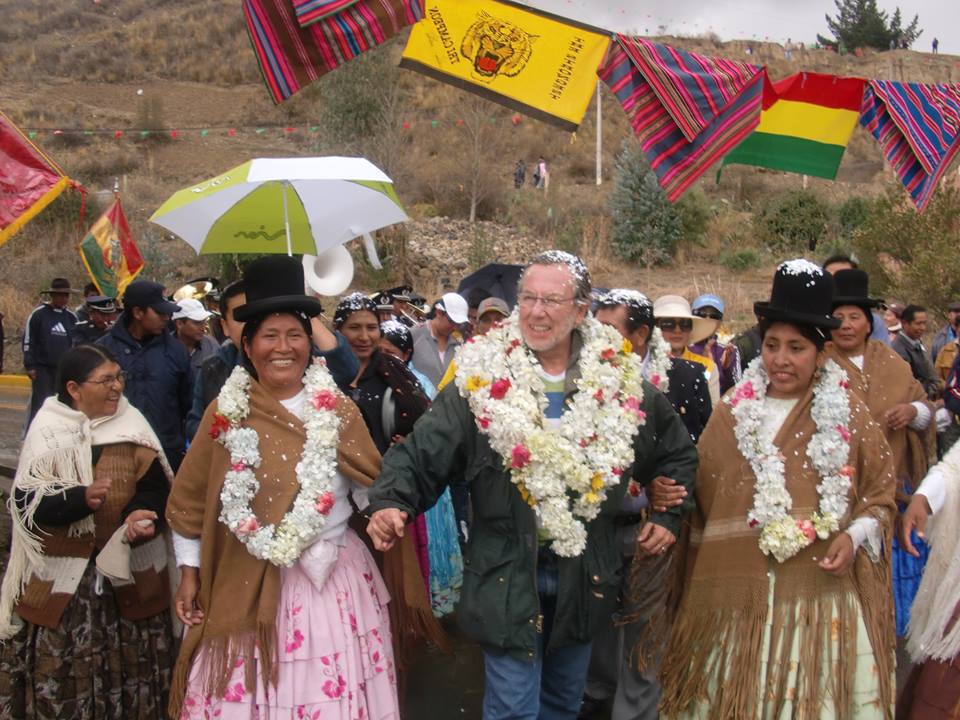
The author sees this as part of plurinationality, “used to articulate a multitude of subnational socio-cultural formations” like peasant unions and organizations around neighbourhoods and indigenous groups. It is allied to ideas about hybridity and challenges essentialist notions whereby mestizaje masks “a reality of racist exclusion through the promotion of national homogenization”.
Through the tensions and contradictions of hegemony and plurinationality, the core of the book examines critical moments in Bolivia during the proceso de cambio: the attempted building of a highway through indigenous territory; the struggle for control of CONAMAQ, the country’s most important indigenous organization; the functioning of Charagua, the first autonomous indigenous community created under the 2009 constitution which established Bolivia as a plurinational state.
 “Visions of transformations” is a valuable study of what has been called the first revolution of the 21st century and if the revolution failed this may ultimately be down to the weighting given to a way of thinking that is tracked in the book as hegemonic.
Jeremy Corbyn knows Bolivia well and will share the disappointment over the result of the country’s recent general election.
He is, to judge by what is coming out about the new, provisionally named Your Party, surely looking to create an organization with the politics of MAS but not its hegemonic understanding of state power and the organizing of resistance.
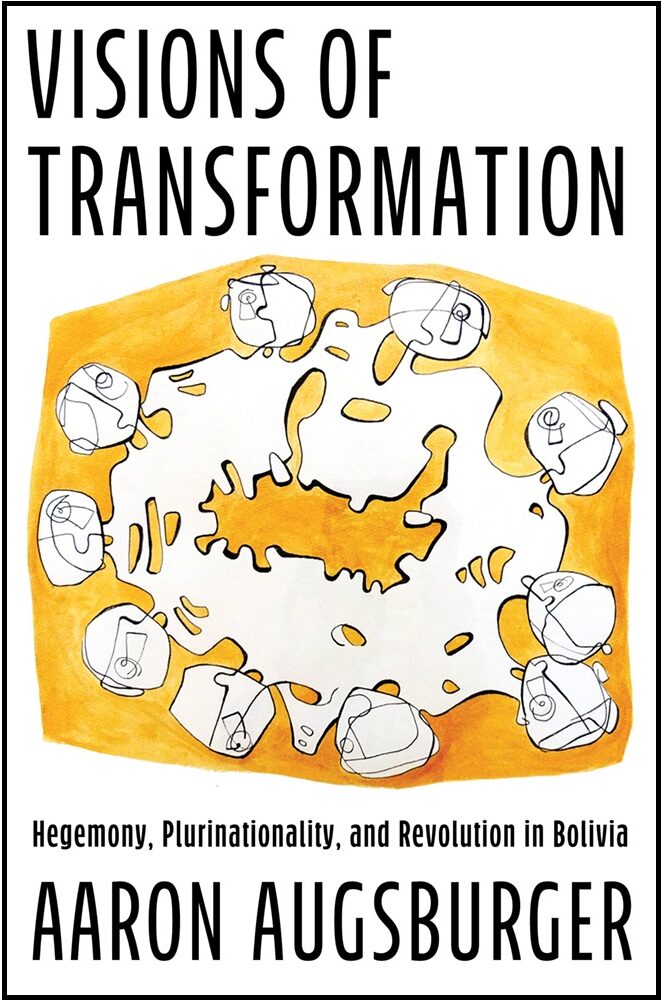
“Visions of transformation: hegemony, plurinationality, and revolution in Bolivia” by Aaron Augsburger, is published by The University of Arizona Press.
(Photo: Pixabay)










.jpg)













