
The collective strength and resilience of women resisting threats to their lands, communities and futures is documented in “Rooted in Resilience”, an eloquent collection of images from Brazil, Nigeria, Cambodia and Nepal. The women share insights on their work and struggles. The exhibition runs from 9 to 12 October in London.
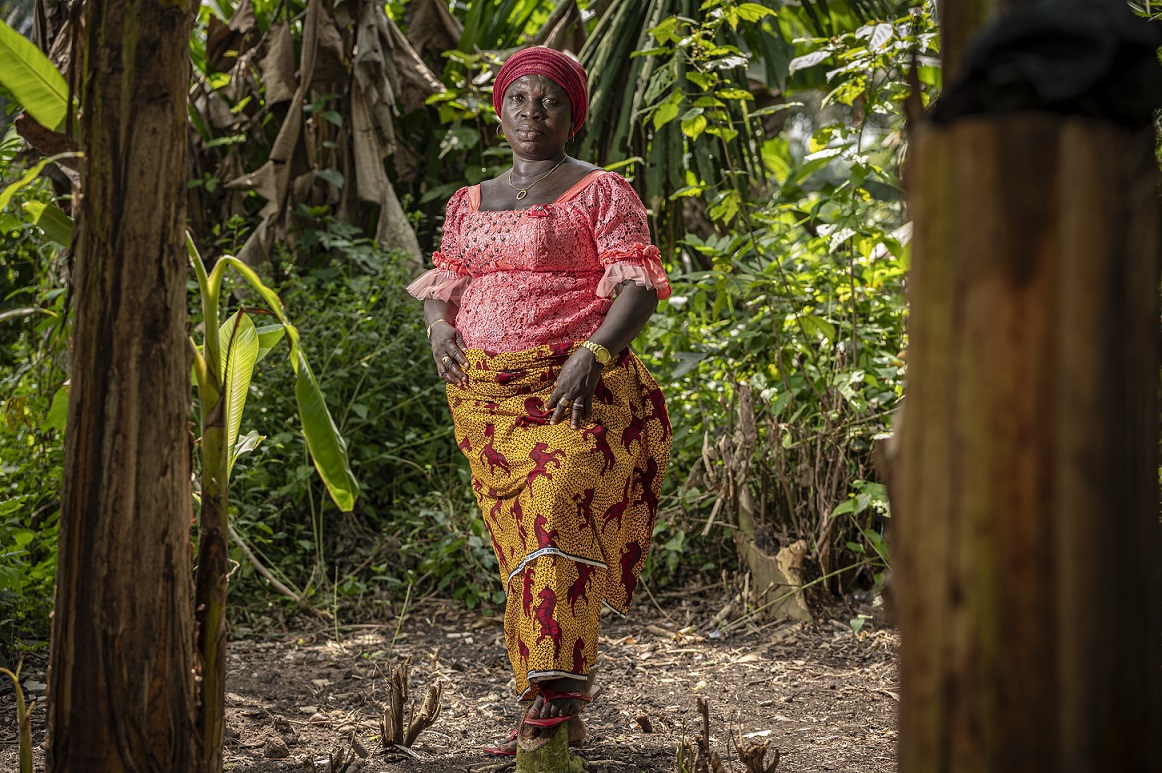
Isabella Cipirska / ActionAid UK
As the world prepares for COP30 this November and all eyes turn to Brazil, the host of this year’s summit, ActionAid is urging governments to stand with communities such as the coconut breakers who are fighting to protect our planet’s precious ecosystems. It also urges them to put climate justice, land rights, and indigenous voices at the centre of global action.
Generations of women in Brazil’s northeastern Maranhão state have depended on the babassu palm tree to live, farm, raise children, and keep their communities together, collecting and breaking the babassu coconuts according to centuries-old knowledge passed down from mother to daughter.
But today their forests and livelihoods are under siege, threatened by the unchecked spread of industrial agriculture practised by powerful companies.
In São Luís Gonzaga, Quilombola communities – established in the mid-1500s by formerly enslaved people who resisted colonial rule – are standing together to confront persistent land grabbing and the destruction of the babassu coconut groves which they depend on, and which are vital for the health of the planet.
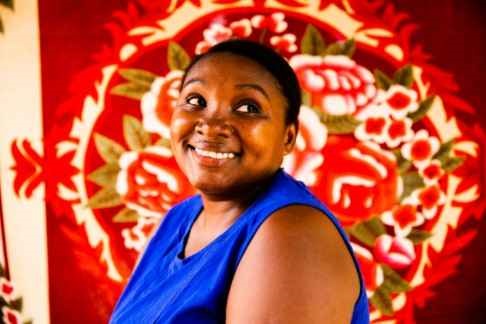
That is why the international NGO ActionAid UK has included in its flagship photography exhibition Women by Women the collection ‘Rooted in Resilience’. And one of the communities highlighted in the exhibition is the women babassu coconut farmers from Brazil, who are fighting to protect their forests and their way of life against powerful landowners and agribusinesses who want to clear babassu forests for cattle ranching or plantations.
Kleidianny is the General Coordinator of the Association of Women Coconut Breakers (AMTQC), where she leads a group of 80 women coconut breakers to defend their land and protect their coconut palms from felling. For her, as with many women, the bond with the babassu palm runs deep: it shapes their lives, their culture, their sense of self, and the future of their community.
According to Kleidianny the palm tree is what helps support thousands and thousands of families in the Northeast of Brazil. “We use everything we find in the babassu. We sell the kernels and make charcoal from the coconut shell. We can use the mesocarp; we can make oil; we can make fertiliser; the straw is used to cover houses; the stalks are used to make fences”.
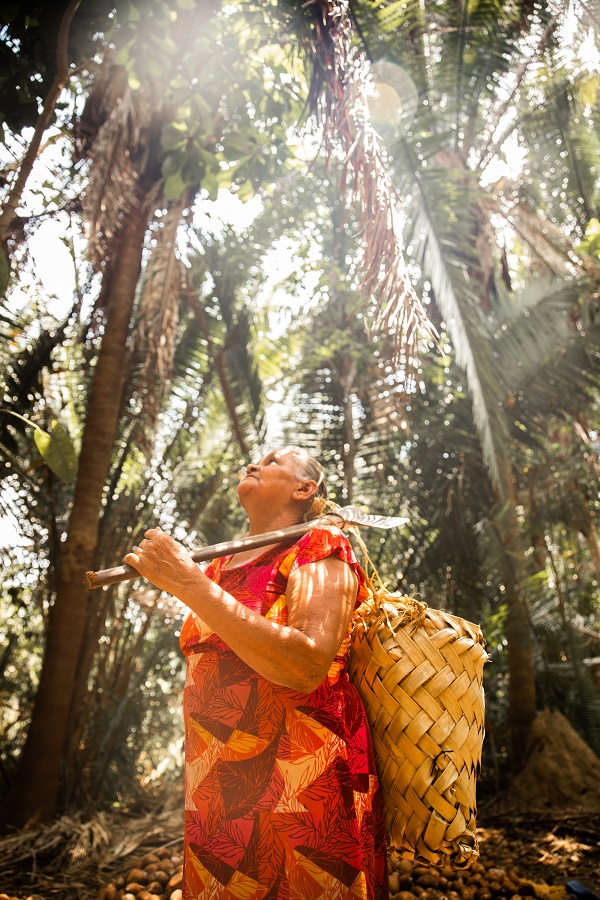
And she adds: “Having healthy palm trees means the continuation of the coconut breakers, of the rural worker, because as long as there are palm trees, we know that the coconut-breaking culture will continue. That’s why we’re fighting today to preserve the babassu trees.”
The coconut breakers were instrumental in creating and passing the Babassu Free Law, which imposes restrictions on the felling of palm trees and guarantees coconut breakers and their families the right of free access to coconut groves on private land. On paper, these state-level laws recognise the cultural and economic importance of babassu to traditional communities, but in practice, they are routinely flouted and ignored.
Kleidianny says that the “law doesn’t prevail for those who really need it. There are fences that prohibit us from entering certain spaces. We, the breakers who organised this movement, we feel that our rights are violated every day.
“We’re here fighting in this organisation so that women are respected and their territory valued and recognised, so they can walk freely wherever they want, without any barriers”, she explains.
Forest clearances in the area are being driven by large-scale producers who practice industrial agriculture, imposing monocultures of crops like soy, maize, and cotton. Soaring global demand for products like soy is helping drive this trend: Brazil has rapidly become one of the world’s biggest suppliers of soy.
The industrial farming method used by agribusiness companies – which promote deforestation and cause biodiversity loss and pollution – contrasts sharply with the agroecological, sustainable, subsistence farming of the coconut breakers.
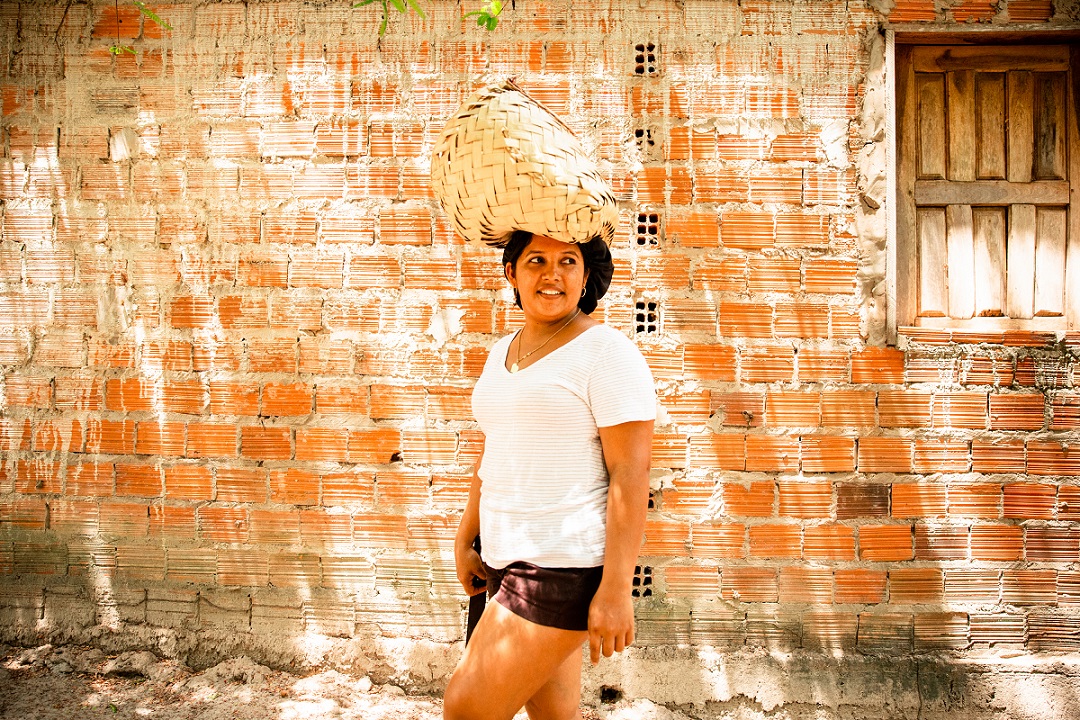
Bárbara, Secretary of the Association of Women Coconut Breakers (AMTQC), is fighting alongside her community to protect their land and its coconut groves.
She said that she is “a true defender of the earth. Whenever companies are felling trees, people always get in touch, so I can mobilise the other women, and we go all together.”
Bárbara says the community is now working to document their land ownership:
“Sometimes we receive threats because these lands have no documentation. Our case is ongoing, and there’s a lawyer advising us on this. It’s recognised that it is our land but not official yet.”
Brazilian photographer Nay Jinknss travelled to São Luís Gonzaga to meet the coconut breakers, hear their stories and capture their images for the Women by Women exhibition.
Hailing from northern Brazil’s Ananindeua, Nay first got into photography after moving to Rio de Janeiro, where she took pictures of communities and families she met in the favelas. She is passionate about using her art to push against the touristy photography that usually comes out of Brazil, choosing instead to celebrate real communities and people in her work.
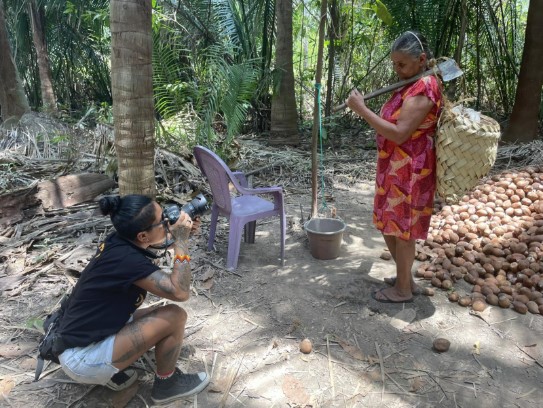
Nay thinks that photography, “just as it is a weapon to create stereotypes, can also be a weapon to defend our territory, our memory, our ancestry. What I want with this work is to be able to preserve memory, the identity of these communities, their struggle, their resistance.”
Alongside the coconut breakers from Brazil, this year’s Women by Womenexhibition celebrates women land defenders from Nigeria, Nepal and Cambodia, telling their deeply personal stories while also exposing the systematic discrimination and exploitation they face. The exhibition brings an anti-racist, feminist perspective to theway that women and girls are depicted, with the promise of never telling a single or stereotyped story about a person or place. It showcases the incredible talent of women photographers, who are often underrepresented, and demonstrates why – as storytellers who understand the local context – they are best placed to represent the lives and experiences of women in an authentic way.
The stories told in the exhibition consistently highlight the power of collective action to bring about real change, yet the local, grassroots women’s rights organisations – like AMTQC in Brazil – that are at the forefront of the fight for justice and equality are often overlooked by donors and struggle to secure the long-term and flexible funding they need.
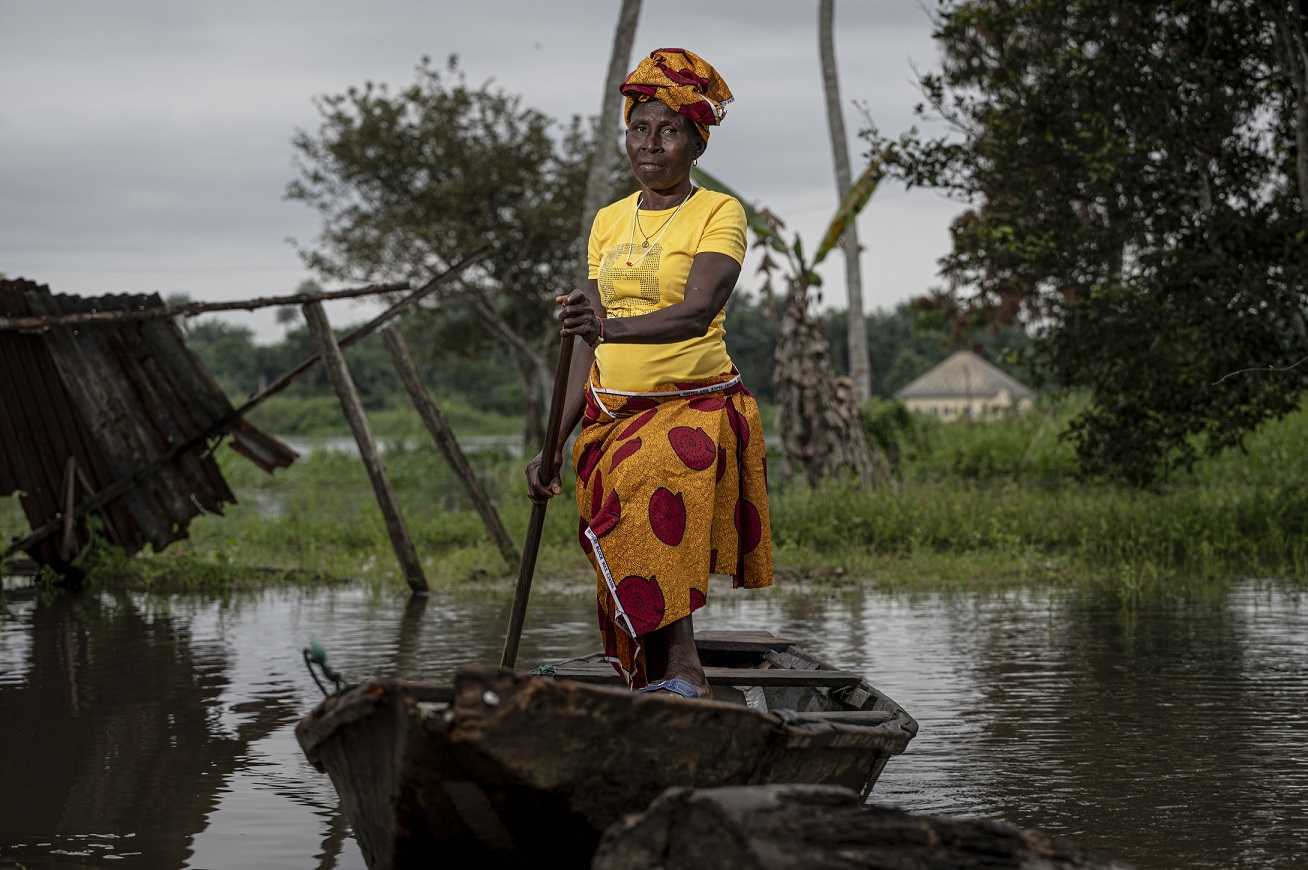
For Taahra Ghazi, co-CEO of ActionAid UK, this exhibition “is a true celebration of resilient women, who tirelessly defend their land against multiple threats and, in doing so, preserve the precious ecosystems that we all depend on.”
“At a time of great fear and upheaval in the world, these striking images capture the collective love, strength, and joy in women’s resistance.”
For her Women By Women is “a platform for action”.
The stories captured “demonstrate the groundbreaking work of women’s rights organisations around the world: we hope people will be galvanised to support their work and join our call for these organisations to be awarded the long-term, flexible funding they need to keep on bringing about vital change.”
Date and venue: gallery@oxo, Oxo Tower Wharf, in London’s South Bank, from Thursday 9th October to Sunday 12th October. For more information click here.
(Photos provided by ActionAid and authorised for free publication)










.jpg)












