
Speculating is what gamblers and investors in a risky business proposition do but the word has another sense for the philosopher Hegel and it forms the core of “Reading Hegel”.
 Sean Sheehan
What is retained from the ordinary meaning of the word is the idea of a bold venturing, a going beyond, and it does so by keeping opposites together.
Holding opposites together could be a recipe for stasis, equivocation and the illusion of liberals but for Hegel it brings an affirmative result.
Like taking the wrong train to the right station, an error has to be made before the right choice is arrived at and what look unstable needs holding onto firmly. In “the sky is blue”, the identity of the subject, the sky, is confirmed as an unequivocal given and the predicate, blue, adds something to this.
Hegel is not satisfied with this, finding it an abstract kind of identity and as the author nicely puts it: “the copula ‘is’, taken as the marker of identity, is in fact a metaphor which has forgotten that it is one”.
What is forgotten, betrayed by the grammar of ordinary language, is the slippery nature of identity. A subject-object statement does not simply capture what is always already there and this is brought out by linking the subject with an apparently incongruous predicate. In a speculative sentence, like “property is theft”, the predicate does not merely add something but becomes essential to grasping the nature of the subject.
 A speculative attitude is needed to release a creative way of reading what on the face of it has an obvious meaning. Thinking says Hegel, is loosened when subject and object speculatively interfere with each other and achieve what he calls ‘plasticity’.
The second half of Robert Lucas Scott’s book consists of his readings of some heavyweight writers in the light of speculative reasoning.
He begins with Gillian Rose as ‘an attempt to retrieve Hegelian speculative experience for social theory’ and looks at Rose’s reading of Kazuo Ishiguro’s novel “The remains of the day” (1989) and its film adaptation in 1993.
A contrast is drawn with the film “Schindler’s list” where the spectator might become emotionally involved but not intellectually or politically challenged.
Rose calls it ‘Holocaust piety’ whereas in “The remains of the day” the portrayal of fascism has to be recognised as our own and not disowned in the way “Schindler’s list” allows for.
“Instead of emerging with sentimental tears which leave us emotionally and politically intact”, writes Rose, “we emerge with the dry eyes of a deep grief”. While this is absolutely right, Scott’s espousal of Knausgaard’s six-volume novel series “My struggle” is, for me at least, unconvincing – though readers who don’t find him profoundly boring will feel otherwise.
 “Reading Hegel” provides an insightful account of what Hegel means by speculative thought and a thoughtful set of reflections on what it means to read critically.
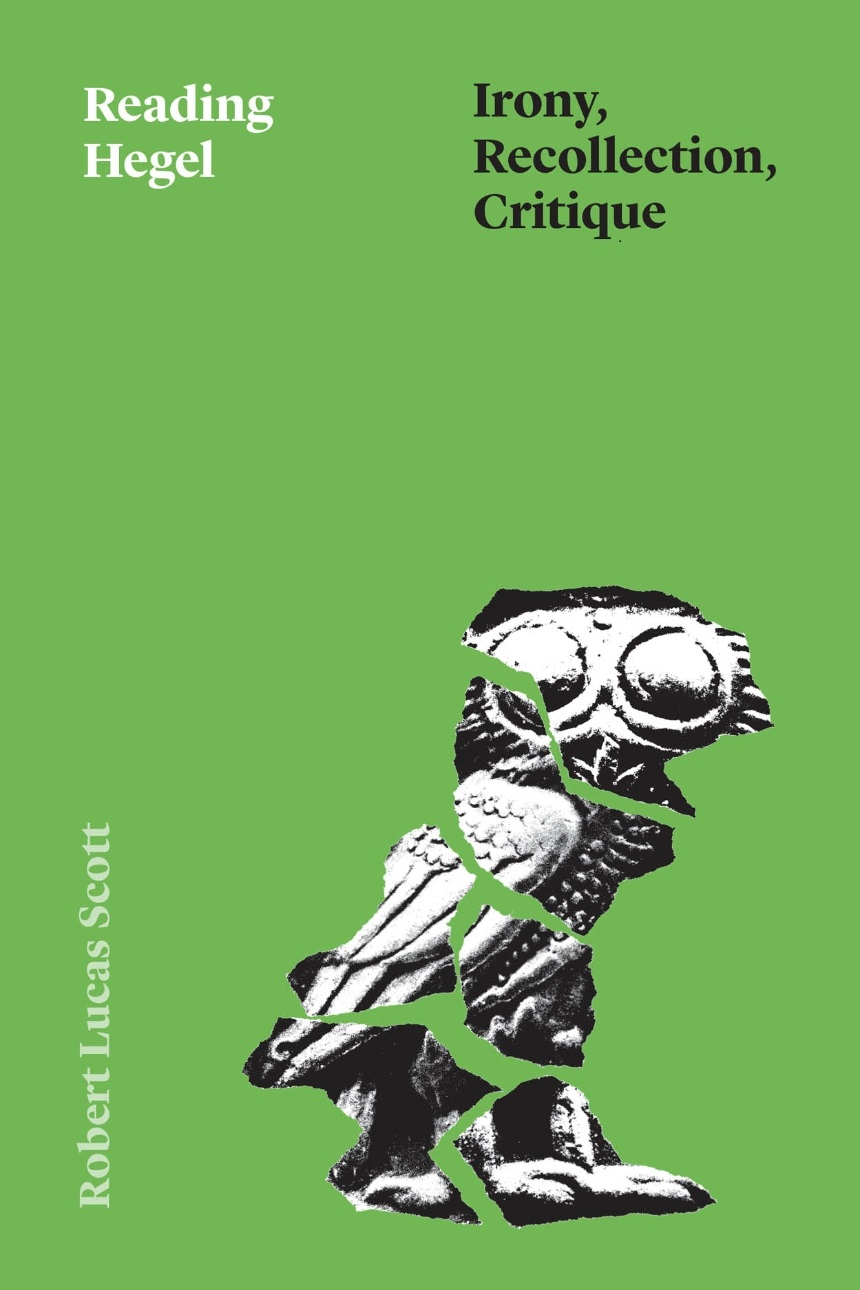
“Reading Hegel: Irony, recollection, critique” by Robert Lucas Scott, is published by The University of Chicago Press.
(Photos: Pixabay )










.jpg)












