
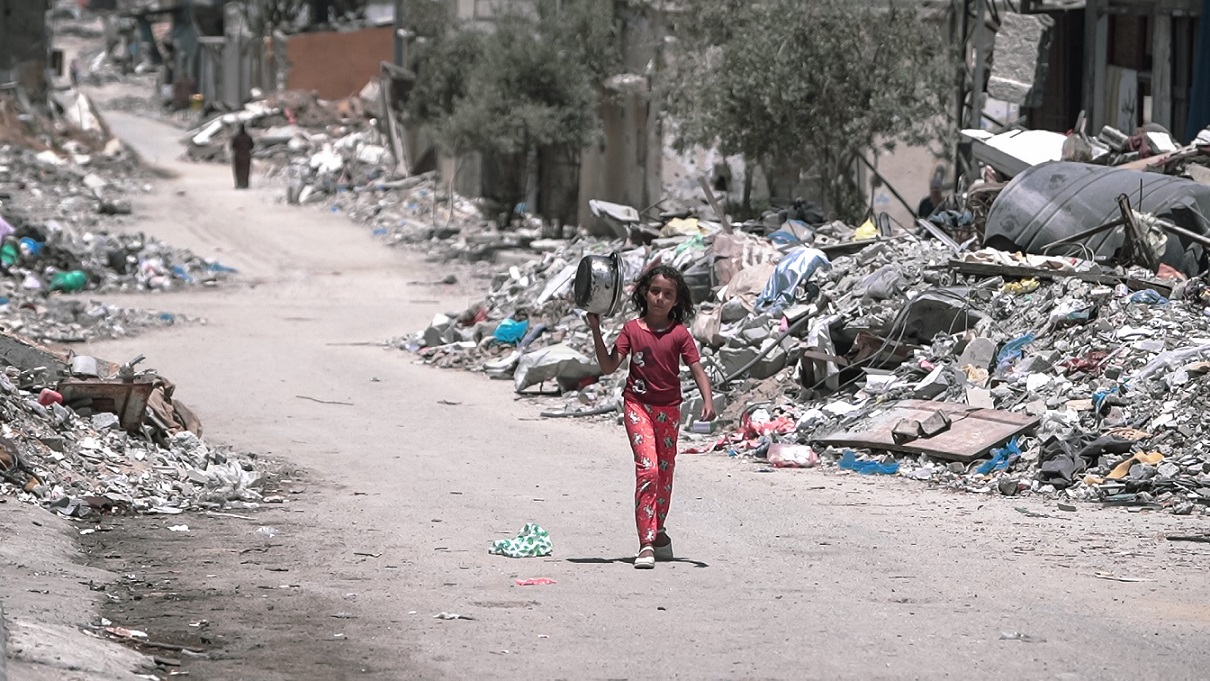
The leading causes of violent death worldwide among children under five years of age have been drowning, transport incidents, choking, fire and falls. Now there is another one, after choking and above fire: Israeli violence.
Sean Sheehan
The tragedy, says Eman Basher, “is not just in the lives lost but in the futures stolen”.
She knows, having taught in Beit Hanoun Prep School in Gaza for eight years, that nothing prepares a teacher to attend the funerals of her students.
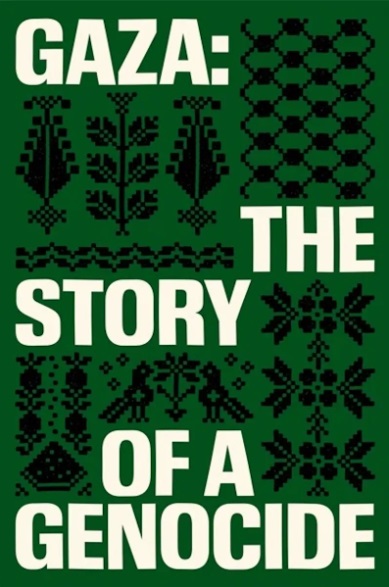
Noor Alyacoubi’s child was six months old in October 2023 when the Israeli Defense Minister Yoav Gallant announced that food, water, electricity and gas would be cut off to Gaza. The struggle to keep her child alive is painful to read. Her piece ‘On Searching for Food in Gaza’ is, like Eman Basher’s, one of those making up “Gaza: The story of a genocide, an anthology of writing about Israel’s ongoing project to destroy the idea that Palestinians have a claim to their lives and the prospect of a future life on their own land.
 The genocide, uniquely, is being televised and shown around the world but it is also taking place in prisons and kept secret. A glimpse into what is happening is revealed by Malaka Shwaikh who conducted interviews with former prisoners, over 5,000 of whom were held in Israeli jails before October 2023. They aged from under ten to over seventy, men and women, and there is no knowing how many are currently incarcerated and how many have died as a result. They can be mistreated, underfed and tortured by Israelis confident that they will never be held accountable.
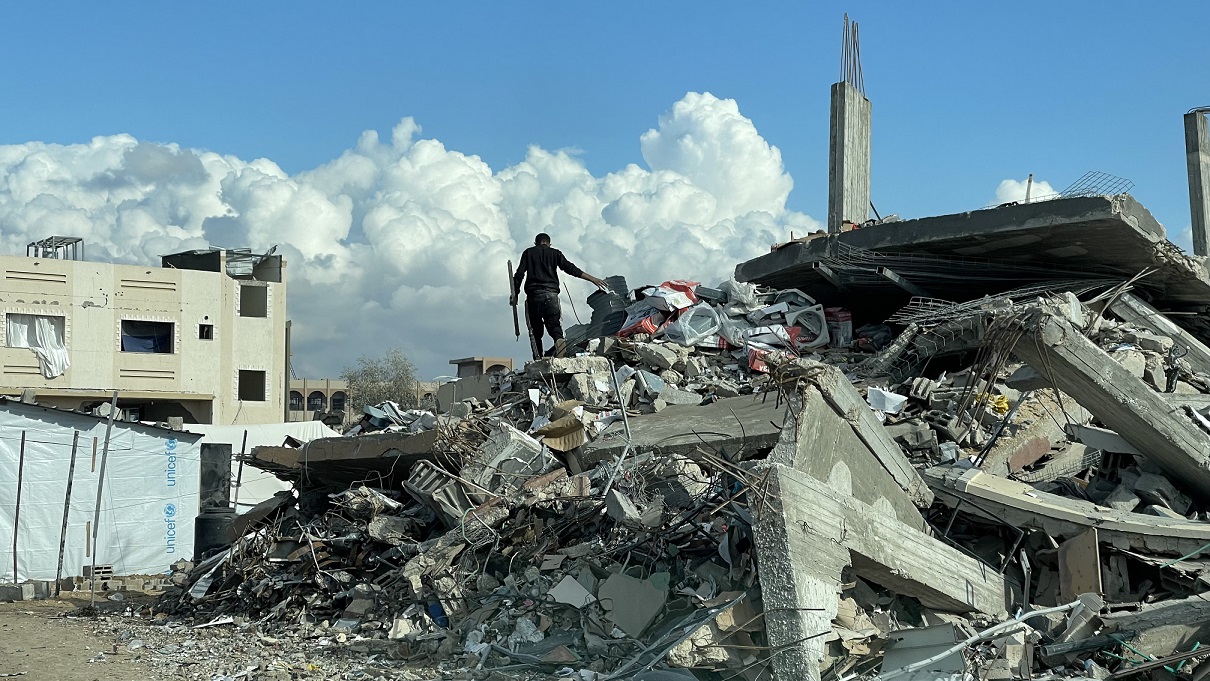
“Why BDS Matters” explains why the Boycott, Divestment and Sanctions (BDS) movement is important. It involves not buying any goods from Israel and calls for shops and supermarkets to follow the UK’s supermarket chain, the Co-operative, in announcing that it will stop sourcing Israeli products. BDS also calls for a boycott of Israeli academic institutions because of the role they play in the country’s regime of oppression. Every university in Gaza and hundreds of schools have been destroyed.
“Gaza: The story of a genocide” is a vital record of the genocide which, according to UN human rights experts, has included “domicide, urbicide, scholasticide, medicide, cultural genocide and, more recently, ecocide”. The deliberate destruction of an environment – ecocide – is practised to create conditions in Gaza that will lead to Palestinians’ slow death. It is, as Nina Lakhani concludes in her piece, ‘a fundamental element in the ethnic cleansing and genocide being committed’.
This anthology is necessary reading and the editors are donating their royalties to UNRWA (United Nations Relief and Works Agency for Palestine Refugees in the Near East).
UNRWA struggles to provide support for the victims of a genocide as it is happening and 269 members of their staff have been killed in Gaza – the highest number of UN personnel killed in any conflict – one more telling statistic about the nature of the Israeli state.
“Gaza: The story of a genocide”, edited by Sonia Faleiro and Fatima Bhutto is published by Verso.
(Photos: Pixabay)










.jpg)















Excellent article but too short.