
The accelerated sale of land for housing projects is displacing essential crops and putting food security at risk. The high cost of materials, debts and real estate market pressure is pushing many people to abandon their farms in El Salvador.
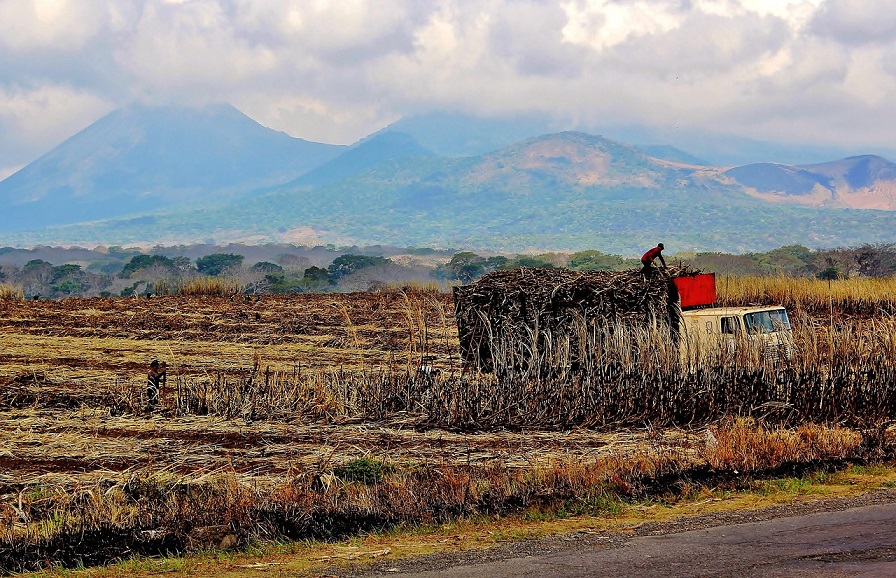
It is rumoured that the land that could produce food, livestock, coffee, corn, beans and sugarcane, is being sold for the purpose of large housing developments.
Here near the mountain range of El Bálsamo, in La Libertad Sur, rumours are spreading among the people that land is on sale and residential developments are already being prepared for construction in the mountains. The greenery of the hills will be replaced by streets and houses in just a few months, according to a local who spoke to Prensa Latina.
For example, Sandor Siliezar, the president of the Cattle Ranchers’ Association of El Salvador (AGES), stated that there are no laws in the country that protect the use of land for agricultural or cattle ranching purposes to guarantee food security long-term amid the current wave of real estate development.
A recent article in El Mundo newspaper stated that the sale of farmland for building projects is gaining strength, and two union leaders think that “often the sales price of the land is more profitable for the producers than continuing to cultivate it”.
Regarding this issue, Luis Treminio, the president of the Salvadorean Chamber of Small and Medium Agriculture and Livestock Producers (Campo), stated that most of the land being sold is destined for real estate projects, from warehouses to housing estates.
 “Very little is sold for the purpose of tourism because rural tourism could even be combined with the developments, but people are selling up for housing estates and things like that; a lot of land is being subdivided”, said Treminio, according to the newspaper.
The increase in land sold to Colombian and Chinese investors under the administration of President Nayib Bukele is allegedly due to the high cost of supplies required to be able to produce the food the country needs. El Salvador imports corn and beans, for example, to meet demand. El Mundo’s report states that this is in conjunction with the increased cost of land that is rented out to grow staple goods, recorded in 2023, which forced many out of farming and, as a result, forced the owners of the plots to make decisions about their land.
Also, the use of land for purposes that are not farming concerns the coffee-growers. According to Sergio Ticas, the president of the Association of Coffee Growers of El Salvador (Acafesal), the sales of farms were driven by the growers’ desperation due to high costs and banking debts.
 Ticas gave the example of the construction in the Zapotitán valley, around the district between Quezaltepeque, the site of El Niño, and other places that are also of farming interest.
Likewise, the president of Campo pointed out that even in Santiago de María, a coffee-growing region, areas of farming have been turned into vehicle repair workshops.
As well as the above, Siliezar added that the increase in land costs and farming supplies, labour shortages and the absence of generational succession is driving property sales.
For some analysts, the medium-term impact will be focussed on the decrease in food production, and farms which are close to neighbouring highways or roads run the risk that they may be the next ones to disappear.
These statements correspond to and reinforce the rumour that the country’s farmland is at risk of disappearing due to the real estate boom and high volume of investment in the construction sector. Today it is the driving force of the local economy, and perhaps tomorrow it will be the digging the grave of food production. PL
(Translated by Donna Davison – Email: donna_davison@hotmail.com) – Photos: Pixabay










.jpg)












