
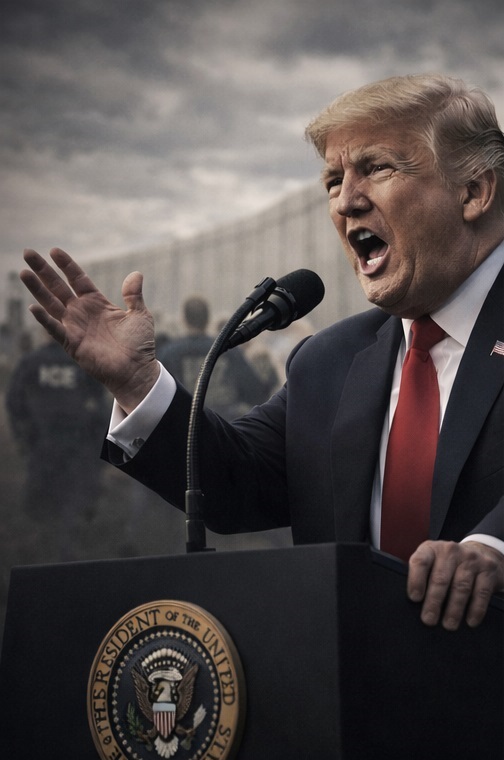
Executive orders, migratory repression and the elimination of inclusion policies mark Donald Trump’s second term. Activists denounce a witch-hunt against immigrant communities while the president combines political vengeance, democratic backsliding and a racial narrative that deepens fear and uncertainty.
 Deisy Francis Mexidor
Rapid changes in policies over immigration, the economy and foreign relations, forced through via over 200 executive orders with unchecked power. That’s how the first year of Donald Trump’s second term in the United States could be summarised.
Irma Lozano is an activist, immigrant and United States resident of over 45 years. For her, for her family, for her friends and her community, Trump’s first year “has been one of extreme suffering and of anguish and uncertainty, since the chaos this president and MAGA (Make America Great Again) has subjected us to seems endless”.
She says that “this government’s fascist nature is obvious. Its current policies mean nobody is safe and I am referring especially to the question of immigrants”. If Joe Biden built his presidency around the idea that United States democracy suffered an unprecedented blow on 6th January 2021, when Trump supporters assaulted the federal Capitol, and worked to ensure the culprits were held accountable, the Republican has inverted this premise. Trump has pardoned over a thousand of the accused, appointed deniers of the 2020 election results to senior positions and used state resources to cover up the assault on the Capitol.
According to the Axios publication, the president is fixated on revenge after surviving four criminal proceedings, attacking his political enemies with investigations and accusations that have destroyed any notion of the Department of Justice’s independence. In addition, he has eliminated the government’s equality, diversity and inclusion framework and undertaken a wide-ranging campaign against universities and institutions he considers promoters of the Biden era’s “progressive” agenda.
 Trump has combined this backward step with an explicit racial rancour, arguing that the protection of civil rights has harmed white US citizens, whom he has sought to defend by simultaneously repositioning the federal government in their defence.
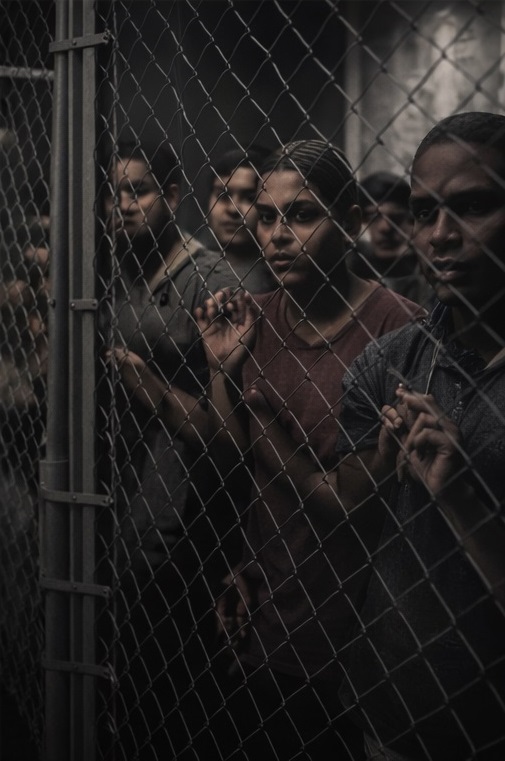
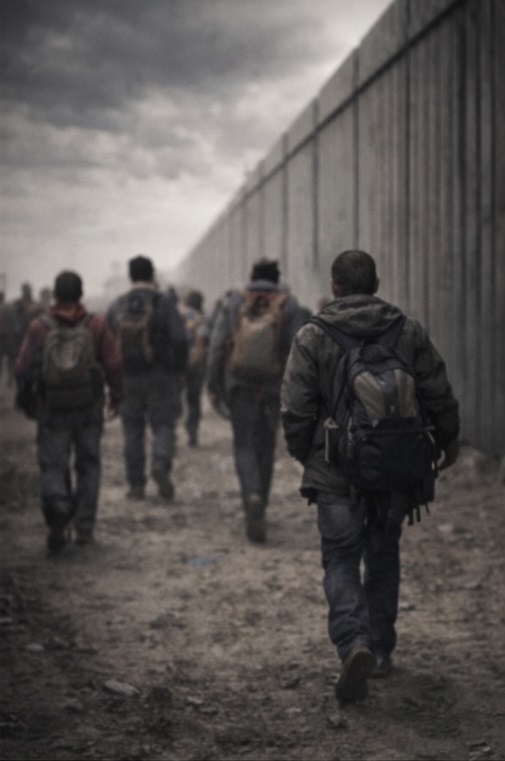
This change coincided with the aggressive repression of immigration, both legal and illegal, with Trump centring his attention on communities of colour, including those of Somali origin in Minnesota, while extending special refugee protections to white South Africans, the publication notes.
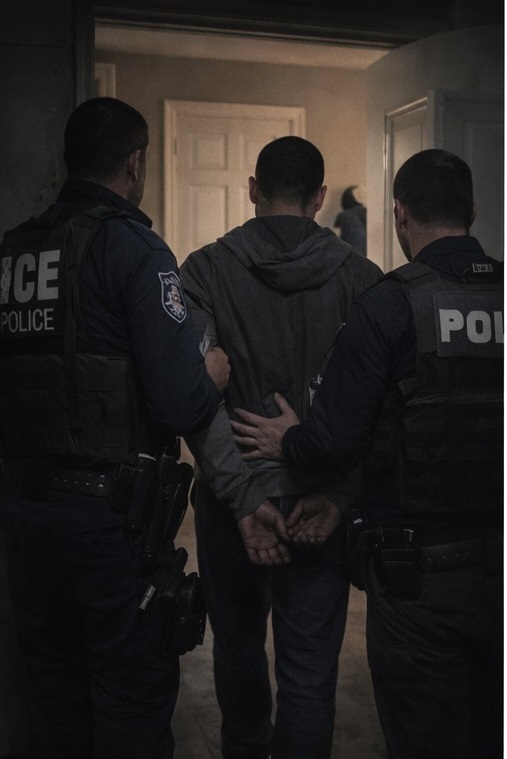
Lozano believes that over the last 12 months “a witch hunt has been unleashed in our communities and it’s not about them looking for the worst of the worst, as Kristi Noem, the Secretary of Homeland Security, puts it.
“Most of us immigrants in this country are respectable workers, law-abiding taxpayers, and the benefits we bring to the economy are obvious”, stressed the activist of Salvadorean origin.
High prices
In journalist David Montgomery’s view, “In his second term, just before the country’s 250th anniversary, Trump is demonstrating how vulnerable US democracy is when faced with a president with authoritarian instincts”. During the last 12 months “he has only approved one important law, the one he calls the ‘Big Beautiful Bill’ and instead of seeking political consensus, he governs through unilateral executive actions”.
Trump campaigned promising, among other things, to reduce prices from his first day in office.
 However, “essential products are more and more expensive and the false promise of lowering the cost of living went up in smoke like everything else”, comments Irma Lozano noting that “on the contrary, the policy of disrespect towards other countries and the imposition of tariffs makes many products increase in price”.
Like her, many US citizens are now questioning whether President Trump has the right priorities in his management of the country because he is increasingly focused on foreign intervention, at least that is what is reflected in the polls. Around six out of ten US citizens disapprove of Trump’s handling of foreign policy and 56%, a majority, believe he “went too far” in using the US Army to intervene in other countries. According to a survey by The Associated Press – NORC Center for Public Affairs Research, Trump is showing subtle signs of vulnerability because he still hasn’t convinced voters on the most crucial topic: the economy.
 World conquest
Over the last year, Trump has fired thousands of career public servants by imposing loyalty tests on the federal workforce and dismantling agencies. To do this, he created the Department of Government Efficiency led by Elon Musk who was then almost his right- hand man.
He has also distanced himself from Biden on the subject of global warming. The Democrat treated the phenomenon as an existential threat and gave it priority on his agenda but Trump describes climate change as a “hoax” and has declared war on clean energy, defending fossil fuels.
With regards to multilateralism, Biden based his foreign policy on the affirmation that “the United States is back”, valuing alliances, NATO and supporting Ukraine, whereas Trump is trying to impose a new world order with his doctrine of peace through force and his “America First” vision.
Trump’s tariffs, announced in April 2025, have become an instrument of political pressure.
Analysts suggest that Trump is moving away from the alliances that have been in place since the end of the Second World War in 1945, distancing himself from traditional allies like Europe and withdrawing the United States from various UN agencies and other international bodies.
The world, say his critics, is less safe with Trump. The leader, despite claiming a vocation for peace (and demanding prizes for it), ordered the attack on 3rd January on Venezuela – a sovereign nation rich in oil – which led to the kidnapping of its constitutional president Nicolás Maduro.
James Monroe, the fifth president of the United States, announced a policy in 1823 seeking to protect the region from the advance of powers outside the continent (the Monroe Doctrine). Trump seems to be looking for a similar directive which some even dubbed the Donroe Doctrine after the attack on Venezuela.
 He has threatened the use of force against Cuba, Mexico, Colombia, Iran and Greenland, and at one point threatened to take control of the Panama Canal, a topic which is apparently on hold for now.
Summing up his critique of Trump’s 365 days leading the United States, the journalist David Montgomery is clear: “Anyone awho disagrees with him – universities, lawyers, judges, the media, disappointed followers, Democrat public servants, foreign nations – is punished with insults, legal action, investigations, funding cuts, the deployment of the federal police, tariffs, bombardments and threats of annexation”. (PL)
(Translated by Philip Walker – Email: philipwalkertranslation@gmail.com) – Photos: Pixabay and generated by AI ChatGPT, copyright-free.










.jpg)












