
Islamophobia and far-right discourse intensify after terrorist attacks, while the media reinforce prejudice against diverse Muslim communities. The challenge is to distinguish minority violence from the broader richness of European pluralism.. Some have spoken about the risk of Islamisation of Europe and the alleged danger that a Muslim presence poses for Western society. Others see immigration as an emerging threat to Europe’s existence.
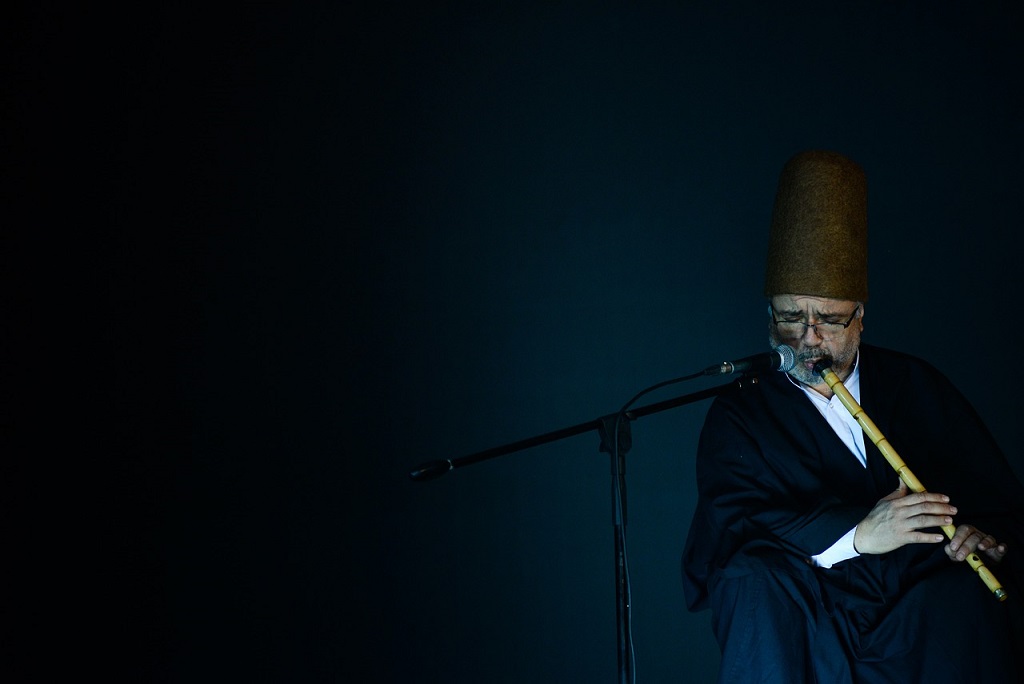 Claudio Chipana
According to British historian, Eric Hobsbawm, Europe had a short 20th Century, starting with the First World War (1914) and ending with the collapse of the Soviet Union (1991). He called this the ‘age of extremes’, with communism and nazism amongst the dominant ideologies of the period.
Contrary to previous decades, extremism today has changed ideological guise. Some have spoken about the risk of Islamisation of Europe and the alleged danger that a Muslim presence poses for Western society. Others see immigration as an emerging threat to Europe’s existence.
Since 1991, tension has not dissipated. On the contrary, new tension and new extremes have appeared, especially with the terrorist phenomenon that has surfaced in recent years. However, at the same time, there have been xenophobic groups and ultra-nationalist parties, such as Amanecer Dorado, National Front and UKIP.
For the far right, a Muslim presence and an increase in immigration represent a threat that would undermine the foundations of European identity and that would be compounded by the stream of Syrian refugees towards European soil.
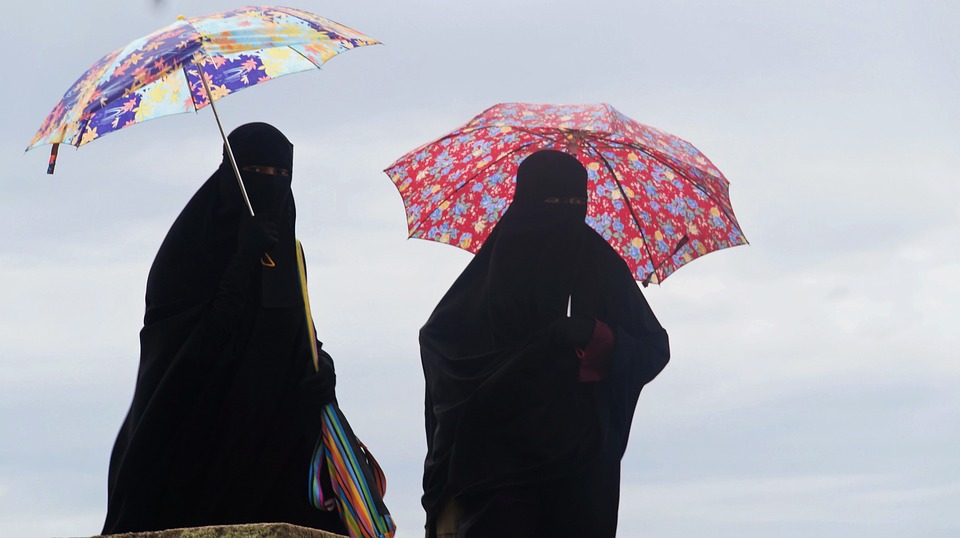 The lethal actions carried out by Islamic extremists, claiming new victims in Brussels years ago, as occurred before in Paris, London and Madrid, exacerbated tension and fed the idea of incompatibility between ‘Western’ and Islamic values. Once again the question has been raised of whether a multicultural and multi-faith Europe is possible, leading us to search for the real reasons behind the crisis affecting Europe. Muslim communities are also the victims of fundamentalist groups’ terrorist attacks, as each attack produces an increase in Islamaphobia, largely fuelled by the media. What appears certain is that immigration and consequent ethnic and cultural diversity have not led Europe to resort to antagonism, putting it on the brink of collapse. Extremist and fundamentalist groups are minority groups that do not represent Muslim communities, who are themselves very diverse. Immigration made an important contribution of labour workers in order to reconstruct post-war Europe.
The threat does not stem from cultural, ethnic or religious diversity.
 Both the far right and terrorist groups are factors behind instability and social tension.
On the other hand, the current neoliberal economic model has put millions of Europeans in a situation of uncertainty, as evidenced by the high rate of unemployment amongst young people. A large part of the Eurozone crisis can be explained by the continuation of this model.
Multiculturalism, rather than being a hindrance, holds the necessary potential to build a Europe that is open, tolerant, integrated and peaceful, just as Monnet and Schuman, the pioneers of the European Union, imagined. The Europe that we want has little to do with the impregnable fortress or the exclusive club that some wish to build. The way forward for Europe is not to abandon the European Union or to close borders, much less to abandon tolerance, always an essential part of liberal European tradition. (The Prisma’ memoirs)
*Peruvian philosopher resident in London, and a member of Café Filosófico and the Centre for Latin American Identity. QEPD.
(Translated by Abaigh Wheatley – Email: abaighwheatley@hotmail.co.uk) – Photos: Pixabay










.jpg)












