
The refusal to support military action in the Middle East reopens tensions with Washington and lays bare the divisions that now mark the old continent. The government recalls the consequences of the Iraq war and argues that foreign policy must respect international law.
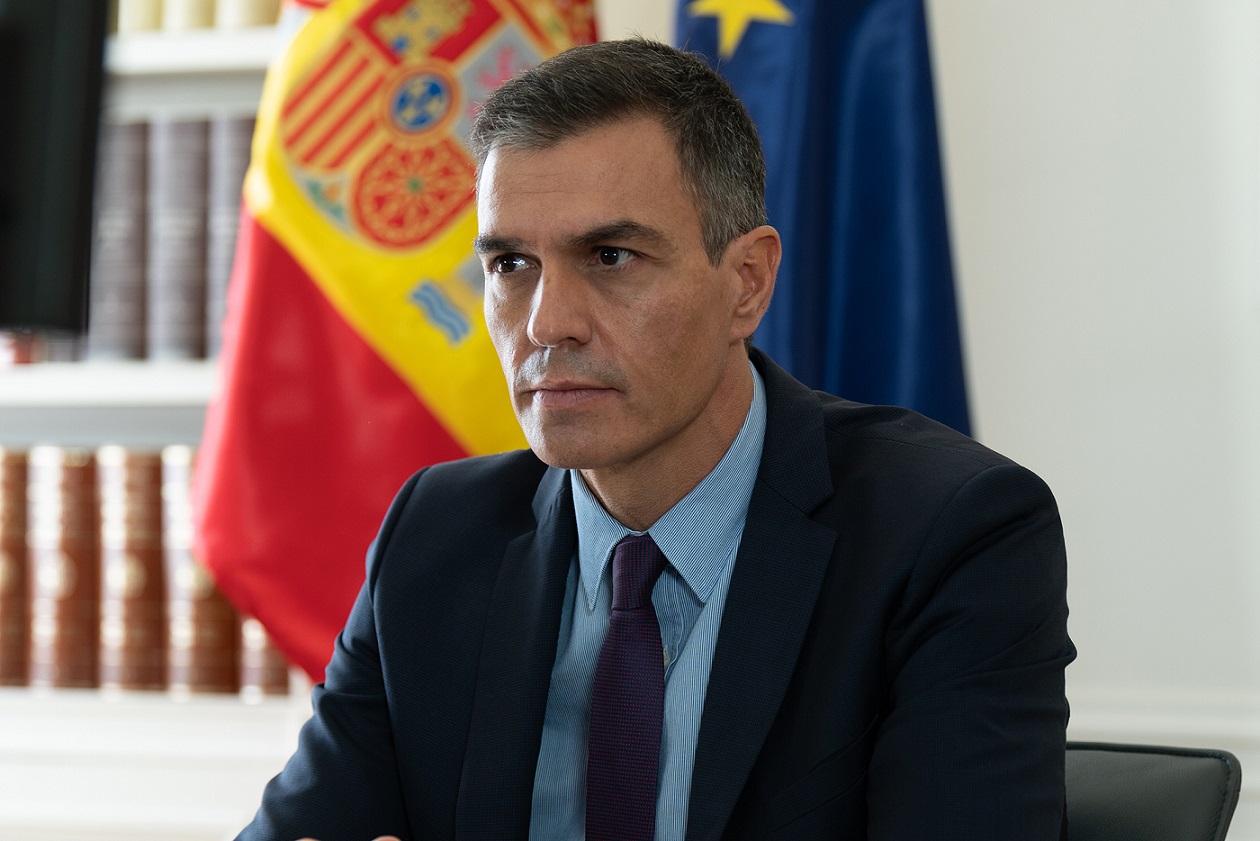
Spain’s reaffirmation of “No to war” today brought various repercussions, among them Germany’s lack of empathy in the face of Donald Trump’s threats.
The Minister of Foreign Affairs expressed his surprise that the German Federal Chancellor, Friedrich Merz, did not support Spain in the face of criticism from the US president and his threat to suspend trade.
Albares said in statements to TVE that there is no doubt that Angela Merkel or Olaf Scholz, Merz’s two predecessors, would not have acted in the same way. Spain’s top diplomat discussed the matter with his German counterpart, Johann Wadephul, following Trump’s remarks in the Oval Office, where he met with Merz and lashed out at Spain for not authorising the use of the bases in Rota and Morón for the operation in Iran.
“When one shares with a country a currency, a common trade policy and a common market, one expects the same solidarity that Spain showed Denmark over the US desire to take over Greenland (…)”, Albares told Wadepuhl.
He underlined that Spain had constructive relations with previous federal chancellors, the Christian Democrat Angela Merkel and the Social Democrat Olaf Scholz, and now deals alongside the Christian Democrat Merz.
“I cannot imagine Merkel or Scholz making statements of that kind. There was a different European spirit,” he stressed, referring to Merz’s backing of Trump’s remarks.
 This Wednesday, Spain reaffirmed its “No to war” in an institutional statement by Prime Minister Pedro Sánchez in response to threats from the United States.
Without at any point mentioning Donald Trump, nor the European countries (France, Germany and the United Kingdom) aligned with the military attack on Iran, Sánchez stressed that Spain will not be “complicit in something that is bad for the world”, such as war in the Middle East, “simply out of fear of reprisals from someone”.
From Moncloa Palace, the head of government referred in a sober yet firm manner to the military actions of the United States and Israel against Iran, Tehran’s responses and Trump’s threats against Spain because of its position in this conflict.
“If the US administration wishes to review it (the trade relationship), it must do so while respecting the autonomy of private companies, international law and the bilateral agreements between the European Union and the United States,” Moncloa argued.
 In his address of around 10 minutes this Wednesday, Sánchez emphasised that the government’s position on the war in the Middle East can be summed up “in four words: No to war”.
The phrase refers to the slogan that became popular during the Iraq war of 2003, into which the then Spanish Prime Minister, José María Aznar, led Spain alongside George W. Bush and Tony Blair.
In this regard, Sánchez mentioned that the conflict “was said at the time to be aimed at eliminating Saddam Hussein’s weapons of mass destruction, bringing democracy and guaranteeing global security”, but “produced the opposite effect”, with greater insecurity, terrorism and impacts on the global economy.
“That was the gift of the Azores trio (the place where they proclaimed the war) (Bush, Aznar and Blair) to Europeans at the time: a more insecure world,” he concluded.
The Foreign Minister also stressed that “Spain is a sovereign country that makes its decisions sovereignly. And we demand respect from all our allies towards one of the oldest nations on the planet, which is Spain”.
He also took the opportunity to explain to the leader of the opposition, the conservative Alberto Núñez Feijóo, that International Law and Human Rights are part of the same framework.
 Albares said that “Feijóo demonstrates an absolute lack of knowledge of both terms”, after the leader of the Popular Party (PP) attacked Sánchez for allegedly siding with Iran in the conflict. Meanwhile, ministers and leaders of the Sumar group backed Sánchez’s message and deplored the rhetoric of the PP and Vox, aligned with Trump. PL
(Translated by Rene Phelvin) – Photos: Pixabay










.jpg)












