
The Prisma series “Fetishisation of Latinas in the UK”. Paola Cardona felt the weight of the stereotyping of Latina women when she began using dating apps in the United Kingdom: from offers of money and racist comments to sexual expectations framed by the exoticisation of her Colombian origin.
 Sara Piquer Martí
In a quiet café in Cheltenham, Paola Cardona, a 33-year-old Colombian, stirs her chai latte as she remembers her first years in London. When she had the opportunity in 2019 to leave the department of Risaralda where she was born, she didn’t think twice: she wanted to give her daughter the chance to grow up and learn outside Colombia. She also wanted to travel, and London represented the chance to make that dream come true.
Her curly shoulder-length hair frames a round, wheat-coloured face, speckled with small freckles, and slightly slanted dark eyes. In the melodious accent of the ‘Coffee Axis’ she explains that, despite having a degree in Spanish and literature, when she first arrived in London she worked in a smoothie business.
Seven years later, she lives in Gloucester with her boyfriend and daughter. She is the warehouse manager for a mycology company.
Her spoon is still making circles in a cup that is steadily getting colder.
Paola watches me press the ‘record’ button before we plunge into conversation over the weight of the stereotyping of Latina women in the United Kingdom: how it affected her image and situations she experienced on dates with men who objectified her.
When did you start using dating apps?
I had some experience of them in Colombia but at that time it wasn’t common to use them. They were used more for going out with foreigners.
Did you experience the stereotype of the Latina woman in Colombia?
Yes, because the applications are used by pre-pay women, an elegant term used to describe sex workers. They offer their services on Tinder. Unfortunately, there is a stereotype of Colombian women’s physiques. And nowadays foreigners find women who fit that stereotype on Tinder.
 What is your experience of using such apps in England?
I think Colombian women use our nationality to attract attention. We know we are ‘different’ and ‘exotic’. Other women I know, and myself, we like to put ‘Colombian’ on our profiles because we know it sounds a bit exotic… a bit Latina.
Once you met through the app, how did conversations begin?
“Ahhh, Colombia, wow! Amazing! That’s great!”. They always referred to the stereotype. Colombia is the world’s largest cocaine exporter, so the stereotype became the voluptuous woman with big breasts, large buttocks, and very long, straight, dark hair.
Did you notice a personality stereotype?
When you start to talk to people a lot of them are guided by the stereotype: “That’s nice”, “How exotic!” But with most people you realise when you start to get to know them in person.
Is there any particular experience that sticks in your mind?
Once, a man of about 40 told me that women like me only look for men like him, for money or papers. Then I said to him, “What do you mean, like me?” And he answered, “You know, Latina, Colombian and young”. I was 28. I explained to him that I didn’t need papers or money, as I had both.
 Have you ever felt sexualised?
I was offered money once. I didn’t go out with that person; I just had a conversation. He said to me, “Hey, Colombian, I’ll give you £500 an hour”.
I thought, “Sh*t! What’s this guy thinking? What does he expect from us?” Although it is often difficult to know whether this is because you are Colombian or because you are a woman, I do think it is related to nationality.
In what other situations have you felt that something was expected of you because you were a Latina?
On a first date with a guy, he sat next to me and touched my knee. I moved to pull away. And he said, “Come on, I’ll show you my flat”. And I said to him, “No, we’re fine here”.
At a certain point he realised that I didn’t… Then we ended the date. I left and he wrote to me afterwards: “What did I do wrong? You Latinas are very delicate”. He was desperate and seemed to think that we Latinas are very complicated, as though he thought we are meant to be easy and permissive.
Did you see him again?
No, I blocked him.
Have you ever been compared to British women?
Yes, by my current boyfriend. I began talking to him on Tinder. Once he said to me, “Well, if I finish with you, it’s going to be impossible for me to move on from Latinas”.
 I asked him why and he said he thought we were more expressive, more communicative, we argue, we fight… And also, that we are more expressive sexually.
Do you think fetishisation can go unnoticed because it’s confused with admiration for the other culture?
It’s complicated. I think my boyfriend, who had been in a relationship with a British person for 8 years and had only ever been with British people, said to himself “this is different” when he met a Latina. It’s as though he realised that the cultures are very different in the way they communicate and the way we talk about sexuality. For me it is very difficult to say, “all Latinas are like me”.
I see it differently when a man only goes out with Latinas. That is a fetish. There are men who only look for Latinas.
How do you feel about the fact that there exists a type of man who is only interested in you because you are a Latina?
I used to use my status as a Latina to attract attention in London. In Colombia my style was more rocker, metal-head, relaxed. In contrast, when I came here, I began to dress in a more Latina way, to stand out so people knew I was a Latina.
And what does “dressing in a more Latina way” mean?
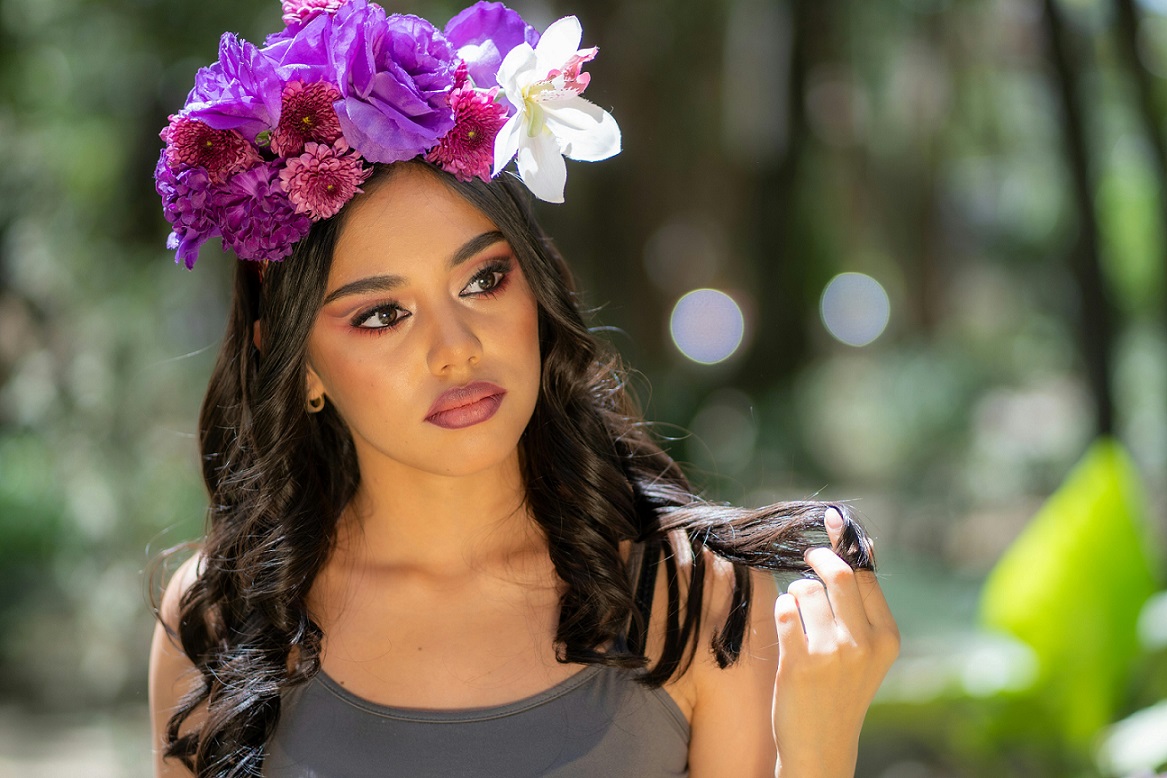
Showing a bit more cleavage and wearing tighter trousers that showed the shape of my buttocks. In Colombia I always had short hair, but here I let it grow because that’s the idea of what a Latina looks like.
Would you say that you have had to orbit around the stereotype?
Yes, but then I said to myself, “I am not that person”. It is nice to know that one is attracting attention, but it is also very difficult because you continually have the weight of how you should dress. I like to be sensual and attractive, but it’s not really me. Then I realised that the stereotype of Colombian women is too widespread.
 At what point did you feel that you had to get away from it?
There were a few things. First, I had to go through a process of accepting my body. I realised that what I was doing was more for my own self-confidence. And I started to distinguish between what people looked for in me and what I wanted to be.
What motivated you to tell me about your experience?
I feel it’s important to start to detach t’s going be impossibleLatinas from narco-aesthetics. Because us Latinas, and Colombians in particular, have spent years with the idea that was born from drug trafficking which says that we have to be a certain way: large breasts, sensual, kind. So, it’s good to have the conversation, because it’s important to disentangle ourselves from that.
What message do you have for other Latina women living in the United Kingdom?
That everything is a learning experience. That they try to discover themselves and know what they like, beyond stereotypes. There’s nothing wrong with wanting to be a sexy, kind and provocative woman, but that must not define us. You don’t have to be like that just because you are a Latina. If you are like that, it is because you want to be.
 What is needed to put an end to objectification?
I think conversation always helps, talking about it. Normalising these things is not right.
They are objectifying us; we are a product. Conversation is important. If you speak and make a noise, so much the better.
As the conversation ends and with a spoon moving round inside a by now completely cold chai latte, Paola looks at the cup for a few seconds and watches through the window as the city of Cheltenham continues at its relaxed pace. The recording stops having captured an uncomfortable truth: being seen does not always mean being recognised. Paola’s story shows that regaining one’s own voice and throwing off a stereotype, often internalised, is possible.
*Next week: “Body, accent and prejudice: being a Latina in the UK”
(Translated by Philip Walker – Email: philipwalkertranslation@gmail.com) – Photos: Pixabay
The Prisma Series: “Fetishisation of Latinas in the UK”
The symbolic violence of social media against Latinas
Being a Latina on social media: from stereotypes to abuse
From algorithms to real life: stereotypes of Latinas
Dating, stereotypes and prejudice: being a Latina in the UK
Body, accent and outside views: Latinas in the UK










.jpg)












