
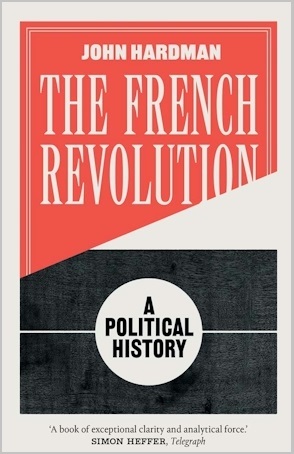
John Hardman, author of “The French Revolution: a political history”, is a recognised authority on the French Revolution and his micro-level knowledge is impressive. For a background to the momentous French Revolution, Robert Darnton’s “The revolutionary temper: Paris, 1748-89” provides a necessary complement.
Sean Sheehan
Hardman is unbeatable at the granular level of facts, and he takes it for granted that readers are already acquainted with the main narrative events he puts under the microscope; if not, keep Wikipedia at your fingertips.
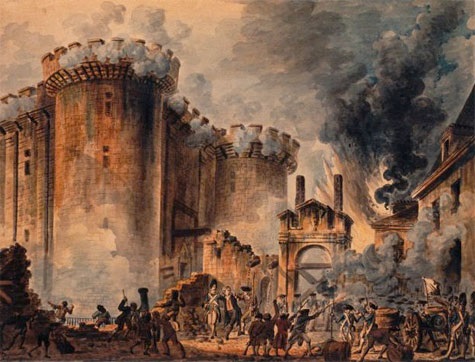
At one bare level, the absolute authority of a monarchy that has lasted a millennium is pitted against those who object to it. Printed material detailing the antagonism flooded the streets of Paris and at prices that the majority of people could afford. Arbitrary rule by royalty in Versailles versus liberty of the people was a broad canvas that allowed opposition to the king to snowball and spread outside the capital. The position of the royal court was a complex one, far from reducible to the “let them eat cakes” of popular mythology, and Hardman is at his best when unpacking the debates and decisions that led to the storming of the Bastille, the trial of Louis XVI and the guillotine.
 There is a good chapter covering the seismic course of events over 10 months in Paris that start in August 1792: disagreements between the two main groups opposing the monarchy, the Girondins and the Montagnards; the king’s trial and his execution; the victory of the revolutionaries across France.
The chapter that follows looks at the other great show trials, from Marie-Antoinette to the Girondins and Danton, before the gripping narratives of “Robespierre’s Red Summer”, his ousting in 1794 and the end of his revolutionary project.
“The French Revolution: a political history” begins in a way that is not especially reader-friendly, but it gathers pace and interest, and the effort is repaid as the chapters proceed.
Darnton’s “The revolutionary temper: Paris, 1748-89” has a more brisk approach and captivates the reader from its opening pages.
As the final decade of the eighteenth century approached, France’s fiscal crisis would lead to a street-led overthrow of the existing order but, as Darnton premises his account, “Events do not comenaked into the world”. He succeeds brilliantly in showing how ‘attitudes, assumptions, values, memories of the past, anticipations of the future, hopes and fears’ created a revolution that would resonate with global consequences.
 What Darnton (or Hardman for that matter) does is explore the class conflict behind the Event but he does help explain how in 1788 in Paris soldiers were patrolling the streets with bayonets, almost 60cm long, attached to their muskets while a poster is stuck on a wall announcing that “Kings have received their power from the people… They owe an exact account of their revenue to the nation”.
“The French Revolution: a political history”, by John Hardman is published by Yale University Press. “The revolutionary temper: Paris, 1748-89” by Robert Darnton is published by Penguin.










.jpg)












