
A year of workshops and creative work has given rise to “Casa para Mariposas” (House for Butterflies), a project that culminates in an exhibition of architectural memorials created by children who are victims of the conflict. This initiative, unique in Colombia, transforms memory and pain into living spaces, proposing a unique way of thinking about peace from a child’s perspective.
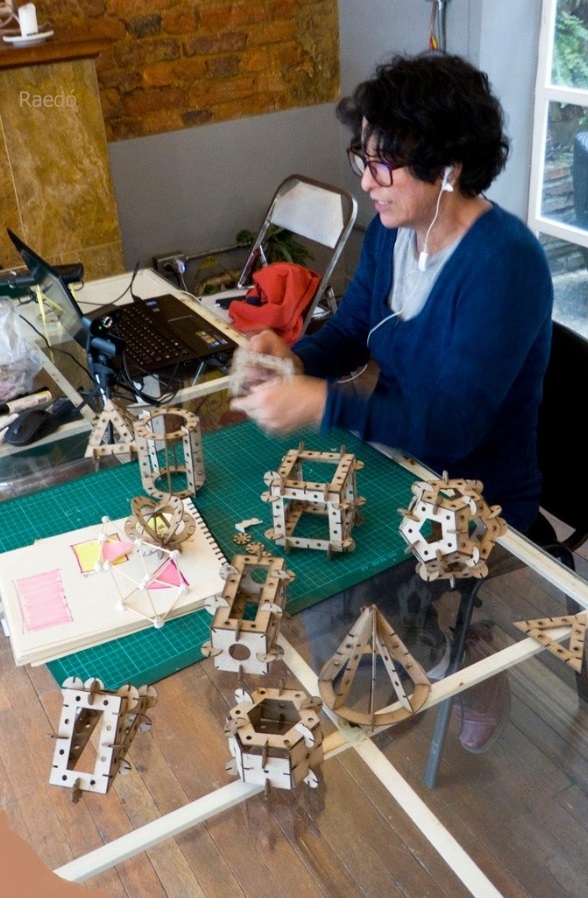
Mónica del Pilar Uribe Marín
Alejandra* was very young when the guerrillas entered her village and her home. They were looking for her uncle. It was night-time and everyone was asleep. The gunfire ended as abruptly as it had begun, and all was silent. It was then that they realised her uncle was still in the room. There they found him dead in bed, with gunshot wounds to his head and body. Grief overwhelmed the family.
The tragedy in Antonio’s* story is a different chapter altogether. His grandparents were artisan weavers. His mother told him that one day armed men came to seize their home. It all happened very quickly and they had to flee without their belongings; they left behind the yarn and the loom. They were all overcome by a sense of helplessness and rootlessness.
Elsewhere, Irene, the daughter of a community leader, grew up in a family of artisans specialising in totumo, weaving and music. When she was nine, her father told her that one day he had gone out with a colleague to a rural village in search of totumos to make maracas. Suddenly, “some bad people appeared and told them they would kill them if they didn’t stay put. My dad hid behind a house, in a shed, and from there he saw them murder a boy and heard them threatening his friends to make them say where he was. He stayed locked up for almost three days without food or water. At first there were screams, crying and gunshots, then only silence. The owner of the house managed to get him out alive.”
With Maribel* and Ramiro*, things are different because the memories etched into their minds involve animals. In Maribel’s case, it was a cat. “I adored that little cat, it was beautiful, until some people, in retaliation for my being in the armed group, killed it right in front of my eyes by running it over with a car. They said it was an accident, but I knew it wasn’t.” This violent act left a deep impression on her and she realised “that there were a lot of people who were really angry” with her.
Those recounting these violent events are minors. They are aged between 9 and 17 and have endured far too much pain, fear and loss in their lives. They bear the scars of displacement and forced recruitment and hail from San Jacinto (Bolívar); Catatumbo (Norte de Santander); Arauca, Cauca and Putumayo – regions of Colombia that have been the scene of violence.
 But these narratives are no longer fragmented, thanks to a process that began in 2019. Behind this initiative is architect Fabiola Uribe, director and founder of “LunÁrquicos: Experimental architectural practice for children”, who, in conversation with The Prisma, explained how this project took shape, transforming these memories into exercises in architectural creation.
The first butterflies
In 2019, the “Leopoldo Rother” Museum of Architecture at the National University organised the exhibition “Victims”, a memorial designed by the New York architect John Quentin Hejduk, in tribute to the victims of the Holocaust. The organisers contacted Fabiola as LunÁrquicos is a collective in Colombia that aims to “introduce children to architecture”. They asked her to run a workshop with children and teenagers on the subject. Fabiola was well acquainted with Hejduk’s work and marvelled at the 63 structures (masques) of “Victims”, but she was aware that it was a subject to be handled with care. “For us,” she explains, “the word ‘victim’ was difficult, as it sounded too aggressive. So, we came up with a poetic name: House for Butterflies, as it alluded to the fact that butterflies, just like those victims, held great value within their environment, but their lives had in some way been prematurely cut short by violence.”
They designed the workshop so that the children could create a series of memorials dedicated to people in their lives whom they considered to have also been victims, of any kind. “At that time, we weren’t thinking about armed conflict or anything like that, but rather about the concept of being vulnerable.” The themes of suicide, bullying, the loss of pets and possessions, and loneliness emerged. And during that process, two stories caught their attention, told by two children displaced by violence. Stories of loss and violent death, which they recreated in moving architectural models.
The experience left Fabiola with a desire to explore the themes of violence, conflict and childhood through architecture. Her idea was to create memorials designed by children, something that had never been done before in Colombia.
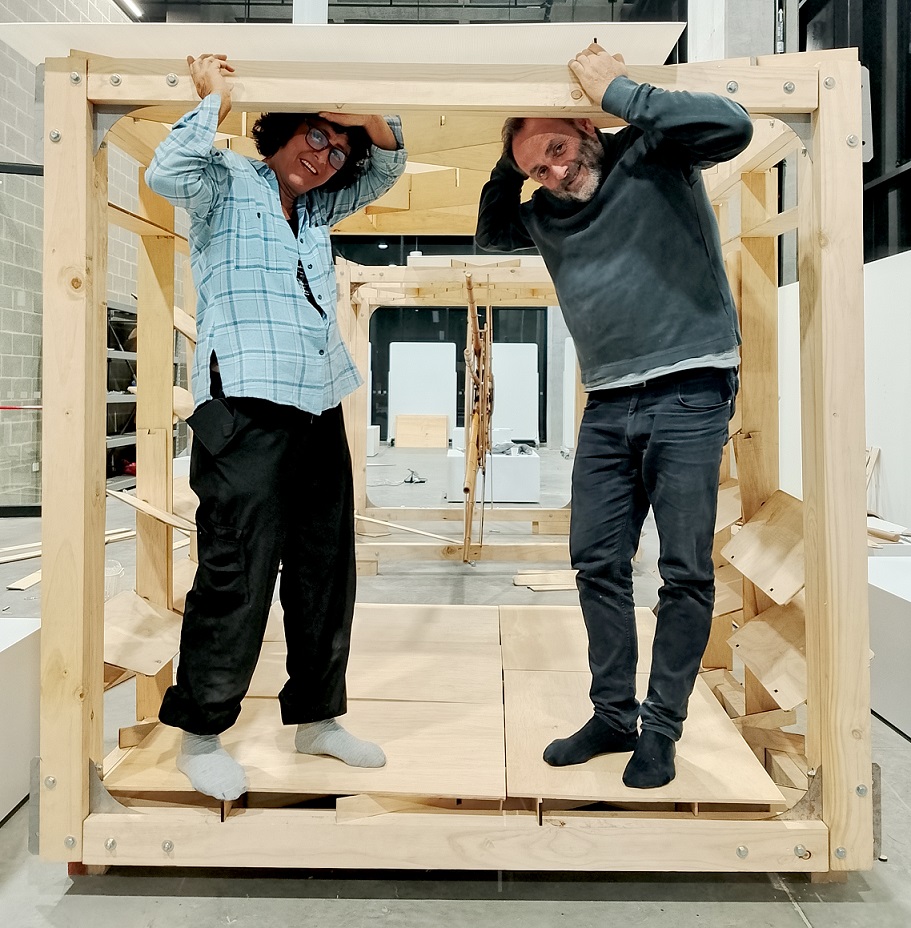
She shared this with her team: Sebastián Fonseca and Jorge Raedó, their advisor. They all agreed: one day they would work on it. In the years that followed, they undertook numerous activities, mainly academic and others of a different nature, some tangential to the subject. Finally, in 2024, Fabiola received a call from Carlos Barberá, an architect and lecturer in the Department of Graphic Expression at the University of Alicante, to discuss a call for cooperation. He wanted to form a partnership with LunÁrquicos.
It was the right moment to address the issue of children, violence and architecture. Furthermore, “the Truth Commission was at that time revealing figures on the forced recruitment of minors. So I felt I should propose this issue, which has always had a profound impact on me, particularly because of its effect on children. We worked on and proposed a project in which they would participate directly and be able to express their reflections on how the conflict has affected them.”
They drew up the proposal, which included, amongst other aspects, the creation of a set of 30 architectural memorials and working with children affected directly or indirectly by the armed conflict.
The aim was to bring together the themes of memory, childhood and conflict through an architectural design project, thereby encouraging reflections that span the artistic, the symbolic, the cultural and, of course, memory itself.
The intention: to encourage children to express themselves through art and architecture, to express how they have lived or experienced loss, and how those people they have lost, who have disappeared from their lives, can be remembered and reclaimed through memorials. This is because these memorials are built from their memories, and in the spaces they design, the loss of their loved ones, or their moments, animals or objects, is reconstructed and staged there, allowing them to recall their actions, their words and their deeds. “But it is not about transcending the violent fact of loss,” she says.
Memorials and architecture
Where does the link between architecture, aesthetics and memory lie, and what purpose does it serve?
Fabiola says that to understand “Casa de las mariposas” one must understand Hejduk. She thought that what was done in “Víctimas” could be applied to the children’s new designs. “There, those buildings are like poetic entities that exist in space and condense, preserve or represent the biographies of those who died in the Holocaust. Hejduk proposes inhabiting memory.”
She explains that monuments always remain a frozen memory. But her idea is that “we should start remembering all those actions or activities that people used to do, their everyday lives. It is about recovering those stories through memory.”
So, what happens at the House of Butterflies? There, “there is always the memory of the space you inhabit or where the actions that define you take place. That construction is filled with activities and actions, with remembering the one who cultivates and sows, the mother who knits, having a place to reflect on your life…” In these created spaces, people who are no longer there are placed, the animal that sang, the books that were read. A monument is a battle, a war, a static event that recalls that moment. But the memorial has a dynamic element because every time you approach it, you can interact with it, reinterpret it and make it your own.”
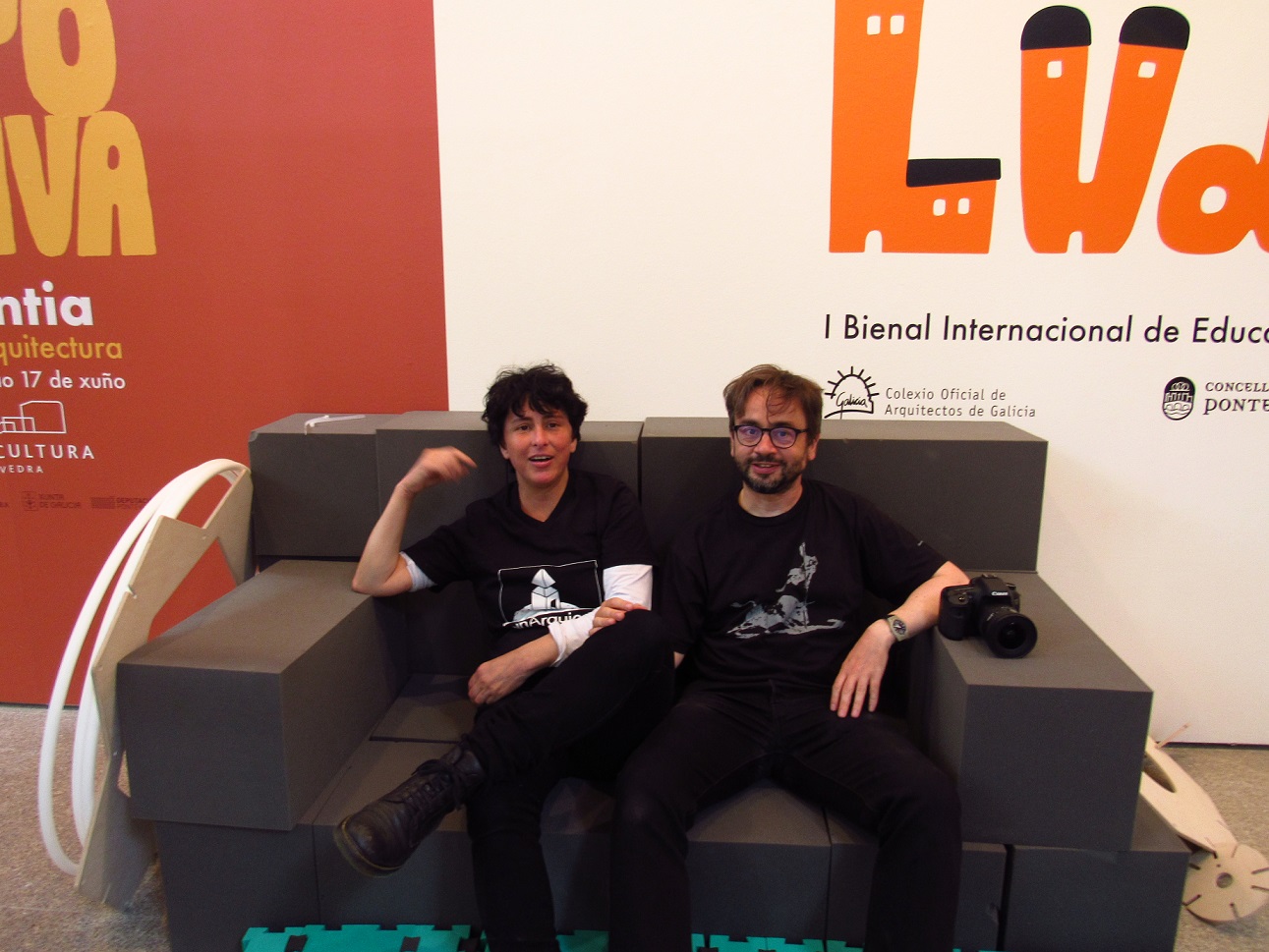
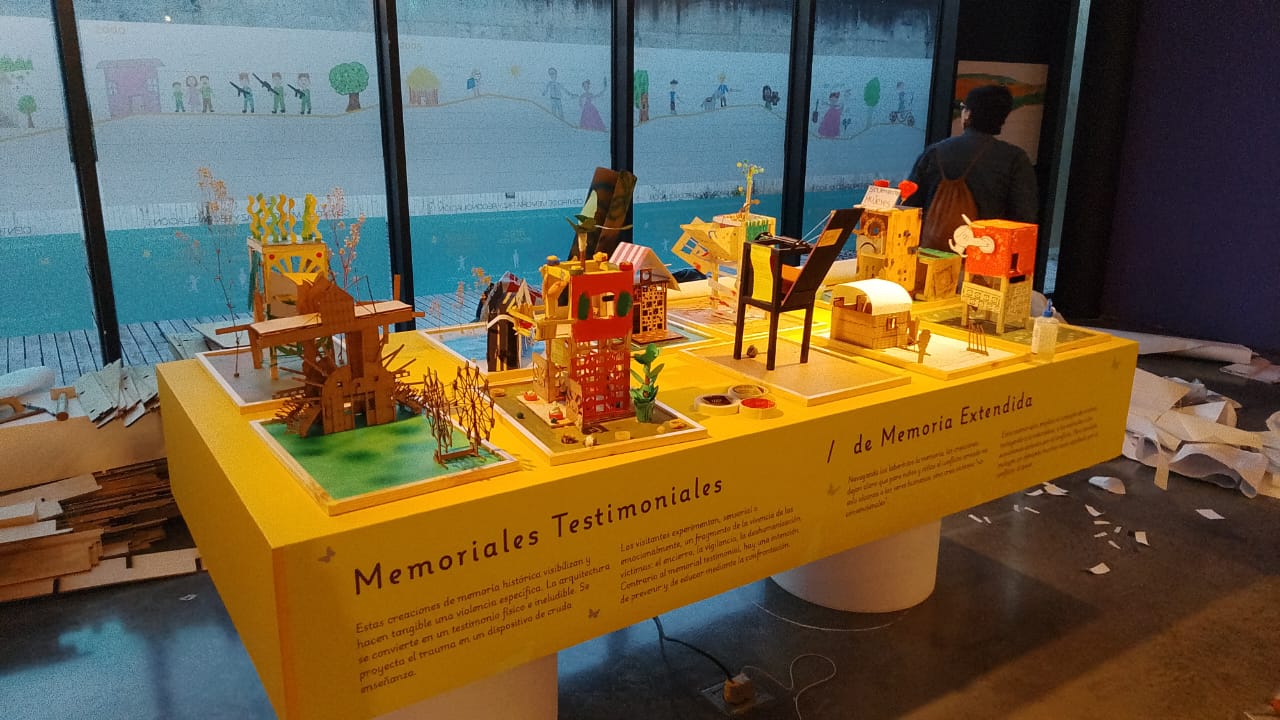
In other words, in that physical structure where memories are reconstructed, you can climb a staircase, look out over a landscape and then write a poem. “We felt it was important for the children to focus on the actions carried out by the people who had disappeared, on the victims that they themselves are. Because action is the breath of life given to the object.”
Butterflies in San Jacinto
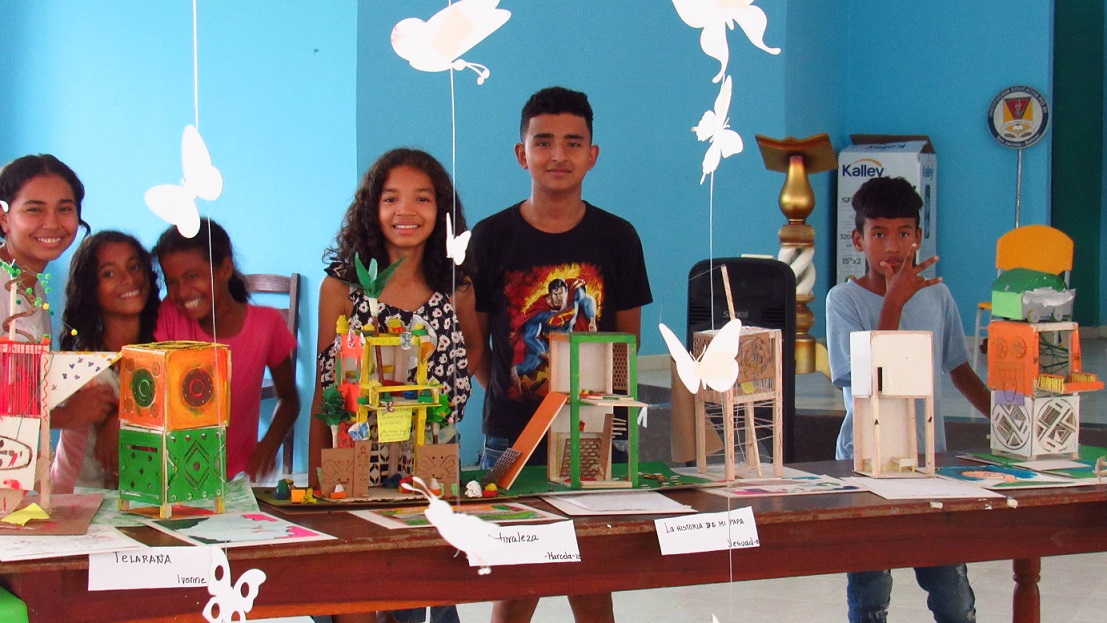
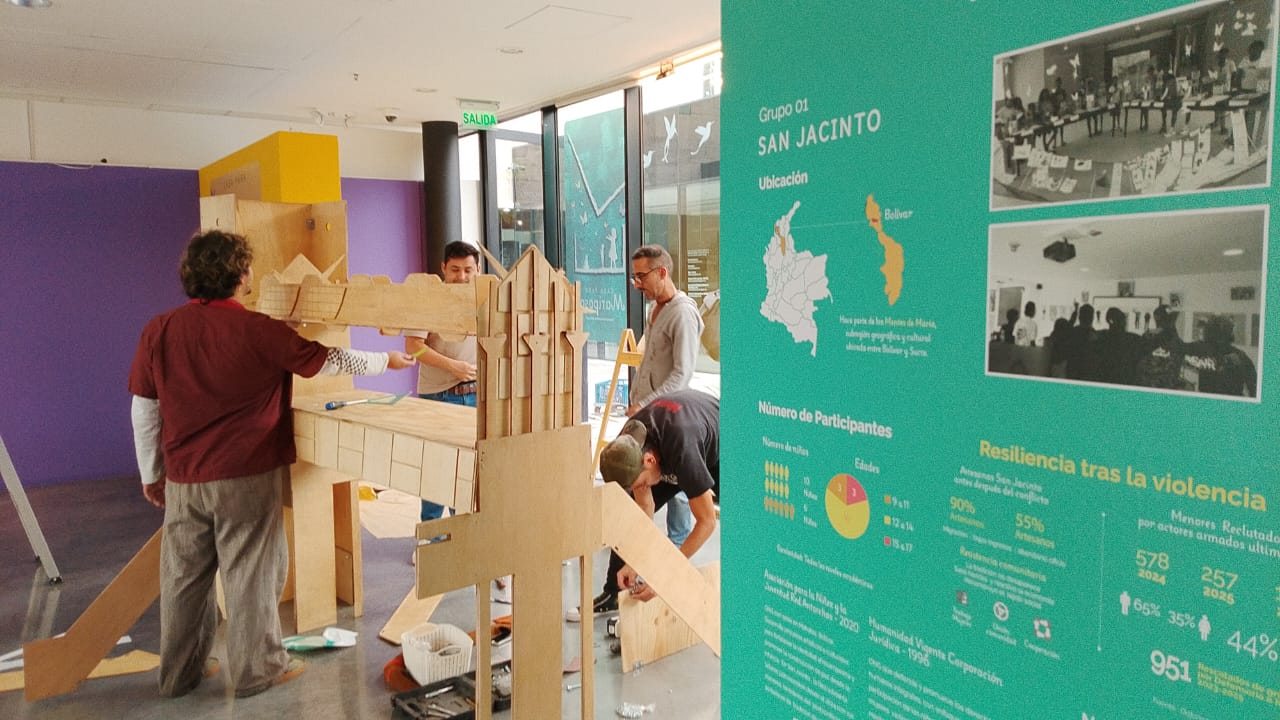
The aim was clear, and so Fabiola, the entire LunÁrquicos team and Carlos Barberá focused on the regions from which the memorial creators would come, forming two groups: one of victims and the other of demobilised youths. The first group consists of 16 boys and girls from San Jacinto, aged between 9 and 16, who were selected by the Red Antorchas Association.
“Having come through a process of social organisation carried out with the community and with Red Antorchas, they are very cooperative children, showing great solidarity with one another, and are very receptive and cheerful.”
Adults were present during the first two days as intergenerational discussions took place. Afterwards, Fabiola and Sebastián worked with the children on their own, though supported by a psychologist and a social worker, both from Red Antorchas. “They were there to support us in case any wounds were opened during the process.”
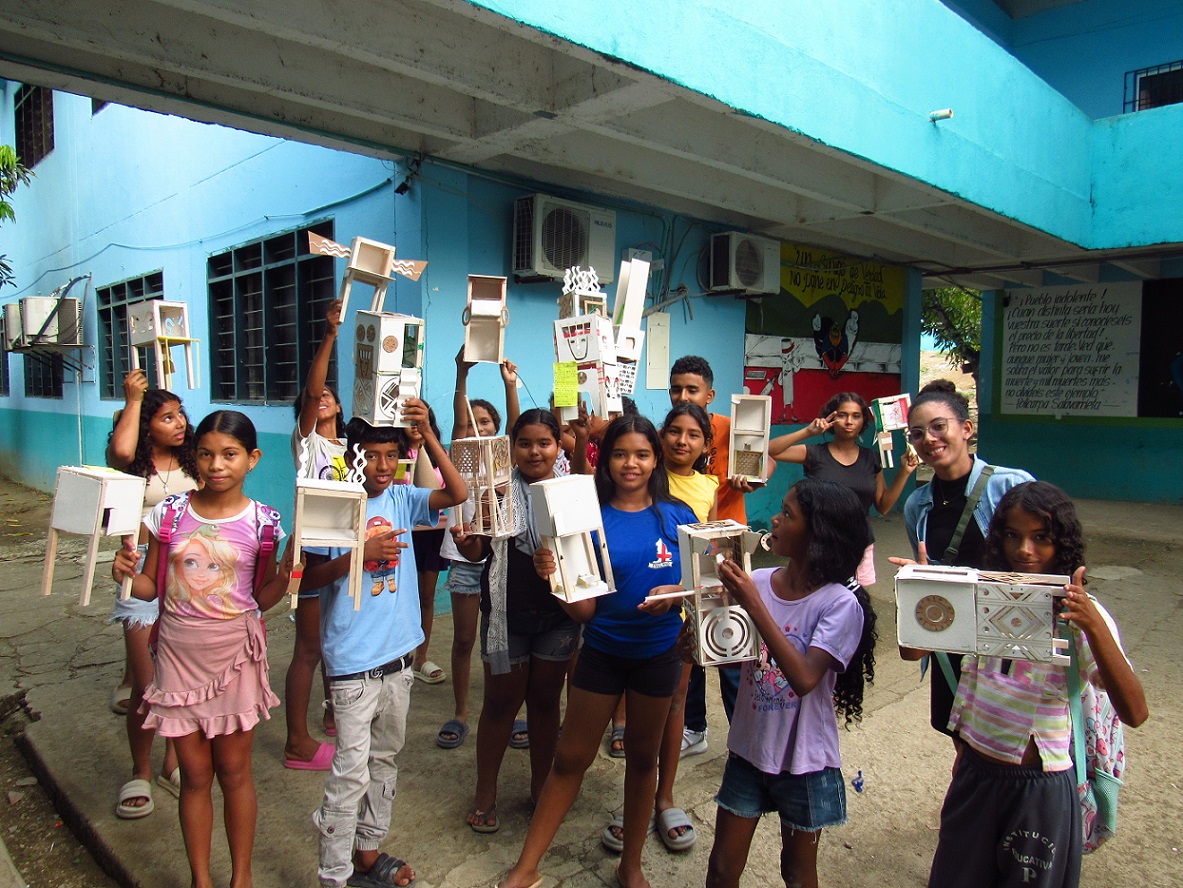
And so the days passed in that region of relentless, blazing sunshine, where they not only listened to the children, but also watched them piece together their memories and memorials, which they later, at the end of the programme, presented to the community.
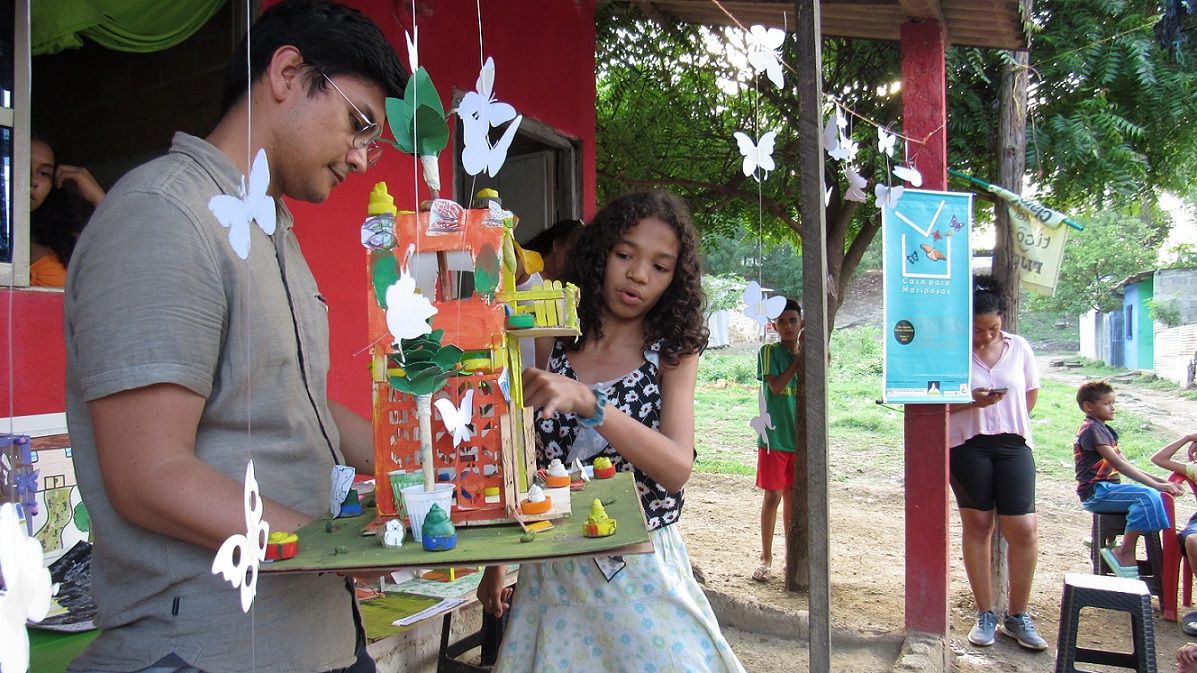 They worked in the Guitarra neighbourhood, one of the areas hardest hit by the armed conflict during the 1990s. A section of the population has experienced generational displacement. It wasn’t a difficult experience: “As they are familiar with the subject, they have taken part in many workshops, are deeply immersed in cultural and artistic expression, and are accompanied by their families. They all come from the same neighbourhood, a very close-knit and socially organised community.”
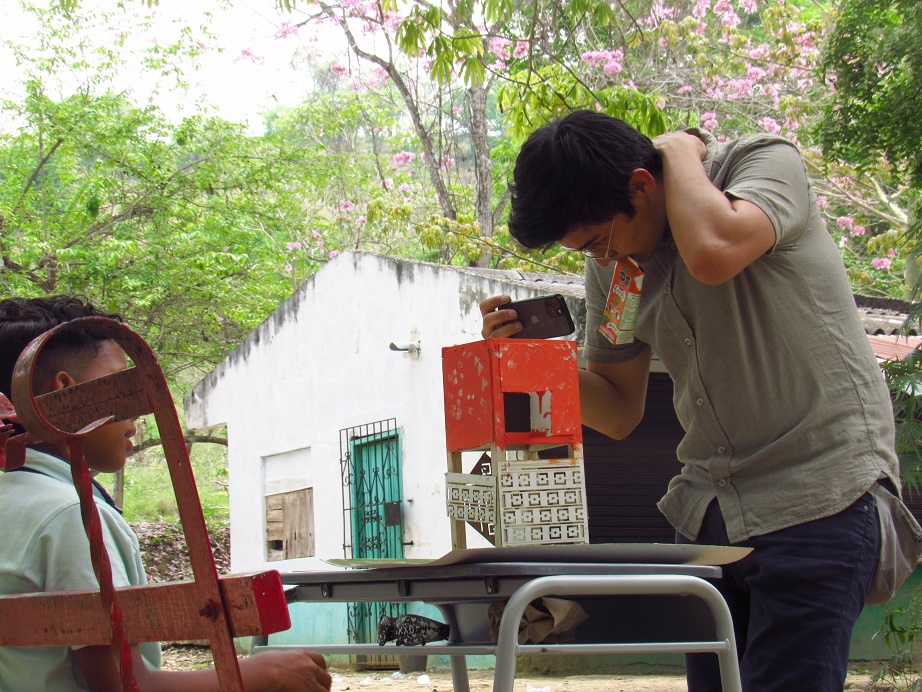
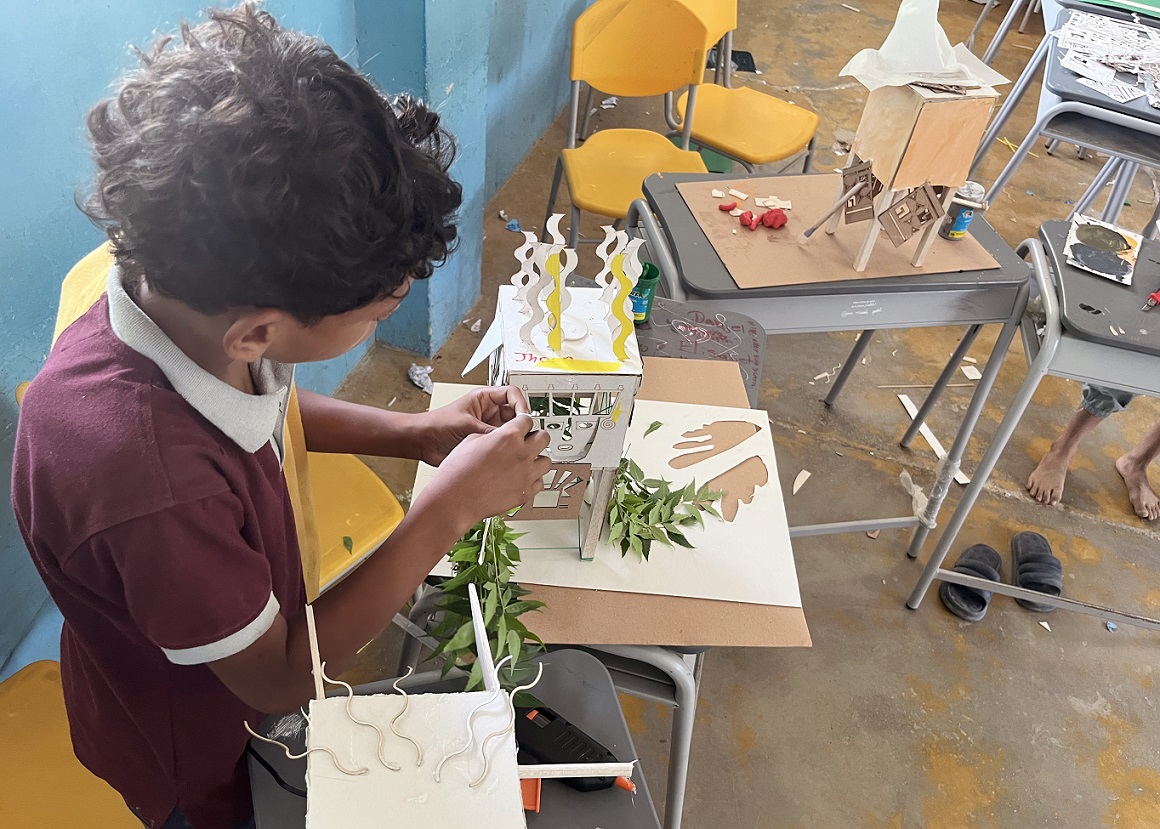
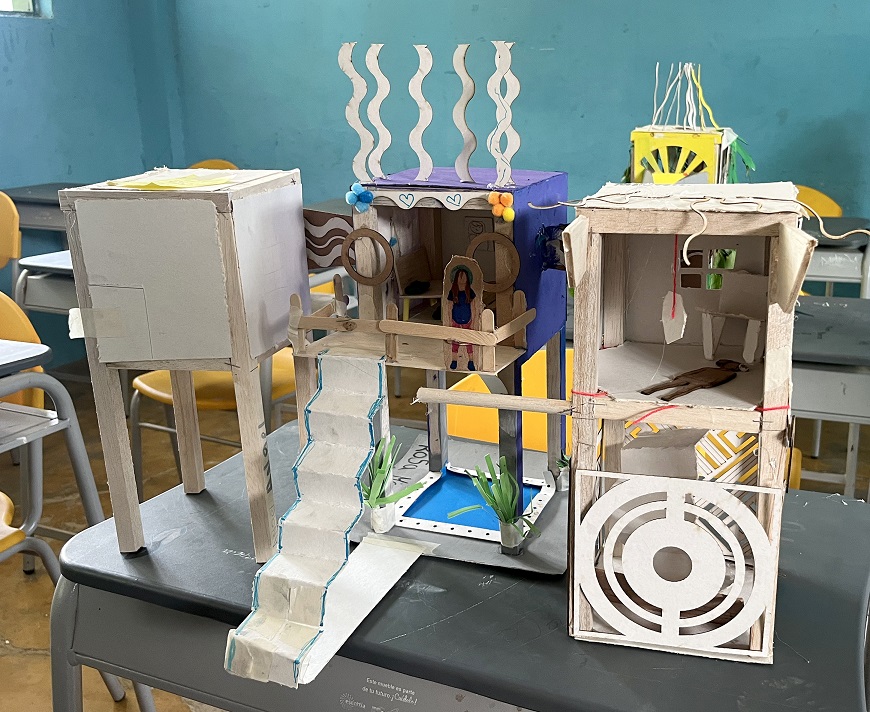
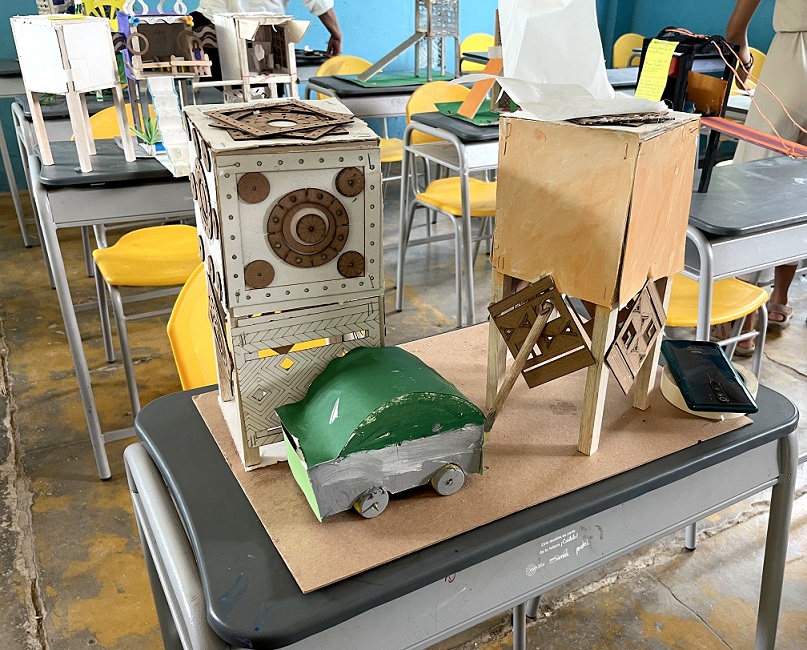
And as they are the children of craftspeople and weavers, they had great manual dexterity and made some “very interesting models using the materials we gave them. As they knew each other well, they shared stories and helped one another to make the architectural models.”
The only obstacle was that, as they were very young children, they didn’t really understand much when they were told about the memorial. “That’s why we approached them with the ancient concept of a ‘home for the soul’, where spaces are built to house the souls and memories of those who have passed away. This concept proved easy for them to understand.”
 Butterflies in Bogotá
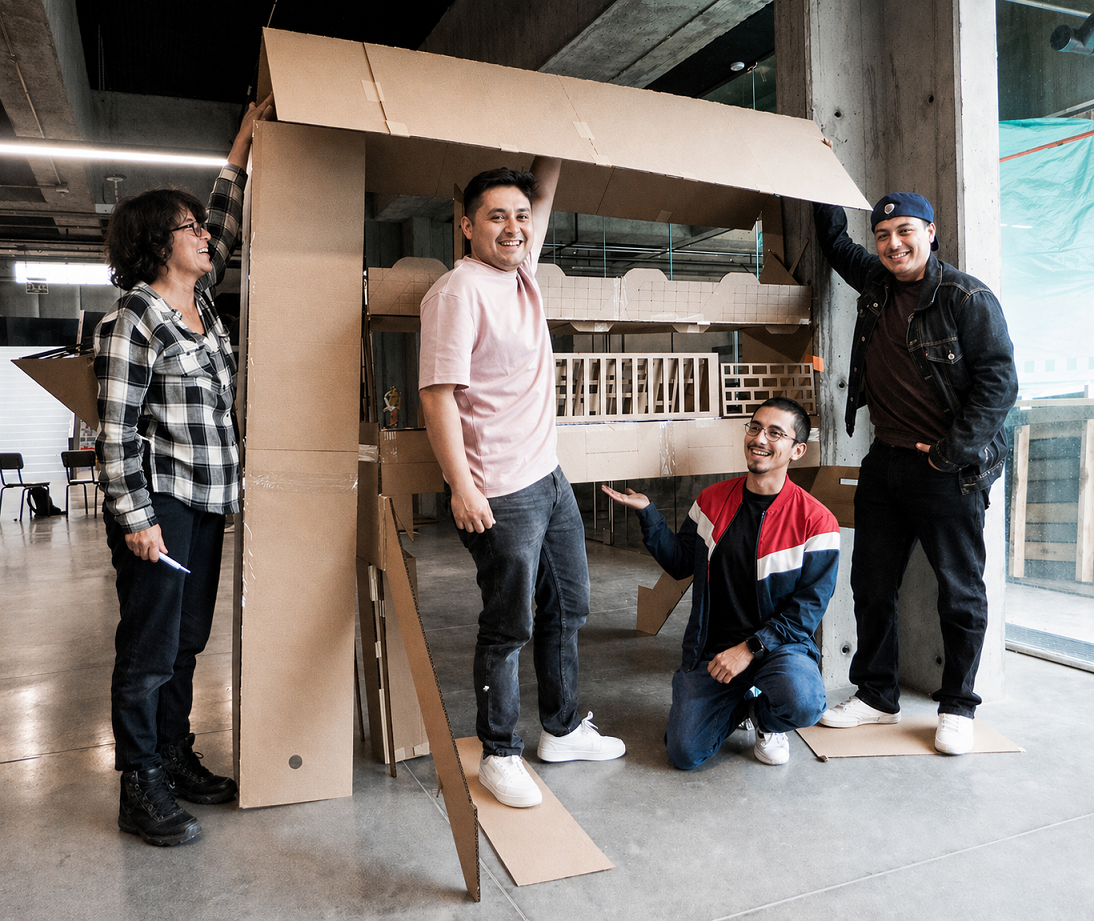
It was in this city that the second group, Territorios, was formed. It was set up by the Colombian Institute of Family Welfare and the Foundation for the Reintegration and Care of Children (CRAN). The group started with 12 young people, but only eight completed the process. They are aged between 13 and 17 and come from different parts of the country; they are demobilised individuals who were forcibly recruited by guerrillas, paramilitaries, self-defence groups and other armed actors. They have families, but for security reasons they had to separate from them and leave their places of origin. They are under protective measures.
Their life stories are very different. They are deeply marked by violence. Fabiola explains that “they were less receptive. CRAN wanted us to focus above all on the positive, on helping them understand that they were embarking on a new life, as these are young people who have suffered emotional and psychological trauma as a result of what they have been through.”
The children from San Jacinto have experienced violence as displaced persons. Those from Territorios “have been victims in a different way. They were recruited by armed groups, which meant they took part in the conflict as armed actors.”
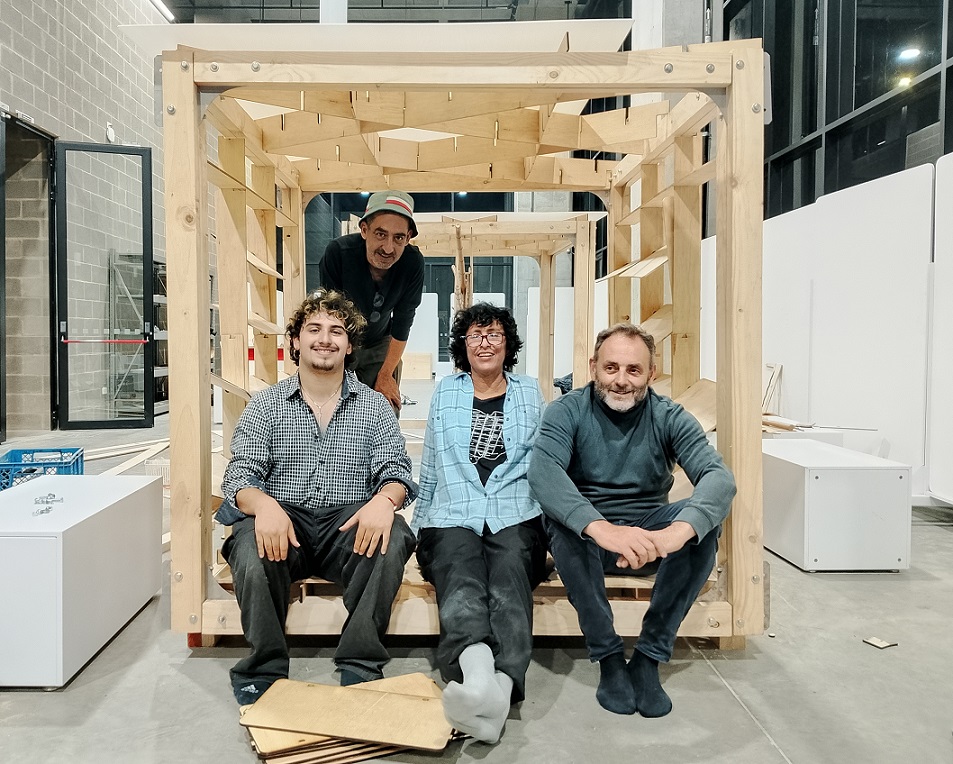 Working with these young people was difficult at first because, although LunÁrquicos is well versed in the subject, they had never worked with demobilised minors before. That is why they welcomed the constant support of the psychologists during the workshops. The psychologists were very clear: “Do not open wounds that you will not be able to heal later”.
Sebastián and I talked a lot before we started. Above all, it was important to approach them with love, affection and sensitivity. To understand them. They are young people from very rural backgrounds, some of whom spent a long time in armed groups. We arrived with an architecture workshop that requires certain skills… But for them, anything to do with manual expression or visual art seemed like it wasn’t for men. They had carried and used weapons, so for them, expressing themselves through art seemed ridiculous.”
They had to use a great deal of visual support and graphic material to help them understand that art and architecture are a language that allows them to express things they might not have been able to process or understand about themselves. “It was the hardest part, but also the most rewarding, because afterwards they would say: ‘I think this makes it easier for us to talk about what we’ve been through.’ Even the psychologists told us, ‘They’ve said more doing this than they sometimes do when speaking.’”
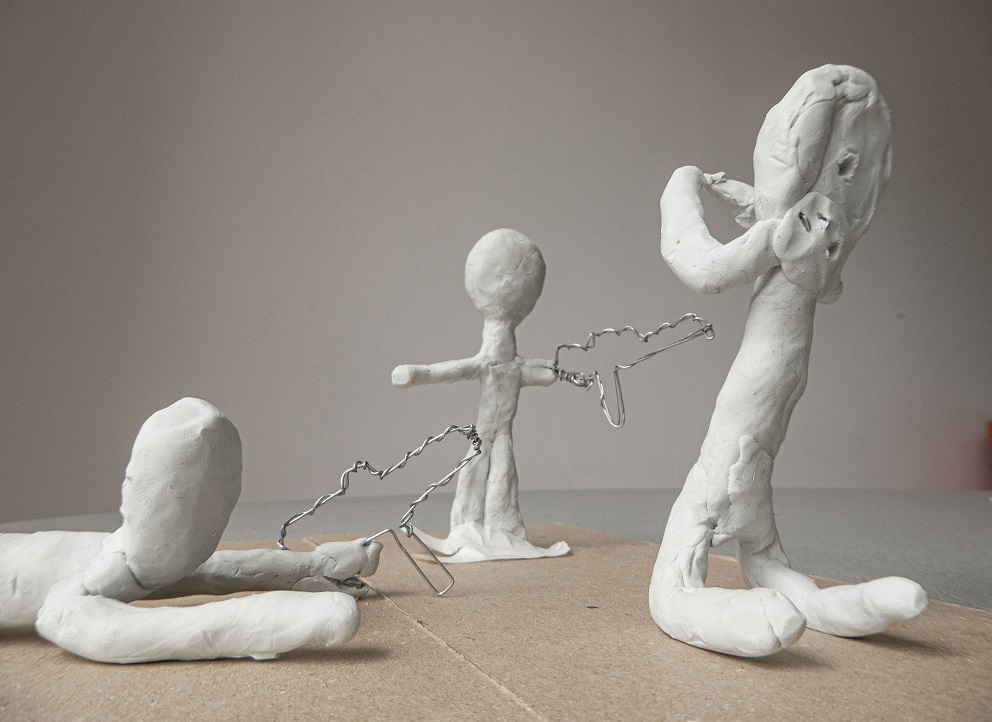 And so, eight remarkable memorials finally emerged.
Butterflies in stages
After almost a year of intense work, LunÁrquicos and the University of Alicante brought this project to fruition in stages; it is the first of its kind to be carried out in Colombia: Architecture, memory, peace and childhood, an aesthetic and creative symbiosis of resilience and memory.
A symbiosis in which other efforts and forms of support converged: the School of Architecture at the National University of Colombia, the Centre for Memory, Peace and Reconciliation of the Mayor’s Office of Bogotá, the CRAN Foundation, the Red Antorchas Association and the Humanidad Vigente Legal Corporation.
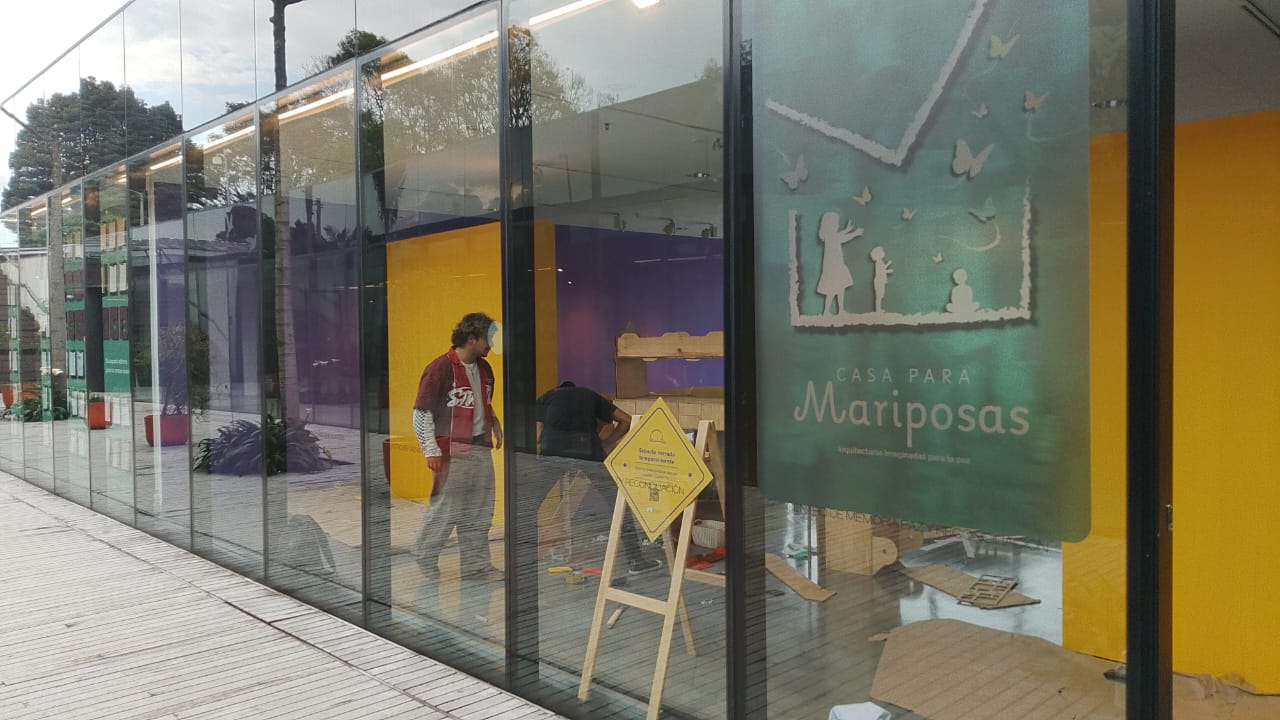
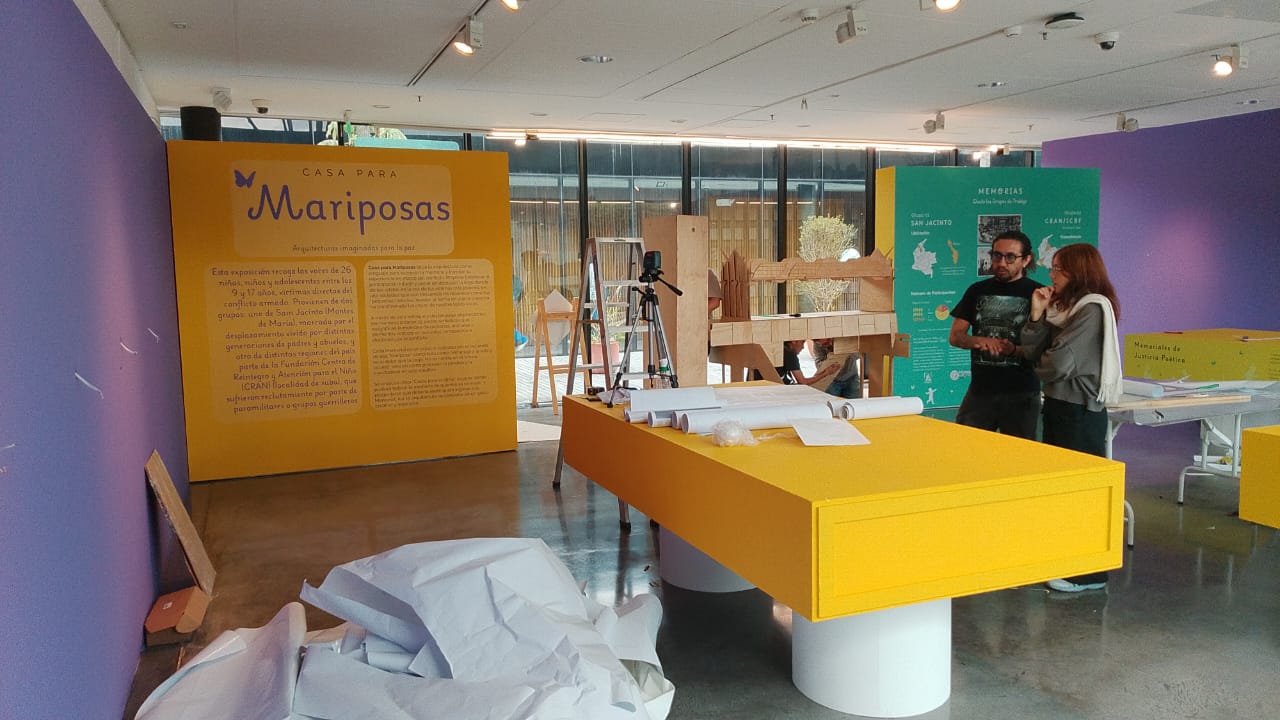
But the greatest efforts came from the architects of memory – those children and teenagers who created 24 designs destined for temporary exhibition at the Centre for Memory, Peace and Reconciliation, entitled “House for butterflies: Imagined architectures for peace”.
The project was structured in four phases “because, as well as drawing on the children’s memories of the conflict, we wanted it to be a process in which many people could get involved, to raise more awareness, and to keep bringing the issue to the fore.”
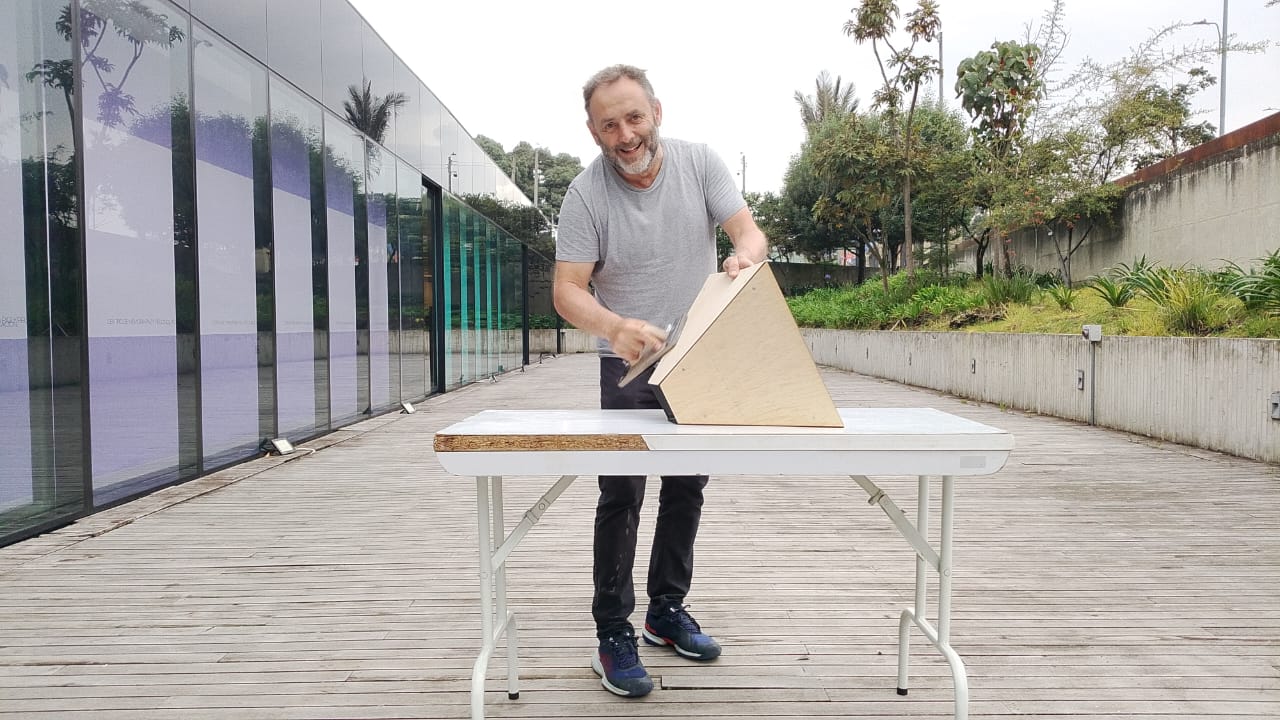
 After formulating the project and designing the architecture workshops with the children, the construction of the memorials was proposed. A parallel process took place. This was the third stage and was carried out with the National University, a strategic partner in the project: a design laboratory focusing on memory, childhood and conflict.
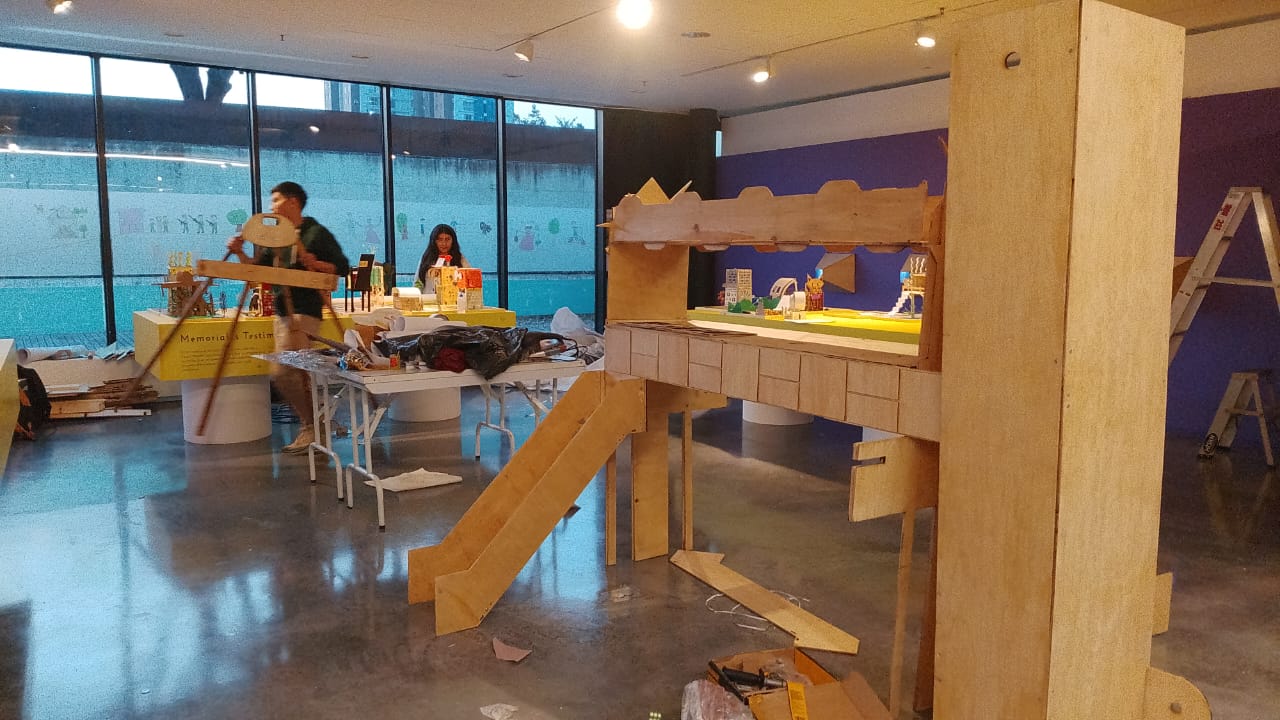
A workshop was held with architecture students to design an urban park with a memorial character, just as Hejduk had done, placing his buildings within a memorial park in Berlin.
There, they discussed where the memorials created by the children should be placed. Fabiola admits that this stage has a long-held goal: “It is important and necessary that in a country that seems not to care for its children, where almost one and a half million of them have been victims of the conflict, there should be a Memorial Park to help heal these wounds.”
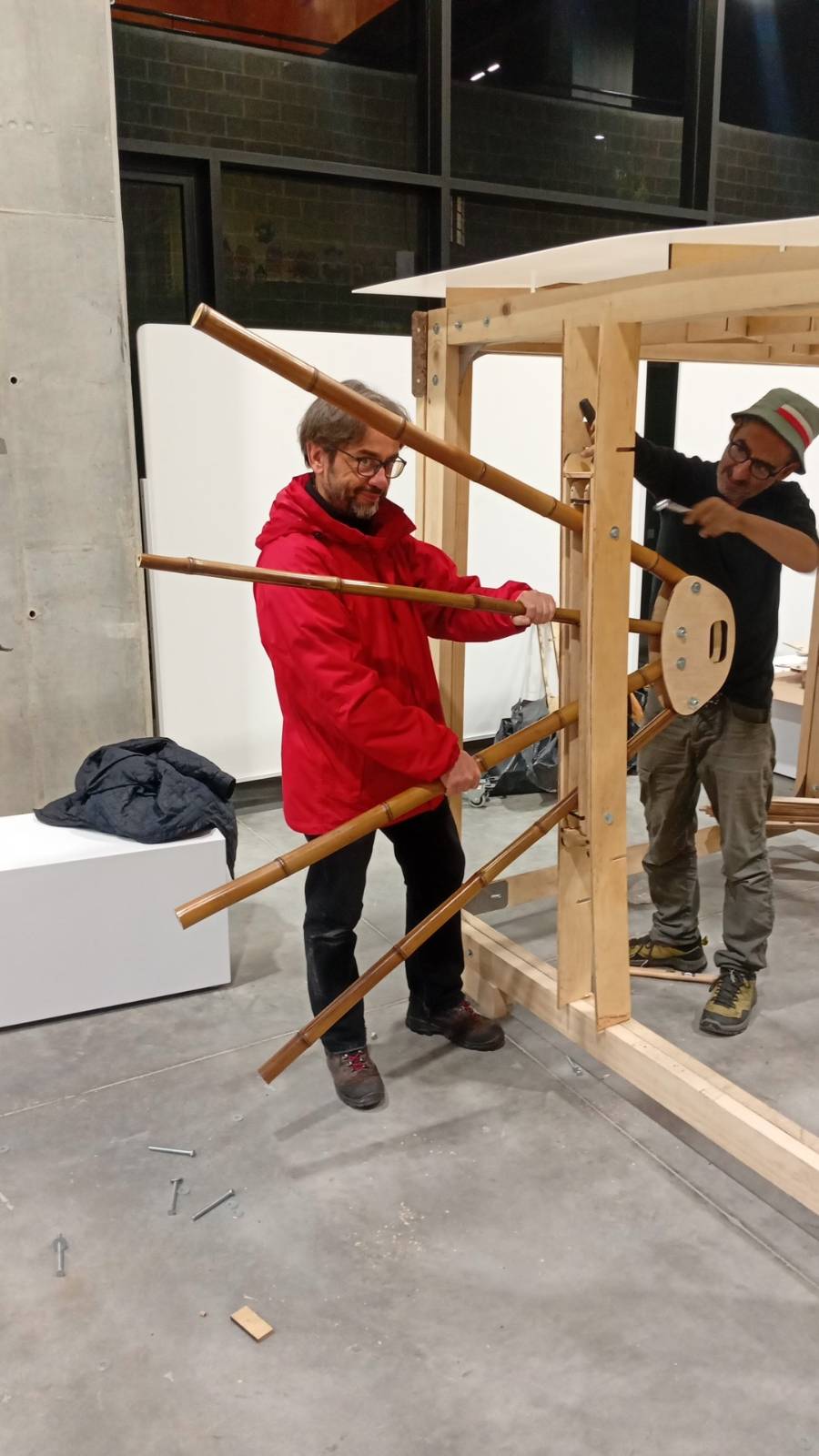
And the final stage is the exhibition on 29 April at the Centre for Memory, Peace and Reconciliation, where the 24 pieces created by the children in San Jacinto and Bogotá are accompanied by the model made by the architecture students: a sort of synthesis of the various models created by the children of San Jacinto and the CRAN.
“What we did was take a model by a child who had been recruited, called The bridge for souls, and transform it into a smaller installation to explore the theme of memory within the exhibition itself,” explains Fabiola.
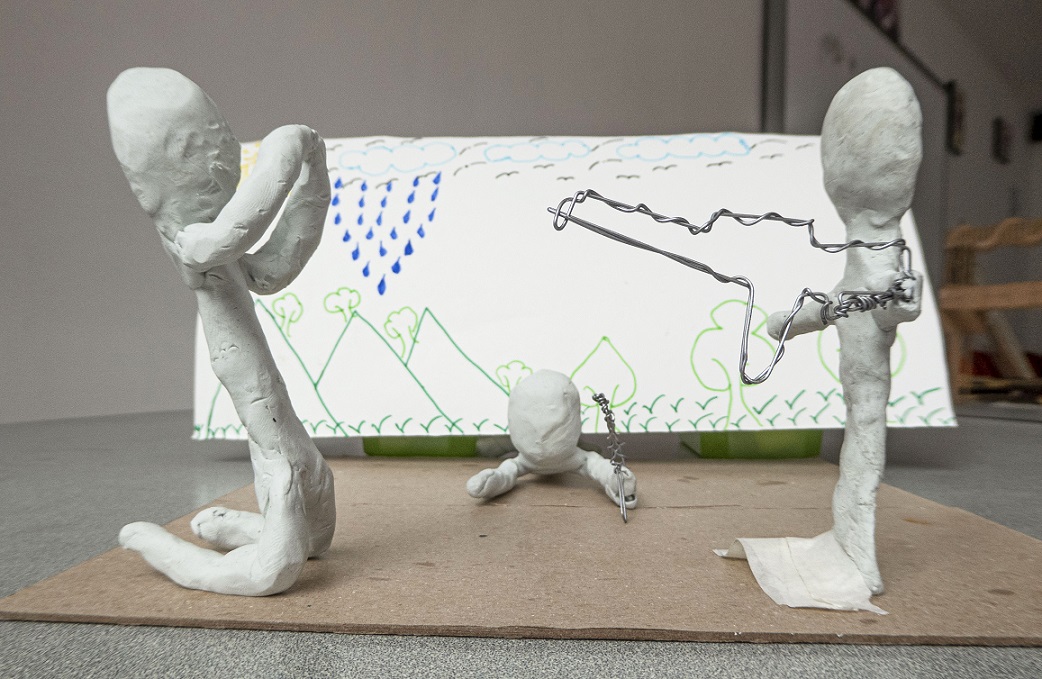
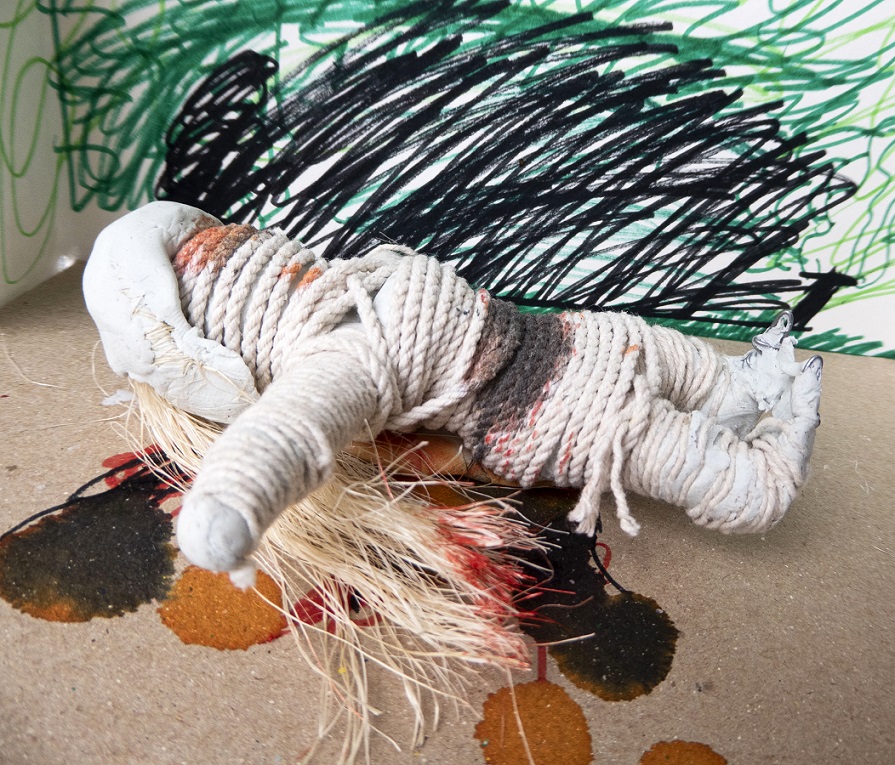
 The exhibition will also feature the result of a project with young people from CRAN: “The place of never ever”, which they brought to life with small plasticine sculptures.
The butterflies take flight
Fabiola falls silent and smiles when I ask her how she feels about this project and what she thinks about the future; she says: “It was important to give children a place in history, but it is better if we think of this place as not being made of architecture.”
Architecture in itself is an inert object. It only makes sense insofar as it is inhabited and brought to life by people’s actions and activities. In a peace process, the construction of buildings such as memorials or other meaningful structures can help bring communities together in shared spaces. Architecture can create spaces that are open to dialogue.
That is why her dream is to create Memorial Parks for children in Colombia. It is necessary. “Something that is rarely done is working directly with children who are victims, because normally the stories told in Colombia about children affected by the conflict are told from the perspective of adults or when the children themselves have become adults.”
(Translated by Rene Phelvin – Email: renephelvin@gmail.com) -Photos are the property of LunÁrquicos and have been provided for publication in The Prisma
“House for Butterflies” Gallery










.jpg)












