
After moving from Germany to London as a child, integrative psychotherapist Nibarna Kannathasan came to understand migration not only as movement, but as something that reshapes family life, identity and care. Through her work and research, she reflects on what Tamil women inherit, hold and are only now beginning to express.
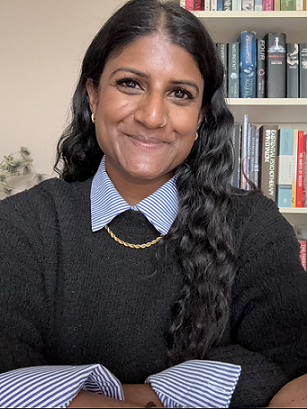
Evie Ratnaventhan
For Nibarna Kannathasan, migration is not a single moment but a layered inheritance.
Her father left Sri Lanka for Germany in 1979, part of a generation seeking stability in the West. Her mother followed to marry him. Years later, Nibarna moved again, from Germany to London at the age of ten, joining a Tamil community already rooted in the city.
She remembers that transition clearly. The stairs from their flat in Germany, the final walk down, the ferry across the English Channel. But what shaped her most was not just leaving; it was arriving at something already formed.
London was not unfamiliar. She had visited often to see cousins and grandparents. More importantly, there was already structure. Extended family, temple spaces, shared language and familiar rhythms of life created continuity.
Her own family’s life shifted after moving from North London to East London. The cost of living increased. Her parents worked longer hours. Stability requires more effort. She became aware, even then, of how much was being held together behind the scenes.
By her mid-teens, she knew she wanted to understand people. There was no clear path around her to follow. Medicine was the expected route. Psychology was not.
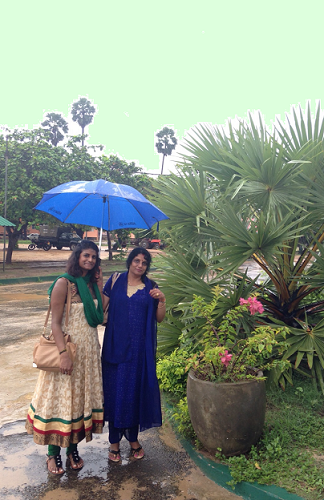
She describes that certainty as stubbornness, something she recognises in herself and in the women around her. When she speaks about her mother, grandmother and aunts, she returns to a familiar pattern. Tamil women often carry the responsibility of keeping life in motion. They hold together homes, rituals, food, religion and family continuity, often without naming that labour directly. As women do in so many other cultures.
 That understanding would later shape her doctoral research.
Working across the NHS, in private practice and community settings, Nibarna noticed the same pattern emerging in therapy. Tamil women would often arrive with present day concerns such as relationships, intimacy or anxiety.
Over time, those concerns would trace back to earlier experiences. Childhood, migration and family dynamics began to sit at the centre of the work.
A recurring theme was the gap between first and second generations after migration. Not just a difference in language, but in emotional expression. Different ways of showing care, different expectations and different understandings of what it means to feel safe or heard.
Rather than simply restating that this gap exists, she wanted to explore how it could be worked through. Her doctoral research used the Tree of Life approach to explore identity and family relationships. Then her study shifted when it centred on mother and daughter pairs.
What emerged challenged her expectations. Much of the academic literature around migration focuses on trauma and displacement. While those histories remain important, what surfaced here, years after migration, was something else. Women spoke about rebuilding, about stability and about the quiet work of creating a life.
What stood out most was the silence around sacrifice.
The mothers did not explicitly name what they had given up. Their values appeared through action. Ensuring there was food on the table. Taking children to school. Keeping the household functioning. In contrast, daughters were more likely to describe themselves through identity and personal values.
 “It’s the women that carry the culture across borders,” she says. “And there’s so much grief in that, and they do it with such grace.”
This insight continues to shape her therapeutic work. Many of the women she sees are navigating attachment patterns formed in families shaped by migration.
What appears as difficulty in relationships or communication in adulthood often connects back to what was expressed, what was withheld and what was necessary for survival within the home.
It is not about assigning blame. It is about understanding context.
Alongside her therapeutic practice, Nibarna is also a Co-director at Anbu UK. The organisation supports Tamil people affected by childhood sexual abuse through advocacy, resources, awareness and culturally informed spaces for conversation. She joined Anbu during her own therapeutic journey, at a point where she was questioning how accessible mainstream therapy spaces felt. In her experience, therapy in the UK can often reflect a white, middle-class context that does not always account for the realities of communities shaped by migration and silence.
T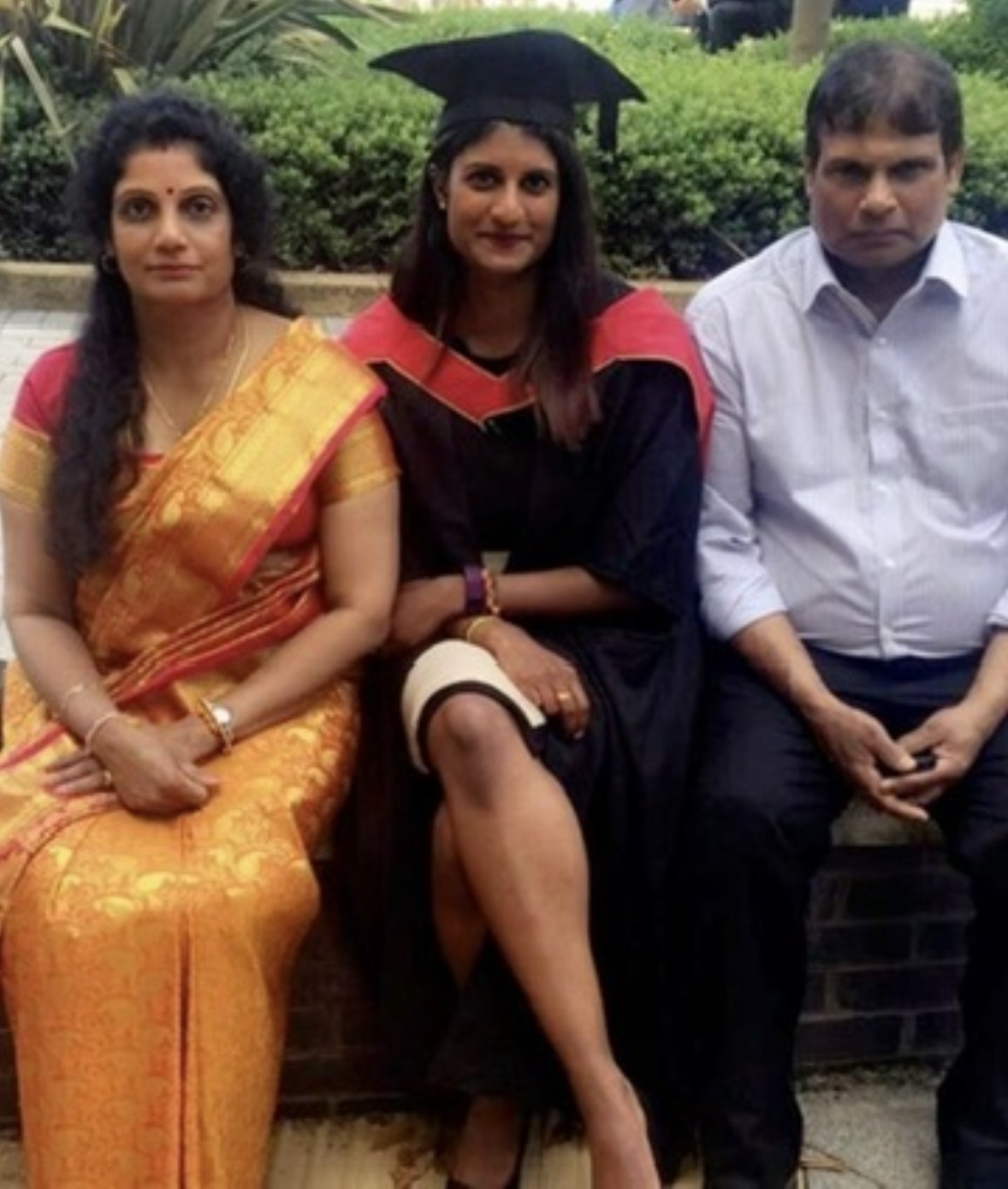 hrough Anbu, she was able to engage in conversations that are often left unspoken. Workshops, awareness work and community engagement allow Tamil individuals to explore mental health in ways that feel more culturally grounded.
The work spans generations, opening language around experiences that have historically been difficult to articulate.
Across this work, one truth sits underneath it all. Even where there is tension, many families are driven by needs for protection.
Parents who have experienced migration or instability often want safety and opportunity for their children. But that instinct can also make emotional expression more difficult, particularly around vulnerability, intimacy and mental health.
Tamil women are often navigating both sides of that inheritance. They carry an awareness of what the fears and pains their mothers held, while also trying to articulate their own needs more openly. What is beginning to shift is the space to do that. Community led work, alongside therapy, is allowing more women to speak about their experiences in ways that feel valid and understood. It is not about rejecting the past. It is about meeting it with more language, more honesty and more care.
In many ways, the story returns to what was always there.
The women who built, carried and sustained life across borders are now being seen more clearly, not only for what they did, the foundations of community they build together.
(Photos supplied by Evie Ratnaventhan and authorised for publication in The Prisma)










.jpg)












