
Through her work Ahrabi Rajkumar moves between international advocacy for Eelam Tamil justice and community work around childhood sexual abuse. Across both spaces, she reflects on memory, responsibility and the silences that continue to shape Tamil life in the diaspora. The Prisma Series: “Tamil women in the UK”.
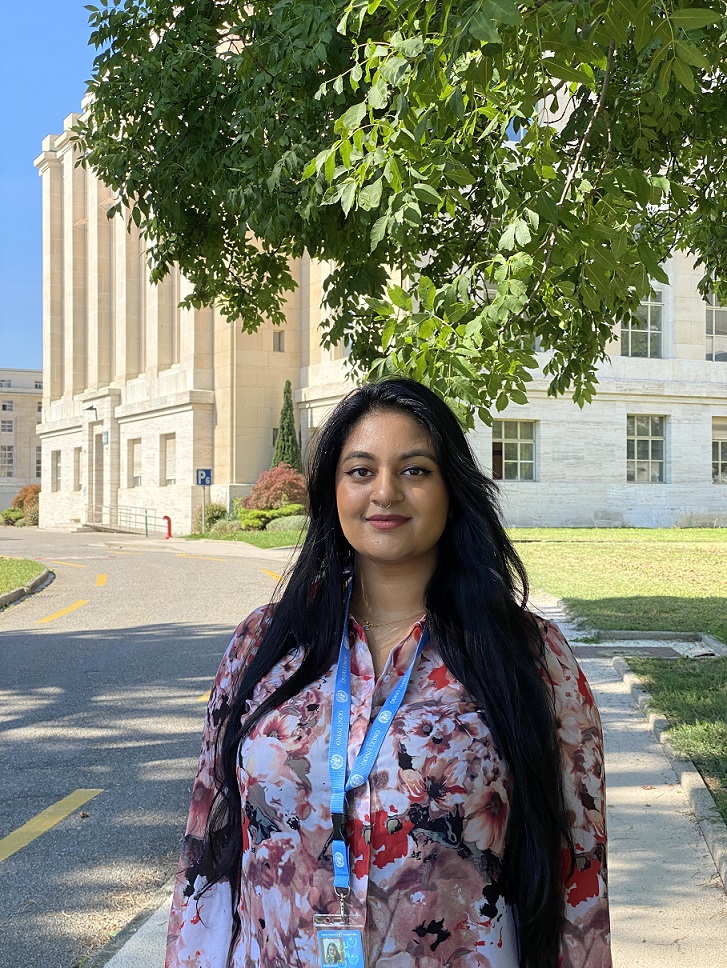
Evie Ratnaventhan
For Ahrabi, activism does not sit in one place.
It moves between policy briefings, community spaces and conversations that are often difficult to have. It exists in international advocacy and in private disclosures. It is both public and deeply personal.
She wears two hats. As Advocacy and research director at People for Equality and Relief in Lanka (PEARL), she works towards justice, accountability and self-determination for Eelam Tamils, with a strong focus on Tamil genocide recognition. The organisation engages policymakers across the UK, US and Canada, as well as at the UN, while documenting ongoing issues in the Eelam Tamil homeland, from militarisation and land grabs to the harassment of journalists and human rights defenders.
Alongside this, she is Co-Director of ANBU UK, where she works with volunteers to raise awareness and create resources for survivors of childhood sexual abuse within the Tamil community.
On paper, they are very different spaces. For her, they are connected. “PEARL is about justice,” she says. “ANBU is about looking inward and holding our community accountable.”
That sense of responsibility was shaped early for her. Growing up in the UK, Ahrabi was deeply aware of her family’s experiences. Her parents were open about their lives during the genocide, and those conversations played a key role in shaping her political understanding. What remains more private is how those stories are shared beyond the home, held with care and respect for their ownership.
One moment remains particularly formative. In 2009, as thousands of Tamils gathered in protest across the UK and globally against the Tamil genocide, she witnessed the scale of collective grief for the first time.
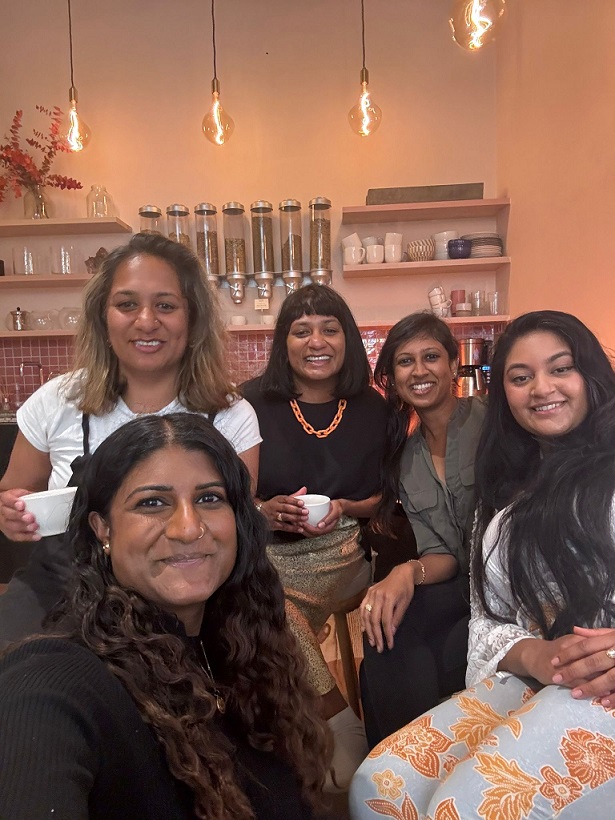 “It was the first time I saw our community come together like that,” she says. “There was this overwhelming sense of helplessness, but also a shared understanding.” That feeling has stayed with her.
In her work today, she often encounters a different kind of distance.
“There’s this perception that everything is okay now,” she says. “People go back for holidays and assume things have settled.” From her perspective, that is not the case.
She points to ongoing militarisation, the destruction of Tamil places of worship and continued intimidation of activists and journalists. Through PEARL, she works with those on the ground as well as diaspora organisations, building research and advocacy that can reach international policymakers.
Their recent work has focused on what the organisation describes as the erasure and appropriation of Tamil spaces, supported by case studies including Tamil farmers in Batticaloa attempting to protect their land. Within this, she sees a clear role for the diaspora. “People on the ground can only do so much,” she says. “We have reach. We can advocate. We can push.” PEARL itself was built with a specific intention.
Founded around twenty years ago by Tasha Manoranjan, the organisation emerged in a context where Tamil political spaces were largely male-dominated. From the beginning, it positioned itself differently, as a Tamil-women-led space where activism could feel accessible and safe.
For Ahrabi, that legacy is visible in the present. She works alongside a team of people largely in their twenties and early thirties, many balancing full-time work, family life and activism. “To see Tamil women leading this work, sustaining it over time, it means something,” she says.
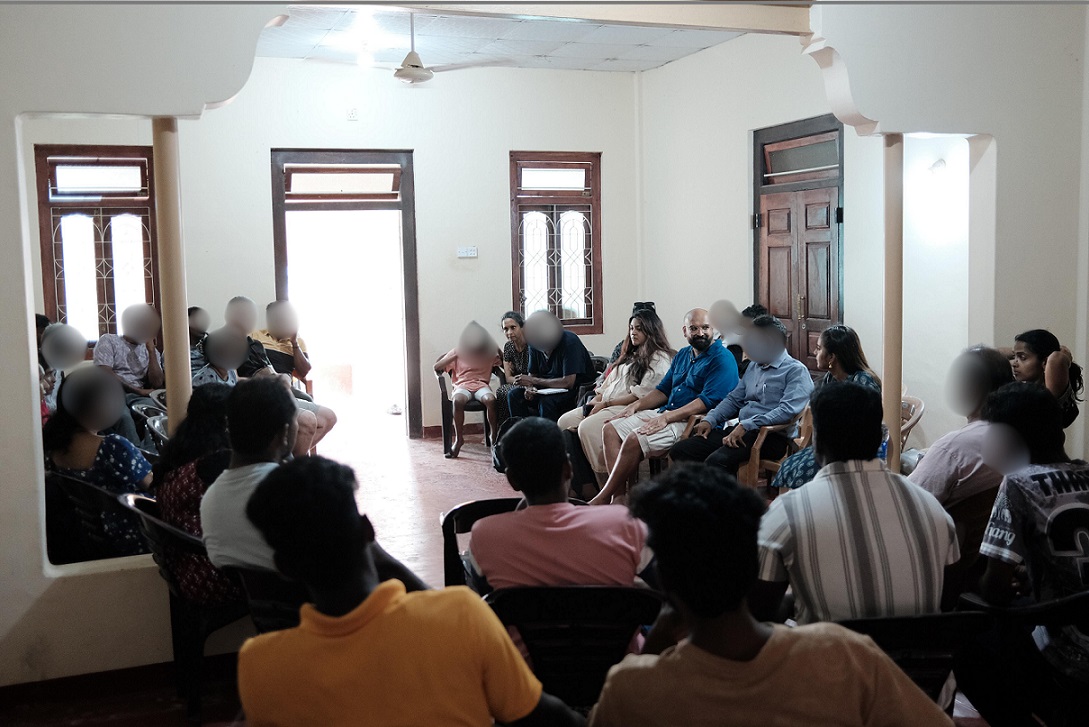 Across both of her roles, the work involves listening to difficult experiences. Stories of violence, loss and silence surface in different ways, whether through advocacy or community support. There is no clear method for managing that weight.
“I don’t think anyone has found the balance,” she says. Instead, she speaks about perspective. About recognising her own position within the diaspora and understanding that not everyone has the safety to speak or act in the same way.
“I see myself as a listener to other people’s lived experiences,” she says. “You just feel grateful that they trust you with that.” Even so, the emotional weight remains. “It is heavy. There’s no real solution to that.” What helps is community. A network of other activists doing similar work, holding space for one another in ways that make it more sustainable.
While PEARL focuses on external accountability, ANBU UK turns inward.
Its work addresses childhood sexual abuse within the Tamil community, an issue that remains surrounded by silence.
“There is a huge cultural shame,” she says. “A need to protect the community, which can make it difficult to speak about what’s happening within it.”
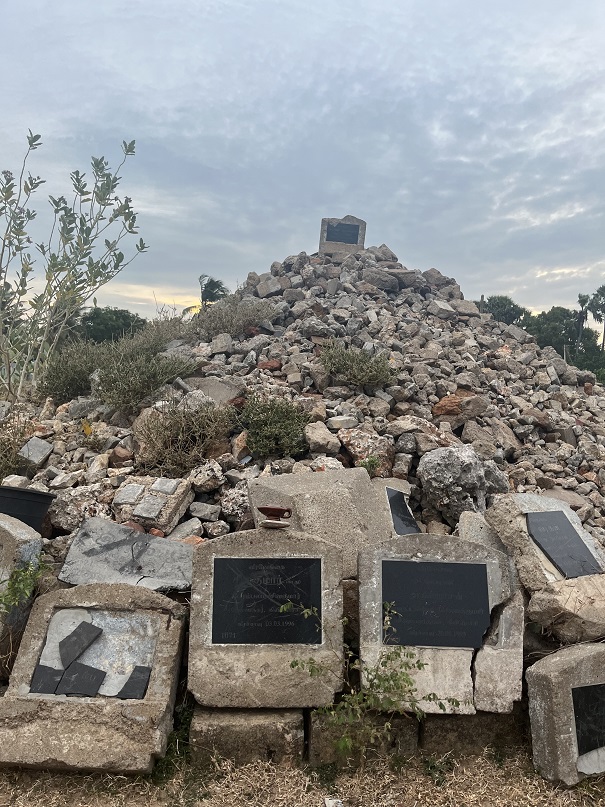 This silence is reinforced by a lack of accessible language and resources. Conversations around therapy and mental health can still feel distant or unfamiliar, particularly for older generations. “Sometimes people don’t even have the words,” she says.
Part of ANBU UK’s work focuses on developing trauma-informed language and translating resources into Tamil, creating ways for people to begin those conversations.
She also reflects on the structure of Tamil community life itself.
“We are a very relationship-based community,” she says. “You’re introduced to someone and asked to call them uncle or aunty. There is a level of trust in that, but it can also create vulnerability.”
For her, the connection between these two areas of work is not optional.
“I couldn’t be part of the Eelam Tamil space, fighting for justice, without also doing something that strengthens our community itself,” she says. Both forms of work, in different ways, resist erasure. One addresses the ongoing struggle for justice in the homeland. The other challenges the silences that exist within the community.
When asked what healing looks like in the absence of full justice, her answer returns to something simple. Community.
For ANBU UK, the message is clear. “You are not alone.” It is a phrase that carries weight across both sides of her work. Advocacy can be isolating. Community work can be emotionally demanding. In both spaces, connection becomes essential.
“Holding each other through it all is what we need,” she says.
Looking ahead, her hopes for younger Tamil women are shaped by that same understanding.
She speaks about inheritance not just as history, but as something emotional. What is passed down, what is carried and what can be changed. “I hope they are free from loneliness and isolation,” she says. It is a quiet but significant shift.
Across generations, Tamil women have carried memory, responsibility and care, often without recognition. What is emerging now is not a rejection of that role, but a clearer articulation of it.
More language. More openness. More space to speak. And, increasingly, the ability to say what was once left unspoken.
(Photos supplied to Evie Ratnaventhan by the interviewee, and authorized for free publication)










.jpg)












