
Israel’s genocide is being enacted on more than one front. The most brutal and horrendous way is by means of physical slaughter, evoking the Nazi genocide, and this is accompanied, in both Gaza and the Occupied Territories, by creating a new geography designed to replace Palestine and eradicate its cultural identity.
 Sean Sheehana
In the West Bank, there are now nearly 150 colonial settlements and one hundred ‘outposts’ – the numbers continue to grow – and the construction of new four-lane bypasses to connect them. Each bypass pulverises and obliterates another bit of Palestine.
The two authors of “Forgotten”, living in Ramallah, set out to contradict their book’s title by seeking out ‘forgotten and hidden memorials, monuments and places’.
Some of what they look for carries their own personal memories while others reach back a millennium in time.
They begin in Nablus with a triptych of panels and an altar of white stone bricks commemorating the victims of the first (1987-93) and second (2000-05) intifada. A chapter provides the background to the memorial and the nearby Bronze Age archaeological site of Tell Balata.
It takes three excursions to find the Nabi Ukkasha mosque and tomb in west Jericho and when the domed mausoleum is finally located they find good reasons to fear for its protection. In 2009, the Israeli High Court rejected a petition to compel authorities to protect Muslim holy sites (as is done for Jewish holy sites).
 Another excursion is to the Golan Heights (a part of Syria occupied by Israel since 1967) and the site where two Turkish aviators, on a mission to deliver the first Ottoman airmail service to Jerusalem, crashed in 1914. The stone base for the memorial site was taken from a Palestinian village, Samra, all of whose inhabitants were exiled in 1948. Another journey undertaken by the authors seeks to find the sole existing monument to the Nakba within Israel’s borders.
They visit the ground where the neighbourhood of Manshiya, between Tel Aviv and Jaffa, thrived until it fell victim to Irgun, a Zionist terrorist force, determined to rid the place of its Arab residents. In 1963, the ground was used to build a seaside park and a complex of high-rise buildings. “Every time we drive by the exquisite blue sea, Manshiya will emerge whole in our mind, and as it once was, before the Charles Clore Park was built”. Charles Clore was the UK billionaire who funded much of the construction project; early in 2026, a social media post relating to Clore was posted by the Tel Aviv authorities before they quickly deleted it.
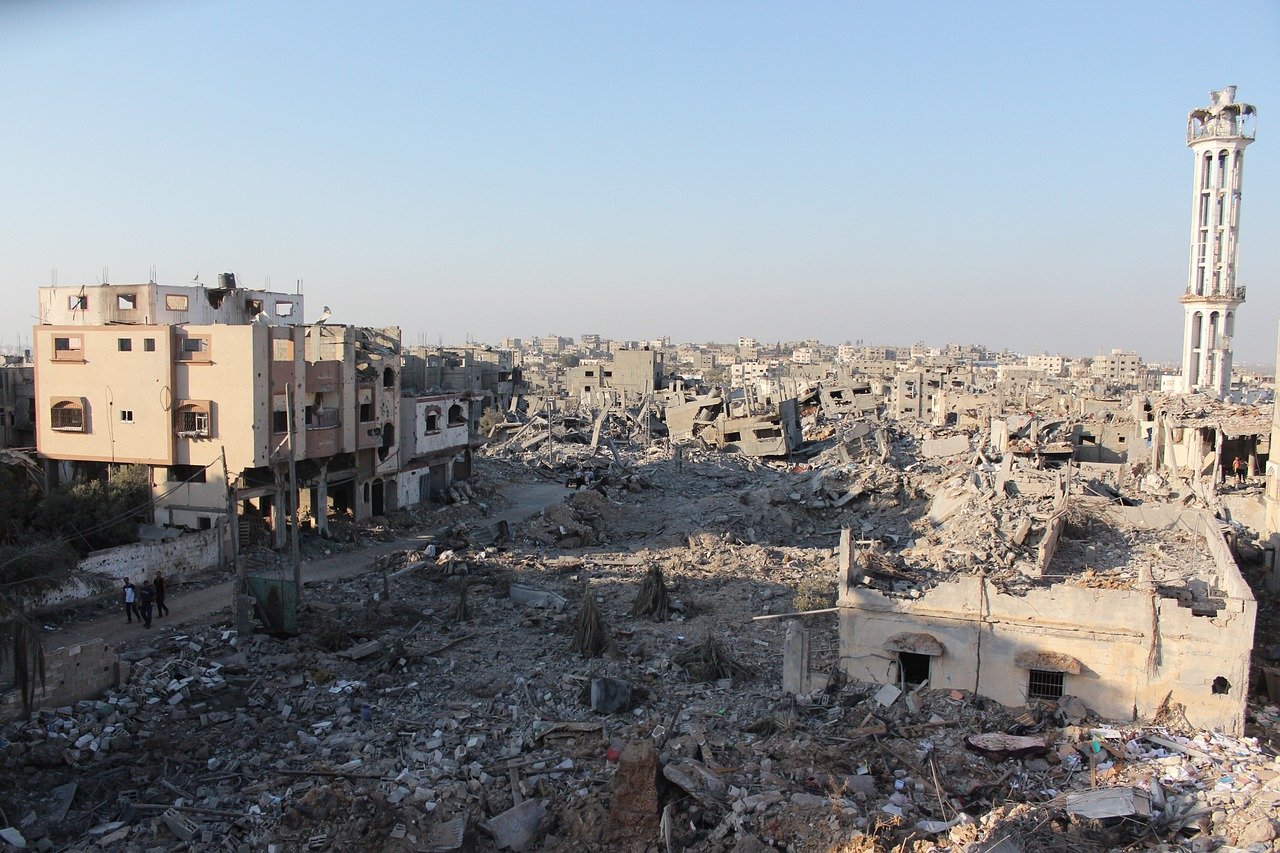 Palestinians have lived between the Mediterranean Sea and the River Jordan for countless generations but the Israeli state is imposing the idea that they do not belong there. Through acts of reshaping, reimagining and remapping, the geography is being changed.i
“Forgotten: Searching for Palestine’s hidden places and lost memorials”, by Raja Shehadeh and Penny Johnson is published by Profile Books.
(Photos: Pexels and Pixabay)
.










.jpg)












