
Arriving in Britain as a child, has spent decades building a vibrant salsa legacy in London, creating a community that keeps Latin sounds alive even in challenging times. Her story reveals the rewards of preserving cultural identity while adapting to life far from home.
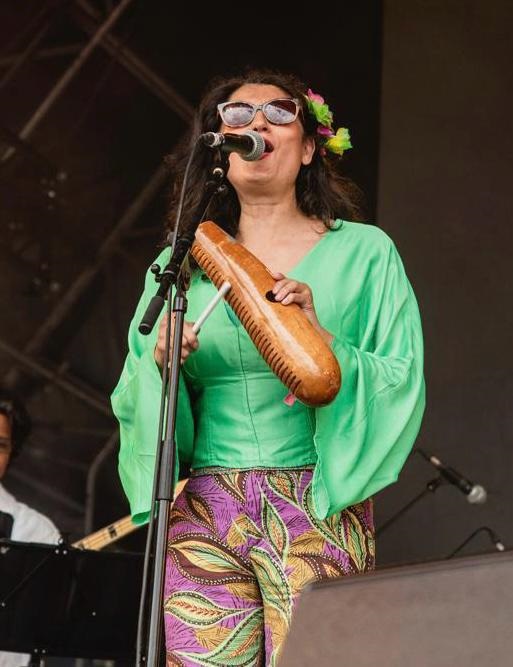
Clelia Frondaroli
The first thing Luz Elena Caicedo noticed when she arrived in the UK was how dark it was.
“We came through Folkestone at the end of September, and it was so dark. Then we our journey to London, and all the houses seemed exactly the same. I thought they were all very grey, very funny-looking houses,” she recollects, with a slight smile.
Born and raised in Cali, Colombia, at just 10 years old, she moved across the world from the city’s vibrant streets to a small neighbourhood in South London. One of seven children, her family came in search of better opportunities, and although it was in Cali where she found her passion for salsa, the UK was where she made her home.
“It was very different back then,” she says, recalling her first few years in the country. “There weren’t many Latin American places. My mum would have to go to Brixton Market for plantains because it was the only place where you could buy them.”
But slowly and surely the community grew, and with it Caicedo’s acclaim. As the leader of Conjunto Sabroso, the singer has spent more than three decades performing salsa and tropical songs. But the Colombian native originally started her career as a folkloric dancer, only transitioning to music in the early 1990s after an impulsive decision to audition as a backing vocalist introduced her to the world of salsa singing.
Although that particular gig didn’t last long, “They sacked me after eight months because I wasn’t a great chorus singer,” she laughs—it spurred her to think of a new avenue for creating music.
 Enlisting the help of her brother, who had friends in the salsa scene, she spent six weeks bringing together musical arrangements and recruiting members for the band. From 1995 onwards, Conjunto Sabroso was born.
The original ten-piece band hit the ground running in London. Performing at venues all over the world and appearing at the All England Latin American Championships this coming month, the group has now cemented itself as one of the capital’s longest-running Latin bands.
But it has not always been easy, especially in recent years. Of the original members, only Luz Elena is left, who always plays with her husband, Wilmer Sifontes, who is the musical director. Although the band can play with anywhere from five to ten musicians, “you can’t get the proper sound of a salsa band with a five-piece, no matter how good the musicians are,” she says. With pubs and venues cutting costs, smaller bands like quartets and trios are in more demand, and competition for gigs is higher than it once was.
Still, the singer has found ways to enrich her career. After creating an album with an elderly person’s group, entitled the ‘Latin American Silver Voices’, she received a grant from the National Lottery to create a community choir. Although that particular group ended after a year, it restarted in 2015 as the Latin American Community Choir – and has remained one of the only such choirs in the city.
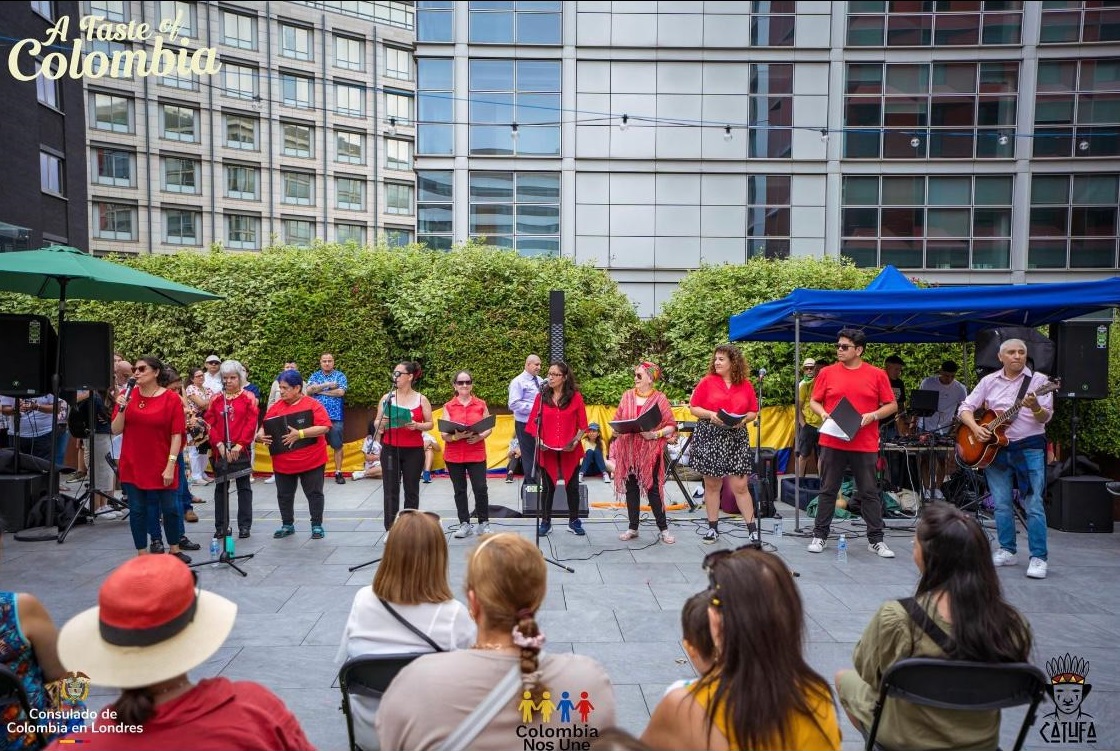 The 15-strong group comes together on Thursdays to practise a range of repertoires, anything from modern Latin ballads to songs with a social message. The choir has also been involved in a number of performances, most recently for the Colombian consulate.
Speaking about the group with an air of warmth and pride, she said: “It’s become very popular, and we have people from Ecuador, Colombia, Venezuela, Peru, Spain and Chile, to name a few.”
She also ran the Cimarron festival from 2008 to 2010, which celebrated the African cultural legacy within Latin America, and as a trained ethnomusicologist she also reflected on ideas of identity in this country and beyond.
“The world has become very difficult to navigate in terms of identity and understanding your place,” she explains.
As for her own identity, Caicedo sees herself not as British, but as a Londoner. Although she loves her home country for its people, their warmth and its dry climate, she is sure that “I would have been a completely different singer over there had I stayed, definitely not a salsa singer.”
 She says living in the UK has given her a greater sense of freedom and acceptance.
“I like the fact that you can look however you want, you can eat whatever you want, you can be from any part of the world, and you don’t have to think about people looking or judging.”
And although Luz Elena does not know whether she will remain in the country forever, she likes to think she will stay a Londoner, firmly planting her roots in the city.
(Photos supplied by the interviewee and authorised for publication)










.jpg)












