
Congress’ decision to overturn the presidential veto to the Dosimetry Law unleashed a new political and legal confrontation about the limits of impunity after the 2023 coup attempt. Its final approval would reduce the penalties for those convicted of the coup plot, including that of Jair Bolsonaro.
 Martha Andrés Román
The controversial regulation, aimed at reducing the penalties of those convicted for the 2023 coup d’état, had been approved by that body last December, but did not enter into force because it was vetoed by President Luiz Inácio Lula da Silva on 8 January 2026, on the third anniversary of the attack against the three powers of the State.
On 30 April, the National Congress submitted to consideration of the president’s veto, who received 318 votes against and only 144 in favour in the Chamber of Deputies, and 49 rejections and 24 supports in the Senate.
The Dosimetry Bill establishes that, when a person is convicted of crimes such as attempted coup d’état and violent abolition of the democratic order in the same context, the penalties will not be added together. Instead, only the most serious will be applied with limited increments. Likewise, the regulations make the rules for the progression of the regime more flexible, reducing the minimum time of fulfilment in prison. According to estimates disseminated by Brazilian media, following the defeat of the veto, which will allow entry into force of the measure, the conviction of former President Jair Bolsonaro could be considerably reduced.
Although the former president has been under “humanitarian house arrest” for health reasons for just over a month, theoretically, he remains in total confinement after being sentenced to 27 years and three months for attempted coup d’état.
Its transition to a semi-open confinement regime is only possible in 2033, but, with the eventual entry into force of the new text, experts indicate that the change of regime could occur within two to four years.

However, specialists warn that these changes are not automatic and will depend on reviews by the Supreme Court (STF) and compliance with legal requirements.
But the impact of the Legislative decision is not only limited to the reduction of sentences for Bolsonaro and dozens of those sentenced for the coup plot. According to an analysis by the newspaper Folha de S. Paulo, the new legislation could benefit more than 200,000 Brazilian convicts, by expanding punishment reduction mechanisms, such as referral for study or work.
The decision generated a wave of critical reactions from sectors of the Workers’ Party (PT) and civil society organisations who described the measure as a “serious institutional setback” and warned about the risk of impunity.
A coalition of more than 20 groups pointed out that the new law represents a serious and historic institutional setback, which normalises violence and poses a risk of impunity in case of future coup attempts.
The statement of the Pact for Democracy coalition points out that the annulment of the veto can be interpreted as a way to minimise frontal attacks against the democratic regime and replace popular sovereignty with authoritarian projects.
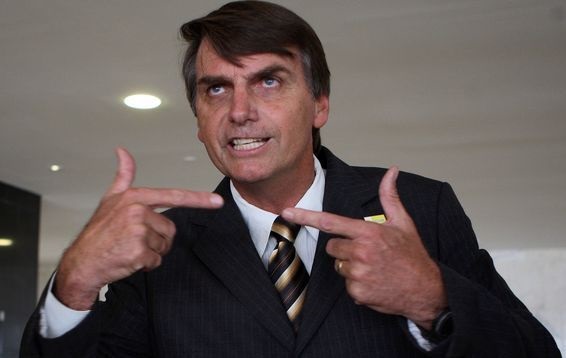
From the ruling party, PT leaders such as Deputy Lindbergh Farias denounced the existence of a “political agreement” in Congress to benefit those involved in the coup plot and warned that the decision transcends the criminal technical field and responds to specific political interests.
Given this scenario, the PT bench is already preparing an action of unconstitutionality before the Supreme Court, with the aim of suspending the effects of the law on the grounds that it violates constitutional principles such as proportionality, separation of powers and the protection of the democratic rule of law. Democratic parliamentarians considered that the rule constitutes a “covert amnesty” and recalled the court’s own precedents that prevent measures that reduce penalties in cases of attacks on democracy.
They also allege that Congress would have invaded the powers of the Judiciary by altering criteria applied in judgements already finalised.
The judicialisation of the issue is emerging as inevitable, and the Supreme Court could once again play a central role in the resolution of tensions between the Legislative and the Executive, with a direct impact on emblematic cases linked to 8 January.
 Legal and political debate
Jurists and analysts agree that the controversy has a double dimension: on the one hand, there is the technical debate on the constitutionality of the rule; and, on the other hand, a broader political dispute about the interpretation and consequences of the coup events is evident.
Some specialists such as Pedro Serrano, professor of Constitutional Law at the Pontifical Catholic University of São Paulo, consider that the law may be unconstitutional by seeking to benefit specific people, which would contravene the principle of impersonality. At the same time, some specialists consulted by Brazilian media interpret the overthrow of the veto as a clear political signal from Congress, reflecting the persistence of a correlation of forces favouring conservative sectors and that could weaken the government’s ability to promote its agenda. PL
(Translated by Susan Seccombe) – Photos: Pixabay










.jpg)












