
Wars, migration and other global issues have led the Pope to express himself on issues tending to be in the realm of international politics. His calls for peace and his criticism of those who promote violence raise how the moral voice is articulated with his status as sovereign of Vatican City.
Enrique González
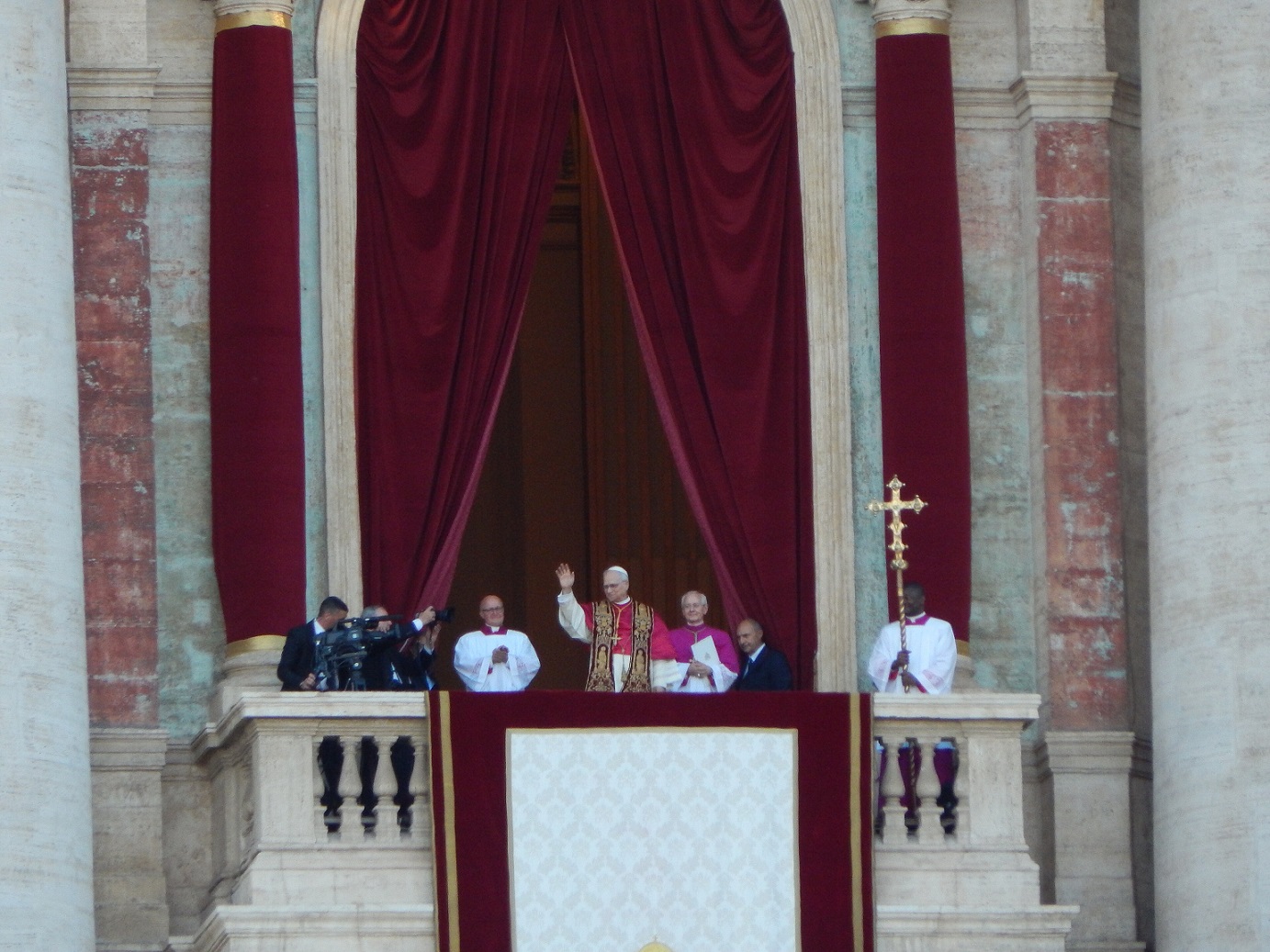
Last month, in the context of celebrating the 250th anniversary of the independence of the United States, after the US ambassador to the Holy See, Brian Burch, offered a dinner to Pope Leo XIV, comments from the diplomat transcended stating that the statements of the Supreme Pontiff about the war with Iran should be understood as head of state and not as an expression of his magisterium.
In that line, the diplomat maintained that when the Pope comments on the war, he would be acting only as sovereign political leader of the Vatican City, placing himself at the same level as world leaders. These statements almost immediately aroused reaction from the Holy See and a series of debates from more than one Vaticanist that the comments made by the American ambassador implied a relativisation of the Pope’s moral authority in matters of war and peace, artificially separating his role as head of state from that of universal shepherd.
The legal and the functional
Firstly, the distinction between the Pope as head of state and as universal pastor must be considered as structural in Vatican diplomacy: his state sovereignty is instrumental, while the logic that guides his external action is essentially spiritual and moral.
 The Lateran Treaty of 1929 created the Vatican City State as a kind of “minimal, almost symbolic sovereignty,” precisely to guarantee the independence of the Pope in his spiritual mission.
The Pope is the head of a state, but it is basically a functional state for the spiritual mission of the pontiffs and not a political enterprise in the classical sense of the concept.
That said, in practice, the Pope usually speaks as head of the Catholic Church and precisely the state dimension exists to protect that voice and offer it a legal framework in the international system.
The Holy See maintains diplomatic relations with more than 180 countries through nuncios and delegates who represent the Pope before the local Church and the State. This diplomatic structure is at the service of papal politics, understood as ecclesiastical politics: internal government of the Church and Defence of its spiritual mission, not as the national policy of one more State.
The Pope intervenes on the international scene as a dual actor: state subject as a legal person and, in turn, moral leader of a global community, which gives him a kind of very unique “soft power”.
Public speeches and gestures
The distinction “head of state/pastor” allows the Holy See to argue that the Pope does not compete with other temporal powers, but addresses them as a “brother” and moral voice.
The words of Paul VI went down in history when he said before the UN: “his temporary sovereignty is minimal and necessary to be free to exercise his spiritual mission.” In diplomatic terms, this kind of “self-understanding” protects the Pope from being appreciated as an “interested party” in conflicts, allowing him, in turn, to present himself rather as a mediator or a critical conscience, thus facilitating his acceptance by very diverse actors.
International strategy
What was analysed above has three practical effects. The first is Moral Legitimacy: when the Holy See emphasises that the Pope acts as a pastor, he demands for his interventions a different status from that of government speeches, thus guaranteeing a certain symbolic weight in public opinion.
 The second is the Room for Manoeuvre: state sovereignty in turn guarantees the Pope immunity, as well as his own ability to evaluate treaties and have a presence in multilateral forums, but in the same way the pastoral narrative prevents him from being trapped in rigid geopolitical blocks. And the third is the Mediation Capacity: Vatican diplomacy is presented as an actor “without competitive ambitions” with respect to other States, which facilitates its capacity for dialogue and mediation.
Burch, who later tried to justify his comments by describing what happened as a “misunderstanding,” focussed his thesis by stating that when Leo XIV speaks as sovereign of the Holy See, his interventions must be read in a diplomatic key, not only ecclesial.
The most delicate point was his way of separating the function of head of state from the pastoral mission of the Pope, a distinction that the Holy See considered wrong.
His statements, voluntarily or not, pointed to a relativisation of the role of the Pope as sovereign of the Holy See. He put on the table a certain “simultaneous reading” of Leo XIV as a spiritual leader and geopolitical actor, something especially sensitive on issues such as Iran, migration and the relationship between the United States and the Holy See. PL
(Translated by Susan Seccombe) – Photos: Pixabay










.jpg)













