
We are living through days of uncertainty. As if the choice were to submit to the promises of God, homeland, security and order, or to retreat into the defence of freedom, of difference and of the hope that dialogue might prevail over the noise of the enemies of the homeland.
 F. Sanri*
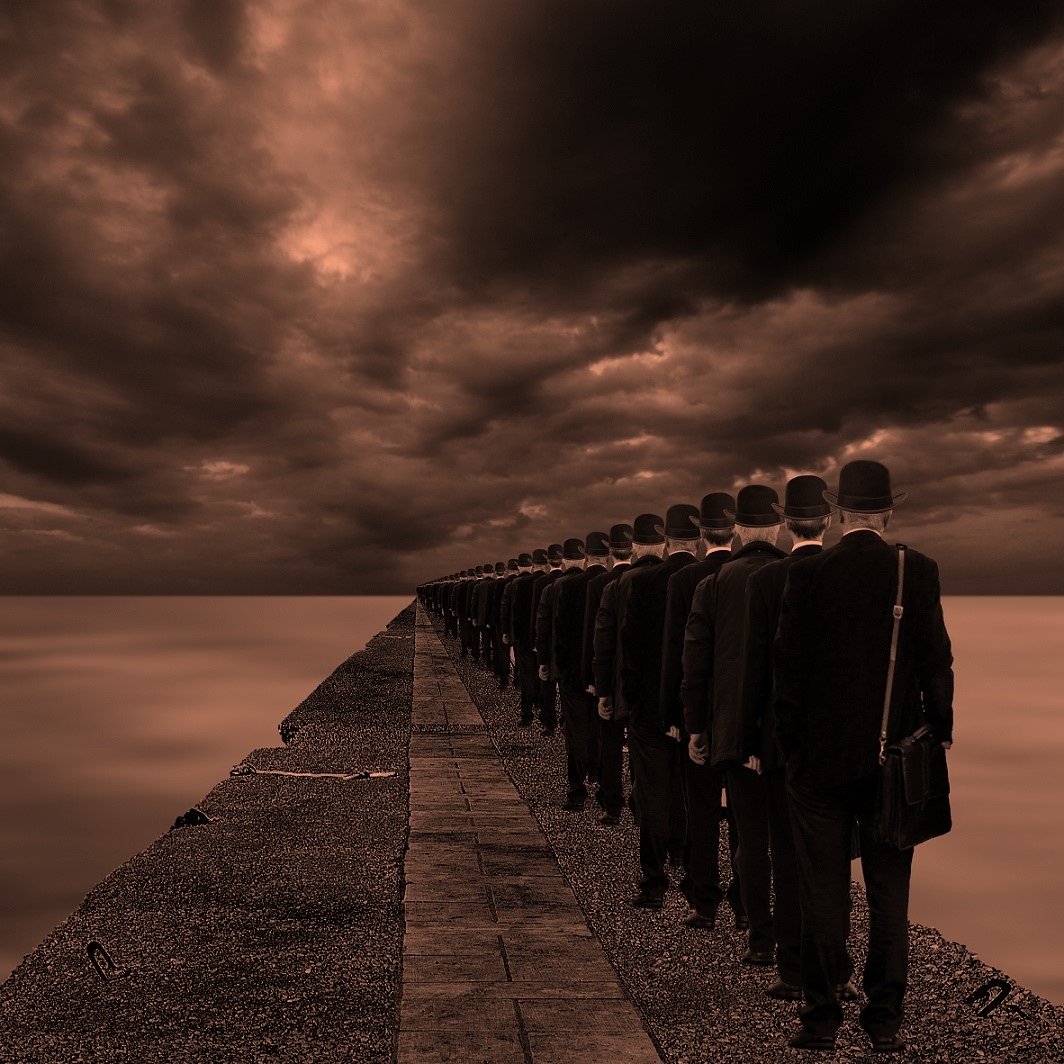
The trouble is that these enemies are becoming increasingly nebulous. Simply opposing is enough to earn a label that functions as a sentence: guerrilla, communist, enemy of the homeland, enemy of God.
Estanislao Zuleta warned about this way of constructing the adversary: when we attribute absolute evil to the other, we stop seeing them as someone with whom we can argue and begin to regard them as a threat. This opens a dangerous moral hinge: whoever believes they possess the truth feels entitled to use force to preserve the good and root out evil.
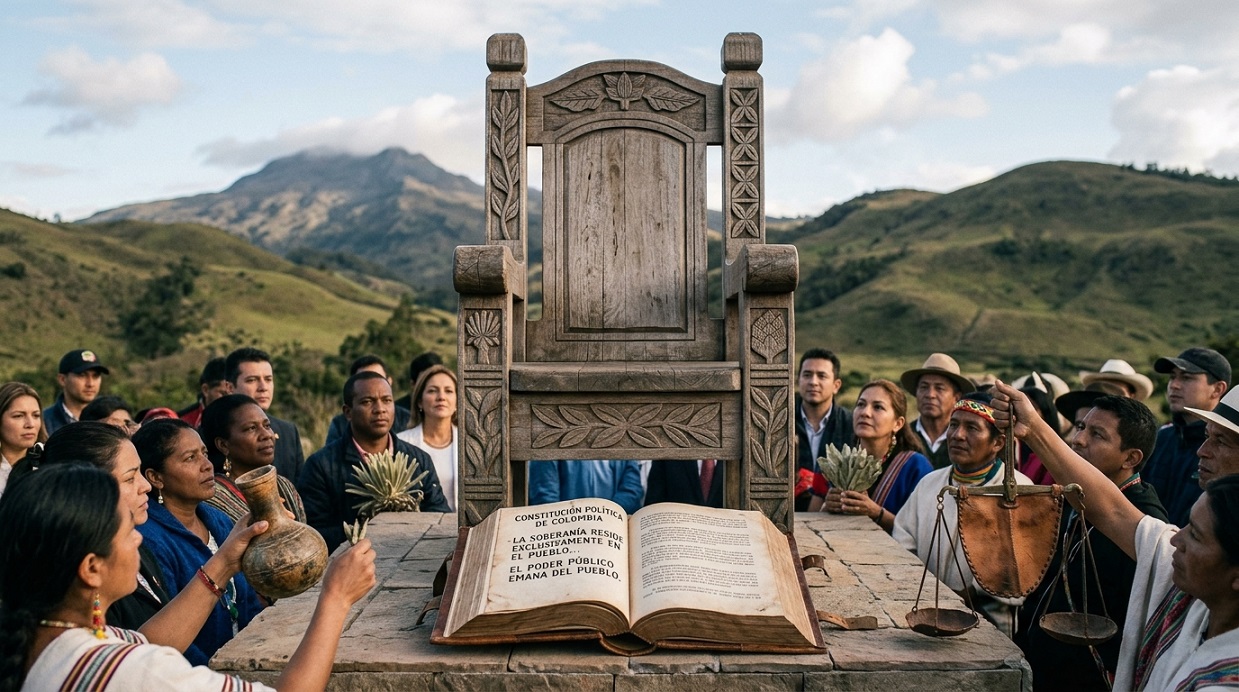
This is why what is beginning to be framed in terms of the secular nature of the State — the separation between religion and public power — should concern us deeply. It is worth recalling where we have come from. The 1886 Constitution began by declaring: ‘In the name of God, the supreme source of all authority’, and its Article 38 established that the Catholic religion was that of the Nation. The 1991 Constitution, by contrast, provides that ‘sovereignty resides exclusively in the people, from whom public power emanates’ and recognises freedom of worship: all religious confessions and churches are equally free before the law.
The difference is no small matter.
Political power, in a democratic State, does not derive from divine will, but from the will of the people. And since both those who elect and those who govern are human beings, both can be mistaken. Power is fallible. That is precisely what the Constitution, the separation of powers, oversight bodies and checks and balances exist for.
Everything changes when whoever wields power begins to present themselves as an interpreter of God’s will. How can one challenge, through human arguments, someone who believes they know divine designs?
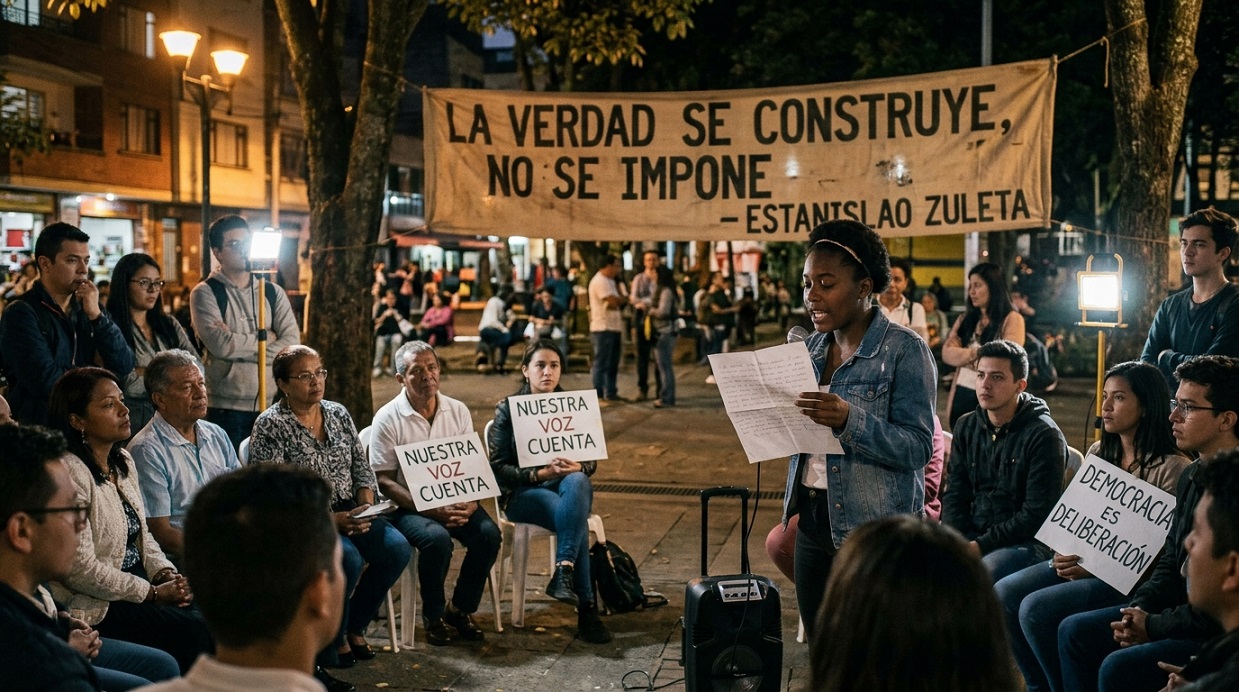 How can one exercise opposition to decisions that cease to be presented as debatable options and instead become clothed in transcendent legitimacy?
When truth ceases to be contested territory and becomes a sacred premise, the need to deliberate disappears. And when religious truth is combined with political power, the dissenter can become a sinner and the political adversary a moral (and mortal) enemy.
History offers too many examples. The conquest and colonisation of the American continent were accompanied by discourses of evangelisation that served to legitimise the domination, dispossession and destruction of indigenous populations. Nor is this only a problem of the past. Gaza is there to remind us that religious references can still be drawn into political and territorial conflicts while the civilian population bears their most atrocious consequences.
Colombia is no stranger to that mixture either. During the so-called ‘Violencia política’, the confrontation between Liberals and Conservatives was clothed in religious language that transformed the political adversary into an enemy of Christ. Monsignor Miguel Ángel Builes is said to have uttered a phrase that helps convey the scale of the problem: “Whoever kills a Liberal commits no sin”.
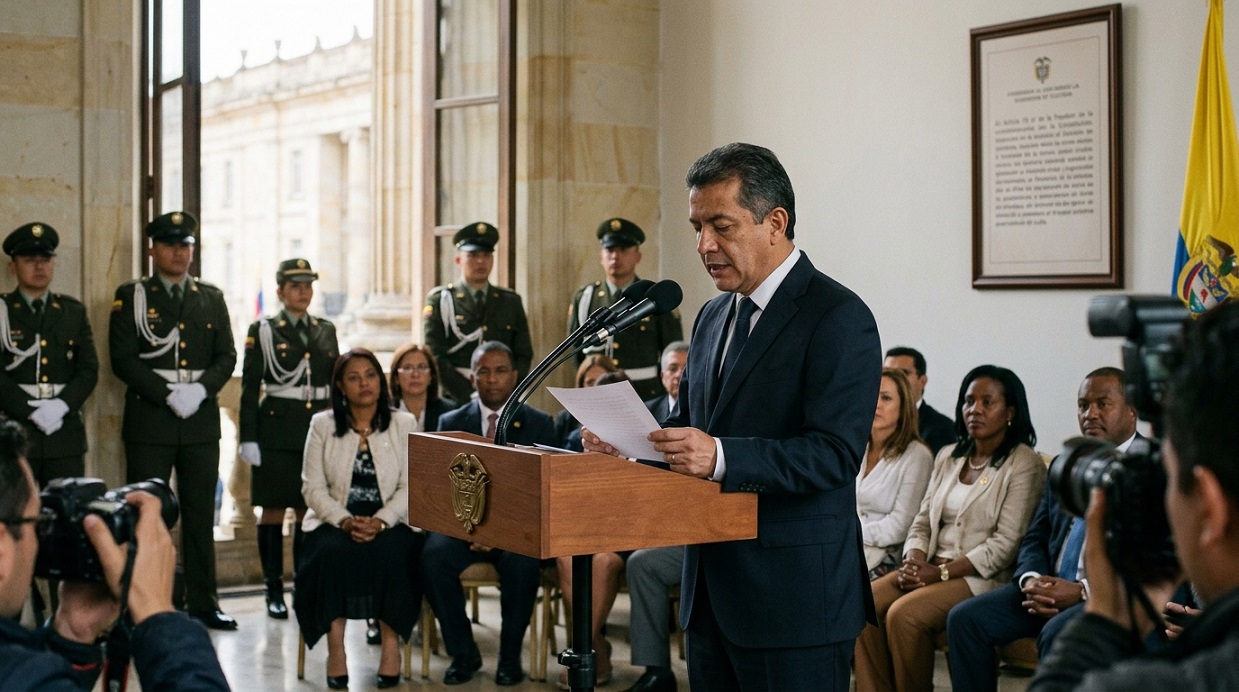
When a political war also becomes a religious war, killing the adversary can end up being presented not merely as permitted, but as necessary. That precedent should be enough for us to understand why it is not harmless to hear ‘Long live Christ the King!’ at the inauguration of Colombia’s current president.
 Not because there is anything reproachable in Christ. Quite the opposite. Nor because anyone should have to hide their faith in order to govern. Religious freedom protects the president too. The problem begins when faith is mistaken for the foundation of public authority and God is invoked to divide people into good and bad, patriots and enemies.
Defending secularism does not mean fighting God, Christ or any religion. It means guaranteeing that everyone may believe — or not believe. If atheists have no cure, in a secular State they do have protection. The Constitution does not require belief in order to be a citizen, nor does it make human dignity conditional on accepting any particular account of God. Our political pact was built around dignity, pluralism and self-determination. Equality, freedom of conscience and freedom of worship are not concessions granted by the government of the day: they are limits on the power of majorities.
Constitutional democracy does not consist solely in counting votes. It consists in guaranteeing that whoever lost can go on existing, speaking, thinking and disagreeing after the votes have been counted.
Nor, for the same reason, is it a small matter to hear, presented as State policy, the idea of ‘removing Marx from the classroom and bringing in Christ’. The concern grows when this conception is projected onto public education, which is not the private property of the government of the day and cannot become a mechanism for reproducing its religious, political or moral outlook.
Christ never had to leave the classroom for Marx to enter it, nor does studying Marx require expelling Christ.
 Education should allow Thomas Aquinas and Nietzsche to meet; Marx and Adam Smith; liberalism and socialism; indigenous worldviews and Western traditions; religions and atheism.
The problem begins when what may be taught ceases to depend on academic, pedagogical and scientific criteria and begins instead to serve the protection of a particular worldview.
That is when the accusation of ‘indoctrination’ appears, which always seems to refer to what others teach. The so-called ‘cultural battle’ that the government has announced in order to reclaim the homeland also appears. The expression ought to unsettle us: at what point did culture become a battlefield?
Culture ought to be the territory of encounter, contradiction, conversation and the building of provisional consensus. Turning it into a battle presupposes trenches, territories to be conquered and enemies to be defeated. If culture is a war, education becomes one of its principal battlegrounds.
At that point it is no longer a matter of teaching people to think, but of deciding what those who learn must think.
A democratic education should not fear ideas. It should teach people to confront and test them. An education in which only one truth may enter ceases to educate people to think and begins to educate people to obey. And a State in which only one truth may dwell begins to cease being democratic.
 Critics can be an advantage for any ruler, because they force certainties to be reviewed and limits to be acknowledged. Petro graduated them into enemies. Let us hope De la Espriella finds in criticism an opportunity to govern with ideas capable of being debated. Possessing the absolute truth makes any dialogue impossible.
Secularism does not require anyone to stop believing. It requires that no one be able to impose their belief from a position of power.
“Long live Christ the King!”, the president ended by saying at his inauguration. Of course! Let each person proclaim and live their faith with absolute freedom. But let that cry never again become a frontier for deciding who deserves rights and who may lose them; who is a citizen and who an enemy.
Still less who may die in the name of a truth that claims to be divine. To prevent that, among many other things, is what a secular State exists for.
*F. Sanri: Writer, teacher, researcher and lawyer.
(Translated by Rene Phelvin) – Photos: Pixabay and generatd by Gemini AI










.jpg)












