
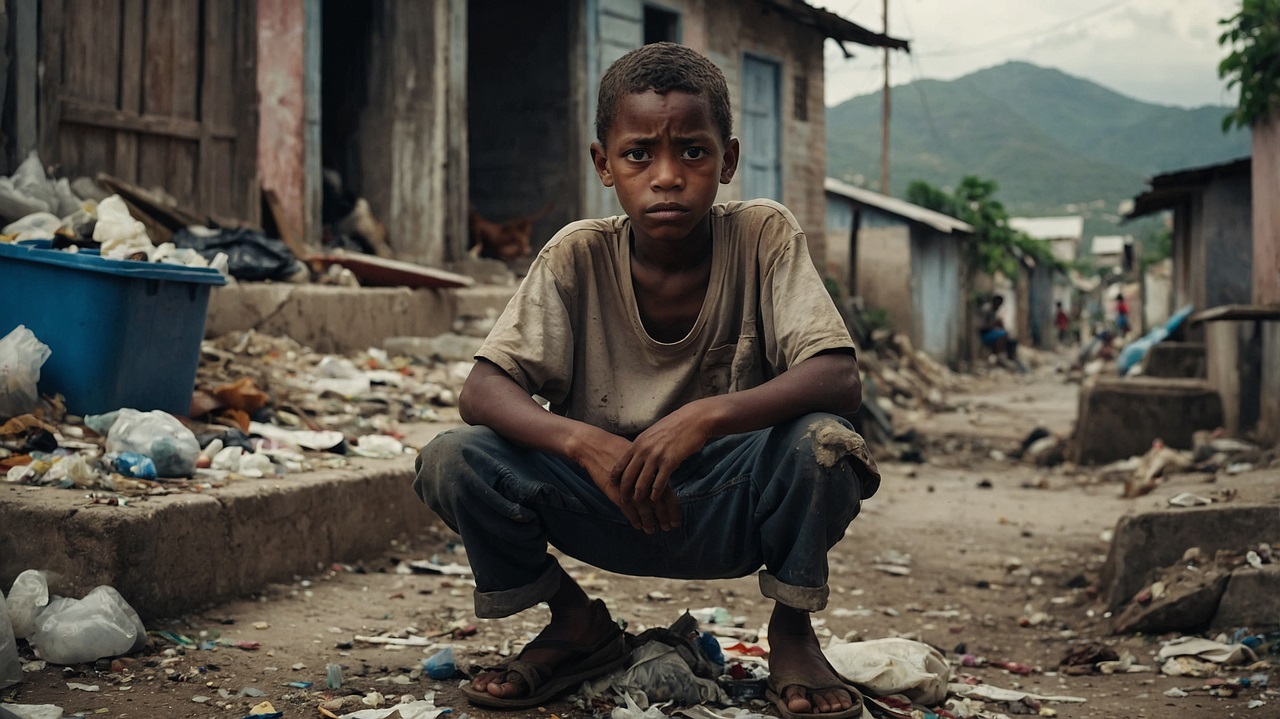
Some 318 million people suffer from acute hunger, twice as many as before the pandemic. For the first time in this century, Sudan, and Gaza face famine at the same time. Another 16 critical points require urgent attention, and six countries are at risk of catastrophic hunger.
 Frank González
Although the projections indicate that hunger will continue to decline gradually, after the number of people affected fell to 645 million in 2025, between 510 and 520 million will still suffer in 2030, according to the report The State of Food Security and Nutrition in the World 2026.
According to the report produced by the Food and Agriculture Organization of the United Nations (FAO) and four other UN agencies, while there was progress in percentages with the prevalence of the phenomenon falling from 8% in 2015 to 7.8% in 2025, in absolute numbers this represents around 50 million more people. By regions, Asia and Latin America and the Caribbean showed the best results, with 6% and 4.8%, respectively. Africa was the furthest behind with 20%, although it experienced improvement for the first time since the launch of the 2030 Agenda for Sustainable Development.
At the same time, the rate of moderate or severe food insecurity improved for the fifth consecutive year, falling from 28.7% in 2020 to 27.1% in 2024 and 25.8% in 2025.
The incidence of food insecurity was higher in rural areas than in urban areas and higher in women than men, according to the FAO. The publication also examines the average increase in the cost of a healthy diet and its affordability, due to higher food prices in 2025, as a consequence of inflation.
 Within this general context lie food crises and acute hunger, which primarily affect groups in countries across Africa and Central Asia, exacerbated by climate disruptions and armed conflicts.
According to the 2026 Global Outlook of the World Food Programme (WFP), around 318 million people were experiencing acute hunger in different parts of the world at the beginning of this year, double the levels in the Covid-19 pandemic, with 41.1 million people in emergency or worse situations.
For the first time in this century, two hunger hotspots have emerged, one in Sudan and the other in Gaza, while another 16 critical points require urgent attention. The WFP has raised the alarm about the situation in countries and areas that are suffering or are at risk of facing levels of “catastrophic hunger” such as Haiti, Mali, Palestine, South Sudan, and Yemen. Similarly, it has expressed “great concern” about the deterioration of conditions in Afghanistan, Congo, Myanmar, Nigeria, Somalia, and Syria, where sectors of the population are facing an acute food insecurity emergency.
The eradication of hunger is the focus of the second of the 17 Sustainable Development Goals (SDG’s) of the United Nations’ 2030 Agenda, considered one of those that has experienced the greatest setback in relation to the targets set in 2015.
 This SDG is concerned with the eradication of hunger and malnutrition; to double the agricultural production and the incomes of the small-scale food producers; and to ensure the sustainability of the food production systems, as well as other aspects.
The availability of financial resources is a key element in achieving the aspirations set out in the SDG’s, which has been the subject of study and debate at international forums in recent years.
At the UN Fourth International Conference about Financing for Development, held in Seville, Spain, an agreement was reached to mobilise $4 billion in an effort to close the annual SDG financing gap in developing countries, a commitment sealed in what is known as the Seville Commitment. PL
(Translated by Carol Byrne – Email: guerrera247@hotmail.com) – Photos: Pixabay










.jpg)












