
Born out of the horror of 80 million deaths, the International Criminal Court embodies the promise that sovereignty is not impunity. The Colombian government is considering withdrawing from this pact; a move that coincides with external pressure to dismantle global justice. In a country scarred by decades of violence, this decision would weaken a guarantee against injustice.
 F. Sanri*
After an unprecedented slaughter on European soil, (a necessary clarification due to European empires having already spilled immeasurable amounts of blood in other places around the world) humanity realised that allowing further barbarities like what happened during the Second World War was indefensible for a species that decided to call itself Homo Sapiens: the wise human.
Around 80 million deaths shook the foundations of rationality and goodness of a civilisation capable of so much self-destruction. From that disgrace arose not just a new world, but the conviction that power needed limits and that there had to be rules and international organisations existing above governments, wars and what is convenient at the time. The United Nations Organisation, created in 1945, was an expression of this aspiration.
In 1948, the Universal Declaration of Human Rights (UDHR) took this idea even further. There are guarantees that belong to every person just by virtue of being a person; life, freedom, education, due process, and equality, among others. Rights that are not granted just to specific people. They are retained by criminals, political adversaries, the poor, the rich, the kind and the mean-spirited, the saint and the sinner. If those rights could be dissolved for moral reasons…
In 1966, the international agreements transformed a large part of the UDHR’s aspirations into legal obligations. However, creating a law does not guarantee that it is enforced.
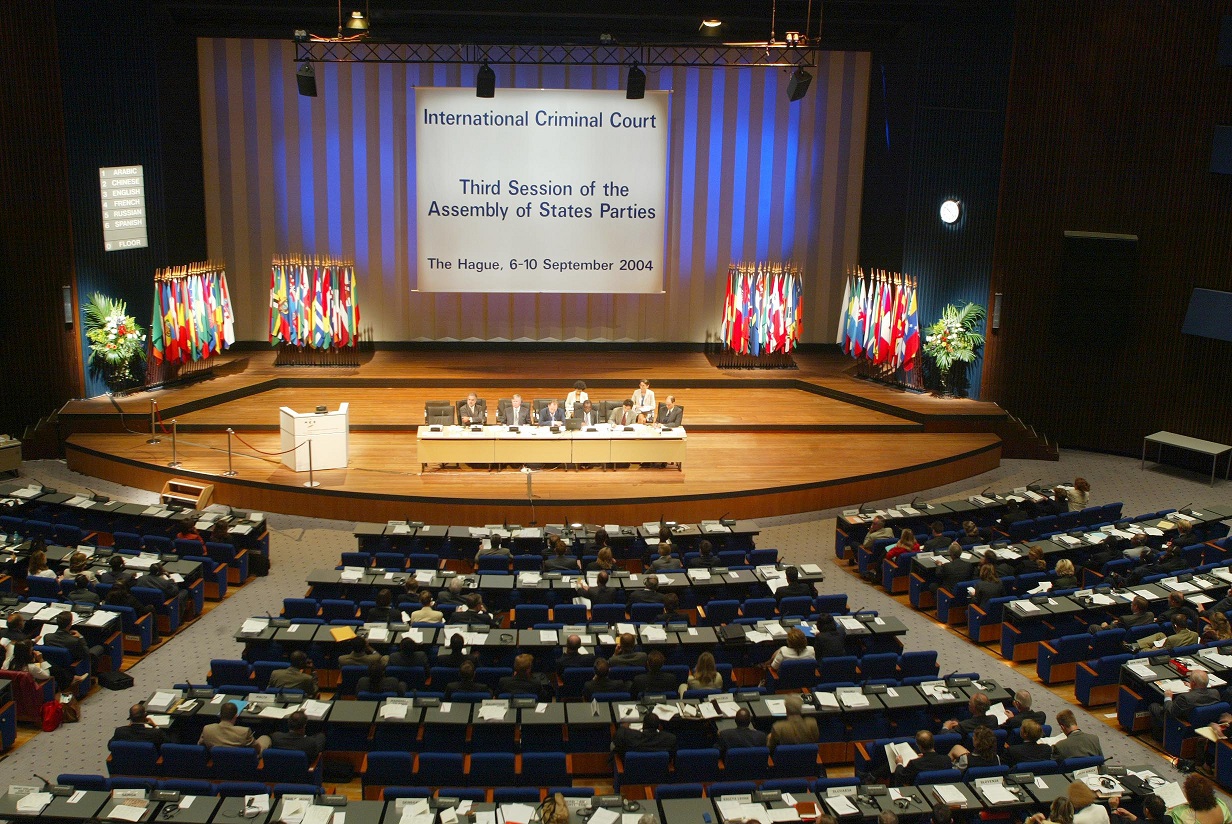
Mauricio García Villegas explained the symbolic efficacy of the law: all legislation generates consequences, even though they may not immediately materialise. Rules create expectations and possibilities for recourse. All legal systems hold a promise for the future and answer a question.
The question that was answered by the Rome Statute in 1998, which created the International Criminal Court (ICC), was: What happens when a State does not prosecute those who commit such serious crimes that they cannot be ignored? Its preamble recalls that millions of men, women and children have been victims of “unimaginable atrocities that deeply shock the conscience of humanity”. Nothing better explains its existence: there are crimes that should never go unpunished, regardless of who committed them, the flag, the cause, the ideology, the religion or the reasons of the State in whose name they tried to justify them. The ICC has the jurisdiction to prosecute genocide, crimes against humanity, war crimes and crimes of aggression. It operates in a complementary way to national jurisdictions. The State retains the primary obligation to investigate and judge. Sovereignty remains, but it cannot be used as a means of impunity.
Colombia took responsibility for this agreement in an especially significant way. To recognise the Courts’ jurisdiction, it was necessary to reform the Constitution through Legislative Act 02 in 2001, which added Article 93. Subsequently, the country approved and ratified the Rome Statute in 2002. It was a State decision which demanded adaptation of the new constitutional order.
 That is why it is worrying that today the possibility of abandoning it is being discussed. Information available to date indicates that the current Government is considering this option, even though Colombia has not formalised its withdrawal. The question is inevitable: what would Colombia gain? The answer is simple: nothing.
We are a country scarred by massacres, disappearances, extrajudicial executions, kidnappings, displacements, child trafficking and sexual violence. We are still looking for people who disappeared 40 years ago, debating how to judge our war and striving to build a peace that neither turns justice into an obstacle, nor impunity into its price.
The ICC has evident problems. Its slowness, selectivity and the absence of major powers within the system warrant serious criticism. These deficiencies should drive us to demand better international justice, not to reduce its reach even further.
It also seems strange to invoke sovereignty to abandon an international institution when the decision coincides with external pressure for several countries to withdraw from it. The order has already been given from the North: the ICC must be dismantled. Using national sovereignty as an excuse makes no sense when it is used to reject an international tribunal in line with a foreign power’s agenda.
Furthermore, leaving does not erase the past. Article 127 of the Statute establishes that withdrawal takes effect one year after notification to the Secretary-General of the United Nations, and maintains contracted obligations while the State was part of the ICC. Neither are matters that were already under consideration of the Court affected by leaving.
The discussion goes beyond foreign policy: referring to the place where we concede the legal limits when they become uncomfortable. A guarantee proves its real worth when someone wants to get rid of it.
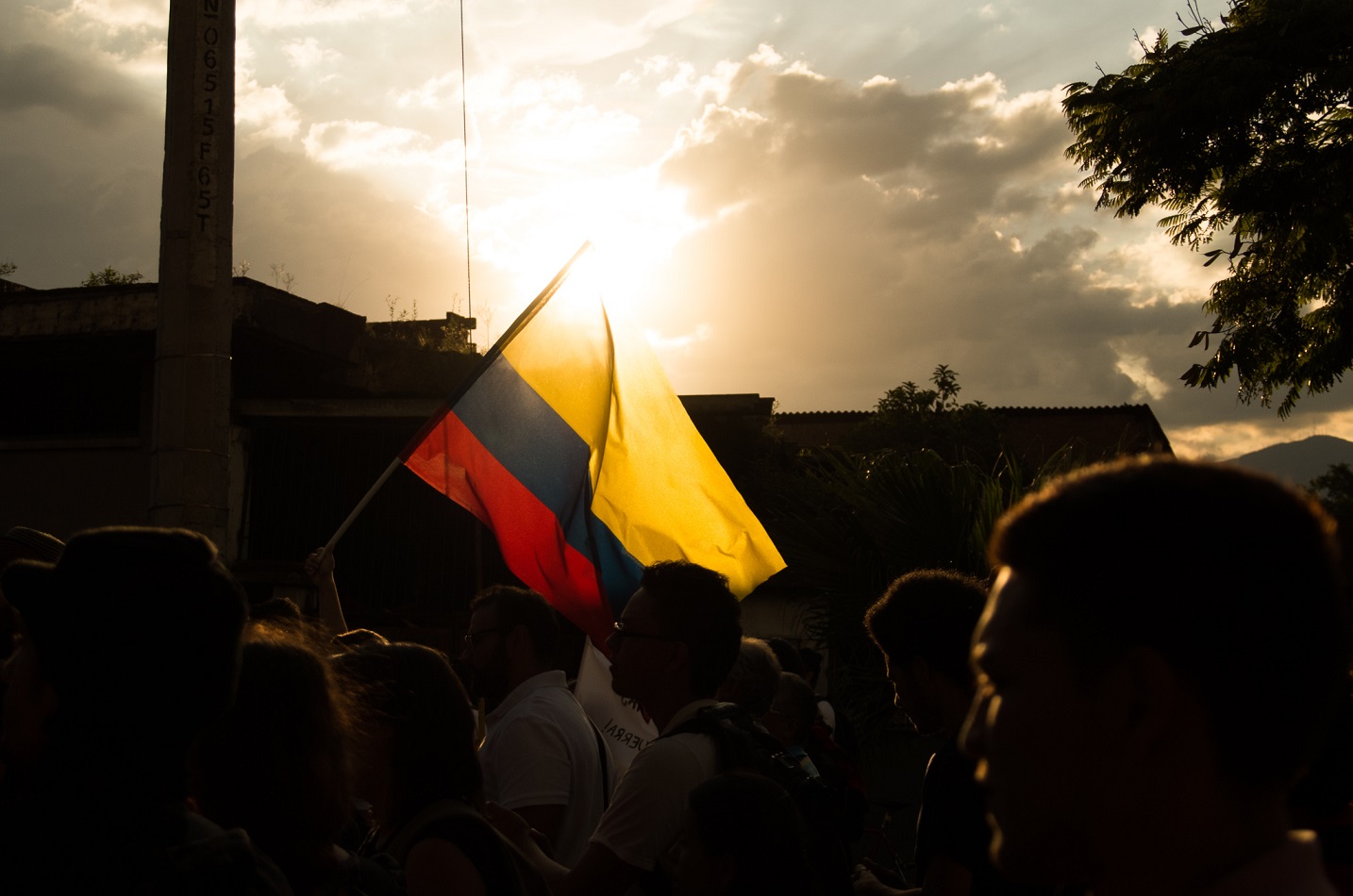
The history of humanity can also be read as the history of limits established after every disaster. It took millions of deaths for us to comprehend that certain behaviours cannot depend exclusively on the will of a government, nor can atrocious crimes remain confined behind a border or covered by the senseless wine of oblivion.
The International Criminal Court represents one of these fragile agreements.
Colombia can question it, demand its reform and renounce its inconsistencies. Withdrawing means something else entirely: voluntarily giving up a guarantee that cost centuries of barbarities to imagine and decades of laws to build. Perhaps the true measure of Homo Sapiens is not in their capacity to dominate the world, but in having learned, after destroying it so many times, to impose limits on themselves. Exiting the International Criminal Court would be the start of dismantling one of those limits.
*F. Sanri: Writer, teacher, investigator and lawyer
(Translated by Donna Davison – Email: donna_davison@hotmail.com) – Photos: Pixabay










.jpg)












